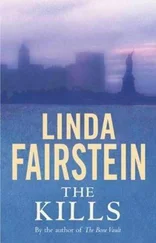
Richard House - The Kills
Здесь есть возможность читать онлайн «Richard House - The Kills» весь текст электронной книги совершенно бесплатно (целиком полную версию без сокращений). В некоторых случаях можно слушать аудио, скачать через торрент в формате fb2 и присутствует краткое содержание. Год выпуска: 2013, Издательство: Picador, Жанр: Современная проза, на английском языке. Описание произведения, (предисловие) а так же отзывы посетителей доступны на портале библиотеки ЛибКат.
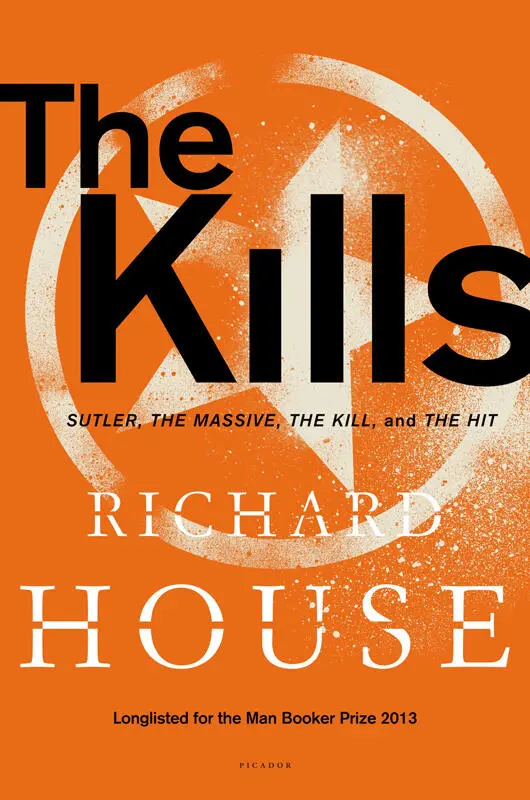
- Название:The Kills
- Автор:
- Издательство:Picador
- Жанр:
- Год:2013
- ISBN:нет данных
- Рейтинг книги:3 / 5. Голосов: 1
-
Избранное:Добавить в избранное
- Отзывы:
-
Ваша оценка:
The Kills: краткое содержание, описание и аннотация
Предлагаем к чтению аннотацию, описание, краткое содержание или предисловие (зависит от того, что написал сам автор книги «The Kills»). Если вы не нашли необходимую информацию о книге — напишите в комментариях, мы постараемся отыскать её.
The Kills — читать онлайн бесплатно полную книгу (весь текст) целиком
Ниже представлен текст книги, разбитый по страницам. Система сохранения места последней прочитанной страницы, позволяет с удобством читать онлайн бесплатно книгу «The Kills», без необходимости каждый раз заново искать на чём Вы остановились. Поставьте закладку, и сможете в любой момент перейти на страницу, на которой закончили чтение.
Интервал:
Закладка:
Rike takes another look, but Udo is out of sight.
‘Back in Damascus you’d never see those two in the same room. Now you see them together the whole time. It’s just how it is. Crisis makes for strange bedfellows.’ Isa yawns harder, like the first yawn was a warm-up. This time she shows her teeth before she covers her mouth. ‘Creepy. Creeps.’
‘How long will this take?’
‘I don’t know. It could take ages. They’re going to weigh me. It’s insulting. They give me a paper gown, make me take off my clothes and have me stand on a scale. Then they’ll take blood, because they always take blood. They weigh, they measure, then they take blood.’
Isa’s eye follows the nurse as she returns; her dress zipping between her thighs, her soft shoes making no sound on the red tiled floor.
‘Do British women deliberately try to look like that?’
Rike follows her sister’s gaze, but can’t see the problem.
‘They don’t care about themselves. Look. There isn’t any dignity. Look at those shoulders. See how she walks. Like a cow heading to a barn. I hate these places. I know about the cats, by the way.’
Rike looks to her sister. Eye-to-eye.
‘Of course I know.’
‘The cats?’
‘The cats. The cats. I spoke with Henning this morning.’
‘He told you?’
‘I made him.’
The sisters look to each other for some kind of measurement or assurance.
‘Why didn’t you say anything?’
‘I didn’t want to upset you.’
‘I’m not upset. Honestly. This is the last thing to worry about. I’m not going to cry over a neighbour who’s taken a dislike to three cats.’
‘Two.’ Rike can’t judge if Isa is sincere. Sometimes there’s no way of reading her.
‘It doesn’t matter. This is Cyprus, the problems here aren’t on the same scale. Anyway, I’m more worried about Henning. He never talks. He’s probably more upset than me, and I wouldn’t know. Everything that’s left from his family is in Damascus, everything from Henning’s father, and we don’t know what will happen.’ Isa pauses because she’s upsetting herself. ‘What worries me is that we’ve only known each other in Damascus. It’s our city. It’s where we met. It’s where we married.’
‘He seems all right. It’s you he’s worried about.’
‘This is how he copes. His job is about managing, so he worries about me instead.’
‘Of course he worries.’
Isa draws her thumb under her eyes. ‘I’m just angry.’ At this her voice begins to wobble. ‘It’s so pathetic.’
Rike smiles at this and slips her hand along the bench to rest under her sister’s thigh.
‘The Heiztlermann’s horses. Can you imagine? She must be going out of her mind.’ Isa clears her throat. ‘Oh. I heard from Mattaus this morning.’
Rike nods. Mattaus. Perfect. This is not what she needs right now. ‘Why didn’t you tell me earlier?’
Isa shrugs. ‘I’m telling you now. He said he wants to visit. He wants to bring a new man he’s met.’ Isa is uncomfortable. ‘You know what he’s like.’
‘But what about Franco?’
‘There is no Franco. They’ve broken up.’
‘When did this happen?’ Rike feels herself tighten up, contract.
‘I don’t know the details. You know Mattaus. Everything has to change when he gets bored. He’s met someone else. Franco is still in their apartment. You know how it goes, someone will come along and he’ll go with them, then disappear until it’s all over. I think he doesn’t like to tell you these things because you can be judgemental.’
‘And you aren’t?’
‘Look, you know how he is. Anyway, he says he’s in love. He’s an architect.’
The sisters roll their eyes in unison.
‘Poor Franco. Did he say anything about him?’
‘Only that he refuses to leave the apartment. I don’t think it’s quite the story you imagine.’
‘And Henning? Have you spoken with Henning about this?’
Isa sharply dismisses the idea. ‘Oh god no. Can you imagine? Anyway, I’ve told Mattaus he can’t stay with us. He can sleep on the beach.’
* * *
Rike sits alone in a marine-blue and minty-green corridor while Isa speaks with the consultant, and wonders what Tomas Berens might be doing. She’d like to tell her sister about the dream, but knows she wouldn’t hear the last of it if she did. Mattaus is an unwelcome interruption. A bad thought.
* * *
She finds the market, she’s come here once before with Isa and Henning.
The market is held every day except Sunday. On weekdays the small avenues between the stalls are especially crowded, and in the morning it can take a while to walk from one end to the other. In the afternoon the market is almost empty. The building has a temporary feel, with windows along the roof, fine wood shavings on the concrete floor, and a line of counters — raised chopping blocks and white marble table tops on which the meat is dressed and displayed. Along one side is a row of upright ancient freezers, their doors scuffed and dented.
While she is squeamish, she’s inured to the displays of cut meat, the hooks stuck through shins and tendons, the cold iron-like stink of blood. Once in a while there’s a sight which makes her cringe, retreat a little — a hoof on a severed limb, a peeled goat’s head, eyeballs and teeth and no skin, slippy layers of pink veins and white fat. Never mind the flies, the small clots of blood, the cloths used to wipe the knives and cutting boards, the butchers’ hands. All men. There are only men here.
The man in Rome. The first Sutler flung into the path of a train. Luggage on the train. Man off, strewn between tracks. Although, no, this isn’t quite the case, in the papers now it isn’t Sutler who died, but Parson, the man who was following him, which means that Sutler is potentially responsible: a thief and a murderer.
She hasn’t come here for death either. She just wants to see something actual. The slaughtered and prepared meat is exactly what it is, flesh, it isn’t a metaphor for anything.
It’s here that she reconsiders Mr Crispy, Sutler Number Three. Her story is wrong-headed. She has romanticized him, sure, and played with the idea that he unwittingly entered a situation. This is a foolish idea. The man isn’t accidentally in the desert, he hasn’t wandered off. Not at all. This is flight. Sutler is a force, propelling itself forward, a determined energy that wills itself to life. This is why he has survived.
Here he is, disguised, wearing Arab dress, concealed already, in some kind of public transport, a rough bus in which people hang heads and arms out of windows, women and children sleep, and an undignified scrum of people bundle together, half-conscious, dozy with the heat. In an attempt to destroy evidence the man was caught in an explosion (she’s heard this from Henning, and read it herself online). He could be bandaged, seriously wounded. Nobody knows the extent of the damage. He could be fingerless, deeply disfigured. He could be numb and witless. Maybe this damage is what makes them so certain that this third Sutler is the real Sutler?
Sutler’s problem isn’t money, it’s his new-found notoriety. He can’t go back, can’t even think about it. He can only move forward.
This figure isn’t devastated by the sun but transformed. The burns are part of a process in which he becomes new. The sun fashions Sutler into a new man. Mr Crispy is no accident, he’s the best option from a limited set of choices. Nothing will remain of the old Sutler. Ears, nose, mouth, the skin off his feet and hands are scorched from him. According to Isa they will slice skin from his back to rebuild his face.
Читать дальшеИнтервал:
Закладка:
Похожие книги на «The Kills»
Представляем Вашему вниманию похожие книги на «The Kills» списком для выбора. Мы отобрали схожую по названию и смыслу литературу в надежде предоставить читателям больше вариантов отыскать новые, интересные, ещё непрочитанные произведения.

Обсуждение, отзывы о книге «The Kills» и просто собственные мнения читателей. Оставьте ваши комментарии, напишите, что Вы думаете о произведении, его смысле или главных героях. Укажите что конкретно понравилось, а что нет, и почему Вы так считаете.