Matthew Thomas - We Are Not Ourselves
Здесь есть возможность читать онлайн «Matthew Thomas - We Are Not Ourselves» — ознакомительный отрывок электронной книги совершенно бесплатно, а после прочтения отрывка купить полную версию. В некоторых случаях можно слушать аудио, скачать через торрент в формате fb2 и присутствует краткое содержание. Год выпуска: 2014, Издательство: Simon & Schuster, Жанр: Современная проза, на английском языке. Описание произведения, (предисловие) а так же отзывы посетителей доступны на портале библиотеки ЛибКат.
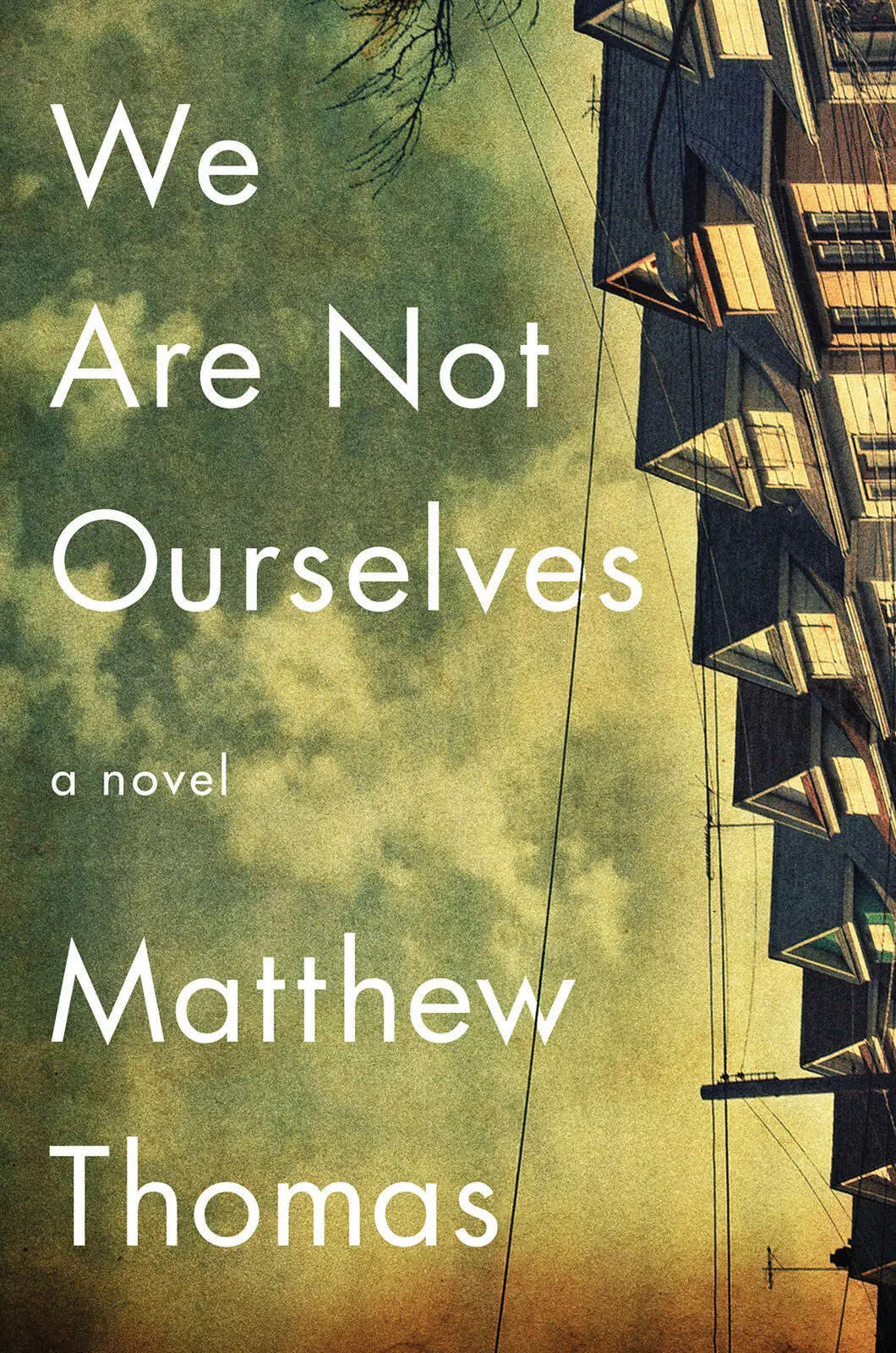
- Название:We Are Not Ourselves
- Автор:
- Издательство:Simon & Schuster
- Жанр:
- Год:2014
- ISBN:нет данных
- Рейтинг книги:3 / 5. Голосов: 1
-
Избранное:Добавить в избранное
- Отзывы:
-
Ваша оценка:
We Are Not Ourselves: краткое содержание, описание и аннотация
Предлагаем к чтению аннотацию, описание, краткое содержание или предисловие (зависит от того, что написал сам автор книги «We Are Not Ourselves»). Если вы не нашли необходимую информацию о книге — напишите в комментариях, мы постараемся отыскать её.
When Eileen meets Ed Leary, a scientist whose bearing is nothing like those of the men she grew up with, she thinks she’s found the perfect partner to deliver her to the cosmopolitan world she longs to inhabit. They marry, and Eileen quickly discovers Ed doesn’t aspire to the same, ever bigger, stakes in the American Dream.
Eileen encourages her husband to want more: a better job, better friends, a better house, but as years pass it becomes clear that his growing reluctance is part of a deeper psychological shift. An inescapable darkness enters their lives, and Eileen and Ed and their son Connell try desperately to hold together a semblance of the reality they have known, and to preserve, against long odds, an idea they have cherished of the future.
Through the Learys, novelist Matthew Thomas charts the story of the American Century, particularly the promise of domestic bliss and economic prosperity that captured hearts and minds after WWII. The result is a riveting and affecting work of art; one that reminds us that life is more than a tally of victories and defeats, that we live to love and be loved, and that we should tell each other so before the moment slips away.
Epic in scope, heroic in character, masterful in prose, We Are Not Ourselves heralds the arrival of a major new talent in contemporary fiction.
We Are Not Ourselves — читать онлайн ознакомительный отрывок
Ниже представлен текст книги, разбитый по страницам. Система сохранения места последней прочитанной страницы, позволяет с удобством читать онлайн бесплатно книгу «We Are Not Ourselves», без необходимости каждый раз заново искать на чём Вы остановились. Поставьте закладку, и сможете в любой момент перейти на страницу, на которой закончили чтение.
Интервал:
Закладка:
“It depends,” she said. “Thirty days. Sixty. Ninety. I don’t know.”
“Don’t we have some kind of rights as tenants?”
“I’m not sure, since we’ve never worried about a lease. I can ask the Realtor.”
“That’s bullshit,” Brenda said. “Put us on a lease. Buy us some time.”
Donny stood up. “It’s hot in here,” he said. “Anyone else want a beer?” He left the room.
Eileen cleared her throat. “That might make it harder to sell the house. Especially because your rent is substantially below market.”
“Then increase the rent. I don’t care. Double it. Whatever it takes.”
“Let’s not worry about that right now,” Eileen said. “Maybe I’ll have a buyer who would prefer to have the house fully rented. I’ll see what I can do when I know more.”
“Maybe we’ll buy it ourselves,” Donny said as he returned with a glass of ice water. She saw that he had meant for the beer comment to lighten the mood. “It’d be nice to have a room for my daughter when she comes over.” He checked his sister’s face to see what she thought of the idea. Brenda’s expression hardened, as if to say, Who’s got that kind of money? Donny sighed. “Don’t worry about us,” he said. “I’m sure you have a lot on your mind. I’ll see what we can come up with on our end. Whatever we can do to help, you let us know.”
She thought about Lena. She knew Lena should hear the news from her, but she didn’t know if she had it in her to go upstairs and go through it again. Lena was upright in everything she did; decency and morality were her default positions. She was one of those heroic old women who sat in church all day taking on the burden of saving the sinners around them.
“There is one more thing,” she said.
“What is it?” said Donny. “Just ask.”
“Will you tell your mother for me?”
• • •
A week later Jen had an open house. The thought of all those people gawking at her furniture, her possessions, her bathroom annoyed Eileen, but then she thought, Let them come. Let them see the oasis we made. Jen came an hour early to put duvets on the beds upstairs — where they’d all cleared out, as requested, despite Eileen’s visions of them haunting the stoop, hangdog or angry looks on their faces — and decorative items on the tables and breakfront. She’d warmed pots of potpourri on the stovetop. It already felt like someone else’s home.
She wondered who would show up. This was the time to leave the neighborhood, not discover it — but perhaps some intrepid breed of young person might fancy themselves enterprising and patient enough to secure an outpost in the neighborhood of tomorrow. It wasn’t her responsibility to tell them that this neighborhood’s best days were in the past.
Eileen left to get her hair done. When she returned, half an hour after the open house should have ended, she saw a tall Indian man on her stoop, talking with Jen. She stopped in front of the Palumbos’ house and watched him for signs of interest. He was gesturing around and nodding at whatever Jen was saying. A woman who must have been his wife was standing on the sidewalk, along with their son and daughter, both of whom leaned against her. Eileen resisted the urge to introduce herself and feel them out. When they left, Jen told her she thought they might bid on the house. The man had said he would need it empty to make room for his extended family — brothers and sisters, nieces and nephews, grandparents. So that’s how they live , Eileen thought.
A couple of days later, the Indian man offered the full asking price—$365,000, which Jen had originally thought a little high. Eileen called Gloria to find out whether the Bronxville house had sold. Then she called Donny to let him know there was an offer.
“How much?”
She told him. Donny whistled into the phone and there was a long pause. Did he know how much less she’d bought it from his father for?
“That’s a lot,” he said. “That’s great, good for you.”
“Thank you,” she said.
He paused again. “How long do we have?”
She explained that it would be soon, a week or two at the most. She wanted to sell as soon as possible.
“Can you wait a little longer?” he asked. “I might have some options, but I could use more time.”
She didn’t know whom Donny was going to ask for the money, or what kind of trouble he would be exposing himself to in order to get it, but that was his concern.
“I’ll see what I can do,” she said, and as she hung up she understood that there was nothing she was willing to do. She had to get out while she could.
She called Gloria and told her to make an offer on the Bronxville house.
The next day — she forgave herself in advance for the lie — she told Donny there had been a competing bidder and the first bidder had gone above asking, but it was his final offer, and he needed an answer immediately.
He was no closer to having a down payment, he said.
“I’m sorry,” she said. “I’m going to have to take it.”
Eileen had bid below asking for the house in Bronxville, but they hadn’t had another bid, so they took it without parrying.
The Indian buyer insisted on a thirty-day closing, but Eileen was able to extend it to sixty when she pled the case of her tenants. That was the most she could do for them.
Donny still fixed her car.
33
Connell woke up to his father screaming at him and wagging his finger in his face.
“ Christ! Do you know what you’ve done? Do you?”
Connell’s mind raced, but he could recall no hanging offenses.
“You left the jelly out all night!” his father said. “You left the cover off!” Connell stammered an apology, but his father waved him off. “How could you do such a thing?” He stamped his feet, one after the other, as though smashing grapes. Connell had never seen him make such a childish gesture, and it disconcerted him more than the yelling had.
Ten minutes later his father was back in his room, sitting on the bed. “I don’t know what came over me,” he said.
All that summer, he was on an energy crusade. He said they didn’t need to shower every day, that every other day was sufficient. If you walked away from a stereo for a second, he hit the power button. If you ran the hot water too long for dishes, he reached across you and pressed the handle down. If you turned on the air conditioner in the car, he told you to open the window instead. When he turned off the air conditioning in the house, Connell’s mother threatened to leave and turned it right back on. That got through to him; nothing else did. He let the air conditioner run, but unplugged the coffeemaker, the toaster, the stereo, the TV, the Apple IIe.
One night, while they were sitting at the kitchen table, his father howled in frustration after breaking the point off a pencil by pressing too hard. “This goddamned thing’s no good,” he said as he snapped it in half. “It’s no good at all.”
His mother took them on scenic drives in the area they were moving to, but when they parked and got out, his father just stood by the car with his arms crossed. They went peach-picking once, in Yorktown, and his father stuck his hands in his pockets and leaned against the enormous wheel of an idle tractor while his mother filled a basket with the most shapely peaches she could find. When they walked back to the barn to pay, his father reached into the basket in his mother’s hands and began tossing peaches to the ground. “We don’t need all these!” he said.
“What the hell is wrong with you?” He’d gotten about half of them out before she fended him off. She was looking around to see who had noticed the outburst. “Have you gone crazy?”
Читать дальшеИнтервал:
Закладка:
Похожие книги на «We Are Not Ourselves»
Представляем Вашему вниманию похожие книги на «We Are Not Ourselves» списком для выбора. Мы отобрали схожую по названию и смыслу литературу в надежде предоставить читателям больше вариантов отыскать новые, интересные, ещё непрочитанные произведения.








Обсуждение, отзывы о книге «We Are Not Ourselves» и просто собственные мнения читателей. Оставьте ваши комментарии, напишите, что Вы думаете о произведении, его смысле или главных героях. Укажите что конкретно понравилось, а что нет, и почему Вы так считаете.