Robert Butler - The Hot Country
Здесь есть возможность читать онлайн «Robert Butler - The Hot Country» весь текст электронной книги совершенно бесплатно (целиком полную версию без сокращений). В некоторых случаях можно слушать аудио, скачать через торрент в формате fb2 и присутствует краткое содержание. Год выпуска: 2012, Издательство: Mysterious Press, Жанр: Современная проза, Триллер, на английском языке. Описание произведения, (предисловие) а так же отзывы посетителей доступны на портале библиотеки ЛибКат.
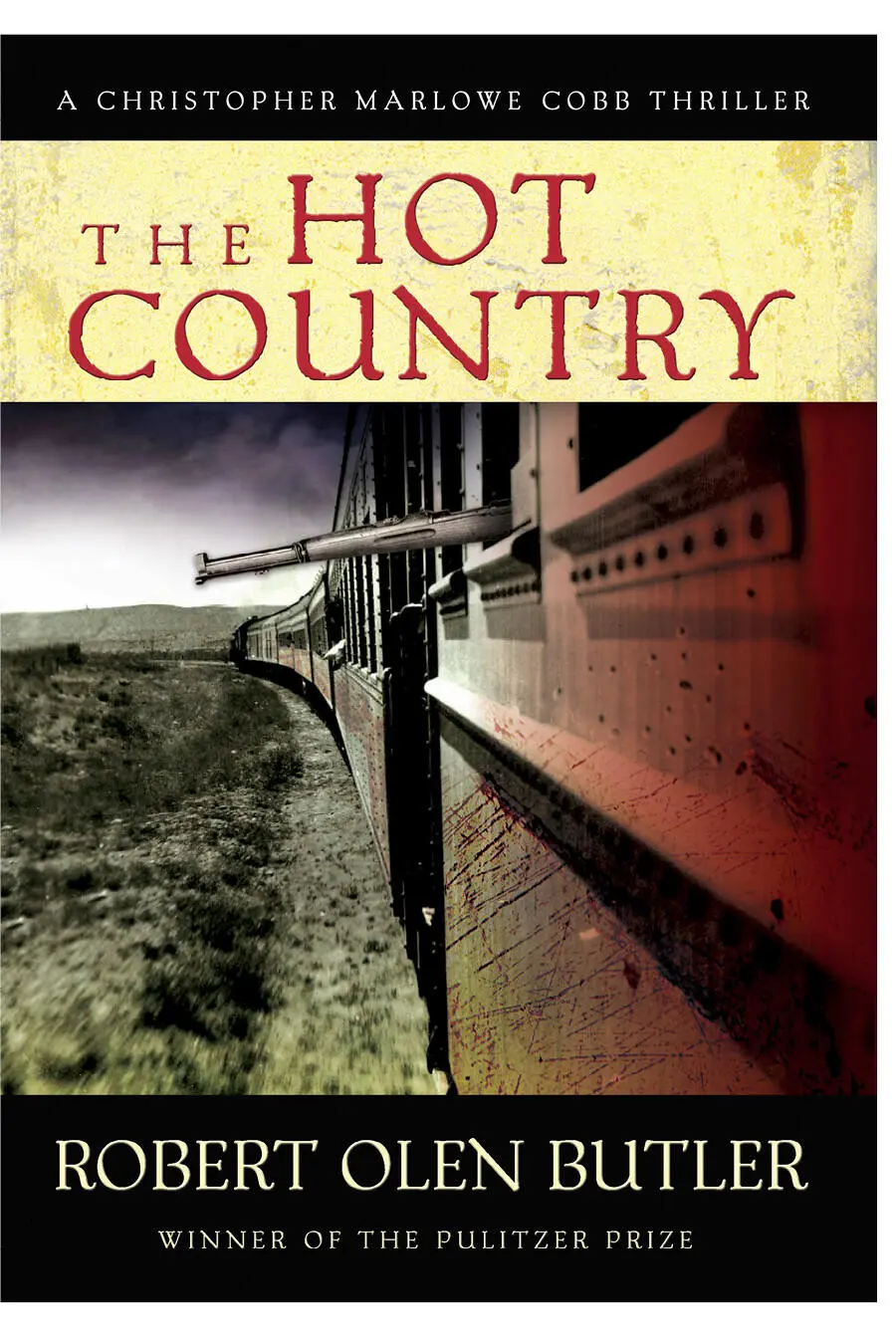
- Название:The Hot Country
- Автор:
- Издательство:Mysterious Press
- Жанр:
- Год:2012
- ISBN:нет данных
- Рейтинг книги:5 / 5. Голосов: 1
-
Избранное:Добавить в избранное
- Отзывы:
-
Ваша оценка:
The Hot Country: краткое содержание, описание и аннотация
Предлагаем к чтению аннотацию, описание, краткое содержание или предисловие (зависит от того, что написал сам автор книги «The Hot Country»). Если вы не нашли необходимую информацию о книге — напишите в комментариях, мы постараемся отыскать её.
, Christopher Marlowe Cobb (“Kit”), the swashbuckling early 20th century American newspaper war correspondent travels to Mexico in April and May of 1914, during that country’s civil war, the American invasion of Vera Cruz and the controversial presidency of Victoriano Huerta, El Chacal (The Jackal). Covering the war in enemy territory and sweltering heat, Cobb falls in love with Luisa, a young Mexican laundress, who is not as innocent as she seems.
The intrepid war reporter soon witnesses a priest being shot. The bullet rebounds on the cross the holly man wears around his neck and leaves him unharmed. Cobb employs a young pickpocket to help him find out the identity of the sniper and, more importantly, why important German officials are coming into the city in the middle of the night from ammunition ships docked in the port.
An exciting tale of intrigue and espionage, Butler’s powerful crime-fiction debut is a thriller not to be missed.
The Hot Country — читать онлайн бесплатно полную книгу (весь текст) целиком
Ниже представлен текст книги, разбитый по страницам. Система сохранения места последней прочитанной страницы, позволяет с удобством читать онлайн бесплатно книгу «The Hot Country», без необходимости каждый раз заново искать на чём Вы остановились. Поставьте закладку, и сможете в любой момент перейти на страницу, на которой закончили чтение.
Интервал:
Закладка:
We crossed the Río Jamapa on a narrow steel-girdered bridge four hundred feet above the ruins of a Spanish causeway, and on we continued to climb, more steeply, ever more steeply, the forested ground tumbling away beside us. And the experienced travelers of this route opened the windows from the top to let the cool of the air and the first scent of pine into the car. We were nearly two thousand feet above Vera Cruz and the sea, with another mile to climb to Mexico City. Up here, the decorative birds and the exotic birds, the fragile birds and the peasant-fishermen birds — the heron and the egret, the grebe and the kingfisher — these had all vanished. Now the eagles and the hawks and the ospreys had taken over the sky, and I thought on this. I thought, but not thoughts exactly. I looked at the birds circling inside my head the way I read faces and gestures and tones of voice when I am working a new source for what he knows about a story I want to write. And sometimes the source doesn’t even know that he knows this thing. The birds circled in my head above Vera Cruz, above all that had happened these past few days.
I thought about the birds even as the locomotive, which was made for climbing mountains, pitched its voice from its huffing on the flatland into something deep and strong and tremulous, like an operatic bass who was finished with his warm-up humming and lip-trilling and now at last was singing his aria, fully, opening his lowest register, unloosing his vibrato. Even the great-taloned birds outside veered away from this voice. This was an oil-burning engine, this mountain locomotive, so as it labored, there was little smoke and no grit, there was a taint of the smell of oil exhaust but mostly there was the smell of pine forest filling the car and a smell that seemed to be the chilled sunlight itself. Many of the hot-country trees had fallen away — the palms and the palmettos and the Spanish bayonets — but the banana trees were still here even as the pines densely mounted the peaks above us, the broad banana leaves dipping by the tracks at our passing, flashing glimpses of the glossy-green leaves of the coffee trees they shaded.
And we turned. And through a cut in the mountain, I had a sudden view of tableland covered with cane fields. And above these, the hawks and the ospreys and the eagles were circling. And they kept circling in my head as well. I thought of the aggressor birds with talons for grabbing and beaks for tearing flesh, and I thought of the long-legged, long-billed birds wading in the marshes of Vera Cruz, who would not dare go near these birds of the high mountains. I thought of the birds. How the birds of the marshes would themselves dip those flat bills into the water and they would grab a passing fish and swallow it and dissolve it inside them. These birds who would be snatched by the talons and torn apart and eaten by the great circling raptors: They found their own place to hunt and kill. You were a bird of prey or you were its food. And I thought: Entweder Hammer oder Amboß. Either a hammer or an anvil.
The German agent, mounted on an exhausted horse and soaked in his own sweat and covered in Mexican dust — as if he were an intrepid man of hot-country action — would ride into Pancho Villa’s camp near Torreón and he would sit with the rebel he wished to make into an ally and he would remind him that Germans have long believed — they even had an old saying for it — that you have to be either a hammer or an anvil. And Mensinger intended to tell Villa — having noted to himself: Kein Einmarsch. Nicht nach T —that Woodrow Wilson would not invade any farther than Vera Cruz, would not even go to Tampico to grab the oil fields. Because Wilson had no eggs. No balls. Keine Eier. Ningunos cojones . And Villa would laugh with this man at the American President. And Villa would feel close to this man who said these things. He would understand from his German friend that Woodrow Wilson and the United States were not a hammer. They were an anvil. Waiting to be struck by a hammer. Germany would encourage Pancho Villa to launch an offensive against the Americans.
I remained sitting very still, though I had a strong urge to leap to my feet. Indeed, I was rendered near perfectly still by that very urge, which was the way any good reporter has learned to respond when someone has just said a thing that suddenly opens a view into your story as if into a deep mountain gorge. I was keenly aware now of the man who sat in his Pullman suite, just two cars forward, looking at these same circling birds of prey.
And the question I had to ask myself was this: Did I have enough — right now — to step off this train in Córdoba or Orizaba and write this story and telegraph it to Clyde? Every enterprising, competitive, big-city newspaper in the United States of America had gone with big-splash front-page stories on fewer actual confirmed facts and more speculation than this. And this would be a pretty big one. Headlines and subheads and bits of story started gabbling at me. German secret agent makes covert trip to rebel enclave, urges Pancho Villa to launch counterattack against American forces. Agent tells Villa: “You’re either the hammer or the anvil.” Brave American secret agent murdered trying to foil German plan. And so forth. As I was imagining the way this story would play in print if I were to file it now, one thing did establish itself as part of my still totally speculative but instinctively probable assessment: Mensinger would not be going to Villa empty-handed. Envoy promises German support, German arms. I was sure the offer of arms was part of his message. Maybe that was the Papiere . Maybe the “paper” on the list of Mensinger’s talking points was some official document pledging arms to Villa. Maybe even a pledge of support for him as the future president of Mexico. He was the odds-on favorite at this point. All of which, however, was just seductively plausible speculation in my own head. As for dispatching my speculations as reportorial truth, by the second day either Nash or Svoboda, without even leaving his desk, could write a “sources say” story about the Ypiranga itself and its cargo being part of this whole plot. Those arms were poised to go to Villa for his commitment to push Funston and our boys into the Gulf of Mexico. Nash, of course, would be Svoboda’s unnamed source, or vice versa. And who knew where they would go on the third day.
And all of that stank. Sure the free press of my beloved country felt so fully and comfortably free that it routinely ran unverified stories, half-assed stories, or even outright lies to sell their goods. But that had never been done under my byline. All I had for sure was a secretive German official in a riding outfit on the way to a nothing town in a rebel province, a dead German-American who played a minor horn in a minor brass band who made some pretty extravagant claims about himself, a few cryptic words on an envelope and my own puzzle-page answers for a few of them. There could be less to this story. There could be more. But the only thing for sure was that I could not be legitimately sure about anything yet. The movements of armies, dead men in a field, advance and retreat and surrender. These were the sure things. These were facts. That’s the reporter I had been. As for the reporter I’d suddenly become, the man I’d become, in a suit I’d never wear, with a phony passport in my pocket, tempted to write a newspaper story that had not been confirmed to be true: I didn’t like any of this.
31
I did not get off in Córdoba. Even to stretch my legs for the half hour of our passenger stop. Clyde and the whole system were breathing heavily in my ear and I didn’t want to let myself be tempted. I blocked them out in the clamor of the Aztec-blooded women below my window hawking their mangoes and Dominico bananas and diced sugarcane, their sweetmeats and white cheese and bunches of high-mountain lilies.
Читать дальшеИнтервал:
Закладка:
Похожие книги на «The Hot Country»
Представляем Вашему вниманию похожие книги на «The Hot Country» списком для выбора. Мы отобрали схожую по названию и смыслу литературу в надежде предоставить читателям больше вариантов отыскать новые, интересные, ещё непрочитанные произведения.
Обсуждение, отзывы о книге «The Hot Country» и просто собственные мнения читателей. Оставьте ваши комментарии, напишите, что Вы думаете о произведении, его смысле или главных героях. Укажите что конкретно понравилось, а что нет, и почему Вы так считаете.