Jan Kjaerstad - The Seducer
Здесь есть возможность читать онлайн «Jan Kjaerstad - The Seducer» весь текст электронной книги совершенно бесплатно (целиком полную версию без сокращений). В некоторых случаях можно слушать аудио, скачать через торрент в формате fb2 и присутствует краткое содержание. Год выпуска: 2006, Издательство: Overlook, Жанр: Современная проза, на английском языке. Описание произведения, (предисловие) а так же отзывы посетителей доступны на портале библиотеки ЛибКат.
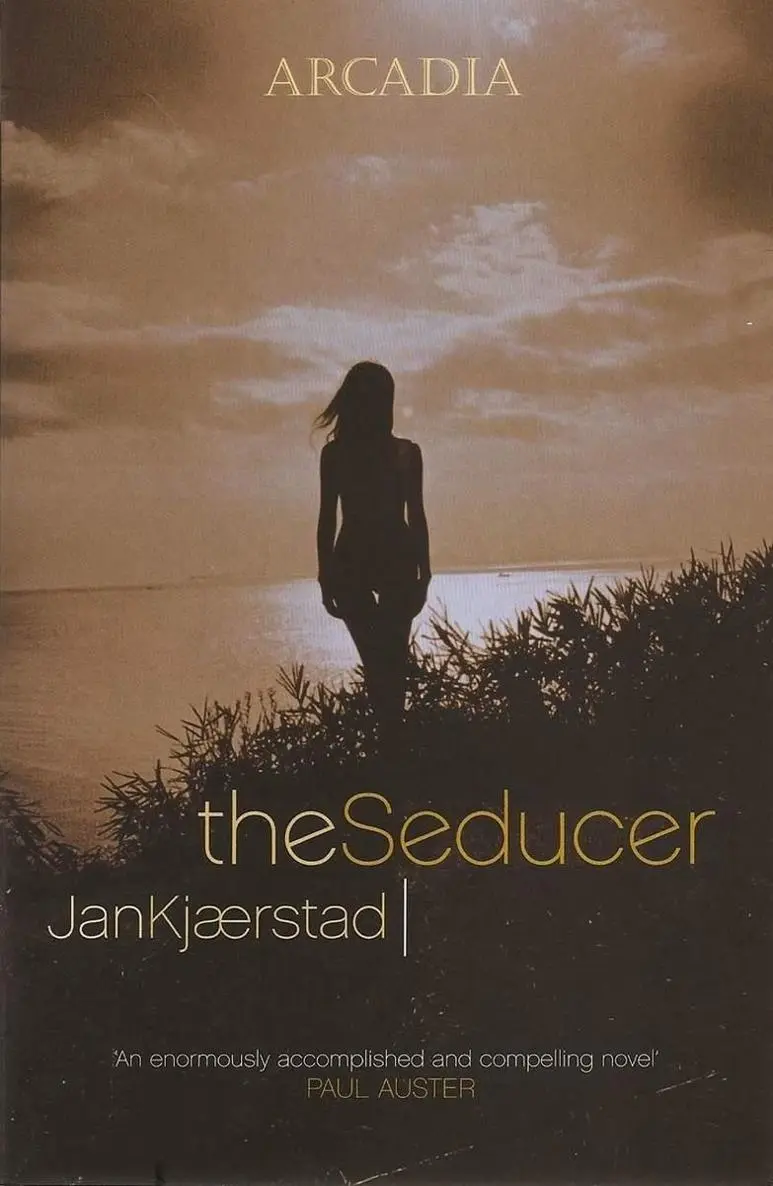
- Название:The Seducer
- Автор:
- Издательство:Overlook
- Жанр:
- Год:2006
- ISBN:нет данных
- Рейтинг книги:5 / 5. Голосов: 1
-
Избранное:Добавить в избранное
- Отзывы:
-
Ваша оценка:
The Seducer: краткое содержание, описание и аннотация
Предлагаем к чтению аннотацию, описание, краткое содержание или предисловие (зависит от того, что написал сам автор книги «The Seducer»). Если вы не нашли необходимую информацию о книге — напишите в комментариях, мы постараемся отыскать её.
The Seducer — читать онлайн бесплатно полную книгу (весь текст) целиком
Ниже представлен текст книги, разбитый по страницам. Система сохранения места последней прочитанной страницы, позволяет с удобством читать онлайн бесплатно книгу «The Seducer», без необходимости каждый раз заново искать на чём Вы остановились. Поставьте закладку, и сможете в любой момент перейти на страницу, на которой закончили чтение.
Интервал:
Закладка:
So what do you do when you are desperate? Or, to put it another way, how heavy is love?
Jonas stands in the bathroom doorway, contemplating the tall, narrow ton-weight of the oak cabinet rearing up between the washbasin and the toilet, the only piece of furniture his mother had brought with her from her childhood home in Gardermoen; and there, more importantly, are the seven bottles of precious aftershave lotion, ranged along the uppermost shelf. Jonas grips the sides of the doorway, his parents’ words ringing in his ears; he feels grief and fury melding, endowing him with a strength of untold dimensions, so great that he makes up his mind to throw that bloody great junk heap of a cabinet out of the bathroom window, a little peephole no more than thirty centimetres square. After all, if man has the muscle power to jump over a building, surely it must also be possible to lift a tall massive cabinet about as heavy as a piano and chuck it out of a window that is too small. After all, the most unlikely things are forever happening. With that, he strides resolutely across to the cabinet, gets his arms round it and actually manages to lift this colossal chunk of oak off the floor, as if he were pulling the Norwegian national tree itself up by the roots and not only that; with a savage roar he also succeeds in throwing, or somehow ramming, the cabinet into the tiny square window high up in the wall: a wonderful cathartic moment as he feels the agonizing implosion transformed into an explosion, the result being that the cabinet crashes into the wall with an infernal bang, shattering the shelf of National Geographics before smashing to the floor, where every article of glass shatters into a million pieces, and Jonas goes on seething for a few seconds more over everything and anything, not least the fact that he did not manage to hurl that cabinet through the little peephole hard enough to send bricks flying in all directions.
Inasmuch as the bathroom in many ways was the flat’s holy of holies, a chamber of dreams both for his mother and his father, Jonas had the great satisfaction of feeling that with this gesture of protest he had killed two birds with one stone. Years of National Geographics lay scattered across the floor, littered with broken glass and spattered with a good few decilitres of scent. Jonas, on the other hand, was safe; the crisis had passed: his destructive energy had, as it were, been burnt off.
How heavy is love? At least 150 kilos I would say. For some days afterwards, Jonas was painfully aware that he had strained himself badly. But better to have aching kidneys than an aching heart. And in any case: it is not every day one has the satisfaction of killing seven lovers with one lethal blow.
What Price Beauty
The bathroom in the new villa was of course quite a different story. It had a red fired-brick floor complete with under-floor heating, gleaming white tiles on the walls with a chequered border in ultramarine designed by Aunt Laura and copied, according to her, from the dome of a mosque in Samarkand. Everything was bigger — the bath, the washbasin, the whole room in fact — which meant that there was also space for a shower cabinet and this, together with the ferns, quite a little rain-forest of them, lent the bathroom an air of sheer luxury, an impression which Jonas crowned by installing a bidet when he took over the house. There were times, sitting on the toilet, when Jonas fell to contemplating the astonishingly rapid rate of social change in twentieth-century Norway: the leap from his grandfather’s naturally aromatic outside privy on Hvaler, by way of the tiny bathroom in the block of flats at Solhaug, to this sumptuous, one might almost say international, chamber in the new house with its generous expanse of mirror and fittings worthy of any number of design awards — the equivalent of making the leap from Stone Age to Atomic Age within a couple of generations. It should be said, however, that they did retain the shelf of National Geographics , the only difference being that the old scent-spattered copies had been replaced by newer issues. Theodor Kittelesen’s picture of Soria Moria Castle also hung in its place on the wall, clearly visible from the toilet seat. Which reminds me that I never did finish the story of Jonas and his grandmother and their activities within the Norwegian fine-art market: a story which has both a moral and a happy ending.
Åse and Haakon Hansen had been on the look-out for some time for a bigger house, although they still had ample room where they were even after Buddha came along, Rakel having left home around the same time. But they had fallen prey to that dream common to all Norwegians: the dream of a house of one’s own, as if the fact of no longer having to live through the wall from anyone else represented the last lap on the road to happiness, a legacy of sorts from the days when every Norwegian inhabited his own valley with high hills between him and his nearest neighbours. Which is why, when a plot of land on the other side of Bergensveien came their way, only a stone’s throw from the block of flats in which they lived, they jumped at the chance and hence — typically — were only just starting to realize their dream of having their own house as Jonas and Daniel, too, were about to leave the nest.
Jonas’s parents hired an architect to draw up plans for a simple house, a house they could afford, but even this proved to be beyond their means. The building, which extended upwards and outwards and would later be dubbed ‘Villa Wergeland’, looked like remaining as out of reach as Soria Moria Castle, to stick with Kittelsen for the moment, the building costs proving to be far greater than anyone had expected — double in fact. Unlike the men behind a number of subsequent, much publicized Norwegian building projects, however, Åse and Haakon Hansen discovered this at an early stage. They obtained a number of estimates from an obliging builder, at no obligation, and very quickly figured out that such an outlay was more than they could afford.
One Sunday when the whole family was, for once, having dinner together in the flat at Solhaug — cold roast pork as usual on such occasions — Jonas’s father explained the situation to the children, with a lot of fiddling and fidgeting, and announced that sadly they would have to shelve their plans for a house of their own. At that very moment, while all of them were feeling pretty glum and even Åse’s crooked smile had been wiped off, the doorbell rang and there stood Jonas’s grandmother, Jørgine Wergeland, who had long since read the signs in telephone conversations with her daughter.
It had been a while since any of them had seen her. Jørgine had gone through a lengthy spell of being Winston Churchill — a magnificent Winston Churchill, I might add — but the word was that in recent years she had gone back to being herself, which is to say an ordinary, one-time farmer’s wife from Gardermoen sitting reminiscing in the kitchen in Oscars gate or down by the pond in Slottsparken, chatting away quite normally to other old folk.
‘Dearie me, you’re a right cheery-looking lot!’ Jonas’s grandmother wasted no time. She asked them to sit themselves down in the sofa nook, she asked for a glass of port, she asked them all to relax.
Then she laid a cheque on the table, made out to Jonas’s mother, Åse Hansen.
‘There you go, and good luck to you.’ She raised the glass of port, winked at them all, even Buddha, who was gazing in wonder at the three deep creases in her forehead.
Jonas’s mother was completely nonplussed. ‘That’s an awful lot of money,’ was all she said.
‘True, but then what would I do with it?’ said his grandmother.
‘But how did you come by it, mother? You haven’t been doing anything illegal, have you?’
Читать дальшеИнтервал:
Закладка:
Похожие книги на «The Seducer»
Представляем Вашему вниманию похожие книги на «The Seducer» списком для выбора. Мы отобрали схожую по названию и смыслу литературу в надежде предоставить читателям больше вариантов отыскать новые, интересные, ещё непрочитанные произведения.







Обсуждение, отзывы о книге «The Seducer» и просто собственные мнения читателей. Оставьте ваши комментарии, напишите, что Вы думаете о произведении, его смысле или главных героях. Укажите что конкретно понравилось, а что нет, и почему Вы так считаете.