Peter Buwalda - Bonita Avenue
Здесь есть возможность читать онлайн «Peter Buwalda - Bonita Avenue» весь текст электронной книги совершенно бесплатно (целиком полную версию без сокращений). В некоторых случаях можно слушать аудио, скачать через торрент в формате fb2 и присутствует краткое содержание. Год выпуска: 2015, ISBN: 2015, Издательство: Crown Publishing Group, Жанр: Современная проза, на английском языке. Описание произведения, (предисловие) а так же отзывы посетителей доступны на портале библиотеки ЛибКат.
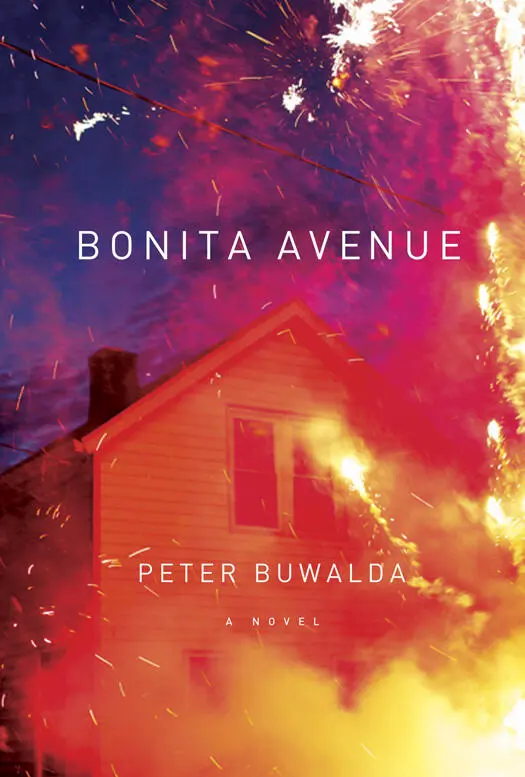
- Название:Bonita Avenue
- Автор:
- Издательство:Crown Publishing Group
- Жанр:
- Год:2015
- ISBN:978-0-553-41786-9
- Рейтинг книги:4 / 5. Голосов: 1
-
Избранное:Добавить в избранное
- Отзывы:
-
Ваша оценка:
Bonita Avenue: краткое содержание, описание и аннотация
Предлагаем к чтению аннотацию, описание, краткое содержание или предисловие (зависит от того, что написал сам автор книги «Bonita Avenue»). Если вы не нашли необходимую информацию о книге — напишите в комментариях, мы постараемся отыскать её.
A riveting portrait of a family in crisis and the ways that even the smallest twists of fate can forever change our lives,
is an incendiary, unpredictable debut of relationships torn asunder by lies, and minds destroyed by madness.
Bonita Avenue — читать онлайн бесплатно полную книгу (весь текст) целиком
Ниже представлен текст книги, разбитый по страницам. Система сохранения места последней прочитанной страницы, позволяет с удобством читать онлайн бесплатно книгу «Bonita Avenue», без необходимости каждый раз заново искать на чём Вы остановились. Поставьте закладку, и сможете в любой момент перейти на страницу, на которой закончили чтение.
Интервал:
Закладка:
Now .
First the cement sidewalk, then with five long strides diagonally across the asphalt, don’t look back or around, the apartment is getting bigger, casts a shadow. He jumps up onto the massive concrete container like a baboon, bags of smoldering garbage bulge out from under the metal lids. Don’t think, act . Why does he keep seeing himself? A naked man clambers over the squeaking lids, curls his toes over the edge of the concrete. He estimates the height: a meter and a half separates him from the railing of the nearest balcony. If he loses his grip he’ll land in somebody’s front yard. He flies, he’s a flying monkey! He’ll make noise. They’re watching football. His knees bang against the pastel-colored panel, his fingers grasp, one hand flies loose, the other grabs the edge of the rail. His body dangles, stretches. His weight pulls on the fingers of his right hand, it feels as though his shoulder is being torn open even farther, as though the skeleton will glide out of his skin, he throws his second hand over the railing. For a moment he hangs totally motionless, his belly pressed against the warm panel. Cutting straight through the pain is the vision of himself dangling there; the disgust energizes him. He’s hung on a high bar plenty of times, did the parallel bars, the pommel horse: he was the best gymnast of them all, better than Snijders, better than Geesink — but that was forty years ago. He pulls himself up with all his might, works himself up until his elbows are locked. The balcony door is closed, the apartment is dark. He swings his left leg over the railing, clambers over, lands on the cool concrete floor. He crouches behind the panel.
He sits like this for a while, panting like after a fight, his good shoulder against the panel, staring at his toes on the concrete. Wait a bit. If someone is home, then they’ll have heard him, the door will fly open any second. He waits. His breathing relaxes, from the neighboring balconies comes the reassuring sound of the football match. Has anyone seen him? On the street? Good chance that the police are on their way. His right shoulder is bleeding again, dripping blood onto the concrete. He inspects the bottom of his foot. In the ball of the foot, just back from his big toe, is a star-shaped hole. It is his short leg: feeling never really returned to his foot after the scooter accident. Now he doesn’t regret it. He pulls out a splinter of glass. New blood wells up.
He gradually persuades himself that no one is home. He looks around, this time in more detail: the balcony is a meter or so deep and runs the breadth of the apartment. To his right is a dark-red door. From a crouch he can just peek into the living room: a green-and-white plaid sofa opposite an old bulky television; farther in, an ironing board and behind it, a kitchenette. A student flat? What would be worse, he wonders: a Tubantia student who recognizes him or a regular Enschede resident face-to-face with a dangerous lunatic?
On the balcony itself there are two plastic chairs, alongside them three empty Grolsch swing-top bottles and in the far corner boxes of waste paper. Opposite the boxes, a yellow drying rack hangs on the railing: laundry . He crawls past a chair toward it. Two dishcloths, a towel, a pair of pink and black ladies’ socks, a pair of red knee-length men’s swim trunks. He wriggles out of the panties and, still sitting, puts on the bathing suit. A wave of euphoria and relief streams through him. He stuffs the panties in one of the back pockets. He lays the drier of the two dishcloths over the wound on his shoulder and ties it with endless fumbling under his armpit. Having no other choice, he tugs the stiffly dried socks onto his feet.
Then he lies down on his back. The concrete supports his weary body. He lies like this for maybe half an hour. The panel doesn’t extend all the way to the floor, if he rests his chin against his bandaged shoulder he can peer through the gap. By turning slightly farther onto his side and pressing his chin farther into his flesh, he can even see Aaron’s house. In the distance he sees the shrubbery at the foot of the path and the top of the front door. Heavy with regret, he looks at it for a while. He gradually becomes calmer, his reasoning takes form. How big was this coincidence? he wonders. The chance of being caught like that? Caught at the most wretched moment of his life. The modulations of fate: coincidences are usually smaller than you’d think, the football match he’d just thanked his lucky stars for probably played a role in his downfall. Undoubtedly. Without the soccer alibi he wouldn’t have even come here tonight, not at this exact time — and knowing those two, the same is true for them. They drove here with the match in mind. Switched on the TV the minute they got home.
Above and alongside him, a new outbreak of cheering. Although he feels relatively safe on this balcony — it gives him a rudimentary sense of security — he’s itching for it to get dark. It’s his younger sister’s birthday. The longest day of the year. Any thoughts about the consequences — what does all this mean for Joni and him, for his family? — he tries to postpone. I’ve got the longest birthday, Ankie always said. Get these old bones of his into his own bed.
But time on this stranger’s balcony clots, the events repeat themselves like TV clips, immutably sharp, he keeps seeing himself crash through that glass door. And with each rerun of that image he realizes what Joni saw, and he wonders how grim her conclusions are. Disastrous, for sure.
• • •
It gets dark, finally. A breeze brings him the first goose bumps of the evening. He prepares to lower his bruised body off the balcony. By way of disguise he wraps the second dishcloth around his head. He knows which getaway route he’ll take, but his patience is being tested once again: the match is over, their team has obviously won. People begin to stream outdoors. From all sides he hears men talking excitedly, a car door slams. Wait until things die down again. But: the chance that the resident of this apartment thanks his hosts for the fun evening and climbs onto his bike — he’s already up. Without feeling his body, without feeling the concrete under his feet, without touching the railing, without touching the grass on which he lands, he’s standing in front of the apartment, and immediately breaks into a run. He scuttles off like a rat, scoots along the fencing toward the Deurningerstraat, ducks into the peaceful residential neighborhood.
His foot strains and stings, but the pain has a cleansing effect, he stays as much as possible in the ever-deepening shadows. In a pinch, he decides, he’ll feign drunkenness. He keeps walking, each step is a step closer to home. Cyclists pass him without so much as a second look, nobody pays him any notice. The sole of his foot is killing him, but pain has meanwhile risen up into his calf. He chooses quiet streets, walks past elegant houses with the curtains drawn. When he reaches the Horstlindelaan he feels a guarded sense of relief. He sits down on a bench but springs back up again.
It’s a strange sensation, as the landscape passes him slowly by, his bare chest exposed to the mild summer evening, this walk puts nearly everything in a different perspective, the immediate contact of his feet with the earth, the gravelly asphalt, the spongy moss on the edge of the road. The starry night sky is perfectly clear, his eyes seem more sensitive than usual, he reads the surroundings like a night animal. He hears a marten burrowing under a bush, in the yellow light of the moon the trees and meadows seem more intensely colored than before.
It’s the second time, damn it. The second time in his life he’s been caught with his pants down. And just as it did back then, the foundation of his life has shifted. As he walks along the wooded path to the campus like a criminal he thinks back on the other time he was caught red-handed. Maybe he’s recalling Tineke’s long-ago birthday party in Utrecht in order to distract his short-term memory. Tineke Beers-Profijt she was called back then — the very idea that his wife was once married to the downstairs neighbor. He and Margriet had been invited; together with about fifteen other neighbors and friends they sat in the ground-floor flat inhabited by Tineke and that vague husband of hers, a weekday cocktail party for the neighbors and colleagues from her furniture workshop; wine, beer, and Campari and funnily enough Tineke’s sister from Amersfoort kept putting on yet another LP by Mojo Mama, Theun’s band, he never saw him anymore, a curious choice of music, Theun was conspicuously absent, as though he hadn’t been invited to his own wife’s birthday party, or, more likely, just didn’t bother showing up. This was Tineke’s midseventies rock ’n’ roll marriage.
Читать дальшеИнтервал:
Закладка:
Похожие книги на «Bonita Avenue»
Представляем Вашему вниманию похожие книги на «Bonita Avenue» списком для выбора. Мы отобрали схожую по названию и смыслу литературу в надежде предоставить читателям больше вариантов отыскать новые, интересные, ещё непрочитанные произведения.









Обсуждение, отзывы о книге «Bonita Avenue» и просто собственные мнения читателей. Оставьте ваши комментарии, напишите, что Вы думаете о произведении, его смысле или главных героях. Укажите что конкретно понравилось, а что нет, и почему Вы так считаете.