Marilynne Robinson - Home
Здесь есть возможность читать онлайн «Marilynne Robinson - Home» весь текст электронной книги совершенно бесплатно (целиком полную версию без сокращений). В некоторых случаях можно слушать аудио, скачать через торрент в формате fb2 и присутствует краткое содержание. Год выпуска: 2008, Издательство: Farrar, Straus and Giroux, Жанр: Современная проза, на английском языке. Описание произведения, (предисловие) а так же отзывы посетителей доступны на портале библиотеки ЛибКат.
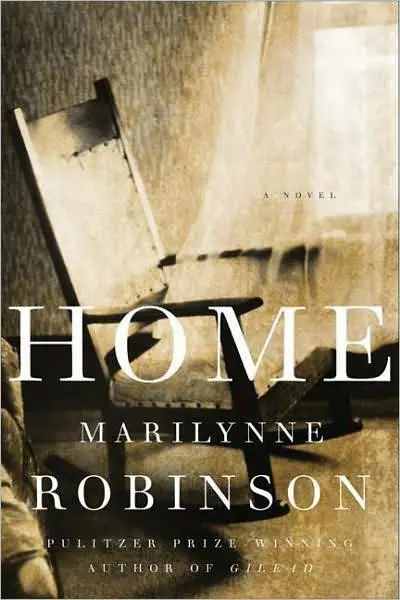
- Название:Home
- Автор:
- Издательство:Farrar, Straus and Giroux
- Жанр:
- Год:2008
- ISBN:нет данных
- Рейтинг книги:3 / 5. Голосов: 1
-
Избранное:Добавить в избранное
- Отзывы:
-
Ваша оценка:
Home: краткое содержание, описание и аннотация
Предлагаем к чтению аннотацию, описание, краткое содержание или предисловие (зависит от того, что написал сам автор книги «Home»). Если вы не нашли необходимую информацию о книге — напишите в комментариях, мы постараемся отыскать её.
, Marilynne Robinson's Pulitzer Prize — winning novel.
is an entirely independent, deeply affecting novel that takes place concurrently in the same locale, this time in the household of Reverend Robert Boughton, Ames's closest friend.
Glory Boughton, aged thirty-eight, has returned to Gilead to care for her dying father. Soon her brother, Jack — the prodigal son of the family, gone for twenty years — comes home too, looking for refuge and trying to make peace with a past littered with tormenting trouble and pain.
Jack is one of the great characters in recent literature. A bad boy from childhood, an alcoholic who cannot hold a job, he is perpetually at odds with his surroundings and with his traditionalist father, though he remains Boughton’s most beloved child. Brilliant, lovable, and wayward, Jack forges an intense bond with Glory and engages painfully with Ames, his godfather and namesake.
Home
Home — читать онлайн бесплатно полную книгу (весь текст) целиком
Ниже представлен текст книги, разбитый по страницам. Система сохранения места последней прочитанной страницы, позволяет с удобством читать онлайн бесплатно книгу «Home», без необходимости каждый раз заново искать на чём Вы остановились. Поставьте закладку, и сможете в любой момент перейти на страницу, на которой закончили чтение.
Интервал:
Закладка:
“It won’t. Not over something so minor. No one is going to upset Papa over a robbery at the dime store. You know I’m right, Jack. We’ve worried about this way too much.”
“Yes,” he said. “Perspective. Thank you, Glory. I’d forgotten what it’s like to have anyone give a damn who my father is.”
She said, “If you feel he’s so worried about you, have you ever considered — just to ease his mind—?”
He looked at her. “Lying to the old fellow? About the state of my soul?” He laughed and rubbed his eyes. He said, “Ah, Glory, what would I be then?”
“Forgive me. It was just a thought.”
After a minute he said, “You remember that lady I mentioned, the one who had a good effect on my character. She was very pious — still is, no doubt. Very virtuous. I actually asked her father for her hand in marriage. He was aghast. Really horrified. Religion was one part of it. My not having any. I wished very much at the time that I could have been, you know, a hypocrite. But I just didn’t have it in me. My one scruple. And it has cost me dearly.” He considered. “No, if I were being honest, I’d have to say he despised me on other grounds as well. Religion first and foremost, of course. He was a man of the cloth. Is.” He laughed. “I fell a little in my own estimation. I don’t know what I could have expected his reaction to be. Something less emphatic, I suppose.” He said, “I don’t know why I told you that story, except maybe to let you know I do have one scruple. I’m not sure I should be as confident as I am that there is a difference between hypocrisy and plain old dishonesty. Though I have noticed that thieves are crucified and hypocrites seem not to be. And from time to time I have taken up my cross—” He laughed. “Not lately, you understand.” He looked at her. “Sorry. No disrespect intended. I’m not a hypocrite. That was my point.”
“I know you aren’t. I shouldn’t have suggested—”
“A fraud, perhaps. I’ll have to grant you that.” He smiled.
“I didn’t accuse you of anything. If I were in your place I might be tempted, but you’re right. I’m sorry I brought it up.”
He nodded. “If I thought I could get away with it, I might be tempted, too,” he said. “But I’ve been taking stock. These gray hairs. This battered visage. These frayed cuffs. I’ve had to admit that I’m not a very good liar, Glory. A lifetime more or less given over to dishonesty, and I have very little to show for it. It wouldn’t be a kindness for me to lie to him, because I know he wouldn’t believe me. If he still has a shred of respect for me — well, you see what I mean. I wouldn’t want him to lose it.”
“I find it hard to believe these things you say about yourself, Jack.”
He laughed. “‘All Cretans are liars.’ Feel free to doubt me, if you want to. It gives me a sort of reprieve, I guess. But you see my problem. I can never persuade anyone of anything.”
“I’m persuaded,” she said. “Not of anything in particular, I suppose. Except that you’re very hard on yourself.”
He nodded. “Yes, I am. For all the good it does me.” There was a silence.
“Well,” she said, “I wouldn’t care if you were a petty thief.”
He smiled. “That’s very subjunctive of you.”
“All right. I don’t care if you are a petty thief.”
He said, “Thanks, Glory. That’s kind.”
He did not show her the newspaper article, the mention of thirty-eight dollars, and she did not ask to see it.
GLORY WENT TO THE HARDWARE STORE TO TELL THEM they would keep the Philco, and to ask them to install an antenna. When she came back she looked for Jack around the house, then found him in the barn, oiling the blade of a scythe, of all useless and forgotten things. She said, “I went to the hardware store to ask them to put up an antenna. They kept me there for an hour. But they did tell me who it was that stole that money from the dime store. Some high school kids. Good kids, they said. That’s why there was never anything about it in the paper. It was a prank, I guess. Then one of the boys had an attack of conscience and fessed up.”
Jack laughed. “How nice of them to tell you! I wonder how they knew you would be interested.”
“Oh well. It’s one less thing to worry about.”
“True,” he said. “In a sense that’s true. For the moment.”
THE NEXT MORNING JACK OFFERED TO READ TO HIS father, and the old man was pleased. “Yes!” he said, “that will pass the time!” So they thought they might make a custom of taking him into the porch early every morning, after he was bathed and shaved, when the warmth would be tolerable to him, and the breeze would be pleasant.
“What would you like to hear?” Jack asked. “We’ve got The Condition of the Working Class in England .”
The old man shook his head. “Read it in seminary,” he said. “It was very interesting, but as I remember, the point was clear. I don’t feel I need to return to it. I’m surprised we still have it. I thought I gave my copy to the library.”
Jack laughed and glanced at her. He said, “Here’s one Luke sent. Something of Value . It’s about Africa.”
His father nodded. “I had a considerable interest in Africa,” he said. “At one time.”
Glory said, “Luke sent me a note about that one. He says the critics raved.”
Jack said, “I’m a little bit interested in Africa, myself.”
“Yes, well, Mozambique, Cameroon, Madagascar, Sierra Leone. Beautiful names. When I was a boy I used to think I’d go there someday. We can read that one.”
“It’s about Kenya.”
“Well, that’s fine, too.”
Jack lowered his head and began to read, leaning over the book almost prayerfully. He smiled at the parts he liked—“‘Somewhere out of sight a zebra barked, and along the edge of a stream a baboon cursed.’” Teddy used to say Jack was the bright one, that he, Teddy, was only conscientious. And in fact there was a kind of grace to anything Jack did with his whole attention, or when he forgot irony for a while. It was always a little surprising because it was among the things about himself he shrugged off, concealed when he could. But his voice was mild and warm, courteous to the page he read from, and his father looked at her and lifted his brows, the old signal that meant, He is wonderful when he wants to be. Really wonderful.
The old man laughed over the cook’s pagan version of “Jesus Wants Me for a Sunbeam,” listened with interest to the household arrangements of the McKenzies, marveled at the killing of the elephants, and nodded off. Jack continued reading to himself. He said, “I think I can see how this is going to end.” He turned to the last few pages. “Yes.” He read, “‘Peter hunched his shoulders close to his neck and took a deep, sobbing breath and squeezed. Kimani’s tongue came all the way out past his teeth, and his eyes suffused in blood as the tiny vessels broke. There was a slight crick and then a sharp crack, as if a man had trodden on a dry stick, and Kimani’s body went limp.’”
Their father roused himself. “Kimani is that child he’s playing with at the beginning, isn’t he? Those two children are playing together.”
Jack nodded.
“I guess he killed him.”
Jack closed the book. “I guess he did.”
“A pity,” the old man said. “That seems to be how it is, though. So much bad blood. I think we had all better just keep to ourselves.”
Jack laughed. “I have certainly heard that sentiment before,” he said. “I know a good many people who agree with you about that, believe me.”
“Yes. We might want to try another book, Jack, don’t you think? It seems there’s nothing in that one that’s going to surprise us.”
Читать дальшеИнтервал:
Закладка:
Похожие книги на «Home»
Представляем Вашему вниманию похожие книги на «Home» списком для выбора. Мы отобрали схожую по названию и смыслу литературу в надежде предоставить читателям больше вариантов отыскать новые, интересные, ещё непрочитанные произведения.




Обсуждение, отзывы о книге «Home» и просто собственные мнения читателей. Оставьте ваши комментарии, напишите, что Вы думаете о произведении, его смысле или главных героях. Укажите что конкретно понравилось, а что нет, и почему Вы так считаете.