Marilynne Robinson - Home
Здесь есть возможность читать онлайн «Marilynne Robinson - Home» весь текст электронной книги совершенно бесплатно (целиком полную версию без сокращений). В некоторых случаях можно слушать аудио, скачать через торрент в формате fb2 и присутствует краткое содержание. Год выпуска: 2008, Издательство: Farrar, Straus and Giroux, Жанр: Современная проза, на английском языке. Описание произведения, (предисловие) а так же отзывы посетителей доступны на портале библиотеки ЛибКат.
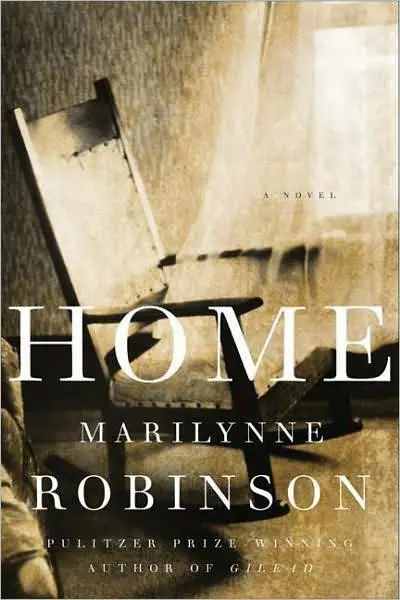
- Название:Home
- Автор:
- Издательство:Farrar, Straus and Giroux
- Жанр:
- Год:2008
- ISBN:нет данных
- Рейтинг книги:3 / 5. Голосов: 1
-
Избранное:Добавить в избранное
- Отзывы:
-
Ваша оценка:
Home: краткое содержание, описание и аннотация
Предлагаем к чтению аннотацию, описание, краткое содержание или предисловие (зависит от того, что написал сам автор книги «Home»). Если вы не нашли необходимую информацию о книге — напишите в комментариях, мы постараемся отыскать её.
, Marilynne Robinson's Pulitzer Prize — winning novel.
is an entirely independent, deeply affecting novel that takes place concurrently in the same locale, this time in the household of Reverend Robert Boughton, Ames's closest friend.
Glory Boughton, aged thirty-eight, has returned to Gilead to care for her dying father. Soon her brother, Jack — the prodigal son of the family, gone for twenty years — comes home too, looking for refuge and trying to make peace with a past littered with tormenting trouble and pain.
Jack is one of the great characters in recent literature. A bad boy from childhood, an alcoholic who cannot hold a job, he is perpetually at odds with his surroundings and with his traditionalist father, though he remains Boughton’s most beloved child. Brilliant, lovable, and wayward, Jack forges an intense bond with Glory and engages painfully with Ames, his godfather and namesake.
Home
Home — читать онлайн бесплатно полную книгу (весь текст) целиком
Ниже представлен текст книги, разбитый по страницам. Система сохранения места последней прочитанной страницы, позволяет с удобством читать онлайн бесплатно книгу «Home», без необходимости каждый раз заново искать на чём Вы остановились. Поставьте закладку, и сможете в любой момент перейти на страницу, на которой закончили чтение.
Интервал:
Закладка:
“I believe I’ll go out for a little walk,” she said. It was late enough to have made her father worry, if he had been paying attention. But he was consulting with Jack about the crossword puzzle.
She was afraid to be angry, and that made her angry. What right did he have to take over the house this way? Granting he had as much claim to it as she did, the only difference being that she had spent some months caring for the house and her father before he arrived. Now he seemed inclined to help with the old man, too, and he did it well, and as if something were communicated in it that made it more a gracious ceremony than the acting out of duty or obligation. A tacit agreement had formed between the two men that Jack would help his father with the bathing and changing that had been the uneasiest part of her caring for him, and that was a great relief, since he had been reluctant to accept the attention he needed. The fact was that she had taken comfort from the thought that her duty was plain and that a sense of obligation was becoming in anyone and so on. But things were better with Jack in the house.
“Insinuating” is an ugly word, snakey. She’d have thought of a better one if she could. He had resumed his place in his father’s heart, that was clear. She believed that in twenty years there might have been four letters, because when she was newly returned to her father’s house she went to the big Bible with the altogether blameless intention of soothing her mind with a psalm or two, and the Bible opened on four letters, tucked between the Testaments. The envelopes were worn enough to make her think the letters might have some family interest, but when she saw the return addresses, she put them back unread. Whatever had passed between father and son, their father had not seen fit to tell any of the rest of them, at least as far as she knew. Jack had ceased to be spoken of, almost. Now here he was, without a word of explanation, crowding her out of that big, empty house, or so it seemed to her sometimes. I should leave, she told herself once or twice, to savor the thought of their surprise, their regret. What a childish idea. Then Jack would leave, no doubt, so that she would come back, as she would have to do, and her father would be plunged in sorrow of which she was directly the cause, and which would not end in this life.
She was less inclined to pray than she had been once. In her childhood, when her father, a tall man then and graceful, had stepped into the pulpit and bowed his head, silence came over the people. He prayed before the commencement of prayer. May the meditations of our hearts be acceptable. It seemed to her that her own prayers never attained to that level of seriousness. They had been desperate from time to time, which was a different thing altogether. Her father told his children to pray for patience, for courage, for kindness, for clarity, for trust, for gratitude. Those prayers will be answered, he said. Others may not be. The Lord knows your needs. So she prayed, Lord, give me patience. She knew that was not an honest prayer, and she did not linger over it. The right prayer would have been, Lord, my brother treats me like a hostile stranger, my father seems to have put me aside, I feel I have no place here in what I thought would be my refuge, I am miserable and bitter at heart, and old fears are rising up in me so that everything I do makes everything worse. But it cost her tears to think her situation might actually be that desolate, so she prayed again for patience, for tact, for understanding — for every virtue that might keep her safe from conflicts that would be sure to leave her wounded, every virtue that might at least help her preserve an appearance of dignity, for heaven’s sake. She did wonder what the neighbors thought, if anyone saw her in the street at that hour. Something fairly near the mark, no doubt.
As she considered the prayer she was not yet disconsolate enough to put into words, the unwelcome realization came to her that she loved Jack and yearned for his approval. This was no doubt inevitable, since it was assumed to be true of the whole family, separately and together, excluding in-laws, who might never have met him or even heard his name, and who could only be a little amazed by the potency of this collective sentiment if by some means they became aware of it. He was the black sheep, the ne’er-do-well, unremarkable in photographs. None of the very few stories that mentioned him suggested the loss of him could have been wholly regrettable. It was the sad privilege of blood relations to love him despite all. Glory was thirteen when he left for college, having been by that time ignored by him for years. And here she was in middle age feeling the fact of his touchy indifference a judgment on her, so it seemed to her, though he had been so grievously at fault, and her intrusions all those years ago, her excesses, whatever he might have called them, were no such thing — she had defended them in her mind a thousand times and would defend them to his face if the occasion ever arose, which God forbid, God forbid.
The thought had occurred to her more than once, even before the gradual catastrophe of her own venture into the world had come to an end, that “despite all” was a dangerous formula, and that the romance of absence was a distraction from more sustaining joys. Those years of her late childhood, when she felt so necessary, when she was so sure things would come right if only enough effort was given to making them come right — those years stayed with her as if they had been the whole of her life. The others hadn’t even known — not Faith, not Teddy. Her father said it was Jack’s choice to tell them or to be silent, since he might feel still less at ease with them if they knew, and not seek them out if the need arose. He might not come home when they came home, at Christmas and Thanksgiving. Her father told her with tears in his eyes that the three of them could alleviate Jack’s guilt and also his shame by making the very best of the situation. So she took up knitting. It was a deep secret. They were at work on a great rescue. Her parents talked freely to her or in her hearing about it all, trusted her, and she never breathed a word except to old Ames, whose discretion was perfect. It embarrassed her to remember how happy she had been, those three bitter, urgent years until it all ended. Her brother would never know the thousand things she had done to make life tolerable for him.
Brothers. When she was a child, attention from any of her brothers was wonderful to her. It was rare, and it was wry, odd, not at all parental. Even Grace, who was older than she was by less than two years, tried sometimes to mother her, and Faith and Hope — such names! — were irksomely mature and responsible. But when any of the brothers noticed her, it was to swing her around by her hands or to carry her on his back or to show her a card trick or the husk of a cicada. When the boys had all gotten their growth, they were within an inch of one another in height, lanky young fellows with angular faces and unruly hair. Luke had left for school when she was four, Dan when she was seven. Jack and Teddy left the same year, the year she was thirteen, since Teddy was so good in school that he had skipped two grades. So when they were at home together, in the summer and at holidays, they took a conscious pleasure in it, and this was truer as the younger boys were recruited into the ranks of the fully grown. They joked and sparred and took off together in Luke’s old Ford, sometimes even to Des Moines, Jack with them if he could be cajoled. They were vain of their freedom and their manhood, of their cleverness and their long legs, but gentlemanly all the same, and vain of that, too. Their mother called them the princes of the church, and they did look fine, strolling into the sanctuary together in their jackets and ties, Bibles in hand, the three of them, and then sometimes the fourth. They said things like volo, nolo , and de gustibus and “Let me not to the marriage of true minds,” and she was in awe of them. Seeing Jack reminded her of those days. She knew the others now, after the manner of adult friendship. And fond as she was of them, it was hard to remember that they had ever seemed marvelous to her. But Jack was as remote from her as he ever had been, and she found herself waiting again for notice and approval, to her own considerable irritation.
Читать дальшеИнтервал:
Закладка:
Похожие книги на «Home»
Представляем Вашему вниманию похожие книги на «Home» списком для выбора. Мы отобрали схожую по названию и смыслу литературу в надежде предоставить читателям больше вариантов отыскать новые, интересные, ещё непрочитанные произведения.








Обсуждение, отзывы о книге «Home» и просто собственные мнения читателей. Оставьте ваши комментарии, напишите, что Вы думаете о произведении, его смысле или главных героях. Укажите что конкретно понравилось, а что нет, и почему Вы так считаете.