Daniel Alarcon - Lost City Radio
Здесь есть возможность читать онлайн «Daniel Alarcon - Lost City Radio» весь текст электронной книги совершенно бесплатно (целиком полную версию без сокращений). В некоторых случаях можно слушать аудио, скачать через торрент в формате fb2 и присутствует краткое содержание. Год выпуска: 2008, Издательство: Harper Perennial, Жанр: Современная проза, на английском языке. Описание произведения, (предисловие) а так же отзывы посетителей доступны на портале библиотеки ЛибКат.
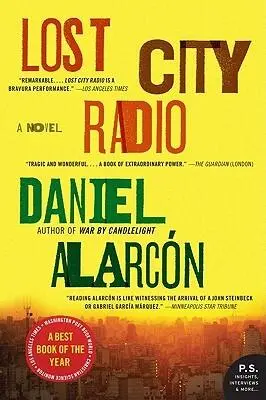
- Название:Lost City Radio
- Автор:
- Издательство:Harper Perennial
- Жанр:
- Год:2008
- ISBN:нет данных
- Рейтинг книги:4 / 5. Голосов: 1
-
Избранное:Добавить в избранное
- Отзывы:
-
Ваша оценка:
Lost City Radio: краткое содержание, описание и аннотация
Предлагаем к чтению аннотацию, описание, краткое содержание или предисловие (зависит от того, что написал сам автор книги «Lost City Radio»). Если вы не нашли необходимую информацию о книге — напишите в комментариях, мы постараемся отыскать её.
, she reads the names of those who have disappeared — those whom the furiously expanding city has swallowed. Through her efforts lovers are reunited and the lost are found. But in the aftermath of the decadelong bloody civil conflict, her own life is about to forever change — thanks to the arrival of a young boy from the jungle who provides a cryptic clue to the fate of Norma's vanished husband.
Lost City Radio — читать онлайн бесплатно полную книгу (весь текст) целиком
Ниже представлен текст книги, разбитый по страницам. Система сохранения места последней прочитанной страницы, позволяет с удобством читать онлайн бесплатно книгу «Lost City Radio», без необходимости каждый раз заново искать на чём Вы остановились. Поставьте закладку, и сможете в любой момент перейти на страницу, на которой закончили чтение.
Интервал:
Закладка:
A few hours later, he was sifting dirt through his fingers, trying to recall the name of a movie he had seen once as a boy. In his mind’s eye, a leggy blonde floated across the screen. An hour after that, he was asleep.
In the morning, the women went for him and brought him back to the village to feed him. He was groggy and sore. All this was duly noted. Already Rey was being followed, his movements, moods, and physical condition recorded by a mole recruited in the village. Three days later, he left for the camp where he was to meet a man he knew only as Alaf. The mole recorded Rey’s departure and speculated about which way he was headed. It was a guess, but a good one: that the man from the city was headed down the river and over the ridge. Some days, when the wind was right, the mole had heard shooting. There was, he felt certain, something noteworthy happening in that vicinity.
TWELVE
THE PORTRAIT was spread on the coffee table, its frayed edges held down by coasters, and Victor could hardly stand to look at it. He didn’t feel curiosity at all toward this man, or rather, toward this drawing of a man. A few seconds was enough to decide his father was an unremarkable-looking human being. He had a full head of whitish hair, and eyes and ears and a nose in all the conventional places. Maybe the drawing was no good. It certainly showed little imagination on the part of the artist: just the flat expression of someone caught unawares, looking sleepy. In the drawing, Rey did not smile. Victor squinted at the face. He had no memories with which to compare it. He didn’t speculate about any resemblance, and this was just as well: there was none.
Norma asked Manau to repeat what he’d said.
“That’s Victor’s father,” he said again. “I’m sorry.”
A dark silence descended on the room. Norma sank back into the couch, and her face turned a watery pink color that Victor had never seen before. She didn’t cry, but looked straight ahead, nodding and whispering to herself. Many times, she began to say something but stopped. All the quiet was discomforting. Victor felt the need to be somewhere else. He expected his teacher to say something, but Manau, too, was silent. Norma took another look at the drawing and then at him, until Victor felt the unpleasant heat of being scrutinized. She reached for him, but he was suddenly afraid. These people did not stop disappointing him. “Victor,” Norma said, but he backed away from her.
This time, he didn’t go to the street, but out of the room, through the only door available, into the kitchen. Norma and Manau let him go. The door swung open, startling the woman Victor supposed to be Manau’s mother. He was suddenly in another, warmer world. She dropped the spoon she’d been holding, and it fell into a pot on the stove. She gave Victor a careworn smile, then gingerly fished the spoon out. She held it before her, and it steamed. “Are you all right, child?” she asked.
Victor didn’t feel the need to answer the question, nor did Manau’s mother seem to expect a response. In fact, she took only a small breath before continuing. Victor pulled a chair from under the table, and before he’d even sat, she was talking, in her aimless way, about Manau and the sort of boy he’d been: “…So nice of you to come visit your old teacher because you do seem like such a thoughtful young boy, and I know Elijah had a difficult time there, but he himself was so kind when he was young and that’s what must make him a good teacher. I don’t care what the exams say. He’s such a nice boy, always was, there was a dog he took care of, just a street mutt, but he combed its hair and taught it tricks, and I dare say that people have always liked him, God is merciful. You do like him, don’t you?”
“Yes,” Victor said.
“Oh, you are a good boy, aren’t you?”
A moment later, she had served him more tea and placed a bowl of soup before him. There was a beautiful piece of chicken, a drumstick, poking out from beneath the surface of it. His mouth watered. She wiped a spoon against her apron and laid it beside his bowl. Victor didn’t need much more urging, and he didn’t need the spoon. He attacked the submerged piece of chicken, wondering briefly if this was bad manners. It didn’t matter. Manau’s mother had her back to him, rinsing some plates in the sink, prattling on breathlessly about something or other: her husband, she said, was away on business. He drove trucks filled with electronics — had Victor noticed the box of plastic calculators just by the front door? “They come from China,” she added with great admiration, and he liked the sound of her voice. “Your mother is very beautiful,” she said. He had picked the chicken half-clean.
Victor looked up. It took him a moment to process, to understand. He wondered if it was worth explaining. “Thank you,” he said, when he had decided it wasn’t.
“WHAT IF,” Norma had once asked her husband, “what if something happens to you? Out there, in the jungle?”
It seemed naïve and ridiculous now, but she remembered asking him just such a question, something just as clueless and trusting. Maybe she’d never wanted to know. Rey had smiled and said something to the effect of “always being careful.” There were now, of course, multiple and unintended meanings of being careful . He had not been careful, she thought. He’d gotten some jungle woman pregnant and then most likely gotten himself killed. Then there was this boy and these ten years she’d spent alone, praying hopefully that her innocent husband would stumble out of the forest, unharmed. Did she even believe that? Had she ever believed it? She was, Norma realized, one of those women she’d always pitied. Worse, she was her own mother: a few details altered to suit different times, and still, an exotically costumed but quite conventionally deceived woman. Old school, uninteresting, common. And as alone as she had ever been. The moment, she felt certain, called for some explosive act of violence: for the rending and tearing of some heirloom or photograph, the destruction of a meaningful item, some article of clothing, but she was in a foreign and unknown house, on the other side of the city from her apartment and all the artifacts of her years with Rey: bizarrely, she was struck by the image of a burning shoe. If she were someone else, Norma might have laughed. She wanted, from somewhere deep inside her, to hate the boy. She closed her eyes; she listened to her own breathing. Manau hadn’t stirred; the poor man had no idea what to say besides his repeated apologies. It wasn’t clear any longer what he was apologizing for. For this bad news? For this drawing and all its implications? I should ask for details, Norma thought. I should needle him and see what he knows, but already the moment had begun to pass. The boy was off in another room, and she was alone in a strange house with this stranger and this portrait and this news.
“Is there anything I can do?” Manau asked.
She opened her eyes. “A drink?”
“There’s none in the house. My mother won’t allow it.”
“What a shame,” Norma said.
“It’s why my father is never here. Should we go somewhere?”
Norma shook her head and managed to ask if he had anything else to tell. “Not that this isn’t enough.”
“No,” he said. The quiet dragged for another moment, then Manau asked if they would stay the night.
Where else would they go? There was nowhere left in the city. She said something vague about being alone, then felt embarrassed as soon as she had said it. This was hardly the time for confessionals. Already this Manau knew things about her life that she herself had not known only minutes before. There were, she imagined, places in the country where no one knew her name or her voice, somewhere in the unsettled wilds of the nation, a place the radio had never arrived, where she could blend into the landscape, embrace spinsterhood, and live quietly with her disappointments.
Читать дальшеИнтервал:
Закладка:
Похожие книги на «Lost City Radio»
Представляем Вашему вниманию похожие книги на «Lost City Radio» списком для выбора. Мы отобрали схожую по названию и смыслу литературу в надежде предоставить читателям больше вариантов отыскать новые, интересные, ещё непрочитанные произведения.










Обсуждение, отзывы о книге «Lost City Radio» и просто собственные мнения читателей. Оставьте ваши комментарии, напишите, что Вы думаете о произведении, его смысле или главных героях. Укажите что конкретно понравилось, а что нет, и почему Вы так считаете.