Lily King - The English Teacher
Здесь есть возможность читать онлайн «Lily King - The English Teacher» весь текст электронной книги совершенно бесплатно (целиком полную версию без сокращений). В некоторых случаях можно слушать аудио, скачать через торрент в формате fb2 и присутствует краткое содержание. Год выпуска: 2006, Издательство: Grove Press, Жанр: Современная проза, на английском языке. Описание произведения, (предисловие) а так же отзывы посетителей доступны на портале библиотеки ЛибКат.
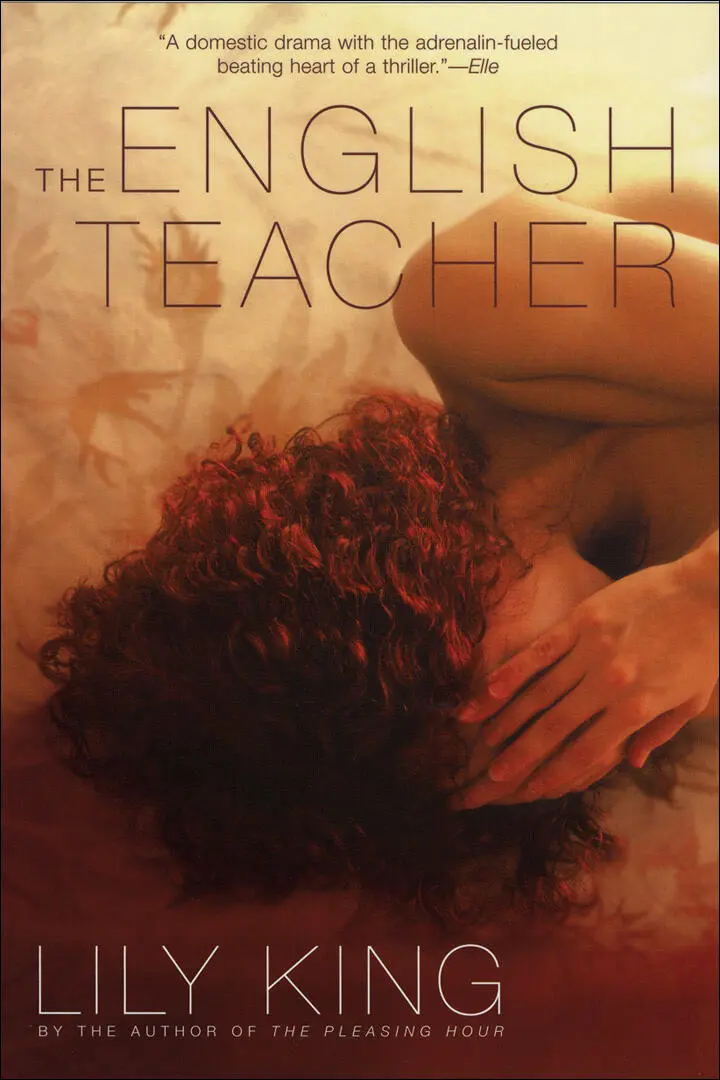
- Название:The English Teacher
- Автор:
- Издательство:Grove Press
- Жанр:
- Год:2006
- ISBN:нет данных
- Рейтинг книги:5 / 5. Голосов: 1
-
Избранное:Добавить в избранное
- Отзывы:
-
Ваша оценка:
The English Teacher: краткое содержание, описание и аннотация
Предлагаем к чтению аннотацию, описание, краткое содержание или предисловие (зависит от того, что написал сам автор книги «The English Teacher»). Если вы не нашли необходимую информацию о книге — напишите в комментариях, мы постараемся отыскать её.
and
as one of the Best Novels of 2005, Lily King's new novel is a story about an independent woman and her fifteen-year-old son, and the truth she has long concealed from him. Fifteen years ago Vida Avery arrived alone and pregnant at elite Fayer Academy. She has since become a fixture and one of the best teachers Fayer has ever had. By living on campus, on an island off the New England coast, Vida has cocooned herself and her son, Peter, from the outside world and from an inside secret. For years she has lived largely through the books she teaches, but when she accepts the impulsive marriage proposal of ardent widower Tom Belou, the prescribed life Vida has constructed is swiftly dismantled.
This is a passionate tale of a mother and son's vital bond and a provocative look at our notions of intimacy, honesty, loyalty, and the real meaning of home. A triumphant and masterful follow-up to her multi-award-winning debut,
confirms Lily King as one of the most accomplished and vibrant young voices of today.
The English Teacher — читать онлайн бесплатно полную книгу (весь текст) целиком
Ниже представлен текст книги, разбитый по страницам. Система сохранения места последней прочитанной страницы, позволяет с удобством читать онлайн бесплатно книгу «The English Teacher», без необходимости каждый раз заново искать на чём Вы остановились. Поставьте закладку, и сможете в любой момент перейти на страницу, на которой закончили чтение.
Интервал:
Закладка:
Once she got ahold of herself again she grew bored by his performance. She had the impulse to get up and grade a few papers until he had finished. Then she understood that he wasn’t going to stop until she stopped him.
“All right,” she said. “If it’s so important to you.”
“Not just to me. To all of us. Stuart, Fran, Caleb, and Peter.”
“Peter has nothing to do with this.”
“Peter has everything to do with it.”
“I’ll see you at home.” She got up off the couch, sat down at her desk, and swung the stack of freshman essays around to face her.
When she looked up again, he was gone. She was soothed again by the sensation she’d had in her kitchen the day he proposed, that this was practice, and that the real event, the one that counted, the one that would be graded and put in the book, would happen later, when she had studied harder and knew her lines.
Her sophomores were in the midst of some intrigue. She could tell at once by the sound of their feet, which were clustered together and moving quickly as if trying to keep up with the pace of their gossip. Even the boys were in on it, their voices cracking with surprise. By the time they reached her door they had all composed themselves somewhat, greeting her with their usual blend of resentment that people like her existed and reassurance that the world, dastardly as it was, had not changed over the weekend. Peter seemed out of the loop. He was the last to enter the room and took his regular seat, which was removed from the froth of gossip. She admired him for this, and tried not to think about Tom’s words.
Whatever it was had gotten them all stirred up, and they took longer than usual to get settled. Lindsey scribbled something and handed it to Brian, who giggled like a third grader.
Karen was the only one who’d gotten out her book. “God, Mrs. Belou, why did she tell him?”
“Why did who do what?” She wished she’d had time to review last night’s reading.
“Tess! Why’d she have to tell Angel?”
So they had gotten there already. “All right,” she said to the most agitated corner of the room. “Give it a rest now. Why don’t you take out”—the commotion stopped and she could hear them breathing, waiting—“your book.”
A ripple of relief spread through the room, though there were a groaning few who had read carefully in hopes of a quiz to boost their grade.
“Brian, could you give us a little summary of what happened last night?” she said. Then, as an irritating little grin grew on Brian’s face, she added, “In the book.”
“Well,” he began, clutching the unopened novel like a football, “after a lot of talking talking talking Tess finally agrees to marry Angel. On December thirty-first, which I think is a really weird day to get married. And then she tells him about the Alec dude and the baby and it’s all over.”
Vida was surprised he’d understood that much of it. “Anyone want to add anything to that?”
“She tells him because after the wedding he tells her about some woman in London he was with for a while and he asks Tess to forgive him,” Harry said. “She is so psyched because she thinks now it will be easy to finally let out this secret she’s been keeping from him, but when she tells him he has a completely different reaction.”
“What does he say?” Vida felt an energy returning to her, an energy she’d begun to suspect she’d lost. Lately, she found herself vacillating between anger and lassitude, unable to find the vigilance and rigor she once had. But today she would talk about the ill-chosen location of the honeymoon, the crumbling d’Urberville mansion, and how Hardy plants his Darwinian theories of social determinism in the faces of Tess’s two ancestors on the wall (paintings built into the wall that cannot be removed), one representing treachery, the other arrogance.
“At first he wonders if she’s joking or going crazy, and then he gets mad.”
Helen raised her hand. “He doesn’t get mad, exactly. He’s kind of in a state of shock. He tells her that he can’t forgive her because the woman he has been loving is not her, but another woman in her shape. It’s just like that poem we read by Hardy last year — about the guy who meets that ghost on the road.”
“‘The Well-Beloved,’” Vida said quietly, wondering exactly who she was, that woman Tom had seen going up to the podium in June.
“I think she was so stupid to have told him. They could have gone to a different part of England and he never would have found out,” Kristina said.
“But it would always be there in her heart, eating away at her,” Helen said.
“I think it was selfish of her. She like ruined this guy’s wedding night.”
“ He ruined it. He couldn’t forgive her.”
Vida interrupted the two girls. “You have to understand Angel’s point of view. Tess was a poor, uneducated, unreligious girl. Purity was her only asset, the only way he could justify her to his parents.”
“She wanted to start the marriage honestly, no secrets.”
Vida was sick of Helen’s whining. She looked to the back, careful to avoid Peter in the corner, who actually seemed to be paying attention. From what Peter says. She felt a burning on the underside of her arms. Caroline was beside him and hadn’t spoken in several days. She caught the girl’s eye. “What are your thoughts, Peter?” Peter? Had she truly said Peter?
Caroline, whose mouth had opened slightly in preparation, turned in relief to her left.
“I don’t think you can have a real relationship with someone without being truthful.”
“But Tess’s ‘truth’ isn’t true, Peter,” Vida said calmly.
“What’s that supposed to mean?” He glared at her, defiant.
“The subtitle of this book is A Pure Woman. Tess is no less pure for her encounter with Alec d’Urberville. In fact, it is what she learns from her experience with Alec and losing her baby that makes her so intriguing to Angel. He doesn’t love her for her innocence. He loves her for her depth of feeling and knowledge, which comes from her experiences. ‘Tess’s corporal blight was her mental harvest,’ Hardy writes.”
“But she was miserable, Mrs. Belou!” Vida let Helen override any noises Peter had begun to make. “She had to tell him. She was never going to be happy otherwise.” It was the first stupid thing Vida had ever heard come out of her mouth.
“Well she sure as hell ain’t gonna be happy now.”
“Don’t tell us!” several of the girls squealed.
“This is what is known as a tragedy. It says so right there on the back of your book. I don’t teach fairy tales, folks.”
“Does something terrible happen to Tess?” Karen asked quietly.
Peter’s neck had splotched up. He was still glowering at her.
Vida nodded, then pulled on an invisible rope around her throat as her head fell limp against her shoulder.
“She dies?” they gasped.
Helen’s voice was cold and serious. “But you said she wouldn’t die.”
“Of course she dies.” She looked down at their faces and for a moment she couldn’t have said who any of them were or how she knew them; even Peter fell away from memory. All she knew was that she wanted to hurt them somehow for all they didn’t know. “We all die.”
The lunchroom of a high school is a disturbing place. Everyone’s neuroses gather here. The combination of food and voluntary seating releases uneasiness into the air like a gas. At Fayer Academy, the teachers suffered no less than the students. Of the sixteen tables in the lunchroom, two were designated for faculty. Brick always came to lunch first and stayed through all three periods. He sat at the table closest to the door, making it, for the twenty-four years he had been headmaster, the desirable table. The rules of the lunchroom seating for faculty had never been uttered, yet every teacher, within days of arriving at Fayer, understood where he or she belonged. Somehow, without words, Brick made it clear who was in and who was out. In the course of one’s career, adjustments were made. Mark Stratton, when he was a part-time geography teacher, would have never dreamed of sitting at the first table, but the computer revolution changed all that. Davis Clay had sat at Brick’s table for years until he stopped drinking and lost his sense of humor. There were more teachers popular with Brick than there were places at the table, but room was always made, chairs borrowed from other tables to accommodate them.
Читать дальшеИнтервал:
Закладка:
Похожие книги на «The English Teacher»
Представляем Вашему вниманию похожие книги на «The English Teacher» списком для выбора. Мы отобрали схожую по названию и смыслу литературу в надежде предоставить читателям больше вариантов отыскать новые, интересные, ещё непрочитанные произведения.








Обсуждение, отзывы о книге «The English Teacher» и просто собственные мнения читателей. Оставьте ваши комментарии, напишите, что Вы думаете о произведении, его смысле или главных героях. Укажите что конкретно понравилось, а что нет, и почему Вы так считаете.