Lily King - The English Teacher
Здесь есть возможность читать онлайн «Lily King - The English Teacher» весь текст электронной книги совершенно бесплатно (целиком полную версию без сокращений). В некоторых случаях можно слушать аудио, скачать через торрент в формате fb2 и присутствует краткое содержание. Год выпуска: 2006, Издательство: Grove Press, Жанр: Современная проза, на английском языке. Описание произведения, (предисловие) а так же отзывы посетителей доступны на портале библиотеки ЛибКат.
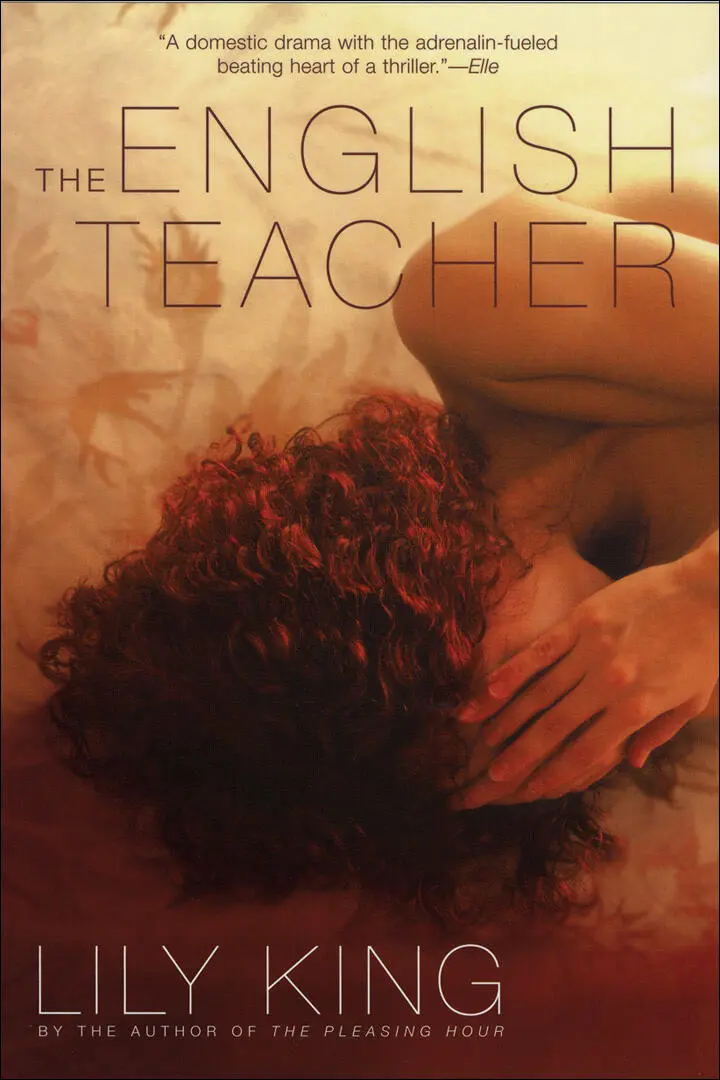
- Название:The English Teacher
- Автор:
- Издательство:Grove Press
- Жанр:
- Год:2006
- ISBN:нет данных
- Рейтинг книги:5 / 5. Голосов: 1
-
Избранное:Добавить в избранное
- Отзывы:
-
Ваша оценка:
The English Teacher: краткое содержание, описание и аннотация
Предлагаем к чтению аннотацию, описание, краткое содержание или предисловие (зависит от того, что написал сам автор книги «The English Teacher»). Если вы не нашли необходимую информацию о книге — напишите в комментариях, мы постараемся отыскать её.
and
as one of the Best Novels of 2005, Lily King's new novel is a story about an independent woman and her fifteen-year-old son, and the truth she has long concealed from him. Fifteen years ago Vida Avery arrived alone and pregnant at elite Fayer Academy. She has since become a fixture and one of the best teachers Fayer has ever had. By living on campus, on an island off the New England coast, Vida has cocooned herself and her son, Peter, from the outside world and from an inside secret. For years she has lived largely through the books she teaches, but when she accepts the impulsive marriage proposal of ardent widower Tom Belou, the prescribed life Vida has constructed is swiftly dismantled.
This is a passionate tale of a mother and son's vital bond and a provocative look at our notions of intimacy, honesty, loyalty, and the real meaning of home. A triumphant and masterful follow-up to her multi-award-winning debut,
confirms Lily King as one of the most accomplished and vibrant young voices of today.
The English Teacher — читать онлайн бесплатно полную книгу (весь текст) целиком
Ниже представлен текст книги, разбитый по страницам. Система сохранения места последней прочитанной страницы, позволяет с удобством читать онлайн бесплатно книгу «The English Teacher», без необходимости каждый раз заново искать на чём Вы остановились. Поставьте закладку, и сможете в любой момент перейти на страницу, на которой закончили чтение.
Интервал:
Закладка:
It was wet and salty with tears and blood and when she opened her mouth Peter did the same and their tongues met and it felt slimy, like kissing Walt. It felt like being a tadpole more than being human, a tadpole with a tiny brain and a big mouth and everything wet and silty all around. A rattle of breath from her nose poured out onto his cheek and he was so focused on his mouth he didn’t know what he was doing with his hands though they were moving the whole time. It was noisy, this kind of kissing, and the noise made him like it even more. And then, in an instant, that whole briny, underwater world became memory. She hit him hard on the upper arm and stood up, wiping everything off her mouth. She was still crying as she told him he was gross and shouldn’t be kissing his stepsister. Then she disappeared down the hall to her room.
Peter waited a long time before he got up. In the bathroom, Mrs. Belou was stern.
I thought it might come to this.
I’m sorry.
She’s my little girl.
I know.
You don’t know. What do you or your mother know about anything?
Peter turned away from the picture to the mirror. No wonder you’re so — What had she been going to say? Wimpy? Boring? Dense? “Unfocused” and “distant” were words that appeared regularly on his report cards. Was his mother somehow responsible for that? He’d never thought of his mother in this way. She was like a building to him, tall, brick, permanently adjacent and absolutely necessary, whose shape he had never questioned, whose shadow he had never noticed until he stepped back and stood with the Belous at a safe distance. Now he could see the dilapidated frame, the broken windows, the rotting roof.
He sat on the toilet cover looking at the thin hand towels with the embroidered bluebells and the jar of dried petals on top of the wicker cabinet — decorations his mother would never have chosen. She would have left all those places bare and ugly.
He thought of how, not all that long ago and for as long into the past as he could remember, he used to fear her absence, and how the sound of the Dodge pulling up beneath his window could make him whimper with relief. He doubted he could ever feel that way about her again and for a moment, as the great building was razed swiftly to the ground, he felt guilty and ashamed. Then he turned back to the picture and saw a deepening smile.
Stuart was not in their room, and he was relieved. In his bed in the dark his body reexperienced, in random order, moments of the long night. The bra on the windshield, the smell of stain, the salty metallic slippery kiss, the blue black of Kristina’s hair in his fingers, Jenny Mead’s head tipping back. His mind could find nothing to rest on, nothing that made him feel safe.
SEVEN
VIDA CIRCLED THE CLASSROOM SLOWLY, STOPPING AT EACH WINDOW, feigning interest in the bleakness below. Wendell was out by the pond, raking up the last of the slimy half-frozen willow leaves at its edges. Her freshmen were writing an in-class essay comparing “A Perfect Day for Bananafish” with “A&P.” If she looked toward them and not out the windows, their hands would shoot up with a hundred useless questions — Can I use purple ink? Where should I write my name? — questions designed simply to bring her over to their side where just the presence of her body was comforting to them. But they were in ninth grade now, and they needed to be broken of those middle school habits.
Stepmothering, she realized, was not all that different from teaching. It was essential to keep their intellectual development in mind at all times. You couldn’t get all wrapped up in their needs and whims. Stuart and his mysticism. Fran reading The Thorn Birds. They were too old now for that kind of material. A young man needed a hearty Byronic outlook, not this boneless Taoism. And if Fran began to believe in the characters in novels like that, real people were going to be a sore and sorry disappointment. She would have to, once again, urge Fran to read Tess of the d’Urbervilles; that would teach her exactly how far she could trust a man, even a seemingly well-intentioned man like Angel Clare.
Or Tom Belou, who had withdrawn since her blowout with Fran last week. He was angry in a way she didn’t understand — placid, wordless anger. He had behaved yesterday as if he couldn’t see her in the room. She figured that all marriages, if they lasted, ended up here in the land of quiet regret. She and Tom had simply arrived a little early. She had predicted it, but even her own conviction that she would fail did not protect her from the discomfort of having done so. In bed last night she had tried, her heart thumping stupidly, to make a small advance: one brave hand reaching up over the curve of his hip bone and down into still unfamiliar and terrifying ground — but it was soundly rejected and she lay awake for several hours cradling her humiliated fingers.
She moved to the windows at the back of the room. A dog she didn’t recognize trotted briskly up the driveway. A few years ago Walt would have charged out to meet it, smell it, inform it of whose territory it had trespassed. This morning she’d had to lift him up and hold him before his bowls as all four legs quivered and shifted desperately for a painless balance. He took a tongueful of water, then looked at her, confused by his lack of appetite.
Behind her Patrick Watkins cleared his throat. He’d let his raised arm fall unbent into the crook of his other hand just to let her know how long he’d been trying to get her attention.
When she was beside him he asked, “Is it okay if I call Seymour Glass Morie? I mean, just sometimes? My father’s best friend from college is named Seymour but we call him Morie so I’ve kind of gotten used to calling Seymour Glass Morie in my head.”
“That’s not okay, Patrick.”
“Really?”
As she weaved through the desks back to the perimeter of the room, she saw that Mandy Hughs was dotting all of her i’s with daisies. She’d only written half a page for all the time it took to make the petals. “No flowers,” Vida said as she passed. “Just letters.” How did those middle school English teachers sleep at night?
Finally the bell shook the floor. Her students dashed off their last thoughts and tossed their pages onto the pile on her desk. Everyone was suddenly free.
Peace returned to her classroom. She realigned her chairs, picked up flecks of torn notebook paper from the floor. She gathered up the essays, each page puckered on both sides from the ballpoint ink pressed on hard and nervously. If she were focused, she could get through half of these, then glance at the pages her sophomores read over the weekend before the next bell. But focus had eluded her lately. She was behind on her grading, and had been less than inspired in the classroom. Her students rattled her in a way they didn’t used to. And the material, once so easily intellectualized, seemed to writhe under her inspection of it. Even Hardy, whose theories on Darwinism, religion, and social codes were as cold and straightforward as mathematics, was becoming a sensualist, with all those disgusting passages she’d never noticed before about the oozing fatness and rushing juices of summer, the dripping cheeses in the dairy where Tess takes refuge after her baby dies and meets Angel Clare.
“Vida.”
A wild yelp came out of her as she spun toward the voice. It was Tom. Fuck him for sneaking up on her like that.
“I was just hoping …” he said, looking around, making sure they were alone. “I called to find out when you had a free period, and I thought we could talk.”
She couldn’t speak for the sudden thrumming of her heart. She’d heard nothing, no scuffle on the stairs, no crack of an old board in the hall. Fear, unable to hear reason, flooded her body.
Читать дальшеИнтервал:
Закладка:
Похожие книги на «The English Teacher»
Представляем Вашему вниманию похожие книги на «The English Teacher» списком для выбора. Мы отобрали схожую по названию и смыслу литературу в надежде предоставить читателям больше вариантов отыскать новые, интересные, ещё непрочитанные произведения.








Обсуждение, отзывы о книге «The English Teacher» и просто собственные мнения читателей. Оставьте ваши комментарии, напишите, что Вы думаете о произведении, его смысле или главных героях. Укажите что конкретно понравилось, а что нет, и почему Вы так считаете.