Rafael Yglesias - Only Children
Здесь есть возможность читать онлайн «Rafael Yglesias - Only Children» весь текст электронной книги совершенно бесплатно (целиком полную версию без сокращений). В некоторых случаях можно слушать аудио, скачать через торрент в формате fb2 и присутствует краткое содержание. Город: New York, Год выпуска: 2010, ISBN: 2010, Издательство: Open Road Integrated Media LLC, Жанр: Современная проза, Домоводство, Юмористические книги, на английском языке. Описание произведения, (предисловие) а так же отзывы посетителей доступны на портале библиотеки ЛибКат.
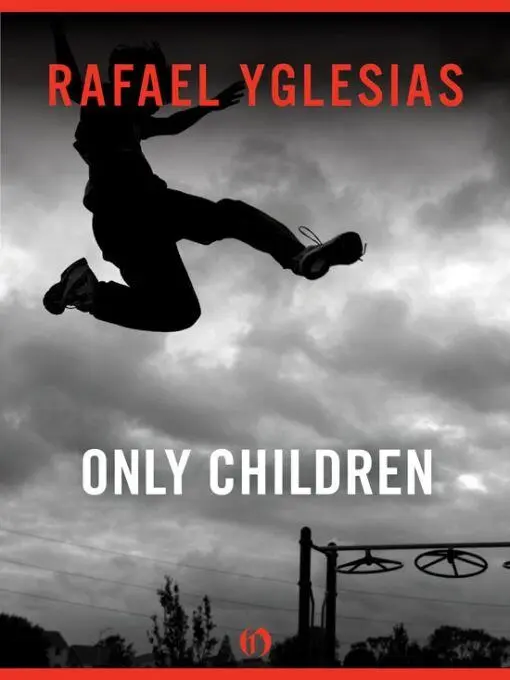
- Название:Only Children
- Автор:
- Издательство:Open Road Integrated Media LLC
- Жанр:
- Год:2010
- Город:New York
- ISBN:9781453205167
- Рейтинг книги:3 / 5. Голосов: 1
-
Избранное:Добавить в избранное
- Отзывы:
-
Ваша оценка:
Only Children: краткое содержание, описание и аннотация
Предлагаем к чтению аннотацию, описание, краткое содержание или предисловие (зависит от того, что написал сам автор книги «Only Children»). Если вы не нашли необходимую информацию о книге — напишите в комментариях, мы постараемся отыскать её.
Set in a milieu of material excess and limitless ambition,
skewers new parents who expect perfect lives, but also offers an intimate look at the trials all new parents face as they learn how to nurture.
This ebook features a new illustrated biography of Rafael Yglesias, including rare photos and never-before-seen documents from the author’s personal collection.
With insight and candor, Yglesias recounts five years in the lives of two yuppie couples, to whom parenthood occasions typical tribulations and discouraging self-assessments. Byron’s birth exacerbates the problems between Diane and Peter Hummel (she’s a Yale-educated corporate lawyer, he’s a wealthy fundraiser for the arts). While she foolishly tries to be super-mom, wife and professional, she also puts pressure on Byron to excel, attempting to enroll him in an elite school and forcing him to play the violin. Peter withdraws from them both after Byron’s presence activates long-dormant memories of his icily aloof mother. Investment counselor Eric Gold, obsessed by the humiliation of his father’s business failures, frantically pushes himself to produce substantial earnings for his wife Nina and their son Luke. Her imagined inadequacies torment Nina, especially when she cannot soothe Luke, whose colic makes him infuriatingly uncontrollable. This is a vivid description of how rearing a first child can conjure up neurotic fears, which must be resolved before parents can nurture their offspring. Yglesias has abandoned the cynicism that infused Hot Properties; this new novel is deeply felt and thought-provoking. $75,000 ad/promo; Doubleday Book Club main selection; Literary Guild featured alternate.
Copyright 1988 Reed Business Information, Inc.
"The joys of Motherhood. Are they all one great lie?" In carefully orchestrated, parallel stories of two New York couples and their sons from birth through age five, Yglesias explores this and other contemporary parenting issues. The story moves carefully between the Golds and the Hummels in a sort of literary counterpoint that becomes more staccato in the second half of the book. Educated professionals with good incomes, both sets of parents have excellent intentions but are crippled by emotional "baggage": they are adult children ("only children") themselves. The children are unusually bright, but their development, like their parents’, is impeded by complex psychological issues. Yglesias writes with insight, showing how true adulthood comes with self-awareness, pain, and understanding. Definitely recommended.Ellen R. Cohen, Rockville, Md.
Copyright 1988 Reed Business Information, Inc. From Publishers Weekly
From Library Journal
Only Children — читать онлайн бесплатно полную книгу (весь текст) целиком
Ниже представлен текст книги, разбитый по страницам. Система сохранения места последней прочитанной страницы, позволяет с удобством читать онлайн бесплатно книгу «Only Children», без необходимости каждый раз заново искать на чём Вы остановились. Поставьте закладку, и сможете в любой момент перейти на страницу, на которой закончили чтение.
Интервал:
Закладка:
Peter’s legs were taut, so rigid that he felt the need to sag to his knees, as if the muscles would explode from the tension of keeping him up. That brought Peter face-to-face with Byron. The skin on the side of Byron’s face was a swirl of yellow and bluish colors. But Byron’s eyes twinkled as he said, “I threw it. It got all broke.” He lowered his head and shrugged his shoulders in a poor imitation of disappointment. “Can’t play anymore.”
I’m supposed to mediate this, to find out what’s right and what’s wrong. I can’t leave Diane’s misbehavior to her own supervision.
The responsibility was almost as frightening as the evidence that Diane had lost control. Byron could be maddening, was getting more and more infuriating, but—
“Why did you smash the violin?” Peter asked Byron gently, hoping to get the truth by not implying in his tone that there was any threat of punishment in response to honesty.
“It hurt me.” Byron put out his index finger. “See?”
There was nothing wrong with Byron’s finger. Diane looked at it with a curious expression, as if she had never seen Byron’s finger before. Peter got her attention and raised his eyebrows in silent inquiry, hoping she would explain. But her body sagged in response, her eyes looked vacant — I’m not here, they said.
“Your finger looks okay,” Peter said.
“It hurts!” Byron yelled with a whoosh of air into Peter’s face. The speed and fury were startling. Peter rocked back on his heels.
“I’m not arguing with you. I just don’t understand. How does it hurt your finger?”
“He’s lying,” Diane said in a listless voice, gazing off at some view, something mysterious and beautiful that wasn’t there.
“Am not!” Byron’s eyes got red and he was crying. His dissolution into tears happened so fast that logic told Peter the unhappiness must be fake. But Byron wept with conviction. Byron stood between them, making no move to be consoled, standing independent in his deserted sorrow.
And then the truth came to Peter, clear as a message from God. The simple truth shone through the pleasant fog of Peter’s assumption that Byron was a privileged, even spoiled child, doted on by his mother, and loved by Peter, if somewhat casually. After all, Diane had given up her career only a few months ago for Byron; even Peter had taken to staying home three or four nights a week. There were layers and layers of evidence that Byron had an especially charmed life: Francine, his nanny, was there for him as well as Diane; Diane’s mother made regular visits and brought all the newest and most expensive toys, such as that disgusting castle; Diane had applied to put Byron into the best private schools; Byron had swimming classes, violin classes, tumbling classes, summers in the Hamptons, a trust fund set up by Peter’s father, even a friend, that little boy Luke, who lived a block away. Surely this was a childhood that would amaze Charles Dickens. Peter had often said to Kotkin, “I envy him. I resent him having a happy childhood.” But now, suddenly, watching this creature, this baby, stand alone in the well of his despair, his face mottled by Diane’s rage, Peter knew: this is not a happy child. We are raising him badly. He is suffering. And it’s up to you, his father, to make it right.
“Come here,” Peter said, and opened his arms.
“No,” Byron interpolated in his sobbing. Byron hugged his arms to his chest and swung gently from side to side, rocking himself.
He only trusts his own love, Peter thought, and a nauseating wallop of fear and self-disgust hit Peter in his gut. “Come on,” he said, and reached for Byron, not only to comfort his son, but to find a bottom for his own sinking hopes. Byron fought the embrace. He pushed against Peter’s arms and averted his kiss.
“Let go,” he moaned.
“I love you,” Peter said. The words almost hurt his throat.
Diane grunted. Peter looked up at her, but she had no expressiveness on her face. She leaned against the hallway walls, her head resting on a poster of The Titan .
I didn’t make that show, Peter thought, I made this misery. Kotkin wouldn’t approve of that judgment, Peter scolded himself. Byron eased in Peter’s arms, accepting the hug. The sobs went from a gallop to a trot, slowing, quieting. Byron’s rigid resistance melted into a limbless bundle of warmth. If only Peter could hold Byron forever, in this simple unity of love and good intentions, then being his father would be easy.
“Are you okay?” Peter said.
“Yeeessss,” Byron moaned.
“Does your face hurt?”
“No,” Byron mumbled.
That had to be a lie. Was he scared to complain of Diane’s … abuse?
This can’t be happening to me, Peter thought. She just hit him once, for God’s sakes. Calm down. Again, he looked at her for something, an explanation, help, consciousness.
“I told him I was sorry,” she said this time. There was no apology in the tone, however.
“Mommy got angry,” Byron said. He looked at Peter hopefully, wanting his answer to satisfy.
What do I do? If I don’t say she’s wrong, am I approving it for Byron? If I criticize her, am I wrongly faulting her for a minor incident?
What about the violin playing? Is that lost forever? But Byron was so proud, so handsome when he practiced. Wasn’t Byron going to reject any attempts in the future to apply himself to the demands of art if this calamity is the only memory of an attempt?
“Can I see the violin?” Peter asked. He wanted to inspect the one tangible thing in all this.
“It’s broke,” Byron said, lowering his head.
“Does that make you sad?”
“Yeesss,” Byron sobbed. “Mommy says I can’t play anymore!” he wailed.
He wants to play? Maybe it was just an accident. No, she said he threw it. Or did she? “What happened?” Peter said bravely to Diane. “He dropped it?”
“No! Don’t you listen! He refused to practice and he threw it—” Her exasperation was too great. She closed her mouth and stamped her foot. Byron startled in Peter’s arms. “I can’t talk about it,” she said, and leaned back against the poster, shutting her eyes and sighing. “I’m an asshole,” she mumbled. “Just forget it!” she shouted at the ceiling.
“I don’t think anyone’s going to forget it.”
“Fine. You deal with it.” Diane went into the kitchen. She banged something. Byron jerked again in Peter’s arms. He’s terrified of her. How could that be? He adores her. How could one slap destroy all that, all her sacrifice, almost three years, month after month, week after week, hour after hour, of love and care and pride — gone? From one slap?
Maybe Byron and I want too much.
“Daddy,” Byron said.
“Yes?”
“Would you play with me?”
Peter felt trapped. He didn’t want to be with Byron. He wanted to pursue Diane, to correct her, reengage her attention on Byron. She seemed ready to resign from her role as a mother. That had to be prevented. Peter couldn’t substitute for her, that would be even worse for Byron. “Show me the violin,” Peter said.
“No!”
“Maybe it can be fixed.”
Byron opened his eyes wide. He looked normal. Active, his body ready to perform, full of hope. “Okay.” He pulled Peter into his room. The violin must have been left where Byron had thrown it. Diane must have been too upset to do anything about it.
It was finished, all right. The neck had been severed, its back thoroughly cracked, and a strip about an inch wide had caved in.
“We could tape it,” Byron said, excited now. A project, a repair, an erasure of his wrong and Mommy’s anger: attention, correction, and forgiveness all in one package. Peter had given him hope. That was stupid of me, Peter realized, holding the dismembered instrument in his hands.
Читать дальшеИнтервал:
Закладка:
Похожие книги на «Only Children»
Представляем Вашему вниманию похожие книги на «Only Children» списком для выбора. Мы отобрали схожую по названию и смыслу литературу в надежде предоставить читателям больше вариантов отыскать новые, интересные, ещё непрочитанные произведения.






Обсуждение, отзывы о книге «Only Children» и просто собственные мнения читателей. Оставьте ваши комментарии, напишите, что Вы думаете о произведении, его смысле или главных героях. Укажите что конкретно понравилось, а что нет, и почему Вы так считаете.