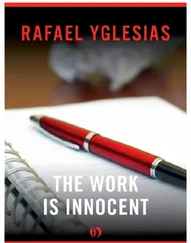
Rafael Yglesias - Only Children
Здесь есть возможность читать онлайн «Rafael Yglesias - Only Children» весь текст электронной книги совершенно бесплатно (целиком полную версию без сокращений). В некоторых случаях можно слушать аудио, скачать через торрент в формате fb2 и присутствует краткое содержание. Город: New York, Год выпуска: 2010, ISBN: 2010, Издательство: Open Road Integrated Media LLC, Жанр: Современная проза, Домоводство, Юмористические книги, на английском языке. Описание произведения, (предисловие) а так же отзывы посетителей доступны на портале библиотеки ЛибКат.

- Название:Only Children
- Автор:
- Издательство:Open Road Integrated Media LLC
- Жанр:
- Год:2010
- Город:New York
- ISBN:9781453205167
- Рейтинг книги:3 / 5. Голосов: 1
-
Избранное:Добавить в избранное
- Отзывы:
-
Ваша оценка:
Only Children: краткое содержание, описание и аннотация
Предлагаем к чтению аннотацию, описание, краткое содержание или предисловие (зависит от того, что написал сам автор книги «Only Children»). Если вы не нашли необходимую информацию о книге — напишите в комментариях, мы постараемся отыскать её.
Set in a milieu of material excess and limitless ambition,
skewers new parents who expect perfect lives, but also offers an intimate look at the trials all new parents face as they learn how to nurture.
This ebook features a new illustrated biography of Rafael Yglesias, including rare photos and never-before-seen documents from the author’s personal collection.
With insight and candor, Yglesias recounts five years in the lives of two yuppie couples, to whom parenthood occasions typical tribulations and discouraging self-assessments. Byron’s birth exacerbates the problems between Diane and Peter Hummel (she’s a Yale-educated corporate lawyer, he’s a wealthy fundraiser for the arts). While she foolishly tries to be super-mom, wife and professional, she also puts pressure on Byron to excel, attempting to enroll him in an elite school and forcing him to play the violin. Peter withdraws from them both after Byron’s presence activates long-dormant memories of his icily aloof mother. Investment counselor Eric Gold, obsessed by the humiliation of his father’s business failures, frantically pushes himself to produce substantial earnings for his wife Nina and their son Luke. Her imagined inadequacies torment Nina, especially when she cannot soothe Luke, whose colic makes him infuriatingly uncontrollable. This is a vivid description of how rearing a first child can conjure up neurotic fears, which must be resolved before parents can nurture their offspring. Yglesias has abandoned the cynicism that infused Hot Properties; this new novel is deeply felt and thought-provoking. $75,000 ad/promo; Doubleday Book Club main selection; Literary Guild featured alternate.
Copyright 1988 Reed Business Information, Inc.
"The joys of Motherhood. Are they all one great lie?" In carefully orchestrated, parallel stories of two New York couples and their sons from birth through age five, Yglesias explores this and other contemporary parenting issues. The story moves carefully between the Golds and the Hummels in a sort of literary counterpoint that becomes more staccato in the second half of the book. Educated professionals with good incomes, both sets of parents have excellent intentions but are crippled by emotional "baggage": they are adult children ("only children") themselves. The children are unusually bright, but their development, like their parents’, is impeded by complex psychological issues. Yglesias writes with insight, showing how true adulthood comes with self-awareness, pain, and understanding. Definitely recommended.Ellen R. Cohen, Rockville, Md.
Copyright 1988 Reed Business Information, Inc. From Publishers Weekly
From Library Journal
Only Children — читать онлайн бесплатно полную книгу (весь текст) целиком
Ниже представлен текст книги, разбитый по страницам. Система сохранения места последней прочитанной страницы, позволяет с удобством читать онлайн бесплатно книгу «Only Children», без необходимости каждый раз заново искать на чём Вы остановились. Поставьте закладку, и сможете в любой момент перейти на страницу, на которой закончили чтение.
Интервал:
Закладка:
“It’s Fred Tatter again,” Irene said.
So I was just a nice schmuck, an errand boy. And now I’m a fool.
Eric took the call.
“Well?” said Fred. “The market’s open. You said you’d call back.”
“I can’t recommend it, Fred.”
“What about two thousand shares?”
“Okay, if you want.” Eric hated him, this fool whom he had tried to protect. What did it get him? Nothing but the misery of truth. “I’ll call you back with the price.”
Eric placed the order, then sat back in his chair, his eyes closed, and waited for a confirmation. Errand boy. Eric the great stock picker. He tried to tune the words out. Errand boy. But they had music in them — Schmuck! Errand boy! — a persistent, irritating jingle that couldn’t be forgotten.
BIG BOY. Big boy. Big boy.
Byron sucked on his soft thumb, washing it with his saliva. He ironed the liquids back into the mushy skin, pressing them out with his tongue and the roof of his mouth. Up and down, trailing his teeth on the knuckle’s hard bump. First cool, then hotter inside, soft on top, hard on bottom.
Big boy!
Mommy pulled him through the lobby. He swung on her hand, felt himself bottomless, heavy, but loose anyway, free in the world tied to the mommy swing.
“Are you tired?” Mommy’s dark, dark face stopped the easy, loose world.
“Tire?”
“Tired. You’re sucking your thumb. Do you need a nap?”
“No!” Angry Mommy wants me away. Look — behind the leaves. A man.
“Hello, Beerun!”
It was Jesus, the doorman. Peeking through the leaves.
“Hello, Beerun!”
Byron scurried across the forest floor to catch the lion Jesus.
“Can’t catch me, Beerun!” Jesus hopped back and forth around the plant, the gold buttons of his blue suit rattling, his feet dancing on the grass floor.
So funny! The green world shook, tables, chairs, all hopping around the lion Jesus. He pawed the air and meowed. “I kratch you, Beerun. I kratch you,” Jesus said as Byron dived for his silky pants. “Oh, no!” Jesus said. Big boy had caught him. Big boy had won.
“Byron, the elevator’s here.”
“Okay. Up now, Beerun. You big boy,” Jesus said, lifting him up from the green rug. “Go catch your mommy.”
“Rrrrr,” Byron said, and grabbed Jesus’s legs again.
“No, no, big boy Beerun. Your mommy’s waiting.” Jesus’s hands pushed him gently toward Mommy. Byron paused and looked at Mommy’s body, tilted sideways, holding up the elevator switch.
“Can’t catch me!” Byron sang and ran, his hair floating, big boy on the fly. “Can’t catch me! Can’t catch me!” He ran into the gold box and looked up at the lighted numbers. Home was six. He jumped at the buttons. Press the button — see the light.
“What are you doing?”
“Want to press, want to press, want to press.”
“I told you. You only have to say things once!”
Big boy jump. Couldn’t. Mommy hands could. “Lift me, lift—” only once, say only once.
“Okay, okay.”
Press and light. “Six!” he called to the light. “We’re home!” he called to Mommy. “Can we play?”
“We’re in the elevator.”
“I know, I know—”
“Byron!”
“I know,” he mumbled. “Can we play in my room?”
“I have to go to work. Francine will play with you.”
“I hate Francine.”
“You do not!”
“Francine fat!”
“Bryon! Don’t you dare say that to her! That hurts people’s feelings.”
“Fat, fat, fat.” The elevator doors opened. Byron ran out. “Francine fat!” he shouted at the tall wall door with the symbol of home—6A.
Diane grabbed him by the elbow. The floor fell away. “Stop it!” she yelled.
Home—6A — jumped. “I’m not bad!” he answered, once the 6A stayed still.
“Stop it! I can’t stand it when you’re like this!”
“You don’t love me,” big boy called up to her, to the dark face.
“I don’t love you when you act like a brat!”
Brat is bad. Not bad. “I’m not!”
“You are! I don’t love a brat. I love a boy who is good.”
The 6A dripped, the floor got big. Mommy’s hand felt hard. Not bad. Too big for the bad. His face got squeezed and hurt. He cried.
“Oh, no,” Francine’s voice said. She was fat and big in the home door. “What’s all the crying? You hurt yourself?”
“I have to go, Francine,” Mommy said. “He needs a nap.”
“Don’t! Don’t need!” The squeezing face hurt more. Mommy don’t love me.
“Now, Byron,” Fat Francine said. “Don’t cry. Babies cry. Big boys don’t.”
Big boy. Big boy. Big boy not bad.
“Good-bye,” Mommy said. The dark face came at him, a shadow sun darkening the squeezed hurt.
“No!” he cried, and turned into Francine’s big warm fat.
“Byron! You bad boy. Give your mommy a kiss.”
“Forget it,” Mommy said, and the shadow went away.
Big boy run, big boy sleep. Big boy bad.
I AM DADDY’S head. I am his hair. His eyes. His ears. His nose. His mouth. I walk on Daddy’s head. Walk through the sky. Walk through signs.
“Don’t pull on my hair, Luke.” Daddy’s forehead rolled up and under his hand.
“Okay.” Luke made his hand flat and felt the rumpled skin.
“Duck,” Daddy said.
The building cover moved at his eyes. He felt himself lowered; he put his head next to Daddy’s. The sun went dark for a moment and then he was going up again, up again to the windows, above the grown-up heads, big and bigger in the world.
“That was a low awning,” Daddy said.
“Why?”
“Didn’t you see how low it was?”
“Why low?”
“Compared to the others, it was low.”
“No, no.” Luke wanted to burst out of words, to yell. “Why make it low?”
“Oh, I’m sorry. I didn’t understand.”
Luke felt the inside jail open and laughed away the worry. “You didn’t!”
“No, I didn’t.” Daddy’s hand went around crazily to pat Luke’s back. “I don’t know why they made that one so low. Maybe the only place to attach it — do you know what ‘attach’ means?”
“No.”
“Like glue. Sticking something to something.”
Daddy was happy. Luke patted the hard ball of Daddy’s head to feel his happiness.
“Anyway, maybe the only place to attach it was low.”
“I see.” He felt the wet air and the dry light. The song played in his ear: “I like you just the way you are. Not the clothes you wear.”
“Is this your neighborhood, Luke?” Daddy said with happiness in his voice.
“What?”
“Welcome to your neighborhood, right?” Daddy said with laughter in his happiness. “This is your neighborhood. Mr. Rogers has his neighborhood and this is yours.”
The worry was back, confused sound and dark light. “What?”
“Do you know what ‘neighborhood’ means?”
He put his hand on Daddy’s fur and grasped it to hold on, hold on to the big and bigger world. “No,” he said, and wished he could pull the hair.
“It means the place right around where you live, the stores, the park, these streets. And ‘neighbor’ is someone who lives right around where you live. In the same building, or one nearby.”
The air was wet again on his face, the light dry and warm. “I see,” he said, and then watched the people, the stores, and, ahead, the wonderful and terrible prospect of the trees and grass of the park. They belonged to Luke now, like his toys, his room, his bed. “This is my neighborhood,” Luke sang. “Welcome to my neighborhood.” He laughed.
Daddy’s happy head bucked under his hand. “That’s right, Luke.”
AS ERIC approached the playground gate, he felt more in control than usual, because he had been so clever at wooing Luke to the park. When Eric first made the suggestion they go to Washington Square Park — he wanted Nina to sleep late, undisturbed by their noise in the living room — Luke had lowered his head, his bright blue eyes darkening as if the source of their energy were on the blink. Eric said, “We’ll go to the park, I’ll put you on the swing until you’re tired of that, then I’ll catch you going down the slide—”
Читать дальшеИнтервал:
Закладка:
Похожие книги на «Only Children»
Представляем Вашему вниманию похожие книги на «Only Children» списком для выбора. Мы отобрали схожую по названию и смыслу литературу в надежде предоставить читателям больше вариантов отыскать новые, интересные, ещё непрочитанные произведения.









Обсуждение, отзывы о книге «Only Children» и просто собственные мнения читателей. Оставьте ваши комментарии, напишите, что Вы думаете о произведении, его смысле или главных героях. Укажите что конкретно понравилось, а что нет, и почему Вы так считаете.