Sophia Nikolaidou - The Scapegoat
Здесь есть возможность читать онлайн «Sophia Nikolaidou - The Scapegoat» весь текст электронной книги совершенно бесплатно (целиком полную версию без сокращений). В некоторых случаях можно слушать аудио, скачать через торрент в формате fb2 и присутствует краткое содержание. Год выпуска: 2015, Издательство: Melville House, Жанр: Современная проза, на английском языке. Описание произведения, (предисловие) а так же отзывы посетителей доступны на портале библиотеки ЛибКат.
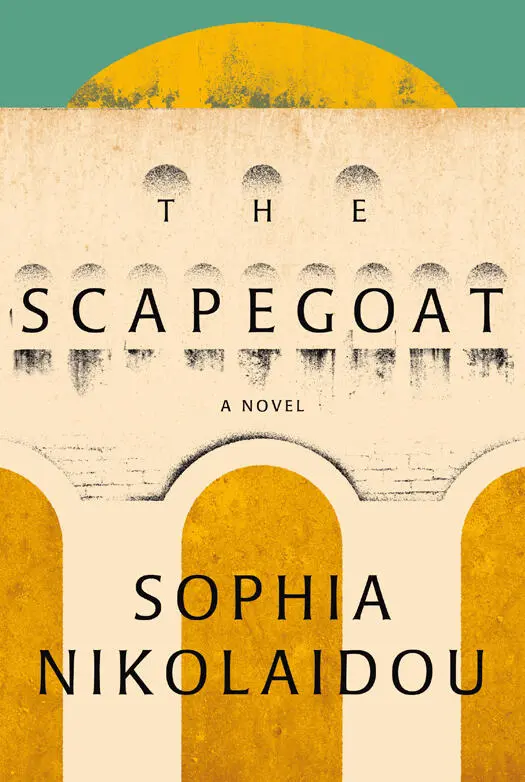
- Название:The Scapegoat
- Автор:
- Издательство:Melville House
- Жанр:
- Год:2015
- ISBN:нет данных
- Рейтинг книги:5 / 5. Голосов: 1
-
Избранное:Добавить в избранное
- Отзывы:
-
Ваша оценка:
The Scapegoat: краткое содержание, описание и аннотация
Предлагаем к чтению аннотацию, описание, краткое содержание или предисловие (зависит от того, что написал сам автор книги «The Scapegoat»). Если вы не нашли необходимую информацию о книге — напишите в комментариях, мы постараемся отыскать её.
Flash forward to modern day Greece, where a young, disaffected high school student is given an assignment for a school project: find the truth.
Based on the real story of famed CBS reporter George Polk — journalism’s prestigious Polk Awards were named after him — who was investigating embezzlement of U.S. aid by the right-wing Greek government, Nikolaidou’s novel is a sweeping saga that brings together the Greece of the post-war period with the current era, where the country finds itself facing turbulent political times once again.
Told by key players in the story — the dashing journalist’s Greek widow; the mother and sisters of the convicted man; the brutal Thessaloniki Chief of Police; a U.S. Foreign Office investigator — it is the modern-day student who is most affecting of them all, as he questions truth, justice and sacrifice. . and how the past is always with us.
The Scapegoat — читать онлайн бесплатно полную книгу (весь текст) целиком
Ниже представлен текст книги, разбитый по страницам. Система сохранения места последней прочитанной страницы, позволяет с удобством читать онлайн бесплатно книгу «The Scapegoat», без необходимости каждый раз заново искать на чём Вы остановились. Поставьте закладку, и сможете в любой момент перейти на страницу, на которой закончили чтение.
Интервал:
Закладка:
Nikolas would accept advice from Souk that he wouldn’t from Fani. Mostly because there was nothing preachy about him: his relentless irony undermined everything. Nikolas told his mother he didn’t find her friend boring, like all the tutors with their fancy degrees whom Fani paid through the nose to teach her child to give the right answers. And while she was happy that Marinos had developed this channel of communication — even at a distance — with her sourpuss of a son, it worried her, too: even she preferred a more conventional approach to the issue of her son’s education.
So when she saw Nikolas hanging on Marinos’s every word that night after the concert, agreeing with whatever the teacher said, she sent him away. Nikolas went off in a huff. For the thousandth time, his mother was spoiling his fun.
Fani leaned toward her friend, whom she hadn’t seen in a long time. He was the one she called with unwashed hair, in pajamas and slippers, when Nikolas was driving her up the wall, but also when she had some important job prospect that she wanted to discuss. She was eternally grateful that she’d never shared a bed with him, as she had with most of her friends, artists with high ambitions and low self-awareness. He wasn’t a very physical person, or at least that’s what she used to think, when she was an undergraduate and would watch him in the lecture hall, the graduate student and teaching assistant for the course. He seemed to be wrapped in barbed wire. The other students didn’t like him, called him a leper , or uptight . They made fun of her for talking to him. But Fani liked how Souk kept his distance. He shunned the crowd. Though in the end he paid for it.
— Why don’t you have a job at the university? she asked abruptly that night after the concert.
He showed no surprise at the question. It was one Fani often returned to. From the moment his advisor, Asteriou, had retired, Fani wouldn’t let it rest.
— I’m not cut out for that kind of institution, Souk replied.
— You’re wasting your life at the school, Fani insisted.
— Who says?
— I do. What on earth are you doing there? I mean, I’m sure you’re doing those brats some good, I see how Nikolas is with you. But you’re made for other things.
— Mmmm, he murmured ironically.
— You’re a fool, Fani said, starting to get mad. A stubborn fool. The king of fools, the fool to end all fools.
— For a bard, your prose isn’t half bad, either, he teased.
Fani tickled him in the ribs. She liked touching him. Sometimes she pinched, or sank her nails into his flesh, or, like now, tested him with a tickle. She liked seeing him pull back in a panic. His body was on alert, it wouldn’t stand for any incursion, even in the form of a caress.
— I’m not cut out for all that, he repeated. Running around to conferences, padding my c.v., making connections. I’m a solitary researcher.
— Okay, Lucky Luke.
Fani clinked her glass against his. After a concert a few drinks helped her relax. But even with alcohol, she could never get to sleep before dawn.
— You don’t understand, Souk insisted. You think things would be better there.
— Yes, I do, Fani answered without hesitation.
He weighed her with his eyes.
— I’m not going back there, even if they burn me alive.
— Well, I can’t argue with that, Fani said, and let the subject rest.
Grandpa Dinopoulos was walking slowly from the olive tree at one end of the veranda to the mallows at the other and back again. Elena helped ease him into the turn. The weather was lovely, the sun caressed his bald spot and eyes, warmed his pajamas. This brief excursion onto the veranda had lifted his mood. So much so that he was considering asking Elena to read him a few pages from the penal code. It might give her some trouble, but she’d manage, she was diligent and compliant, and her Greek wasn’t bad. He was already daydreaming of the moment when he would sink into his armchair and listen.
— Could you bring me my binoculars? he asked.
Elena sat him down in his chair on the veranda. A gorgeous day , the old man thought, closing his eyes.
How could I have imagined , he wondered. Back when I was so anxious all the time, when I thought work was everything. When I spent my days strategizing. When I confused unimportant things for important ones .
Grandpa Dinopoulos raised the binoculars to his eyes. On sunny days when he could sit and daydream outside on the balcony, this was his morning entertainment: watching the passersby and his neighbors, the activity on the street and in the apartments across the way, whenever a curtain parted. He turned his gaze to the tables on the sidewalk outside Terkenlis, the sweet shop on the corner. That’s where Elena bought his favorite tsourekia covered in white chocolate. She brought them home still warm in the box, and he liked to touch them with his hands, stick a finger in the frosting and bring it to his mouth. Buying a whole tsoureki for a few fingerfuls of frosting struck Elena as a waste, but then there weren’t many pleasures left to the old man. The manhandled sweet would end up at the Georgian housekeeper’s apartment, where she gave it to her kids and neighbors.
Grandpa Dinopoulos watched the morning customers at the tables set out on the corner of Agia Sophia Street and Ermou. Middle-aged couples, a few extremely old women, some university students. Evthalia and her girlfriends had taken a spot at the corner table. He recognized her from her knitted suit; she’d always liked bright colors. This one was a roof-tile red that caught the eye, particularly as she was surrounded by her friends’ gray, sky-blue, and salmon-colored jackets. Evthalia was lecturing them, he could tell by the way her head bobbed, and the rest were listening, most likely agreeing.
Grandpa Dinopoulos put down the binoculars with a sigh. How could he possibly have imagined, over half a century earlier when work was his whole life, that the sight of a suit in roof-tile red would be enough to make his day?
1948 AND BEYOND: “WITH EVERYTHING THEY’RE DOING, THEY MIGHT MAKE ME HAVE AN OPINION”
MARGARET TALAS, MOTHER OF JACK TALAS
Each child is born with its character already in place. Teachers and missionaries like to think they tame souls. What do they know? They’re all men, and most of them childless. They think character is something you can shape, that punishments or encouraging words actually make a difference.
Bullshit, darling.
As soon as you take your child in your arms you know. From how it cries and nurses and sleeps. You know how much it’s going to put you through from that very first moment. Jack is a perfect example: he was as stubborn and hardheaded as they come.
— What a beautiful baby, my mother-in-law crowed. He sleeps like an angel.
But when he was less than a month old I saw what his anger looked like: face blue from screaming, legs so stiff he looked like a dry branch. He didn’t know how to talk, so he shrieked until we figured out what he wanted. In all the years that followed he didn’t change a bit. If he set his mind on something, we all had to get out of the way.
My other boy, Mike, wasn’t like that. He went along with whatever his older brother wanted, he didn’t like to fight. They slept in the same room, shared clothes and toys. Mike used to grind his teeth in his sleep, I could hear it at night, and Jack would twist and turn so that in the morning his sheets would be tangled into a ball.
Jack excelled at everything. He was the best student in his class, and had a shelf full of sports trophies. People loved him, but they were jealous, too. At school and in the neighborhood, Jack’s reputation made things hard for Mike. Everyone compared them. It wasn’t fair, but that’s how people are, darling. Jack just laughed, and Mike learned to grit his teeth and bear it.
Читать дальшеИнтервал:
Закладка:
Похожие книги на «The Scapegoat»
Представляем Вашему вниманию похожие книги на «The Scapegoat» списком для выбора. Мы отобрали схожую по названию и смыслу литературу в надежде предоставить читателям больше вариантов отыскать новые, интересные, ещё непрочитанные произведения.










Обсуждение, отзывы о книге «The Scapegoat» и просто собственные мнения читателей. Оставьте ваши комментарии, напишите, что Вы думаете о произведении, его смысле или главных героях. Укажите что конкретно понравилось, а что нет, и почему Вы так считаете.