Sophia Nikolaidou - The Scapegoat
Здесь есть возможность читать онлайн «Sophia Nikolaidou - The Scapegoat» весь текст электронной книги совершенно бесплатно (целиком полную версию без сокращений). В некоторых случаях можно слушать аудио, скачать через торрент в формате fb2 и присутствует краткое содержание. Год выпуска: 2015, Издательство: Melville House, Жанр: Современная проза, на английском языке. Описание произведения, (предисловие) а так же отзывы посетителей доступны на портале библиотеки ЛибКат.
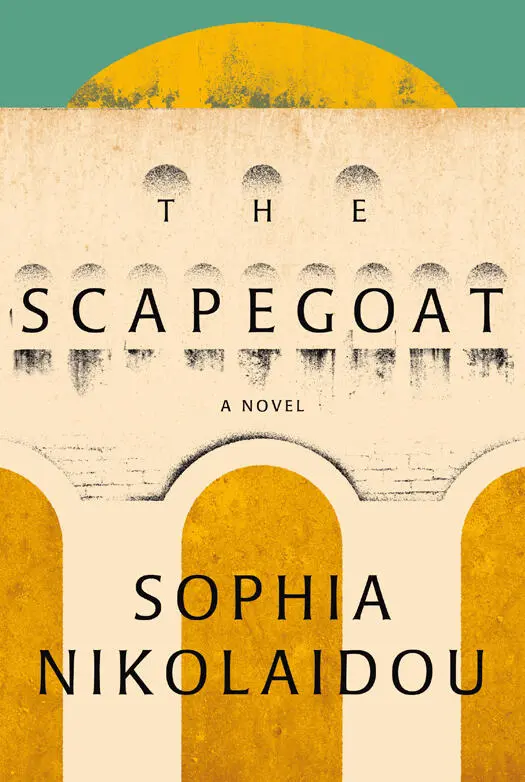
- Название:The Scapegoat
- Автор:
- Издательство:Melville House
- Жанр:
- Год:2015
- ISBN:нет данных
- Рейтинг книги:5 / 5. Голосов: 1
-
Избранное:Добавить в избранное
- Отзывы:
-
Ваша оценка:
The Scapegoat: краткое содержание, описание и аннотация
Предлагаем к чтению аннотацию, описание, краткое содержание или предисловие (зависит от того, что написал сам автор книги «The Scapegoat»). Если вы не нашли необходимую информацию о книге — напишите в комментариях, мы постараемся отыскать её.
Flash forward to modern day Greece, where a young, disaffected high school student is given an assignment for a school project: find the truth.
Based on the real story of famed CBS reporter George Polk — journalism’s prestigious Polk Awards were named after him — who was investigating embezzlement of U.S. aid by the right-wing Greek government, Nikolaidou’s novel is a sweeping saga that brings together the Greece of the post-war period with the current era, where the country finds itself facing turbulent political times once again.
Told by key players in the story — the dashing journalist’s Greek widow; the mother and sisters of the convicted man; the brutal Thessaloniki Chief of Police; a U.S. Foreign Office investigator — it is the modern-day student who is most affecting of them all, as he questions truth, justice and sacrifice. . and how the past is always with us.
The Scapegoat — читать онлайн бесплатно полную книгу (весь текст) целиком
Ниже представлен текст книги, разбитый по страницам. Система сохранения места последней прочитанной страницы, позволяет с удобством читать онлайн бесплатно книгу «The Scapegoat», без необходимости каждый раз заново искать на чём Вы остановились. Поставьте закладку, и сможете в любой момент перейти на страницу, на которой закончили чтение.
Интервал:
Закладка:
She served the food. She had no intention of continuing that conversation. Whatever else she had to say on the subject, she was already saying on the inside.
— Did you know our grandparents knew one another?
Evelina shrugged.
We’ve been hanging out for the past week or so. Her mother apparently considers me a good influence. When we were eight years old, Evelina told her mother, I always have the best conversations with Minas. He’s the smartest kid in our class .
— Just look at our little grown-ups, her mother said to mine, back then. Mrs. Dinopoulou also told Mom that Evelina was the one who put that valentine in my bag in first grade, the paper heart that said, Minas, will you marry me? on it.
At some point, though, we sort of stopped having anything to do with one another. Evelina hung out with more popular kids; I didn’t meet her requirements. It bugged her that I always got the better grades, always scored just a few points higher than she did. Last year she finally got what she wanted and calmed down. The fact that she’s in charge of the attendance book this year is proof that she finally beat me. After being runner-up for years, now she’s getting ready to be flag-bearer at the school parade.
Evelina’s one of those people who needs constant validation. No amount of praise is ever enough. She dopes herself like a race horse. She thinks she knows the truth just because she knows how to pick the right answers on exams. Which isn’t all that great an accomplishment, if you ask me.
There will always be someone who’s better. Someone is always going to know more. Evelina is a right-answer machine, as long as she’s already learned the answer from one of our textbooks. Maybe that’s why it’s so hard for her to deal with Soukiouroglou — because he’s unpredictable. He asks unexpected questions and accepts bizarre answers, as long as you support your position with evidence. Souk doesn’t test our knowledge, he takes it as a given. What he cares about is how we think. His mind doesn’t work like other people’s, he’s full of incendiary ideas and loves to provoke. The atmosphere in his classroom can get pretty tense. Not everyone can take it, and not everyone is interested in supporting a position. If it’s in the answer key, that’s good enough for them. Souk doesn’t even read answer keys. Which is a big problem if you’re in a hurry to find out the answers.
THROUGH OTHER EYES
— Sir, I read the pages you recommended.
Minas’s tone was one of mild despair.
— So, I need to quote others’ opinions and cite my sources properly.
He didn’t know what else to say.
— You think that’s enough? Soukiouroglou asked. Just cite some sources and you’re through? That sounds like an easy way out.
— But, sir, I’m going to discuss the events, too. I’ve been investigating the causal relationships.
Minas couldn’t remember precisely where he’d heard that phrase, but it seemed to suit the occasion, so he went ahead and tacked it on.
— Investigating the causal relationships? Where on earth did that come from? Someone less well-disposed might call your language borrowed.
He gave Minas a look and decided the conversation was worth pursuing.
Years earlier he had spent a semester of unspeakable loneliness in Bristol. The historians at the university there, or at least the ones he met, were all provocatively postmodern, and avoided mentioning events. They preferred to talk about the narrative construction of history . Some wore moth-eaten sweaters and ragged slacks, but others wore bow ties to class, men of privilege with no need to prove anything to anyone, who considered power dynamics the sole driving force behind history.
— Historical events arrive to us already interpreted, they’re trickier than we think, he remembered one graduate student saying, a young man with a bowl cut, wire-rimmed glasses, and a healthy dose of self-confidence. The historical continuum has no beginning, middle, or end, he proclaimed. The ideology of periodization is way out of date. It’s time we recognized that. We can’t just divide history into neat slices. History is a construction. Narrative would be the best word for it.
None of this was entirely foreign to Soukiouroglou, but in Bristol it seemed more appealing. Perhaps it was the unbearable wetness of the place, or the solitude, the fact that he never heard Greek being spoken on the street. He even dreamed in English. It wasn’t something he enjoyed — on the contrary, it was a heavy price to pay.
He wrote two articles while he was there and took notes for more, but nothing could make up for the nights he spent shut up in the cell of a room they gave him, his gaze trained on the wall. As was natural, he became even more suspicious in the face of what was commonly known as truth. So many of his fundamental certainties had been shaken. And yet deep down, he knew it was all not much more than intellectual gymnastics. He didn’t see the wisdom in radical skepticism.
On his return to Greece, he was a different person altogether. Fani was the first to notice. Your voice changed , she’d said. It’s deeper, less certain .
That lesson from his days in Bristol was what he wanted to share with Minas, whose paper he had conceived as an exercise in recognizing that there were multiple versions of reality. A simple statement of the various viewpoints on the case wasn’t what Souk had in mind.
Souk’s colleagues couldn’t believe how slippery he was, pretending to be some kind of monk and then suddenly showing up in the society column in a tender tête-a-tête with Fani Dokou. The photograph that got published the morning after the concert showed them leaning in toward one another. Rumors flew, his colleagues jumped to all kinds of conclusions.
But the joking and laughter stopped abruptly when Souk walked into the teachers’ office, silent and obviously exhausted. He had sunglasses on and didn’t bother saying hello to anyone. They observed his entrance, exchanging glances and committing his movements to memory, as fodder for later conversations. Souk opened his locker, got out his things, and made photocopies for class. He still hadn’t said a word to anyone by the time he headed down to morning prayer. He never crossed himself during prayer, a stance that had attracted comments of all sorts during the years he’d been working at the school.
He was in no mood for small talk or smiles. He stood behind the rows of students, alone, entirely alone, with an armful of books shielding his stomach.
He had missed Fani. They tried to keep up on the phone, but sometimes things got in the way: concert tours, travel, resounding silences initiated by one or the other or both. But then at some point they would simply pick up the thread again, start right where they’d left off, in the middle of a sentence, telling stories to fill in the gaps. Fani told him about experiences she’d had, things she’d done and seen, while he mostly talked about what he’d been reading. They never intruded on one another’s lives, perhaps out of discreteness, perhaps out of discomfort. Souk also talked on the phone with her son. Nikolas Dokos didn’t know Souk all that well, but the boy clearly had a soft spot for him. He was intrigued by the unlikely combination of the teacher’s austere, almost ascetic personality and the abrupt flights of his thought — his unconventional mind, his biting irony, the way he toppled the walls of established logic, overturning everything. Souk didn’t pretend to be a revolutionary, like most of the musicians Nikolas had grown up around. He never launched into long diatribes against the system, he didn’t try to one-up others by being the most radical person around. He said what he thought, didn’t hold back with his opinions, and didn’t change them to suit the circumstances. When you asked nothing of him, he gave you everything. But if you put a knife to his throat, he’d dig his heels in like a mule.
Читать дальшеИнтервал:
Закладка:
Похожие книги на «The Scapegoat»
Представляем Вашему вниманию похожие книги на «The Scapegoat» списком для выбора. Мы отобрали схожую по названию и смыслу литературу в надежде предоставить читателям больше вариантов отыскать новые, интересные, ещё непрочитанные произведения.












Обсуждение, отзывы о книге «The Scapegoat» и просто собственные мнения читателей. Оставьте ваши комментарии, напишите, что Вы думаете о произведении, его смысле или главных героях. Укажите что конкретно понравилось, а что нет, и почему Вы так считаете.