Daniyal Mueenuddin - In Other Rooms, Other Wonders
Здесь есть возможность читать онлайн «Daniyal Mueenuddin - In Other Rooms, Other Wonders» весь текст электронной книги совершенно бесплатно (целиком полную версию без сокращений). В некоторых случаях можно слушать аудио, скачать через торрент в формате fb2 и присутствует краткое содержание. Год выпуска: 2010, Издательство: Bloomsbury Publishing, Жанр: Современная проза, на английском языке. Описание произведения, (предисловие) а так же отзывы посетителей доступны на портале библиотеки ЛибКат.
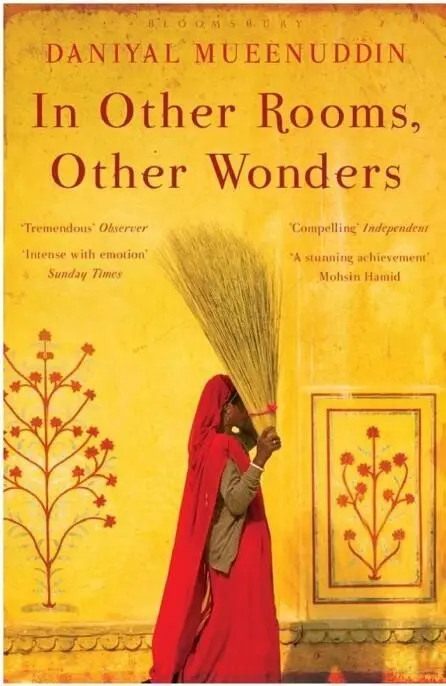
- Название:In Other Rooms, Other Wonders
- Автор:
- Издательство:Bloomsbury Publishing
- Жанр:
- Год:2010
- ISBN:нет данных
- Рейтинг книги:3 / 5. Голосов: 1
-
Избранное:Добавить в избранное
- Отзывы:
-
Ваша оценка:
In Other Rooms, Other Wonders: краткое содержание, описание и аннотация
Предлагаем к чтению аннотацию, описание, краткое содержание или предисловие (зависит от того, что написал сам автор книги «In Other Rooms, Other Wonders»). Если вы не нашли необходимую информацию о книге — напишите в комментариях, мы постараемся отыскать её.
In Other Rooms, Other Wonders — читать онлайн бесплатно полную книгу (весь текст) целиком
Ниже представлен текст книги, разбитый по страницам. Система сохранения места последней прочитанной страницы, позволяет с удобством читать онлайн бесплатно книгу «In Other Rooms, Other Wonders», без необходимости каждый раз заново искать на чём Вы остановились. Поставьте закладку, и сможете в любой момент перейти на страницу, на которой закончили чтение.
Интервал:
Закладка:
A crowd of men lined a drive half a kilometer long leading into the heart of the farm, saluting as the car passed, the chauffeur not slowing down, Murad responding with a wave. As they approached the farm he had become quiet — she sensed the weight of his responsibilities settling on him, and she too felt this weight. Their income derived from this place, and hundreds of men worked on the farm, all looking to Murad and now in some degree to her for their livelihood. People in Islamabad marveled that Murad could spend such long periods at the farm; how then would she do here, a city girl to the core? She would be dependent a great deal upon him, and even more upon herself, upon her resources, as Murad would put it.
A series of archways had been built of bamboo and tree branches, the final one illuminated with an electronic sign that signaled in flashing green and blue lights, happy marraj sir well-come madam.
‘The poetry of arrival,’ joked Murad, breaking the silence, taking her hand and squeezing it.
They drove through an orchard, then through a heavy wooden gate that closed behind them, leaving the crowd outside. It was calm, the house servants offering garlands, men she had never before met, and who would now always be part of her life. The simplicity of the house at first surprised Lily, a plain wooden door leading from the car park, then only eight rooms, built in a U around a grassy courtyard. The lawn opening out from the top end of the courtyard, however, was truly immense, decorated with hundreds, no thousands of oil lamps in little clay dishes, burning along the walls, sparkling in the trees, making geometric designs along the edges of flower beds, disappearing in the far distance. The garden had been his mother’s one contribution to the farm — a legacy to a woman, to me, thought Lily hopefully — six acres enclosed by a wall, with rose beds, groupings of jacaranda trees, flame-of-the-forest, thick banyans with their suckers planted like proliferating elephants’ legs. A lily pond, the lily pads two feet across. His mother would come in the season and herself prune back the roses, hands which did no other work, as Murad had told her.
Two dogs of the local bhagariya breed, resembling wolves, capered around Murad, jumping up, licking at his hand, not quite daring to leap up on him, while he said, ‘Bad dogs, no, no!’ — but playing with them, patting away their paws.
Her perceptions blurred from sleeping in the car, wishing she had a moment to reflect, to arrange herself, Lily knew how much her response to the house and the place mattered to Murad. Petting one of the dogs, which licked its lips with a shy tongue, its creamy yellow snout pricked with black whiskers, Lily felt the place resounding within her, strange sharp smells, servants wearing village clothes bustling past carrying the bags, so many people. The lamps arranged in the lawn blinked and flared as a breeze came up.
‘This is our room,’ said Murad, opening a door. And in a shy tone, ‘I had it fixed for us, see. It was my father’s bedroom.’
It had been redone tastefully, the new-laid rosewood floor gleaming with fresh varnish, rosewood shutters, doors, windows — ‘The wood came from our own trees,’ he told her. A pale blue Persian carpet cooled the room and made it feminine, as did the modern white furniture, arranged too formally in front of the fireplace. He made her sit on the sofa, bounce on the new bed. ‘Do you know, I’ve never slept a single night in this room. I didn’t want my father to come here and find that I’d stepped into his place. Until a month ago his farm clothes were still in the closets. I asked his permission. Now it’s you and me, darling, now it’s our turn.’
They ate dinner in the bedroom, starting with the last bottle of excellent wedding champagne, which they had brought from Islamabad — Mino had given them several cases as a present, unobtainable from the bootleggers in Islamabad, smuggled on a launch from Dubai into Karachi. Lily went to her suitcase, which a servant had carried in, and removed a packet of tea candles. She lit them all over the room, then turned off the lights and lay down on the sofa, feeling her muscles relaxing. In a moment she would unpack, finding places for all her things, shoes, shirts, her jewelry in a drawer, her toiletries in the bathroom, which also had been entirely redone, a parquet floor and an antique bathtub lacquered royal blue. She needed to make the room hers, to start with an ordered center and work her way out. Murad sat patiently watching her, didn’t press her to go out and see the house and the garden, which Lily knew had absorbed so much of his love and imagination when living here alone.
The breeze had turned to wind, servants going around closing the shutters all over the house, making a clattering wooden sound.
‘It’s a dust storm,’ he said, when she had finished organ izing her things. ‘Come on, I’ll show you something that you’ve never seen before.’
As she came out of the room, forcing open the door, climbing a circular staircase up to the roof, the wind struck her, bent her over, snatching away the words they shouted. The sand peeled over them, fine but hard, spattering, liquid in its movement. Before they went up Murad had wrapped cloths around their heads, leaving just a slit for the eyes, muffling them.
When they were up on the roof, above the treetops, he lit a powerful searchlight and placed it on the ground, then led her forward.
‘Look,’ he shouted.
At first she didn’t see anything, just the motes of sand streaming past in the light, like snow caught in the headlights of a car racing into a snowstorm. Then, in front of her, twenty meters tall, her shadow projected onto the dust flowing horizontally through the air. She waved her arms, the shadow mimicking her up in the sky, fuzzy, long-limbed. Running forward, right to the edge of the roof, balancing against the wind, she watched her shadow become tiny, diffuse, armless, headless. A line of eucalyptus trees close to the house waved and bent wildly, leaves being stripped away, leaves from distant trees in the garden swirling past, and she thought, in exultation, This is life, this is real and actual. This is ours. Facing into the wind, she took the cloth from her head, held it fluttering like a pennant for a moment and then released it, letting it sail away, attenu ated, white, flashing into the darkness.
‘Be careful,’ shouted Murad in her ear, coming up and taking hold of her elbow. ‘Don’t fall!’
‘Dance with me,’ she said. She would always remember this sandstorm, this eerie yellow light. Taking his arm, putting it around her waist, she held him very close, her face buried in his neck, eyes closed, the wind singing and fading.
Everyone spoiled her, everyone smiled on the young pretty bride. A month passed, then six weeks. The servants studied her with wide-open eyes, wondering what role she would play in the household, cooked elaborate meals, quail pilau, veal in a thick brown curry, grilled lamb, carrot halva . The orchard manager sent the first guavas, pink-fleshed and sweet, another time an enormous honeycomb, still attached to the branch on which it had grown, carried to her on a broad plank, the comb sopping. Like the chicken at the farm, the eggs, she had never tasted such good honey, spiced sharp by the clover that the bees fed on. In those first weeks she slept as if making up for months and years, waking in the morning, kissing Murad as he went off to the fields, then falling asleep again. Her fibers loosened, her mind settled to the pace of the farm.
Murad and Lily always had their breakfast on the lawn, the air soft, birds calling, babblers, lorikeets, bulbuls, thrushes, hoopoes, the brain-fever bird, from the orchard the booming call of the coucal — Murad knew all the names, of the plants, the birds. Mongooses played in the road sometimes when they walked in the fields, through lanes of sugarcane, or in the orchard, being flooded now with water, so that the thick black soil newly turned by the plow glistened and gave up a ripe odor.
Читать дальшеИнтервал:
Закладка:
Похожие книги на «In Other Rooms, Other Wonders»
Представляем Вашему вниманию похожие книги на «In Other Rooms, Other Wonders» списком для выбора. Мы отобрали схожую по названию и смыслу литературу в надежде предоставить читателям больше вариантов отыскать новые, интересные, ещё непрочитанные произведения.









Обсуждение, отзывы о книге «In Other Rooms, Other Wonders» и просто собственные мнения читателей. Оставьте ваши комментарии, напишите, что Вы думаете о произведении, его смысле или главных героях. Укажите что конкретно понравилось, а что нет, и почему Вы так считаете.