Daniyal Mueenuddin - In Other Rooms, Other Wonders
Здесь есть возможность читать онлайн «Daniyal Mueenuddin - In Other Rooms, Other Wonders» весь текст электронной книги совершенно бесплатно (целиком полную версию без сокращений). В некоторых случаях можно слушать аудио, скачать через торрент в формате fb2 и присутствует краткое содержание. Год выпуска: 2010, Издательство: Bloomsbury Publishing, Жанр: Современная проза, на английском языке. Описание произведения, (предисловие) а так же отзывы посетителей доступны на портале библиотеки ЛибКат.
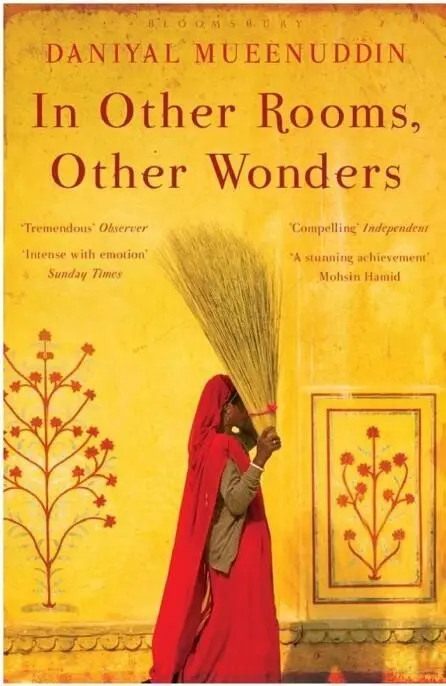
- Название:In Other Rooms, Other Wonders
- Автор:
- Издательство:Bloomsbury Publishing
- Жанр:
- Год:2010
- ISBN:нет данных
- Рейтинг книги:3 / 5. Голосов: 1
-
Избранное:Добавить в избранное
- Отзывы:
-
Ваша оценка:
In Other Rooms, Other Wonders: краткое содержание, описание и аннотация
Предлагаем к чтению аннотацию, описание, краткое содержание или предисловие (зависит от того, что написал сам автор книги «In Other Rooms, Other Wonders»). Если вы не нашли необходимую информацию о книге — напишите в комментариях, мы постараемся отыскать её.
In Other Rooms, Other Wonders — читать онлайн бесплатно полную книгу (весь текст) целиком
Ниже представлен текст книги, разбитый по страницам. Система сохранения места последней прочитанной страницы, позволяет с удобством читать онлайн бесплатно книгу «In Other Rooms, Other Wonders», без необходимости каждый раз заново искать на чём Вы остановились. Поставьте закладку, и сможете в любой момент перейти на страницу, на которой закончили чтение.
Интервал:
Закладка:
Yet Dunyapur had been spoiled for him by the presence of Zainab. He minded very much that he had given his sons a stepmother of that class, a servant woman. He minded that he had insulted his first wife in that way, by marrying again, by marrying a servant, and then by keeping the marriage a secret. His senior wife had never reproached him, but after Jaglani told her she quickly became old. She prayed a great deal, spent much of her time in bed, stopped caring for herself. Her body became rounded like a hoop, not fat but fleshed uniformly all over, a body thrown away, throwing itself away, the old woman sitting all day in bed, dreaming, muttering perhaps when left alone. He reproached himself for taking his eldest son’s daughter and giving her to Zainab, transplanting the little girl onto such different stock. Secretly, and most bitterly, he blamed himself for having been so weak as to love a woman who had never loved him. He made an idol of her, lavished himself upon her sexual body, gave himself to a woman who never gave back, except in the most practical terms. She blotted the cleanliness of his life trajectory, which he had always before believed in. She represented the culmination of his ascendance, the reward of his virtue and striving, and showed him how little it all had been, his life and his ambitions. All of it he had thrown away, his manliness and strength, for a pair of legs that clasped his waist and a pair of eyes that pierced him and that yet had at bottom the deadness of foil.
One morning in April, three months after he had been diagnosed and condemned to die, Jaglani woke feeling better than usual. Walking now with a cane, his face gaunt and improved by it, he went to the verandah and without telling any of the people in the house ordered Mustafa to drive him to Dunyapur. They arrived in the dera just at the time when the sun began to pour down over the roofs of the sheds onto the bricked threshing floor. Chickens walked about picking at spilled grain, and the odor of burnt oil that had soaked into the dust added to the sleepiness of the scene, a heavy baking scent.
Only a few people sat in the sun, two accountants, a watchman, and one or two others, loafers sitting around drinking tea. On the far side of the large open square an old woman with bare feet hunched over and swept the brick threshing floor, throwing up a cloud of dust in the sun. When the people sitting there saw the car they jumped up, saying, ‘Chaudrey Sahib, Chaudrey Sahib,’ as if they had something to hide.
Mustafa ran around to open the door, and Jaglani stepped painfully out, took his cane, and after receiving their obeisance went into his own house, without pausing to discuss business. The men had approached him not less deferentially than before but less fearfully. They knew he had come for the last time, and already their feelings about him were becoming sweeter and more genuinely respectful. With him an entire generation of men from Dunyapur would pass.
Jaglani had lived an opportunistic life, seizing power wherever he saw it available and unguarded, and therefore he had not developed sentimental attachments to the tokens of his power, land, possessions, or even men. Walking into the silent dark house, he felt, for the first time, that he would regret losing a place, these whitewashed walls, the little windows. He had aged greatly in the past weeks as the disease bit into him. He had never loved his wife, his children were fools, and he had no friends. For him there had not been any great leave-takings, no farewells. He had spent his life among the farmers and peasants of the area, or among politicians. He liked some of them, liked their stories or their intelligence or cunning. Although he didn’t laugh often, he played a part when the politicians or the strongmen from around Dunyapur gathered and talked. In the early years, Jaglani sat to one side, dark and acute, and in quiet moments added his shrewd remarks. Later, when he became important, he still mostly listened, but signaled to those around him that they could unwind and speak freely by making brief and slightly witty comments, speaking through lips almost clenched, resisting a smile. His social life had not extended beyond these diversions. He worked in concert with other men, or used them, or struggled against them. The rest did not interest him.
Going into the small living room, Jaglani saw a light in Zainab’s room, and thought that she must be there with the baby. He wondered if someone in his household at Firoza had called and informed her of his arrival. He knew that she must have contacts among his servants in the city. She would want him to find her there, caring for the child. The darkness of the house, its dampness, the expectancy of the salt and pepper shakers carefully aligned on the table and the sadness of the toothpick holder, its pink plastic cover gleaming softly, waiting for his next visit and his next meal, reminded him of the days when he first realized that he loved Zainab, and she sensed that he loved her, and began to smile around him, to play as she served him dinner. He walked quietly to her bedroom. She lay on the white divan, with the baby next to her. He expected her to jump up, to make some reproach at his not having visited her for so long, but she put a finger to her lip, and then with gentle hands covered the baby with a tiny knitted blanket. She disengaged herself, rolled away, kissed the baby, and stood up, smoothing her hair with one hand and arranging her head scarf.
‘ Salaam, Chaudrey Sahib,’ she said quietly. ‘Let me bring you some tea.’ She showed no surprise at seeing him.
Without waiting for an answer she went out. He leaned on his cane, looking down at the baby lying splayed on its face, dressed too warmly, in socks, a sweater, and a crocheted hat. Tiring, he sat down heavily on a chair. He loved her still, he realized, noting it, as if painfully writing something into a notebook. (Lately he often found himself doing this, inscribing his experiences and thoughts, his final rec ord, in an invisible notebook, never able to find a pencil, holding the pad in the air and writing shakily, illegibly.) He had come here to abjure his great love, and he found just this — just a small room lit by a single bulb, chilly despite the sun outside, and the woman he loved sitting alone, putting to sleep this stolen child that he gave her. He finally understood that she lived a simple life, and a wave of pity came over him. He had imagined her moving quickly from task to task, and only now did he perceive how lonely she might have been, waiting for him in the past years, never knowing when he would arrive. She had made so little of his coming that it had not occurred to him that all her days must have been directed toward that moment.
She carried in the tea things, the milk in the pitcher steaming, the sugar bowl covered with an embroidered cloth. From the smugglers’ market in Rawalpindi he had bought her this flowery tea set, kept unused on a shelf with her other good dishes. She was the only woman for whom he had ever brought presents. She placed the tray on a table by the bed, then sat down on the floor, at the edge of the carpet, with her knees drawn up and enclosed in her arms. She looked up at him, holding her chin on her knees. He noticed the kohl on her eyes.
‘They tell me that you’re dying,’ she said quietly, as if smoothing it away between them.
‘Probably.’
She rose up on her knees and poured him tea, sweetened it, and handed him the cup. Watching her settle back on her compact haunches, seated on the carpet, he understood that he would never again make love to her, never again hold her nor see her face when she woke in the morning. They talked of nothing, she told him of the baby’s little tricks, asked him about the farm. It surprised him that she didn’t ask about her own future, about property or money. Finishing his tea, he rose, making an effort not to lean on the cane.
Читать дальшеИнтервал:
Закладка:
Похожие книги на «In Other Rooms, Other Wonders»
Представляем Вашему вниманию похожие книги на «In Other Rooms, Other Wonders» списком для выбора. Мы отобрали схожую по названию и смыслу литературу в надежде предоставить читателям больше вариантов отыскать новые, интересные, ещё непрочитанные произведения.











Обсуждение, отзывы о книге «In Other Rooms, Other Wonders» и просто собственные мнения читателей. Оставьте ваши комментарии, напишите, что Вы думаете о произведении, его смысле или главных героях. Укажите что конкретно понравилось, а что нет, и почему Вы так считаете.