Indra Sinha - Animal's People
Здесь есть возможность читать онлайн «Indra Sinha - Animal's People» весь текст электронной книги совершенно бесплатно (целиком полную версию без сокращений). В некоторых случаях можно слушать аудио, скачать через торрент в формате fb2 и присутствует краткое содержание. Год выпуска: 2007, Издательство: Simon & Schuster, Жанр: Современная проза, на английском языке. Описание произведения, (предисловие) а так же отзывы посетителей доступны на портале библиотеки ЛибКат.
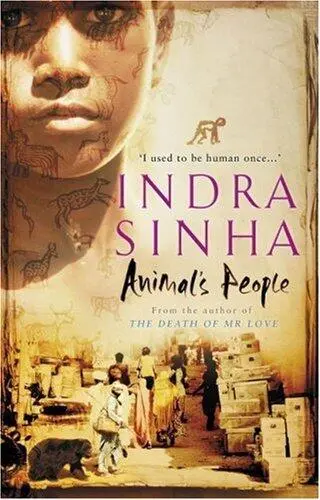
- Название:Animal's People
- Автор:
- Издательство:Simon & Schuster
- Жанр:
- Год:2007
- ISBN:нет данных
- Рейтинг книги:5 / 5. Голосов: 1
-
Избранное:Добавить в избранное
- Отзывы:
-
Ваша оценка:
Animal's People: краткое содержание, описание и аннотация
Предлагаем к чтению аннотацию, описание, краткое содержание или предисловие (зависит от того, что написал сам автор книги «Animal's People»). Если вы не нашли необходимую информацию о книге — напишите в комментариях, мы постараемся отыскать её.
When a young American doctor, Elli Barber, comes to town to open a free clinic for the still suffering townsfolk — only to find herself struggling to convince them that she isn't there to do the dirty work of the 'Kampani' — Animal plunges into a web of intrigues, scams and plots with the unabashed aim of turning events to his own advantage.
Compellingly honest, entertaining and entirely without self-pity, Animal's account lights our way into his dark world with flashes of pure joy — from the very first page all the way to the story's explosive ending.
Animal's People — читать онлайн бесплатно полную книгу (весь текст) целиком
Ниже представлен текст книги, разбитый по страницам. Система сохранения места последней прочитанной страницы, позволяет с удобством читать онлайн бесплатно книгу «Animal's People», без необходимости каждый раз заново искать на чём Вы остановились. Поставьте закладку, и сможете в любой момент перейти на страницу, на которой закончили чтение.
Интервал:
Закладка:
“Tear this place down,” someone cries. “Burn it!” yells another, so I start shouting, “Friends, do not burn anything here, or the chemicals will catch light, it’ll be that night all over again.”
This word spreads in the crowd, who by now number hundreds, with more still arriving. “Do not burn anything. Do not light matches.”
The ever-swelling crowd is full of energy, it wants to do something, but no one can agree what. The women, possessed by nothing’s power, begin their chants, “We are flames not flowers. With our brooms, we will beat the Kampani, we will sweep them out from Khaufpur. Out of India we will sweep them. Out of all existence.”
Of course it can’t last. Dark vans are pulling up by the shattered gate, many vans, maybe twenty. Out jump police wearing helmets, carrying shields and long staves. They form up in ranks, then enter the factory. The crowd, which had gone quiet, watching, now resumes its chants of defiance, louder than before the whole crowd is singing. At such moments people get carried away and say things they otherwise never would utter. They’re shouting, come on, do the Kampani’s dirty work, beat us, take our lives, what do we care, who’ve lost everything anyway? The police advance, without halting or asking questions, their long staves begin to beat. Then there’s uproar, cries of men and women being hurt, howls of anger from deeper in the crowd, which draws back, away from the zone of beating. A police general steps up, a loudhailer in his hand. His voice sounds twangy as he shouts. “Go back to your homes, don’t be led astray, the people who have organised this are Hindu extremists, they have come here from outside to sow hatred and divide your community.”
Despite the fear, there is a great shout of laughter. “Go away,” voices shout. “There are no Muslims or Hindus here, there are just humans.”
Plus one animal. I am lost in a thicket of legs, so I work my way to one side of the crowd, then I can see the fallen gates, police dragging people out, throwing them in the trucks.
“Leave us alone,” cry the voices. “Go and lick the arse of your master the Chief Minister, who licks the hole of Peterson.”
“Get out! Go!” Then the chants begin again, flames not flowers, the chant of sweeping away with brooms, the song of the people’s platoons.
Even now, the horror of that day has hardly begun. More police trucks are arriving. Out of one jumps my old enemy Fatlu Inspector, whom I caught with a stone at the CM demo, this fat bastard is entering the factory site with his gang of goons. They don’t hesitate, but go straight into the crowd and then they are grabbing people, man, woman, doesn’t matter, by any part they can reach, arm, hair, ear, and dragging them off kicking and protesting.
“Send for help,” people are yelling. “Tell everyone to come!”
Fatlu, this putain, he is a bully, he takes pleasure in dealing out pain. He loves his power to hurt. At other times I have been afraid of him, I have run away, at the CM’s demo I hid behind a tree, but today is the day Zafar died. I’m burning with a bloody rage. Fatlu has grabbed hold of a man from Jyotinagar, he is beating him with his fist. “Bastard, where is your permission to enter this place?”
“Sir, I came with the others,” says this fellow, who’s thin and weak, with all the woes of Khaufpur written in his face.
“Bastard,” says Fatlu, “how dare you speak to me? Where…is…your…permission?” During each of these pauses, the fist falls on the man’s head.
“We don’t need your permission,” a woman shouts. It’s Nisha. All in white is she, the colour a widow wears. The news is confirmed then, Zafar is dead. Fatlu continues to beat the man. Nisha grabs hold of his arm, tries to drag him off. Fatlu swings his elbow. She falls to the ground, holding her face. Blood is coming from her mouth. He has hurt Nisha, I will kill this bastard and eat his heart.
Fatlu never sees his death approach, I’ve come running up behind, he’s missed me because I’m so low to the ground, I’ve grabbed the swine round the legs and hauled him down. With a shout, Fatlu falls. Struggling he’s to get back on his feet, but I’ve got him pinned. In vain he strikes at my head, I am stronger, far stronger than he. My shoulders and arms are powerful, muscled like a wrestler’s, I’ve told you this, and now they will end this bastard’s life. My hands fasten round his throat. With what horror his eyes bulge. “No more torture for you, sisterfucker,” I shout in his ear then take the ear in my teeth, I bite until blood is running between my lips, he is screaming. I will not stop, let the ear come off, that’s just the beginning, I am going to tear out his throat and gouge his eyes, but rough hands are pulling me off, blows are falling, blows of heavy sticks, on my head, my back, my shoulders, nothing of me is there that is not being beaten. From far away, it seems, I hear Nisha’s voice crying, “Leave him alone, he was just trying to save me. Father, help him.” As the blows fall I’m thinking, Nisha darling, no use is it appealing to the father, nor to the mother, the son nor the holy ghost, for neither Christian am I nor Hindu nor Muslim, not Brahmin nor Sufi nor saint, neither man am I nor beast. I don’t know what is being beaten here. If they kill me what will die?
The blows stop. I’m lying on the ground, my mouth is full of blood, which I hope is Fatlu’s. Something slimy I’ve spat on the ground, then I see Somraj, who does not believe in direct or violent action, who trusts that law will flower into justice, walk forward and place himself in front of Fatlu Inspector.
“You are a disgrace,” Somraj says, and slaps Fatlu across the face.
The sticks blur around Somraj, they come crashing from all directions. I see him fall, his white spotless kurta turning red, many of them are standing around him with the sticks flailing. In this way my dream comes true, the one where sticks descended on Somraj, and afterwards crows flew down upon his lifeless corpse. The thought comes to me, it’s not his body that is dying, it’s his heart. Lying hearing the thud of police sticks beating Somraj, I don’t know what will happen to us. Maybe they’ll kill us here and now, or drag us to their cells to finish us. So many die in the cells. What will it be like to die? Can it be worse than this horrible life? I am not afraid, just curious. Then a thing happens that no one could have predicted.
From nowhere a tide of ragged people surges over the police and sweeps them away. Thousands have come, they have heard of the fight at the factory and the plight of the Jyotinagar folk and they have come from the Nutcracker and Blue Moon and beyond, from Phuta Maqbara and Mira Colony, from Khabbarkhana and Qazi Camp, even from Chowk, the people have dropped what they were doing and run to our aid and the cursed police are gone. As they run for their trucks, they are forced to crouch behind their shields because the road is lined with crowds who want their blood, never have I seen such fury. One man, he’s ragged, thin his ribs are like furrows ploughed in his flesh, no strength can he have for portering or load-lifting, but so filled with anger is his weak body that he has ripped a paving stone from out of the earth and flung it at the pandus. Now it’s their turn to drop, it’s their blood that stains the earth. Let them bleed, cunts, no stomach have they for this fight. One thing it’s when people are unarmed, defenceless, but these newcomers are armed, the despair of twenty years has turned to rage, in some hands I see knives and swords gleaming. That’s when I know that this will not end here. This day is not over yet.
People from the Claw find us and wipe the blood from us and bring us back to Somraj’s house. How long were we in the factory, I don’t know, it must have been hours, for the sun is setting, it is below the rooftops, the sky is streaked red like it too is wearing blood-soaked bandages. Somraj Pandit is beaten sore, but refusing to go and lie down, his daughter is fretting over him, it’s now I learn she’s had no news from the old city.
Читать дальшеИнтервал:
Закладка:
Похожие книги на «Animal's People»
Представляем Вашему вниманию похожие книги на «Animal's People» списком для выбора. Мы отобрали схожую по названию и смыслу литературу в надежде предоставить читателям больше вариантов отыскать новые, интересные, ещё непрочитанные произведения.









Обсуждение, отзывы о книге «Animal's People» и просто собственные мнения читателей. Оставьте ваши комментарии, напишите, что Вы думаете о произведении, его смысле или главных героях. Укажите что конкретно понравилось, а что нет, и почему Вы так считаете.