Mavis Gallant - Paris Stories
Здесь есть возможность читать онлайн «Mavis Gallant - Paris Stories» весь текст электронной книги совершенно бесплатно (целиком полную версию без сокращений). В некоторых случаях можно слушать аудио, скачать через торрент в формате fb2 и присутствует краткое содержание. Год выпуска: 2002, Издательство: NYRB Classics, Жанр: Современная проза, на английском языке. Описание произведения, (предисловие) а так же отзывы посетителей доступны на портале библиотеки ЛибКат.
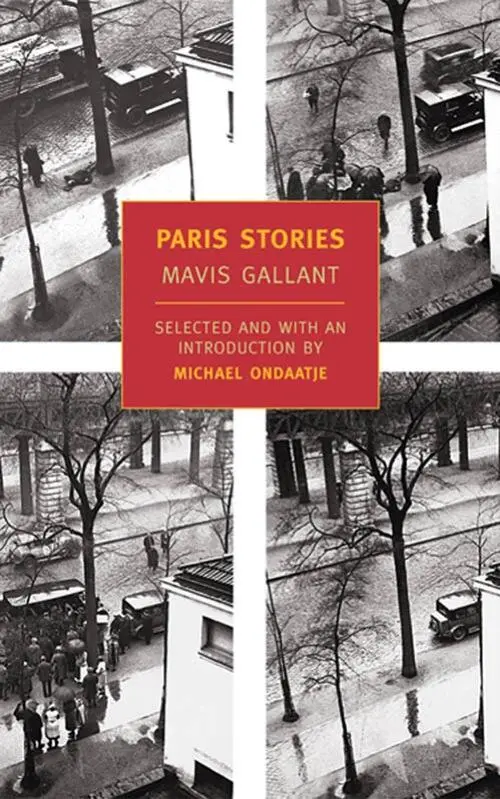
- Название:Paris Stories
- Автор:
- Издательство:NYRB Classics
- Жанр:
- Год:2002
- ISBN:нет данных
- Рейтинг книги:5 / 5. Голосов: 1
-
Избранное:Добавить в избранное
- Отзывы:
-
Ваша оценка:
Paris Stories: краткое содержание, описание и аннотация
Предлагаем к чтению аннотацию, описание, краткое содержание или предисловие (зависит от того, что написал сам автор книги «Paris Stories»). Если вы не нашли необходимую информацию о книге — напишите в комментариях, мы постараемся отыскать её.
Paris Stories — читать онлайн бесплатно полную книгу (весь текст) целиком
Ниже представлен текст книги, разбитый по страницам. Система сохранения места последней прочитанной страницы, позволяет с удобством читать онлайн бесплатно книгу «Paris Stories», без необходимости каждый раз заново искать на чём Вы остановились. Поставьте закладку, и сможете в любой момент перейти на страницу, на которой закончили чтение.
Интервал:
Закладка:
At Forain's first meeting with Barbara, they drank harsh tea from mismatched cups and appraised each other in the gray light that filtered in from the court. She asked him, gently, about his fitness to translate and publish Tremski — then still at the bookstore, selling wartime memoirs and paperbacks and addressing parcels. Did Forain have close ties with the Nobel Prize committee? How many of his authors had received important awards, gone on to international fame? She was warm and friendly and made him think of a large buttercup. He was about the age of her daughter, Halina; so Barbara said. He felt paternal, wise, rid of mistaken ideals. He would become Tremski's guide and father. He thought, This is the sort of woman I should have married — although most probably he should never have married anyone.
Only a few of the mourners mounting the treacherous steps can have had a thought to spare for Tremski's private affairs. His wife's flight from a brave and decent husband, dragging by the hand a child of three, belonged to the folklore, not the history, of mid-century emigration. The chronicle of two generations, displaced and dispossessed, had come to a stop. The evaluation could begin; had already started. Scholars who looked dismayingly youthful, speaking the same language, but with a new, jarring vocabulary, were trekking to Western capitals — taping reminiscences, copying old letters. History turned out to be a plodding science. What most émigrés settled for now was the haphazard accuracy of a memory like Tremski's. In the end it was always a poem that ran through the mind — not a string of dates.
Some may have wondered why Tremski was entitled to a Christian service; or, to apply another kind of reasoning, why it had been thrust upon him. Given his shifting views on eternity and the afterlife, a simple get-together might have done, with remarks from admirers, a poem or two read aloud, a priest wearing a turtleneck sweater, or a young rabbi with a literary bent. Or one of each, offering prayers and tributes in turn. Tremski had nothing against prayers. He had spent half his life inventing them.
As it turned out, the steep church was not as severe as it looked from the street. It was in the hands of a small charismatic order, perhaps full of high spirits but by no means schismatic. No one had bothered to ask if Tremski was a true convert or just a writer who sometimes sounded like one. His sole relative was his stepdaughter. She had made an arrangement that suited her: She lived nearby, in a street until recently classed as a slum, now renovated and highly prized. Between her seventeenth-century flat and the venerable site was a large, comfortable, cluttered department store, where, over the years, Tremski's friends had bought their pots of paint and rollers, their sturdy plates and cups, their burglarproof door locks, their long-lasting cardigan sweaters. The store was more familiar than the church. The stepdaughter was a stranger.
She was also Tremski's heir and she did not understand Forain's role, taking executor to mean an honorary function, godfather to the dead. She had told Forain that Tremski had destroyed her father and blighted her childhood. He had enslaved her mother, spoken loud Polish in restaurants, had tried to keep Halina from achieving a French social identity. Made responsible, by his astonishing will, for organizing a suitable funeral, she had chosen a French send-off, to be followed by burial in a Polish cemetery outside Paris. Because of the weather and because there was a shortage of cars, friends were excused from attending the burial. Most of them were thankful: More than one fatal cold had been brought on by standing in the icy mud of a graveyard. When she had complained she was doing her best, that Tremski had never said what he wanted, she was probably speaking the truth. He could claim one thing and its opposite in the same sentence. Only God could keep track. If today's rite was a cosmic error, Forain decided, it was up to Him to erase Tremski's name from the ledger and enter it in the proper column. If He cared.
The mourners climbed the church steps slowly. Some were helped by younger relatives, who had taken time off from work. A few had migrated to high-rise apartments in the outer suburbs, to deeper loneliness but cheaper rents. They had set out early, as if they still believed no day could start without them, and after a long journey underground and a difficult change of direction had emerged from the Hôtel de Ville Métro station. They held their umbrellas at a slant, as if countering some force of nature arriving head-on. Actually, there was not the least stir in the air, although strong winds and sleet were forecast. The snow and rain came down in thin soft strings, clung to fur or woolen hats, and became a meager amount of slush underfoot.
Forain was just inside the doors, accepting murmured sympathy and handshakes. He was not usurping a family role but trying to make up for the absence of Halina. Perhaps she would stride in late, as at her mother's funeral, driving home some private grudge. He had on a long cashmere overcoat, the only black garment he owned. A friend had left it to him. More exactly, the friend, aware that he was to die very soon, had told Forain to collect it at the tailor's. It had been fitted, finished, paid for, never worn. Forain knew there was a mean joke abroad about his wearing dead men's clothes. It also applied to his professional life: He was supposed to have said he preferred the backlist of any dead writer to the stress and tension of trying to deal with a live one.
His hair and shoes felt damp. The hand he gave to be shaken must have chilled all those it touched. He was squarely in the path of one of those church drafts that become gales anywhere close to a door. He wondered if Halina had been put off coming because of some firm remarks of his, the day before (he had defended Tremski against the charge of shouting in restaurants), or even had decided it was undignified to pretend she cared for a second how Tremski was dispatched; but at the last minute she turned up, with her French husband — a reporter of French political affairs on a weekly — and a daughter of fourteen in jacket and jeans. These two had not been able to read a word of Tremski's until Forain had published a novel in translation about six years before. Tremski believed they had never looked at it — to be fair, the girl was only eight at the time — or any of the books that had followed; although the girl clipped and saved reviews. It was remarkable, Tremski had said, the way literate people, reasonably well traveled and educated, comfortably off, could live adequate lives without wanting to know what had gone before or happened elsewhere. Even the husband, the political journalist, was like that: A few names, a date looked up, a notion of geography satisfied him.
Forain could tell Tremski minded. He had wanted Halina to think well of him at least on one count, his life's work. She was the daughter of a former Army officer who had died — like Barbara, like Tremski — in a foreign city. She considered herself, no less than her father, the victim of a selfish adventure. She also believed she was made of better stuff than Tremski, by descent and status, and that was harder to take. In Tremski's own view, comparisons were not up for debate.
For the moment, the three were behaving well. It was as much as Forain expected from anybody. He had given up measuring social conduct, except where it ran its course in fiction. His firm made a specialty of translating and publishing work from Eastern and Central Europe; it kept him at a remove. Halina seemed tamed now, even thanked him for standing in and welcoming all those strangers. She had a story to explain why she was late, but it was far-fetched, and Forain forgot it immediately. The delay most likely had been caused by a knockdown argument over the jacket and jeans. Halina was a cold skirmisher, narrow in scope but heavily principled. She wore a fur-and-leather coat, a pale gray hat with a brim, and a scarf — authentic Hermès? Taiwan fake? Forain could have told by rubbing the silk between his fingers, but it was a wild idea, and he kept his distance.
Читать дальшеИнтервал:
Закладка:
Похожие книги на «Paris Stories»
Представляем Вашему вниманию похожие книги на «Paris Stories» списком для выбора. Мы отобрали схожую по названию и смыслу литературу в надежде предоставить читателям больше вариантов отыскать новые, интересные, ещё непрочитанные произведения.





Обсуждение, отзывы о книге «Paris Stories» и просто собственные мнения читателей. Оставьте ваши комментарии, напишите, что Вы думаете о произведении, его смысле или главных героях. Укажите что конкретно понравилось, а что нет, и почему Вы так считаете.