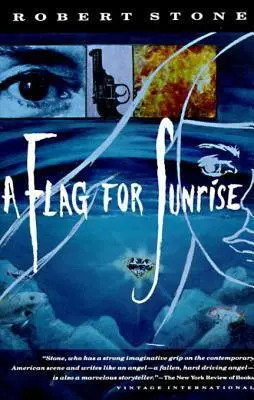
Robert Stone - A Flag for Sunrise
Здесь есть возможность читать онлайн «Robert Stone - A Flag for Sunrise» весь текст электронной книги совершенно бесплатно (целиком полную версию без сокращений). В некоторых случаях можно слушать аудио, скачать через торрент в формате fb2 и присутствует краткое содержание. Год выпуска: 2012, Издательство: Vintage, Жанр: Современная проза, на английском языке. Описание произведения, (предисловие) а так же отзывы посетителей доступны на портале библиотеки ЛибКат.
- Название:A Flag for Sunrise
- Автор:
- Издательство:Vintage
- Жанр:
- Год:2012
- ISBN:нет данных
- Рейтинг книги:4 / 5. Голосов: 1
-
Избранное:Добавить в избранное
- Отзывы:
-
Ваша оценка:
A Flag for Sunrise: краткое содержание, описание и аннотация
Предлагаем к чтению аннотацию, описание, краткое содержание или предисловие (зависит от того, что написал сам автор книги «A Flag for Sunrise»). Если вы не нашли необходимую информацию о книге — напишите в комментариях, мы постараемся отыскать её.
A Flag for Sunrise — читать онлайн бесплатно полную книгу (весь текст) целиком
Ниже представлен текст книги, разбитый по страницам. Система сохранения места последней прочитанной страницы, позволяет с удобством читать онлайн бесплатно книгу «A Flag for Sunrise», без необходимости каждый раз заново искать на чём Вы остановились. Поставьте закладку, и сможете в любой момент перейти на страницу, на которой закончили чтение.
Интервал:
Закладка:
Pablo decided that he would venture an observation.
“Never seen that space on a Texas boat,” he said to Mr. Negus.
“You’ll see it on plenty of boats down here,” Negus told him casually. “When a man takes his family out, he needs more space. The Cloud’s a home, you understand. It’s a lifestyle.”
“Oh,” Pablo said.
There were two ice holds, empty and with their hatch covers off. Aft of them a hatchway led down to an airless lazaret where there was a single bunk and some bales of chafing gear.
“You can sack out for a while if you like,” Negus told Pablo. “But we’re going out before sunset and I want everybody standing to.”
“Roger,” Pablo said.
“Tino can fix you up with boots and whatnot when he’s finished painting. He’ll show you around. Once we’re under way you come on up to the pilothouse and we’ll tell you what you need to know.”
“Yes sir,” Pablo said out of instinct.
Down in the lazaret, he took off his cowboy boots and lay down on the bunk. The sheet smelled freshly laundered, the pervasive odor of diesel fuel made Pablo feel somewhat at home. A powerboat.
He lay low for a while, listening to the slap of water against the boards, the sounds of the quiet harbor. At some time during his rest, the woman came aboard; he heard them call out to her from the pilothouse and then her voice with theirs in a muffled echo through the holds that lay between his quarters and the dark compartment.
Late in the afternoon he looked up to see the black man who had been painting the bow framed in the hatchway above him. The man dropped a pair of white rubber boots down the hatch: each boot had a rubber glove stuffed inside it.
“ Vámonos, muchacho. ”
“ Sí ,” Pablo said. “ Momento. ”
He rolled out of his rack and put on a pair of clean woolen socks, pulled the boots over them and jammed the gloves in his pockets. The black man stepped back to let Pablo climb topside and extended his hand.
“ Soy Tino. ”
Tino’s hand was like a shard of coral. Pablo wondered what Tino made of his own soft hand.
“Pablo.”
“ Buenas. Usted es norteamericano, no? ”
“Texas.”
“Dat’s what I figger,” Tino said.
“Sure is a fine boat.”
“Surely is. Dushi, we say on my island.”
“Which is that?”
“Sint Joost,” Tino told him. “You see it couple days.”
“Be my pleasure to be the fuck off this coast, I’ll tell you.”
Mr. Callahan, looking fresh and sober, was standing on the dockside in conversation with a Compostelan in a smart naval uniform. They were laughing together. Pablo saw them exchange sealed manila envelopes and shake hands heartily. Negus, who had been leaning on the rail beside the pilothouse, sauntered back to Pablo and Tino.
“Reckon we’re just about set,” he told them.
“You don’t want the net rigged?” Tino asked. “Don’t want the outriggers over?”
“Fuck it. We’re not fishing tonight and we don’t have to put on a show. Weather’s nice, so we won’t need the stabilizers. Just get up steam and we’ll ease along out.”
Tino took off for the engine room.
“Like the boat?” Negus asked Pablo.
“Dushi,” Pablo said.
Negus did not smile.
Holliwell traveled down the Río de la Fe from a town called Tapa. The Zeccas together drove him there from San Ysidro. If Captain Zecca had received a line on Holliwell in his workday morning’s mail, he gave no indication of it. At the same time, it seemed to Holliwell that they talked less on the drive than they had before and that their talk was more bland. On the dockside, they shook hands with him gaily and assured him that it had all been fun. Holliwell, quite sober now, felt inexplicably forlorn watching their Honda disappear down Tapa’s single muddy street, headed for the potholed, switchbacking mountain road back to the capital.
In the guidebook Holliwell carried, the local boat was recommended because it afforded a leisurely journey in the course of which one might inspect the magnificent gorges of the river valley, see the Indian towns on the bank and the landings where the hacienderos waited for their mail and their mail-order luxuries from the capital. Unlike Compostela, Tecan had no highway between her coasts; east-west surface transportation was by boat along the river. It was a route much used by Forty-niners during the California gold rush to avoid the journey around Cape Horn; an arduous and malarial journey in those days that killed a quarter of the men who undertook it. Now the traffic moved by diesel-powered launches manufactured in Bremen, and the one moored at Tapa’s dock looked new and fairly well maintained. Holliwell, for the Zeccas’ convenience and his own impulse to flight, had booked passage on the night rápido and engaged a cabin.
An Indian boy carried his bag aboard for a quarter; he found his cabin small but very clean, with a brass-knobbed wooden door opening on an interior passageway and a second, louvered door opening to the deck. The sheets on the bunk were starched and spotless; there was a ceiling fan, mosquito netting, even a glass and a jug of agua purificada. Holliwell took a bottle of the local rum from his suitcase and mixed himself a rum and water. When he finished it, he drew back the mosquito netting, lay down on his bunk and went to sleep.
Rápido or not, the boat stopped many times during the night; so often that Holliwell within the first two hours of darkness was moved to rise and take his bottle out on deck. The night was clear. The mountain ranges rising close over the river on both sides cut off the moon from view but its deflected light lit the rocky peaks and cliffs, the treetops and the slow-seeming tawny river. Night birds and howler monkeys sounded from the banks, their calls echoing in the gorges. Holliwell sat down on a gear locker and looked up at the stars. According to his guidebook, there were jaguar in the valley.
The finca landings were lit by the headlights of parked jeeps. The forks of white light would flash of a sudden from the bank ahead, lighting the dun river in their glow, and the boat would slow and ease toward the bank until the searching spotlight over the wheelhouse picked up the vehicle and the waiting men together with a thousand spinning moths, their bright wings flashing a thousand colors in the glare. Into this well of light, the Indian deckhands would toss the starboard hawsers and the men on the bank secure them to rusty weighted barrels while the vessel’s fantail swung completely around in the invisible current and her engines labored full astern. When the boat was steady against the bank, the engines still rattling astern, the deckhands would push a wooden gangway from cargo deck to bank and, running as though under fire, would commence to carry ashore a few dozen sacks and crates. These the finca’s peons would carefully load in the waiting jeeps. Within a few minutes it would be over, the hawsers cast back aboard and the boat under way again. Astern of them, the landing would quickly dissolve into jungle darkness, like a theatrical tableau suggesting dreams or fairy spectacle.
In the Indian villages along the Río de la Fe there were no jeeps nor were there electric lights of any kind. The people on the bank would signal the boat with torches and the offloading would be lit by the pilothouse searchlight and a fire burning in an open pit beside the bank, with the hawsers secured around stumps. Handshakes and greetings would be exchanged on the run; the language of discourse was not Spanish. Boys would leap aboard from the outer darkness, prowling the decks like scavengers, accosting the few cabin passengers in sight with things to sell — feathered rattles, stuffed lizards, a live snake in a jar. Holliwell, ever conscious of thieves, would watch his unlocked cabin door, although there was little behind it worth stealing. At the last possible moment, the boys would leap ashore in the firelight and the boat continue its slow passage down the river.
Читать дальшеИнтервал:
Закладка:
Похожие книги на «A Flag for Sunrise»
Представляем Вашему вниманию похожие книги на «A Flag for Sunrise» списком для выбора. Мы отобрали схожую по названию и смыслу литературу в надежде предоставить читателям больше вариантов отыскать новые, интересные, ещё непрочитанные произведения.







Обсуждение, отзывы о книге «A Flag for Sunrise» и просто собственные мнения читателей. Оставьте ваши комментарии, напишите, что Вы думаете о произведении, его смысле или главных героях. Укажите что конкретно понравилось, а что нет, и почему Вы так считаете.