John McGahern - Amongst Women
Здесь есть возможность читать онлайн «John McGahern - Amongst Women» весь текст электронной книги совершенно бесплатно (целиком полную версию без сокращений). В некоторых случаях можно слушать аудио, скачать через торрент в формате fb2 и присутствует краткое содержание. Год выпуска: 2008, Издательство: Faber & Faber, Жанр: Современная проза, на английском языке. Описание произведения, (предисловие) а так же отзывы посетителей доступны на портале библиотеки ЛибКат.
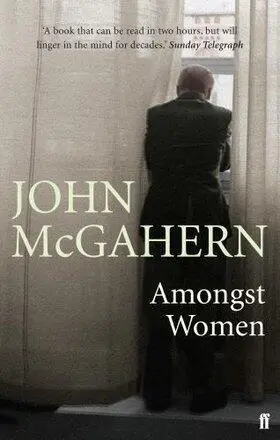
- Название:Amongst Women
- Автор:
- Издательство:Faber & Faber
- Жанр:
- Год:2008
- ISBN:нет данных
- Рейтинг книги:5 / 5. Голосов: 1
-
Избранное:Добавить в избранное
- Отзывы:
-
Ваша оценка:
Amongst Women: краткое содержание, описание и аннотация
Предлагаем к чтению аннотацию, описание, краткое содержание или предисловие (зависит от того, что написал сам автор книги «Amongst Women»). Если вы не нашли необходимую информацию о книге — напишите в комментариях, мы постараемся отыскать её.
Amongst Women — читать онлайн бесплатно полную книгу (весь текст) целиком
Ниже представлен текст книги, разбитый по страницам. Система сохранения места последней прочитанной страницы, позволяет с удобством читать онлайн бесплатно книгу «Amongst Women», без необходимости каждый раз заново искать на чём Вы остановились. Поставьте закладку, и сможете в любой момент перейти на страницу, на которой закончили чтение.
Интервал:
Закладка:
‘What kind of friends?’
‘People he works with.’
‘Has he got himself a decent job then?’
‘He’s started a business with people he got to know. They buy old houses. He says he has to spend too much time in the office now. He’d sooner be out and around the sites.’
‘That’ll all blow up in his face one of these days. You have to depend on too many people. There are plenty of rogues about but of course you can’t tell that gentleman anything.’
‘He doesn’t talk much about it.’
‘He’d be afraid I’d hear too much. How does he look himself?’
‘He looks much the same as he always did.’
‘Well, I’m glad you go to the trouble of seeing him even if he doesn’t act as if he’s still a member of my family. All the members of my family are equal even if they think otherwise. They should never be looked down on or excluded. Not even if they want to exclude themselves.’
The room was already full of delicious smells. Two tables were put together out from the window and covered with a white cloth. The places were set. The huge browned turkey was placed in the centre of the table. The golden stuffing was spooned from its breast, white dry breadcrumbs spiced with onion and parsley and pepper. There were small roast potatoes and peas and afterwards the moist brandy-soaked plum pudding. Brown lemonade was squirted into the glasses from syphons with silver tops.
‘I’m so hungry I could eat a young child,’ Moran said and everybody laughed. He sat at the head of the elongated table. Before Rose came he always ate alone at the big table. The meal was ringed by the Grace he recited before and after.
Then, after the washing-up and tidying, it was a slow struggle to get through what remained of the day. Mona and Sheila read. The others played the long card game of Twenty-one for penny stakes. Moran won the most. There were stifled yawns while tea was made after cards and Moran made loud and exaggerated yawns for comic effect. The whole house was glad to slip away early to bed after the Rosary was said.
As if to make up for the sealing of the house on Christmas Day all doors were thrown wide open on St Stephen’s Day. People continually trooped between houses, bringing presents or friendly words or just making calls. Not many visitors ever called to Moran’s house but the girls were fêted everywhere they called to. ‘You’re home! You’re home for Christmas!’ and hands were gripped and held instead of shaken to show the strength of feeling. Michael went with the girls to some of the houses but had to travel very much in their shadow. Tired of being ignored he went home with ill-grace to Rose. They both went to the door together whenever the wren-boys knocked, local children in gaudy carnival rags wearing masks or warpaint. Few could dance or sing or play properly. Usually they performed a painful parody of all three while they rattled coins vigorously about in a tin canister. Michael lost his grievance as he began to enjoy their incompetence while trying to identify the children underneath their colourful disguises. Between the motley bands of children, the real wren-boys came on the Arigna coal lorry. The girls made sure that they were in the house. Many of the wren-boys did not bother to wear disguises. An accordion struck up as they swarmed from the lorry, then more accordions, fiddles, fifes and a drum. Dancers skipped up the path and caught Rose and the girls and danced them round the room in perfect time. There were screeches of laughter and provocative cheers to the music. Everyone went silent when an old song was sung in a pure tenor with bare accompaniment; then more music and dancing and clowning. Moran liked the traditional music and handed them a larger sum than usual. Before the Ardcarnes left they urged everyone to come to the big dance in the barn that night. As usual all the money they lifted would be spent on whiskey and porter and lemonade and sandwiches and cake and tea. The same musicians would play. All would drink and eat and dance. The little party ended as suddenly as it began with murmurs and clear words of thanks and warnings of Don’t let us miss you tonight ; and then the melancholy sounds of the instruments being packed.
Rose and the girls tried to prevail on Moran to go with them to the wren-boys ‘dance in the barn that night but the one time he had gone with Rose had been more than enough.’ There’s a time for dancing and a time for being out of sight. Why don’t you go with the girls?’ he said to Rose.
‘You know I’ll not go unless you go, Daddy,’ Rose said. ‘You know there will be people far older than us there.’
‘That’s their business,’ Moran said and shuffled out of the room.
In their excitement all the girls looked beautiful dressed for the dance but none was more excited or more carefully dressed than Michael. The girls hardly noticed him. Though tall he was reed-like and they still looked on him as a child. Moran drove them to the dance. They would walk or get a lift home: there was the unspoken sexual excitement of meeting someone who would see them home.
There were no lights around the gates and shuttered gatehouse when they drove up the narrow avenue. They found the big house in darkness but round the back among the sheds the enormous barn was all lit up by lines of naked electric bulbs strung up on poles. Inside, it was already full. Three musicians who had come on the Arigna lorry to the house earlier in the day played reels on a platform of raised planks but no one was dancing yet. Girls were drinking tea and talking in groups at trestle tables set around the walls. Older women drank whiskey with men their age. Around the porter barrels stood crowds of young men. It hardly changed from year to year and could have been the same scene as Rose and Moran had walked in on.
At once Michael joined one of the crowds and took a glass of stout. None of the Moran girls drank. They were as much shocked by the confidence with which Michael moved about among the men as by his actual drinking. Their little brother had grown up without their noticing. He moved loudly among the men as the alcohol went to his head. The men merely turned their backs on the boy’s show of masculinity. Catching his sisters’ stares of disapproval, he waved his glass to them across the floor and started to survey the women.
He was not a good dancer but he moved and held himself well as his father had done on such barn floors and he gave Nell Morahan his whole attention. Defiantly, when the dance ended, he took her across to the table that had whiskey and stout. In the same spirit she asked for whiskey. To the Moran girls this was shameless, even wanton. She did not care. She knew that they considered themselves above the Morahans of the Plains. She held their baby brother in her experienced hands. He did not flinch from their disapproving stares but, laughing, toasted them in whiskey across the floor. They were forced to turn away into a closed circle.
Nell Morahan came from a small farm on the high part of the Plains. Her father, Frank Morahan, worked as a day labourer for big farmers all the year round, leaving his family to manage his own poor acres, helping as much as he could on Sundays and long evenings. They were looked down on. None of the children was clever; there was no escape through the schools. Nell went to work as a maid for a solicitor’s family in the town, where she had her first taste of sexual fondling with the sons of the house home on holidays from college, fondling she had no aversion to. Next she went as a shop girl to a small town near Dublin and had a string of boyfriends from the terraces, when an aunt brought her to New York. There, she showed the family trait of a willingness to work, first in an ice-cream factory, next in a dry-cleaning place and finally as a waitress, where she found that her good humour and energy could earn her more in a week than she could save in a year in Ireland. She had lived with an older man but felt used when he showed no sign of keeping promises. In her practical way she left him without much regret or hurt. Now she was twenty-two and home for a few months with money of her own. She had bought clothes and shoes for her brothers and sisters and other useful things for the cottage on the Plains. For herself she bought a small car that she intended to leave with the family. She would take a younger sister with her when she went back to New York. Above all she was determined to show her father a good time and to have a bit of a fling for herself on the side. She was as far from ugliness as she was from beauty and she was young and strong and spirited. Michael Moran was only fifteen but he had good looks and sexual charm. All through her childhood she felt that farms like the Morans’ had a richness and greenness in spite of her father’s tired assertions to the contrary. When Michael crossed the barn floor to ask Nell Morahan to dance it was natural that they should go together.
Читать дальшеИнтервал:
Закладка:
Похожие книги на «Amongst Women»
Представляем Вашему вниманию похожие книги на «Amongst Women» списком для выбора. Мы отобрали схожую по названию и смыслу литературу в надежде предоставить читателям больше вариантов отыскать новые, интересные, ещё непрочитанные произведения.










Обсуждение, отзывы о книге «Amongst Women» и просто собственные мнения читателей. Оставьте ваши комментарии, напишите, что Вы думаете о произведении, его смысле или главных героях. Укажите что конкретно понравилось, а что нет, и почему Вы так считаете.