John McGahern - The Pornographer
Здесь есть возможность читать онлайн «John McGahern - The Pornographer» весь текст электронной книги совершенно бесплатно (целиком полную версию без сокращений). В некоторых случаях можно слушать аудио, скачать через торрент в формате fb2 и присутствует краткое содержание. Год выпуска: 2009, Издательство: Faber & Faber, Жанр: Современная проза, на английском языке. Описание произведения, (предисловие) а так же отзывы посетителей доступны на портале библиотеки ЛибКат.
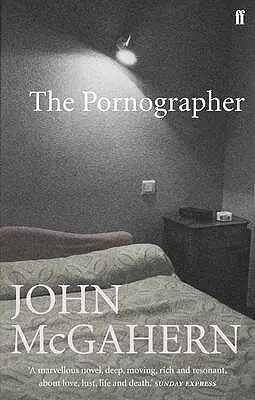
- Название:The Pornographer
- Автор:
- Издательство:Faber & Faber
- Жанр:
- Год:2009
- ISBN:нет данных
- Рейтинг книги:4 / 5. Голосов: 1
-
Избранное:Добавить в избранное
- Отзывы:
-
Ваша оценка:
The Pornographer: краткое содержание, описание и аннотация
Предлагаем к чтению аннотацию, описание, краткое содержание или предисловие (зависит от того, что написал сам автор книги «The Pornographer»). Если вы не нашли необходимую информацию о книге — напишите в комментариях, мы постараемся отыскать её.
The Pornographer — читать онлайн бесплатно полную книгу (весь текст) целиком
Ниже представлен текст книги, разбитый по страницам. Система сохранения места последней прочитанной страницы, позволяет с удобством читать онлайн бесплатно книгу «The Pornographer», без необходимости каждый раз заново искать на чём Вы остановились. Поставьте закладку, и сможете в любой момент перейти на страницу, на которой закончили чтение.
Интервал:
Закладка:
“I hope you don’t think too hard of the brandy,” to my dismay she brought the bottle out and sat with me at the breakfast table. By bringing it out so openly she was drawing me into the guilty maze.
“No, why should I?”
“It’s a great relief to drink with someone in the open. Cyril and your uncle won’t understand anything about it at all.”
“Cyril drinks enough himself to understand,” I said.
“He only drinks because he’s upset. He feels I’m far too long sick now.”
“He must have been upset the greater part of his life, so.”
“Ah, you’re all too hard on Cyril,” she complained. “The world’s hard enough.”
“I didn’t mean that,” I said, “and I have nothing but praise for drink. It’s like a change of country; only it’d be awful to become an old soak.” What I said I believed, but there was no need to say so much. My instinct was to create room, to get out of the responsibility she had so suddenly thrust upon me. The blind instinct had run ahead of any seeing, of sympathy or fairness. I was learning to protect myself so fast now that I’d soon have a whole landscape of the moon to move around in.
“If you were like me,” she laughed with a mixture of wry bitterness and pure amusement, “you’d not care what they called you, an old soak or a young soak, as long as you got relief. The country that I find myself in most of the time now, God forgive me, isn’t fit for living in.”
“Why don’t you try the pills?”
“Ah, you’ve never taken those pills. They’re not like natural pills. You can feel them spreading themselves around in you. They’re killing you. That’s what they’re doing. After you take them you feel you’re walking round in a big dead empty glove.”
She poured me a glass. It was hateful in the morning, when the day was fresh, but I drank it. Later I found myself walking with her down the railway to the garden. Except for the beaten path, where the line had run, it was choked with enormous weeds, especially great pulpy thistles.
“The rails went to Scotland and the North,” she said. “I heard they cut them up and sold them as posts for haysheds.”
We went through a wooden gate made strong by the thin wire used to bind fruit crates, and down steps cut into the embankment. The garden was bordered by high banks on either side, covered with the same rank thistles of the railway, and below was an old hedge of whitethorn studded with several green oak and ash trees and one big sycamore. The clay was dark and loose, in neat drills: onions, carrots, parsnips, beet, peas and beans, the black and white miracle of the flower out, long green splashes of lettuce.
“It’s a fine garden,” I said. She’d already begun to weed.
“I do a bit every day. That way it never gets out of hand. There’s no rush and push. And you can watch it for the bugs. Some of them would sweep you out of it in a day.”
I weeded with her, hating the dry clay on fingers. The garden held no interest for me. I’d never watch it grow.
“That’s all I ask,” she drew up her back, and as I watched her I knew she’d be back in hospital before the fruits were gathered, and that it’d be the last garden she’d watch grow. “You think it’d not be much to ask. Just to get a bit better. Not to have to leave the garden — I hate to think of it running wild again — though Cyril complains it’s nothing but trouble. To just go on. It doesn’t seem much to ask. To let things stay as they are. To go on.”
“But you will.”
“Sometimes I don’t know.”
When I felt sure she wouldn’t notice emotion in my voice I said, “There are some fine trees in the hedge.”
“Yes,” she said with spirit. “Your uncle made one great offer of help when I started the garden. He offered to cut down the trees.”
“He would.”
“I told him he’d be run if I caught him near them. But they must house a million midges. Some evenings they’d ate you alive.”
She was tough. There was nothing but to salute that proud hardness with a perfect silence. She stood at the foot of the garden, under a far outriding branch of the oak, her ravished face and few wisps of hair turned away from the searching light, and she said in a voice matter-of-fact enough to be running through a tenant’s contract, “I don’t know. It’s only after years that you get some shape on things, and then after all that you have to leave. It’s comical. You want to go on and you can’t.”
“I think you’ll be all right, that you’ll get better, but there does come a time — for everybody, for us all,” my own voice sounded so awkward and solemn that I felt bells should mock the still air.
“I know that,” she said and we started to move slowly towards the gate. “But somehow deep down you can never feel it’s going to happen to yourself. In your case somehow you feel the great exception will be made.”
“If you can say that, there can’t be too much wrong with you,” I said.
When we went back to the house we finished the bottle of brandy. Then she said she was going to bed, before anybody could come back. She washed the glasses and put away the empty bottle before she climbed the stairs. And I drove out to the saw mill.
Neither Jim nor my uncle noticed me get out of the car and walk up to the mill. They were in the middle of a quarrel. I had watched these quarrels so often that it was like standing in front of a TV shop window and watching an old familiar movie. They stood with their backs to one another, beside two saws, both idling over; and each vigorous insult was addressed to a point high in the roof of the shed, the very farthest point from the person the insult was intended for. The intervals between the insults were lengthy. Each word seemed taken up, weighed and tested, and then the contemptuous answer would be fired furiously towards the farthest rafters. Their expressions did not change when they noticed my presence on the mound of sawdust. They dropped the quarrel with as much emotion as they might show when putting down a heavy, cumbersome tool they had grown tired using, and came towards me with outstretched hands, both smiling.
We three stood there, not talking, occasional words let drop into the silence like pebbles into still water, allowed to sink and bubble with neither more nor less attention than that given to the preceding and following silence; and when it seemed that an appropriate amount of such silence had been observed Jim walked away towards the big saw without a word.
“You seem to be using a fairly strong aftershave?” my uncle asked, having caught the smell of the brandy.
“It’s brandy. I had a glass in the house with her. I don’t like it very much this time of day.”
“I know that,” he said with an understanding patronage that irritated me. “But what’ll happen to her, at the rate she’s going? What’ll be the end of it?”
“What’ll be the end of any of us?” I was ashamed of my own sharpness when I saw him wince. Then he coughed, a cautious clearing cough, like sending exploratory noises out into the field before risking any compromising words. “You didn’t run into Cyril at all?”
“No. How is he?”
“Worse. He’s a pure dose. I’d move out long ago but it’d not be right with the way she is now.”
Jim had started sawing. In the safety of the piercing scream, the sweet sudden scent of fresh resin, I asked, “What was yourself and Jim arguing about?”
“O that,” he shook with laughter. “He took in some contract timber.”
“What’s that?”
“We don’t do it any more except we know the people. A fella might have a few good trees he’d want sawed, to save him buying timber, and we used to give him a price. A lot of that stuff came from trees they used to plant round houses, beech mostly, and you’d never know what you’d run into, nails by the no time, handles of buckets, links of chains.”
Читать дальшеИнтервал:
Закладка:
Похожие книги на «The Pornographer»
Представляем Вашему вниманию похожие книги на «The Pornographer» списком для выбора. Мы отобрали схожую по названию и смыслу литературу в надежде предоставить читателям больше вариантов отыскать новые, интересные, ещё непрочитанные произведения.







Обсуждение, отзывы о книге «The Pornographer» и просто собственные мнения читателей. Оставьте ваши комментарии, напишите, что Вы думаете о произведении, его смысле или главных героях. Укажите что конкретно понравилось, а что нет, и почему Вы так считаете.