Leslie Silko - The Almanac of the Dead
Здесь есть возможность читать онлайн «Leslie Silko - The Almanac of the Dead» весь текст электронной книги совершенно бесплатно (целиком полную версию без сокращений). В некоторых случаях можно слушать аудио, скачать через торрент в формате fb2 и присутствует краткое содержание. Год выпуска: 2013, Издательство: Simon & Schuster, Жанр: Современная проза, на английском языке. Описание произведения, (предисловие) а так же отзывы посетителей доступны на портале библиотеки ЛибКат.
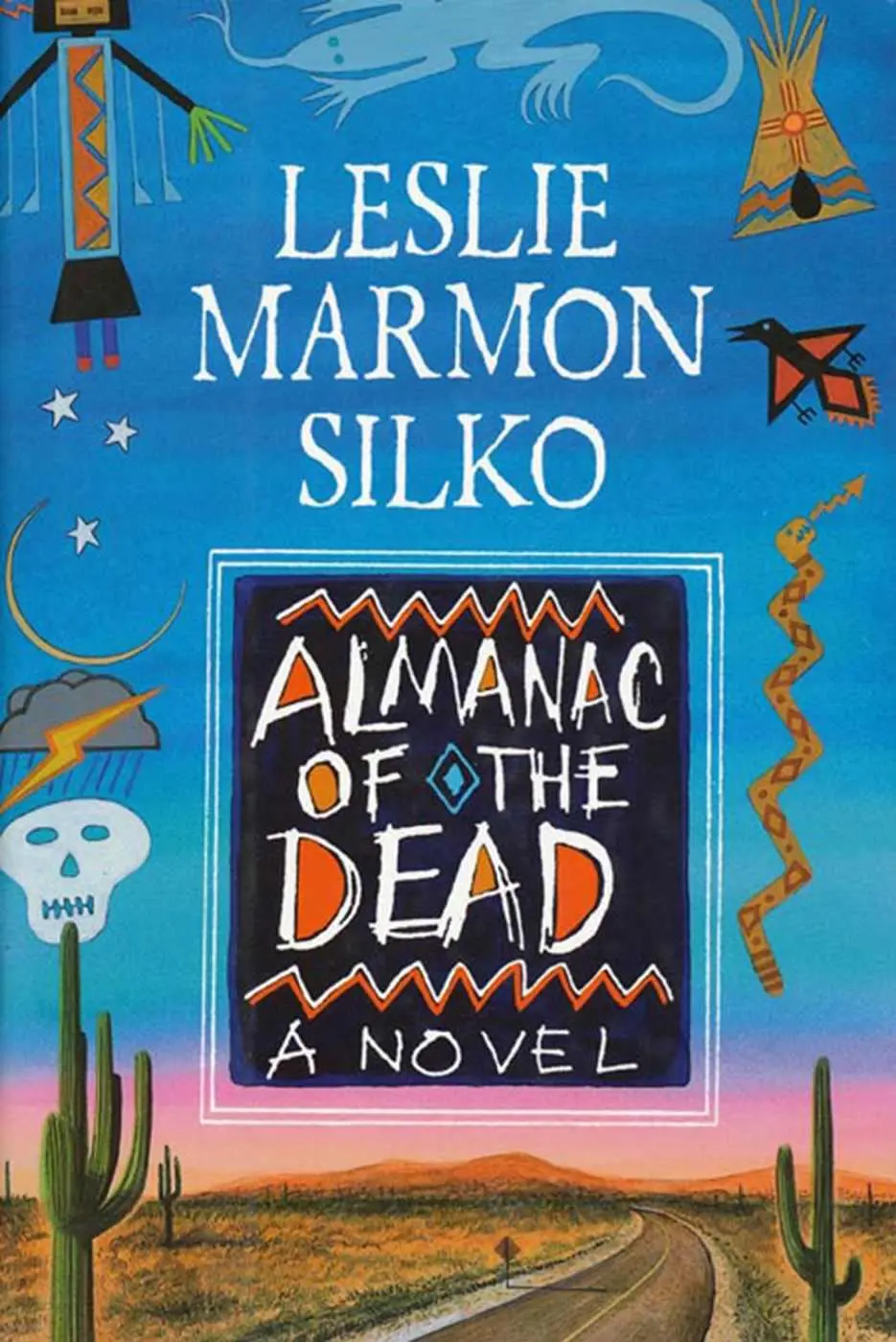
- Название:The Almanac of the Dead
- Автор:
- Издательство:Simon & Schuster
- Жанр:
- Год:2013
- ISBN:нет данных
- Рейтинг книги:3 / 5. Голосов: 1
-
Избранное:Добавить в избранное
- Отзывы:
-
Ваша оценка:
The Almanac of the Dead: краткое содержание, описание и аннотация
Предлагаем к чтению аннотацию, описание, краткое содержание или предисловие (зависит от того, что написал сам автор книги «The Almanac of the Dead»). Если вы не нашли необходимую информацию о книге — напишите в комментариях, мы постараемся отыскать её.
In this virtuoso symphony of character and culture, Leslie Marmon Silko’s breathtaking novel interweaves ideas and lives, fate and history, passion and conquest in an attempt to re-create the moral history of the Americas as told from the point of view of the conquered, not the conquerors. Touching on issues as disparate as the borderlands drug wars, ecological devastation committed for the benefit of agriculture, and the omnipresence of talking heads on American daytime television,
is fiction on the grand scale, a sweeping epic of displacement, intrigue, and violent redemption.
The Almanac of the Dead — читать онлайн бесплатно полную книгу (весь текст) целиком
Ниже представлен текст книги, разбитый по страницам. Система сохранения места последней прочитанной страницы, позволяет с удобством читать онлайн бесплатно книгу «The Almanac of the Dead», без необходимости каждый раз заново искать на чём Вы остановились. Поставьте закладку, и сможете в любой момент перейти на страницу, на которой закончили чтение.
Интервал:
Закладка:
She didn’t know if it was the shock or if somehow the champagne and dope had lasted that long but she had been able to look at the color photographs of Eric’s suicide without flinching. She could see how his body had fallen across the double bed with his long legs angled at the pillows. Death had not been any more peaceful for Eric than his life had. The extreme angles of Eric’s limbs outlined the geometry of his despair. The clenched muscles guarded divisions and secrets locked within him until one day the gridwork of lies had exploded bright, wet red all over. Only a few weeks earlier Eric had helped David carry the roll of glossy-white backdrop paper into the studio. David had wanted the backdrop for an “all-white” series in the bedroom. “But white shows everything, darling,” Eric had teased. David had stared back silently. “Shows all the dirt, shows all the nasty!” Eric had laughed until there were tears in his eyes. David had not smiled. Later Seese had realized the warning had been out in front for her to see, only she had not recognized Eric’s despair.
David had probably not called the authorities for three or four hours to be sure both the color and black-and-white film had turned out. David had photographed Eric’s corpse Police Gazette style. The black-and-white prints David had made were all high contrast: the blood thick, black tar pooled and spattered across the bright white of the chenille bedspread. Was that why she didn’t feel anything, not after she’d realized David had photographed Eric’s body? David had focused with clinical detachment, close up on the.44 revolver flung down to the foot of the bed, and on the position of the victim’s hands on the revolver. Or did she feel no horror because she had already been filled with it, and no photographs of brains, bone, and blood would ever add up to Eric? Eric who loved her and whom she loved was not the corpse in the photographs. Eric would have been the first one to have pointed that out to both her and David. How many times did he have to tell them? The photograph was just a photograph. The photograph was only itself. No photograph could ever be him, be Eric. That was when Eric was drunk that he lectured her and David. David was a year or two older than Eric, but David had never got over Eric’s graduate degree from Columbia. The worst fights Seese had seen between them had started because David thought Eric looked down on him. David had studied art and photography in a community college in Indiana, but Eric had an MFA in art history from Columbia. Eric always said art history was what you did when you weren’t good enough to paint.
David had always denied that Eric had made a last-minute call to him. But how else to account for David’s arriving at Eric’s apartment so soon after the suicide?
White on white: the pure white background of glossy paper; white cat in a snowstorm, white Texas fag boy naked on white chenille. “Feverish with love and need” was a part of Eric’s letter Seese would never forget. The cops and the coroner had even joked about the length of Eric’s letter. The “three-page suicide note” had been Beaufrey’s big laugh for weeks afterward.
Beaufrey was drunk, snorting gram after gram, and rambling on, so witty, so rich, but noticeably oder than his glamour photos due to all the scotch and cocaine and all the young boys in Rio de Janeiro. Beaufrey complained when Serlo forgot and bought harsh white light bulbs instead of the soft rose bulbs. Days before the show was to open, David was still clutching the proof sheets of Eric’s suicide. David could hardly bear to look at the prints for his show, so G. and his gallery assistants worked closely with the color lab technicians who printed all David’s work. Beaufrey had stayed drunk since Eric’s suicide. He was obsessed with Eric’s secret life with David and Seese. Beaufrey accused David of being there. Of watching Eric do it.
David had left the room after Beaufrey said that. Seese followed David outside to the pool. There was a hot, wet wind off the bay, and the city lights were blurry in the mist. David pressed his fist against his chest. David had lied at first about Eric. David told Seese they had been friends since grade school. A lie. Later Eric had told Seese when and how they had become friends. After Eric was dead, Seese had found out he had lied to her too. He and David had not stopped being lovers when Seese first moved in.
Eric had lied. Under the corpse, speckled with bloodstains, the coroner’s assistant had found the envelope. “All those afternoons you didn’t call, I cried,” the letter to David began.
ART
 AFTER DISCOVERING Eric’s body, David didn’t just snap a few pictures. He had moved reflectors around and got the light so Eric’s blood appeared as bright and glossy as enamel paint.
Later the critics dwelled on the richness and intensity of the color. One critic wrote of the “pictorial irony of a field of red shapes which might be peonies — cherry, ruby, deep purple, black — and the nude human figure nearly buried in these ‘blossoms’ of bright red.”
The core photograph was a close-up of the face or what remained of it. By and large, the critical as well as the public reaction was one of outrage. “Photographs that belong in the Coroner’s Office and the police file.” “Punk comes to photography.”
A steady parade of buyers had filled the gallery a week before the opening. Everyone wanted to see. Private collectors expressed concern over the lawsuit. If the negatives were later awarded to the family or destroyed, the prints would increase in value. G. was blunt. David’s success was assured. Influential international critics agreed; at last David “had found a subject to fit his style of clinical detachment and relentless exposure of what lies hidden in flesh.”
A critic at the opening noted the crowd stood a peculiar distance from the photographs “as if they had arrived within a few minutes of the suicide.” G. knew how to sell it. He had issued a press release when Eric’s family went to court for the injunction. The lawsuit had erased any doubt there had been theatrics with greasepaint or beef blood. Eric had been David’s model for three years. The modeling agreement was not written, the attorney for the gallery explained delicately; nonetheless, the terms of the agreement had been well-known to friends and “intimates” of Eric’s. Of course, any agreement or contract had died with Eric, but arguably, the family was obliged to honor the contract.
The tabloids on the East Coast had caught wind of it and had called it “The Last Picture Session” and “The Modeling Job From the Grave.”
When the district court refused to delay the opening of David’s show, Eric’s family had dropped the lawsuit. Beaufrey had taken credit for the press coverage that had softened up those hick Texans.
Seese did not remember much about the weeks before or after David’s show. She did not care if she was pregnant, she just wanted to die. She used cocaine and champagne every day to float herself above the chrome and glass rooms where conversation was perfectly charming but Beaufrey and Serlo looked past her as if she had never existed.
Beaufrey blamed Seese for Eric’s death. He blamed her pregnancy. Their situation would have worked if she had not come along. Men could manage arrangements and accommodations. Seese had not been surprised by Beaufrey’s accusation.
Seese should have known right then that Beaufrey was out to get her and the baby. But he had to play by special rules. David gave him no choice. Seese always understood both David and Beaufrey used others — such as Eric or her — to taunt and to tantalize. David had wanted to break Eric’s heart. But she knew David had fallen in love with her after all.
Читать дальшеИнтервал:
Закладка:
Похожие книги на «The Almanac of the Dead»
Представляем Вашему вниманию похожие книги на «The Almanac of the Dead» списком для выбора. Мы отобрали схожую по названию и смыслу литературу в надежде предоставить читателям больше вариантов отыскать новые, интересные, ещё непрочитанные произведения.







Обсуждение, отзывы о книге «The Almanac of the Dead» и просто собственные мнения читателей. Оставьте ваши комментарии, напишите, что Вы думаете о произведении, его смысле или главных героях. Укажите что конкретно понравилось, а что нет, и почему Вы так считаете.