Mario Vargas Llosa - The Discreet Hero
Здесь есть возможность читать онлайн «Mario Vargas Llosa - The Discreet Hero» весь текст электронной книги совершенно бесплатно (целиком полную версию без сокращений). В некоторых случаях можно слушать аудио, скачать через торрент в формате fb2 и присутствует краткое содержание. Год выпуска: 2015, Издательство: Farrar, Straus and Giroux, Жанр: Современная проза, на английском языке. Описание произведения, (предисловие) а так же отзывы посетителей доступны на портале библиотеки ЛибКат.
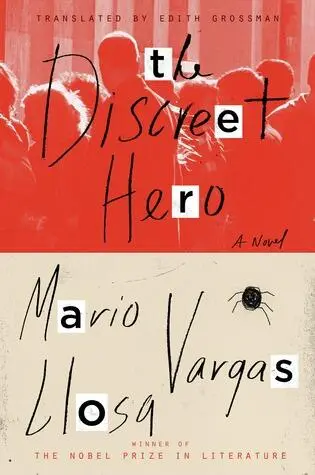
- Название:The Discreet Hero
- Автор:
- Издательство:Farrar, Straus and Giroux
- Жанр:
- Год:2015
- ISBN:нет данных
- Рейтинг книги:3 / 5. Голосов: 1
-
Избранное:Добавить в избранное
- Отзывы:
-
Ваша оценка:
The Discreet Hero: краткое содержание, описание и аннотация
Предлагаем к чтению аннотацию, описание, краткое содержание или предисловие (зависит от того, что написал сам автор книги «The Discreet Hero»). Если вы не нашли необходимую информацию о книге — напишите в комментариях, мы постараемся отыскать её.
Nobel laureate Mario Vargas Llosa’s newest novel, The Discreet Hero, follows two fascinating characters whose lives are destined to intersect: neat, endearing Felícito Yanaqué, a small businessman in Piura, Peru, who finds himself the victim of blackmail; and Ismael Carrera, a successful owner of an insurance company in Lima, who cooks up a plan to avenge himself against the two lazy sons who want him dead.
Felícito and Ismael are, each in his own way, quiet, discreet rebels: honorable men trying to seize control of their destinies in a social and political climate where all can seem set in stone, predetermined. They are hardly vigilantes, but each is determined to live according to his own personal ideals and desires — which means forcibly rising above the pettiness of their surroundings. The Discreet Hero is also a chance to revisit some of our favorite players from previous Vargas Llosa novels: Sergeant Lituma, Don Rigoberto, Doña Lucrecia, and Fonchito are all here in a prosperous Peru. Vargas Llosa sketches Piura and Lima vividly — and the cities become not merely physical spaces but realms of the imagination populated by his vivid characters.
A novel whose humor and pathos shine through in Edith Grossman’s masterly translation, The Discreet Hero is another remarkable achievement from the finest Latin American novelist at work today.
The Discreet Hero — читать онлайн бесплатно полную книгу (весь текст) целиком
Ниже представлен текст книги, разбитый по страницам. Система сохранения места последней прочитанной страницы, позволяет с удобством читать онлайн бесплатно книгу «The Discreet Hero», без необходимости каждый раз заново искать на чём Вы остановились. Поставьте закладку, и сможете в любой момент перейти на страницу, на которой закончили чтение.
Интервал:
Закладка:
“Ah, well, you had plenty of reason to hate him,” the captain admitted, shaking his head. “So you have quite a past, Lituma. Nobody would think so seeing you now, so tame. As if you’d never killed a fly in your life. Really, I can’t imagine you playing Russian roulette. I played only once, with a buddy of mine one night when we were drinking. My balls still freeze up when I think about it. And this Josefino, may I ask why you didn’t kill him?”
“Not for lack of wanting, but I had no desire to go back to the slammer,” the sergeant explained briefly. “But I did give him a beating — he must still be aching from it. I’m talking at least twenty years ago, Captain.”
“Are you sure the pimp spent all his time drawing spiders?”
“I don’t know whether they were spiders,” Lituma corrected him again. “But he definitely was drawing all the time. On napkins, on any piece of paper he had in front of him. It was his mania. Maybe it has nothing to do with what we’re looking for.”
“Think and try to remember, Lituma. Concentrate, close your eyes, look back. Spiders like the ones on the letters sent to Felícito Yanaqué?”
“My memory’s not that good, Captain,” Lituma apologized. “I’m talking about something that happened years ago, I told you — maybe twenty, maybe more. I don’t know why I made that connection. We should probably forget it.”
“Do you know what happened to Josefino the pimp?” the captain insisted. His expression was grave and he didn’t take his eyes off the sergeant.
“I never saw him again, or my cousins, the other two Unconquerables. Since I was readmitted to the force, I’ve been in the mountains, the jungle, in Lima. Going all around Peru, you might say. I came back to Piura just a little while ago. That’s why I said my idea was probably silly. I’m not sure they were spiders. He definitely was drawing something. He did it all the time and the Unconquerables made fun of him.”
“If Josefino the pimp is alive, I’d like to meet him,” said the chief, hitting the table lightly. “Find out, Lituma. I don’t know why, but it smells right to me. Maybe we’ve bitten into a nice piece of meat. Tender and juicy. I feel it in my spit, my blood, my balls. I’m never wrong about these things. I’m beginning to see light at the end of this tunnel. Good for you, Lituma.”
The captain was so happy that the sergeant regretted telling him about his hunch. Was he sure that back when they were all Unconquerables, Josefino never stopped drawing? Now he wasn’t so certain. That night, when his shift was over and, as usual, he walked up Avenida Grau to the boardinghouse where he lived in the Buenos Aires district near the Grau Barracks, he struggled with his memory, trying to be certain it wasn’t a false one. No, no it wasn’t, though now he wasn’t as convinced as he had been. Images of his years as a kid on the dusty streets of Mangachería returned in waves: He, Mono, and José would go to the sandy tracts of land just outside the city to set traps for iguanas at the foot of the carob trees, hunt birds with slings they made themselves, or hide in the thickets and sand dunes to spy on the women who washed their clothes in the river near the culvert, in water up to their waists. Sometimes, because of the water, their breasts would show through their clothes and the boys’ eyes and crotches would burn with excitement. How did Josefino get into the group? He no longer could remember how, when, or why. In any case, the Gallinazo joined them when they weren’t little kids anymore. Because by then they were going to the chicha bars and spending the few soles they earned doing occasional jobs — like selling bets on horse races — on gambling, carousing, and drunken binges. Maybe they weren’t spiders, but they were definitely drawings, and Josefino made them all the time — he remembered that very clearly — while he was talking, or singing, or beginning to brood about his evil deeds, isolating himself from the others. It wasn’t a false memory, but maybe what he drew were frogs, snakes, pricks. Lituma was assailed by doubts. Suddenly they were the crosses and circles of tic-tac-toe, or caricatures of the people they saw in La Chunga’s bar, one of their haunts. La Chunga, that slut! Did the bar still exist? Impossible. If she were alive, she’d be so old by now that she wouldn’t be physically able to run it. Though who knows. She was a tough woman who wasn’t afraid of anybody and could hold her own in confrontations with drunks. Once she even challenged Josefino when he tried to act smart with her.
The Unconquerables! La Chunga! Damn, how time flew. The León brothers, Josefino, and Bonifacia were probably dead and buried by now, nothing left of them but memory. How sad.
He was walking almost in darkness, because after you passed the Club Grau and entered the residential neighborhood of Buenos Aires, the streetlights were farther apart and dimmer. He walked slowly, tripping over the cracks in the asphalt, past houses that once had gardens and two stories and over time had become lower and poorer. As he approached his boardinghouse the buildings turned into huts, rough constructions with adobe walls, posts of carob wood, and corrugated metal roofs on streets without sidewalks and hardly any automobile traffic.
When he returned to Piura after serving for many years in Lima and in the mountains, he moved into a room on the military base, where police as well as soldiers could live. But he didn’t like that much intimacy with his associates on the force. It was like still being in the service, seeing the same people and talking about the same things. That’s why, after six months, he moved to the house of the Calancha family, who had five rooms for boarders. It was extremely modest and Lituma’s bedroom was tiny, but he paid very little and felt more independent there. The Calanchas were watching television when he came in. The husband had been a teacher and his wife a municipal employee. They’d been retired for some time. Board included only breakfast, but if the tenant desired, the Calanchas could order in lunch and dinner from a nearby restaurant whose stews were pretty substantial. The sergeant asked if they happened to remember a little bar near the old stadium, run by a fairly masculine woman who was named, or called, La Chunga. They looked at him uneasily, shaking their heads no.
That night he lay awake for a long time and didn’t feel very well. Damn, he never should have mentioned Josefino to Captain Silva. Now he was almost certain the pimp hadn’t been drawing spiders but something else. Rummaging around in his past wasn’t a good idea. It made him sad to remember his youth, to think about how old he was — close to fifty now — how solitary his life was, the misfortunes that had battered him, that idiotic Russian roulette with Seminario, his years in prison, what happened to Bonifacia, which left a bitter taste in his mouth each time he thought about it.
He slept at last, but badly, and had nightmares that left him with a memory of calamitous, terrifying images when he woke. He washed, had breakfast, and was out before seven, on his way to the spot where his memory guessed La Chunga’s bar had been. It wasn’t easy to orient himself. In his memory, this had been the outskirts of the city, just a few huts of clay and wild reeds built on the sandy tracts. Now there were streets, cement, houses made of reputable materials, streetlights, sidewalks, cars, schools, gas stations, shops. So many changes! The old neighborhood was now a part of the city and bore no resemblance to his memories. His attempts to speak to residents — he asked only older people — led nowhere. Nobody remembered either the bar or La Chunga; a lot of people in the area weren’t even Piuran but had moved here from the mountains. He had the unpleasant sensation that his memory was lying to him; none of the things he remembered had existed, they were phantoms and always had been phantoms, pure products of his imagination. Thinking about that frightened him.
Читать дальшеИнтервал:
Закладка:
Похожие книги на «The Discreet Hero»
Представляем Вашему вниманию похожие книги на «The Discreet Hero» списком для выбора. Мы отобрали схожую по названию и смыслу литературу в надежде предоставить читателям больше вариантов отыскать новые, интересные, ещё непрочитанные произведения.
![Гарри Гаррисон - Bill, the Galactic Hero [= The Starsloggers]](/books/87536/garri-garrison-bill-the-galactic-hero-the-star-thumb.webp)









Обсуждение, отзывы о книге «The Discreet Hero» и просто собственные мнения читателей. Оставьте ваши комментарии, напишите, что Вы думаете о произведении, его смысле или главных героях. Укажите что конкретно понравилось, а что нет, и почему Вы так считаете.