Mario Vargas Llosa - The Discreet Hero
Здесь есть возможность читать онлайн «Mario Vargas Llosa - The Discreet Hero» весь текст электронной книги совершенно бесплатно (целиком полную версию без сокращений). В некоторых случаях можно слушать аудио, скачать через торрент в формате fb2 и присутствует краткое содержание. Год выпуска: 2015, Издательство: Farrar, Straus and Giroux, Жанр: Современная проза, на английском языке. Описание произведения, (предисловие) а так же отзывы посетителей доступны на портале библиотеки ЛибКат.
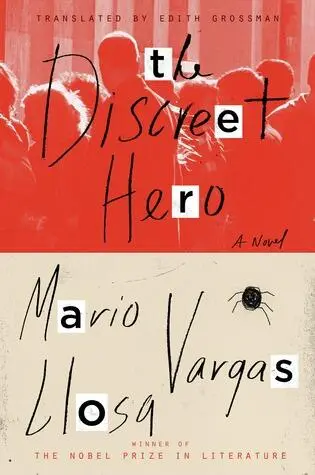
- Название:The Discreet Hero
- Автор:
- Издательство:Farrar, Straus and Giroux
- Жанр:
- Год:2015
- ISBN:нет данных
- Рейтинг книги:3 / 5. Голосов: 1
-
Избранное:Добавить в избранное
- Отзывы:
-
Ваша оценка:
The Discreet Hero: краткое содержание, описание и аннотация
Предлагаем к чтению аннотацию, описание, краткое содержание или предисловие (зависит от того, что написал сам автор книги «The Discreet Hero»). Если вы не нашли необходимую информацию о книге — напишите в комментариях, мы постараемся отыскать её.
Nobel laureate Mario Vargas Llosa’s newest novel, The Discreet Hero, follows two fascinating characters whose lives are destined to intersect: neat, endearing Felícito Yanaqué, a small businessman in Piura, Peru, who finds himself the victim of blackmail; and Ismael Carrera, a successful owner of an insurance company in Lima, who cooks up a plan to avenge himself against the two lazy sons who want him dead.
Felícito and Ismael are, each in his own way, quiet, discreet rebels: honorable men trying to seize control of their destinies in a social and political climate where all can seem set in stone, predetermined. They are hardly vigilantes, but each is determined to live according to his own personal ideals and desires — which means forcibly rising above the pettiness of their surroundings. The Discreet Hero is also a chance to revisit some of our favorite players from previous Vargas Llosa novels: Sergeant Lituma, Don Rigoberto, Doña Lucrecia, and Fonchito are all here in a prosperous Peru. Vargas Llosa sketches Piura and Lima vividly — and the cities become not merely physical spaces but realms of the imagination populated by his vivid characters.
A novel whose humor and pathos shine through in Edith Grossman’s masterly translation, The Discreet Hero is another remarkable achievement from the finest Latin American novelist at work today.
The Discreet Hero — читать онлайн бесплатно полную книгу (весь текст) целиком
Ниже представлен текст книги, разбитый по страницам. Система сохранения места последней прочитанной страницы, позволяет с удобством читать онлайн бесплатно книгу «The Discreet Hero», без необходимости каждый раз заново искать на чём Вы остановились. Поставьте закладку, и сможете в любой момент перейти на страницу, на которой закончили чтение.
Интервал:
Закладка:
“I’m afraid it’s no laughing matter.” A moment later she reversed herself and became serious again. “This has gone too far, Rigoberto. We have to do something. I don’t know what, but something. We can’t just look away, as if nothing were going on.”
“At least now I’m certain that it’s a fantasy, something very typical of him,” Rigoberto reflected. “But what’s he trying to do with these stories? Things like this aren’t unprovoked, they come from somewhere, with roots in the unconscious.”
“Sometimes he’s so quiet, so closed within himself, that I want to die of sorrow, my love. I feel that the boy is suffering in silence and it breaks my heart. Since he knows we don’t believe in his apparitions, he doesn’t tell us about them anymore. And that’s even worse.”
“He might be having visions, hallucinations,” Don Rigoberto digressed. “It happens to the most normal people, whether they’re clever or stupid. They think they’re seeing what they don’t see, what’s only in their head.”
“Sure, of course they’re inventions,” Doña Lucrecia concluded. “We assume the devil doesn’t exist. I believed in him when I met you, Rigoberto. In God and the devil, what every normal Catholic family believes. You convinced me they were superstitions, the foolish beliefs of ignorant people. And now it turns out that the one who doesn’t exist has interfered with our family, and what do you have to say to that?” She gave another nervous little laugh and then fell silent. To Rigoberto she seemed quiet and pensive.
“To be honest, I don’t know whether he exists or not,” he admitted. “The only thing I’m sure about now is what you just said. He might exist, I could get as far as that. But I can’t accept that he’s a Peruvian named Edilberto Torres, and that he devotes his time to stalking the students at Markham Academy. Please don’t fuck with me.”
They discussed the matter from every angle and finally decided to take Fonchito for a psychological evaluation. They made inquiries among their friends. Everyone recommended Dr. Augusta Delmira Céspedes. She had studied in France and was a specialist in child psychology, and those who’d placed their sons or daughters with problems in her care had high praise for her skill and good judgment. They were afraid Fonchito might resist and took every precaution to present the matter to him delicately. But to their surprise, the boy didn’t raise the slightest objection. He agreed to see her, went to her office several times, took all the tests Dr. Céspedes gave him, and always had the best attitude in the world when he talked to her. When Rigoberto and Lucrecia went to her office, the doctor received them with an encouraging smile. She was close to sixty, rather plump, agile, amiable, and droll.
“Fonchito is the most normal boy in the world,” she assured them. “Too bad: He’s so charming I would have liked to keep him as a patient for a while. Each session with him has been a delight. He’s intelligent, sensitive, and for that very reason sometimes feels distant from his classmates. But this is absolutely normal. If you can be totally sure of anything, it’s that Edilberto Torres is no fantasy but a flesh-and-blood person, as real and concrete as the two of you and me. Fonchito hasn’t lied to you. Exaggerated things a little, perhaps. That’s what his rich imagination is for. He’s never taken his encounters with that gentleman as either heavenly or diabolical apparitions. Never! What nonsense. He’s a kid with his feet planted very firmly on the ground and his head in the right place. You’re the ones who have invented all this, and for that very reason you’re the ones who really need a psychologist. Shall I make you an appointment? I see not only children but also adults who suddenly begin to believe the devil exists and wastes his time walking the streets of Lima, Barranco, and Miraflores.”
Dr. Augusta Delmira Céspedes continued joking as she accompanied them to the door. When they said goodbye, she asked Don Rigoberto to show her his collection of erotic prints one day. “Fonchito told me it’s terrific” was her final joke. Rigoberto and Lucrecia left her office floundering in a sea of confusion.
“I told you that going to a psychologist was very dangerous,” Rigoberto reminded Lucrecia. “I don’t know why I ever listened to you. A psychologist can be more dangerous than the devil himself, I’ve known that ever since I read Freud.”
“Shame on you if you think we should joke about this the way Dr. Céspedes does,” Lucrecia said in self-defense. “I only hope you’re not sorry.”
“I don’t take it as a joke,” he replied, serious now. “I was happier thinking that Edilberto Torres didn’t exist. If what Dr. Céspedes says is true, and this person does exist and is pursuing Fonchito, tell me what the hell we’re supposed to do now.”
They did nothing, and for a long time the boy didn’t talk to them again about the matter. He continued to go about his normal life, going to school and coming home at the usual times, going to his room for an hour or sometimes two every afternoon to do his homework, and going out some weekends with Chato Pezzuolo. Though he did so reluctantly, pushed by Don Rigoberto and Doña Lucrecia, he also went out occasionally with other boys from the neighborhood, to the movies, to the stadium to play soccer, or to a party. But in their nocturnal conversations, Rigoberto and Lucrecia agreed that even though this seemed normal, Fonchito wasn’t the same boy he’d been before.
What was different? It wasn’t easy to say, but both were sure he’d changed. And that the transformation was profound. A problem of his age? It was a difficult transition from childhood to adolescence: A boy’s voice changes and becomes hoarse, and the fuzz that announces his future beard starts to appear on his face; he begins to feel he’s no longer a child but not yet a man, and in the way he dresses, sits, gestures, and talks to his friends and to girls, he tries to become the man he’ll be later on. Fonchito seemed more laconic and withdrawn, much more sparing in his answers to their questions at meals about school and his friends.
“I know what’s wrong with you, kid,” Lucrecia challenged him one day. “You’ve fallen in love! Is that it, Fonchito? Do you like some girl?”
With no hint of a blush, he shook his head no.
“I don’t have time for those things now,” he replied seriously, without a shred of humor. “Exams are coming and I’d like to get good grades.”
“I like that, Fonchito,” Don Rigoberto said approvingly. “You’ll have plenty of time for girls later on.”
And suddenly his rosy face lit up with a smile, and in Fonchito’s eyes the impish mischief of earlier times appeared.
“Besides, you know that the only woman in the world I like is you, Stepmother.”
“Oh, my God, let me give you a kiss, my boy,” Doña Lucrecia commended him. “But what do those hands mean, my husband?”
“They mean that talking about the devil suddenly sets my imagination and some other things on fire, my love.”
And for a long while they took their pleasure, imagining that the joke about the devil and Fonchito had passed on to a better life. But no, it hadn’t passed on yet.
VII
It happened one morning when Sergeant Lituma and Captain Silva, the latter distracted for a moment from his obsession with Piuran women in general and Señora Josefita in particular, were working, all five senses focused on the task, trying to find the link that would give focus to the investigation. Colonel Ríos Pardo, alias Rascachucha, the regional police chief, had reprimanded them again the night before, ranting like a madman because news of Felícito Yanaqué’s defiance of the crooks in El Tiempo had reached Lima. The minister of the interior had called him personally to demand that the business be resolved immediately. The press was following the story, and not only the police but the government itself was being made to look ridiculous in the public eye. The rallying cry from headquarters was: Get your hands on the extortionists and make an example of them!
Читать дальшеИнтервал:
Закладка:
Похожие книги на «The Discreet Hero»
Представляем Вашему вниманию похожие книги на «The Discreet Hero» списком для выбора. Мы отобрали схожую по названию и смыслу литературу в надежде предоставить читателям больше вариантов отыскать новые, интересные, ещё непрочитанные произведения.
![Гарри Гаррисон - Bill, the Galactic Hero [= The Starsloggers]](/books/87536/garri-garrison-bill-the-galactic-hero-the-star-thumb.webp)











Обсуждение, отзывы о книге «The Discreet Hero» и просто собственные мнения читателей. Оставьте ваши комментарии, напишите, что Вы думаете о произведении, его смысле или главных героях. Укажите что конкретно понравилось, а что нет, и почему Вы так считаете.