T. Boyle - After the Plague
Здесь есть возможность читать онлайн «T. Boyle - After the Plague» весь текст электронной книги совершенно бесплатно (целиком полную версию без сокращений). В некоторых случаях можно слушать аудио, скачать через торрент в формате fb2 и присутствует краткое содержание. Год выпуска: 2002, Издательство: Bloomsbury Paperbacks, Жанр: Современная проза, на английском языке. Описание произведения, (предисловие) а так же отзывы посетителей доступны на портале библиотеки ЛибКат.
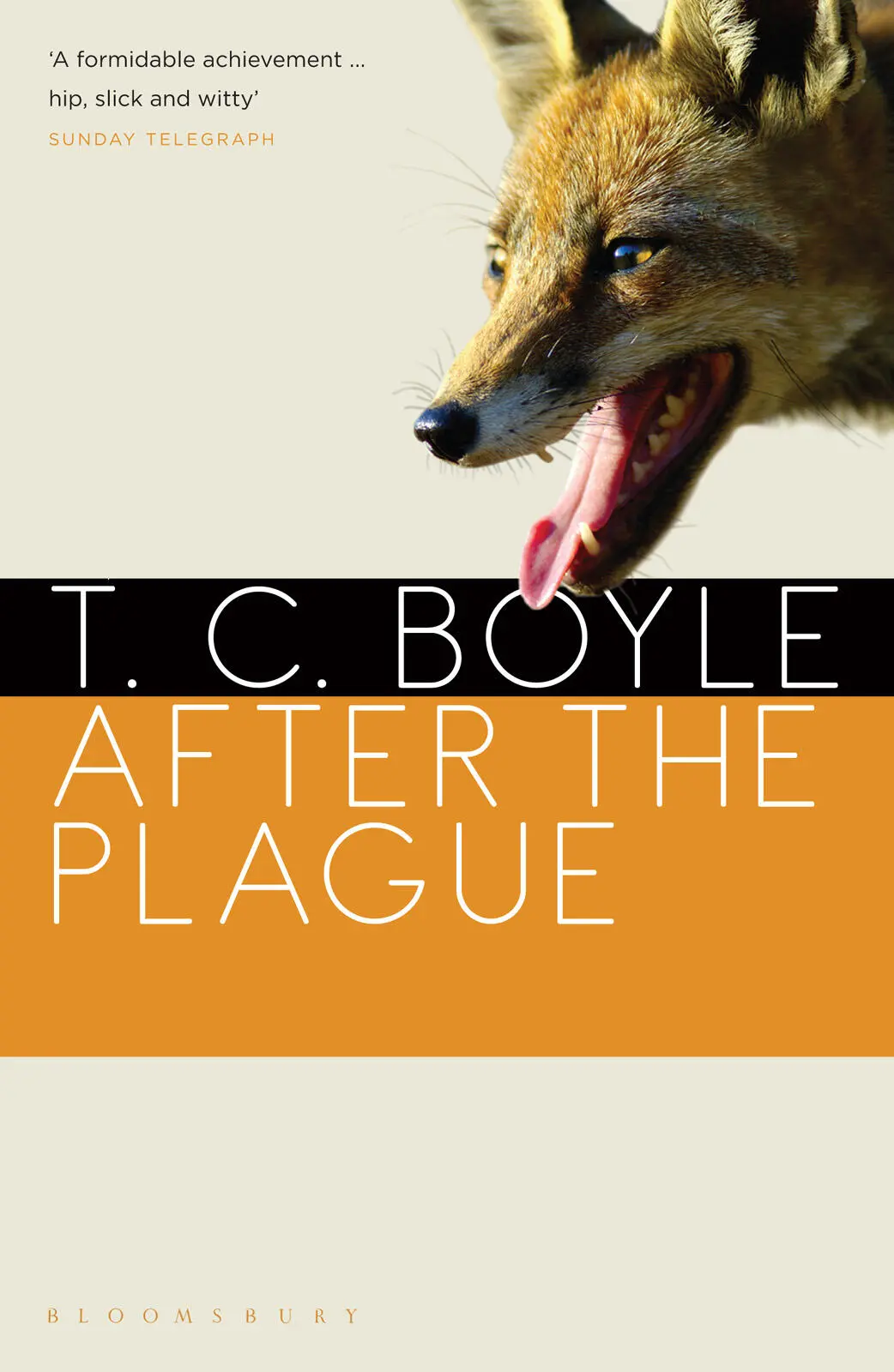
- Название:After the Plague
- Автор:
- Издательство:Bloomsbury Paperbacks
- Жанр:
- Год:2002
- ISBN:нет данных
- Рейтинг книги:5 / 5. Голосов: 1
-
Избранное:Добавить в избранное
- Отзывы:
-
Ваша оценка:
After the Plague: краткое содержание, описание и аннотация
Предлагаем к чтению аннотацию, описание, краткое содержание или предисловие (зависит от того, что написал сам автор книги «After the Plague»). Если вы не нашли необходимую информацию о книге — напишите в комментариях, мы постараемся отыскать её.
-that highlight the evolving excellence of his inventive, modern, and wickedly witty style. In
, Boyle exhibits his maturing themes through an amazing array of subjects in a range of emotional keys. He taps today's headlines, from air rage ("Friendly Skies") to abortion doctors ("Killing Babies"), and delves into more naturalistic themes of quiet power and passion, from a tale of first love ("The Love of My Life") to a story about confronting old age ("Rust"). Combining joy and humor with the dark, intense scenarios that Boyle's audience has come to love,
reveals a writer at the top of his form.
After the Plague — читать онлайн бесплатно полную книгу (весь текст) целиком
Ниже представлен текст книги, разбитый по страницам. Система сохранения места последней прочитанной страницы, позволяет с удобством читать онлайн бесплатно книгу «After the Plague», без необходимости каждый раз заново искать на чём Вы остановились. Поставьте закладку, и сможете в любой момент перейти на страницу, на которой закончили чтение.
Интервал:
Закладка:
People shifted in their seats, a muted moist surge of sound that was like the timid lapping of waves on a distant shore. No one responded — this was a polite crowd, a liberal crowd dedicated to free expression, a university crowd, and besides, the question had been posed for effect only. They’d have their chance to draw blood during the Q&A.
Sean sat at attention beside Melanie, his face shining and smug. He was midway through the Ph.D. program in literary theory, and the theoreticians had hardened his heart: Dr. Brinsley-Schneider was merely confirming what he already knew. Melanie took his hand, but it wasn’t a warm hand, a hand expressive of comfort and love — it was more like something dug frozen from the earth. She hadn’t yet told him what she’d learned at two thirty-three that afternoon, special knowledge, a secret as magical and expansive as a loaf of bread rising in a pan. Another sort of doctor had brought her the news, a doctor very different from the pinched and angry-looking middle-aged woman at the podium, a young dark-haired sylph of a woman, almost a girl, with a wide beatific face and congratulatory eyes, dressed all in white like a figure out of a dream.
They walked to the car in silence, the mist off the ocean redrawing the silhouettes of the trees, the streetlights softly glowing. Sean wanted a burger — and maybe a beer — so they stopped off at a local bar and grill the students hadn’t discovered yet and she watched him eat and drink while the television over the bar replayed images of atrocities in the Balkans, the routine bombing of Iraq and the itinerary of the railroad killer. In between commercials for trucks that were apparently capable of scaling cliffs and fording rivers, they showed the killer’s face, a mug shot of a slightly built Latino with an interrupted mustache and two dead eyes buried like artifacts in his head. “You see that?” Sean said, nodding at the screen, the half-eaten burger clenched in one hand, the beer in the other. “That’s what Brinsley-Schneider and these people are talking about. You think this guy worries much about the sanctity of human life?”
Can we afford compassion? Melanie could hear the lecturer’s droning thin voice in the back of her head, and she saw the dour pale muffin of a face frozen in the spotlight when somebody in back shouted Nazi! “I don’t know why we have to go to these lectures, anyway,” she said. “Last year’s series was so much more — do I want to say ‘uplifting’ here? Remember the woman who’d written that book about beekeeping? And the old professor — what was his name? — who talked about Yeats and Maud Gonne?”
“Stevenson Elliot Turner. He’s emeritus in the English Department.”
“Yeah,” she said, “that’s right, and why can’t we have more of that sort of thing? Tonight — I don’t know, she was so depressing. And so wrong.”
“Are you kidding me? Turner’s like the mummy’s ghost — that talk was stupefying. He was probably giving the same lecture in English 101 thirty years ago. At least Brinsley-Schneider’s controversial. At least she keeps you awake.”
Melanie wasn’t listening, and she didn’t want to argue — or debate, or discuss. She wanted to tell Sean — who wasn’t her husband, not yet, because they had to wait till he got his degree — that she was pregnant. But she couldn’t. She already knew what he would say, and it was right on the same page with Dr. Toni Brinsley-Schneider.
She watched his eyes settle on the screen a moment, then drift down to the burger in his hand. He drew back his lips and took a bite, nostrils open wide, the iron muscles working in his jaw. “We live by the railroad tracks,” Melanie said, by way of shifting the subject. “You think we have anything to worry about?”
“What do you mean?”
“The train killer.”
Sean gave her a look. He was in his debating mode, his put-down mode, and she could see it in his eyes. “He doesn’t kill trains, Mel,” he said, “—he kills people. And yes, everybody has something to worry about, everybody on this planet. And if you were listening to half of what Brinsley-Schneider was saying tonight, I wouldn’t be surprised if every third person out there on the street was a serial killer. There’s too many of us, Mel, let’s face it. You think things are going to get better? You think things are better now than when we were kids? When our parents were kids? It’s over. Face it.”
Something corny and ancient was on the jukebox — Frank Sinatra, Tony Bennett, somebody like that — because the place smacked of the kind of authenticity people were looking for, the kind of authenticity that cried out from the fallen arches, ravaged faces and sclerotic livers of the regulars, to whom she and Sean — at twenty-nine and thirty respectively — were as inauthentic as newborns.
At home, she changed into a cotton nightgown and got into bed with a book. She wasn’t feeling anything, not elation or pain or disappointment, only the symptoms of a headache coming on. The book was something she’d discovered at a yardsale two days earlier— Captured by the Indians: 15 Firsthand Accounts, 1750–1870— and the minute she opened it she was swept up into a voyeuristic world of pain and savagery that trumped any horror she could conceive of. It wasn’t a good thing to be captured by the Indians, as Sean had snidely observed on seeing her poised behind the cover the night before last, not good at all. There were no notions here of the politically correct, of revisionist history or the ethics of one people forcibly displacing another: no, it was the hot flash of murder and reprisal, the thump of the musket ball hitting home, the operation of knife and tomahawk on unresisting flesh. To die, to be murdered, to be robbed of your life and consciousness and being, that was the stuff of morbid fascination, and she couldn’t get enough of it.
Sean was in his underwear, the briefs he preferred over boxers, the sort of thing she’d always associated with boys — little boys, children, that is — and as she watched him pad across the carpet on his way to the bathroom and his nightly ritual of cleansing, clipping, flossing, brushing, tweezering and shaving, it struck her that she’d never in her life been in an intimate situation with a man — or boy — in boxers. “The last they heard,” Sean was saying, and he paused now to gaze at her over the mound of the bedspread and her tented knees, “he was in the Midwest someplace — after leaving Texas, I mean. That’s a long ways from California, Mel, and besides, his whole thing is so random—”
“He rides freight trains — or hops them, isn’t that the terminology?” she said, peering over the cover of the book. “He hops freight trains, Sean, and that means he could be anywhere in twenty-four hours — or forty-eight. How long does it take to drive from Kansas to Isla Vista? Two days? Three?” She wanted to tell him about the doctor, and what the doctor had said, and what it was going to mean for them, but she didn’t want to see the look on his face, didn’t want to have to fight him, not now, not yet. He’d go pale and tug involuntarily at the grown-over hole in his left earlobe where the big gold hoop used to reside before he got serious about his life, and then he’d tell her she couldn’t have her baby for the same reason she couldn’t have a dog or even a cat — at least until he’d done his dissertation, at least until then.
“I don’t know, Mel,” he said, all the tiredness and resignation in the world crept into his voice, as if a simple discussion could martyr him, “what do you want me to say? He’s coming through the window tonight? Of the two hundred seventy million potential victims in the country, he’s singled us out, zeroed right in on us like a homing pigeon—?”
Читать дальшеИнтервал:
Закладка:
Похожие книги на «After the Plague»
Представляем Вашему вниманию похожие книги на «After the Plague» списком для выбора. Мы отобрали схожую по названию и смыслу литературу в надежде предоставить читателям больше вариантов отыскать новые, интересные, ещё непрочитанные произведения.


Обсуждение, отзывы о книге «After the Plague» и просто собственные мнения читателей. Оставьте ваши комментарии, напишите, что Вы думаете о произведении, его смысле или главных героях. Укажите что конкретно понравилось, а что нет, и почему Вы так считаете.