T. Boyle - The Women
Здесь есть возможность читать онлайн «T. Boyle - The Women» весь текст электронной книги совершенно бесплатно (целиком полную версию без сокращений). В некоторых случаях можно слушать аудио, скачать через торрент в формате fb2 и присутствует краткое содержание. Год выпуска: 2009, Издательство: Viking Adult, Жанр: Современная проза, на английском языке. Описание произведения, (предисловие) а так же отзывы посетителей доступны на портале библиотеки ЛибКат.
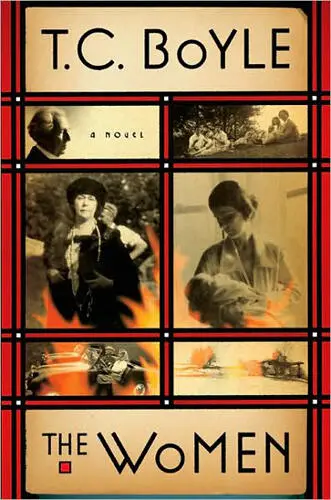
- Название:The Women
- Автор:
- Издательство:Viking Adult
- Жанр:
- Год:2009
- ISBN:нет данных
- Рейтинг книги:5 / 5. Голосов: 1
-
Избранное:Добавить в избранное
- Отзывы:
-
Ваша оценка:
The Women: краткое содержание, описание и аннотация
Предлагаем к чтению аннотацию, описание, краткое содержание или предисловие (зависит от того, что написал сам автор книги «The Women»). Если вы не нашли необходимую информацию о книге — напишите в комментариях, мы постараемся отыскать её.
and sex researcher Alfred Kinsey in
, T.C. Boyle now turns his fictional sights on an even more colorful and outlandish character: Frank Lloyd Wright. Boyle's account of Wright's life, as told through the experiences of the four women who loved him, blazes with his trademark wit and invention. Wright's life was one long howling struggle against the bonds of convention, whether aesthetic, social, moral, or romantic. He never did what was expected and despite the overblown scandals surrounding his amours and very public divorces and the financial disarray that dogged him throughout his career, he never let anything get in the way of his larger-than-life appetites and visions. Wright's triumphs and defeats were always tied to the women he loved: the Montenegrin beauty Olgivanna Milanoff; the passionate Southern belle Maud Miriam Noel; the spirited Mamah Cheney, tragically killed; and his young first wife, Kitty Tobin. In
, T.C. Boyle's protean voice captures these very different women and, in doing so, creates a masterful ode to the creative life in all its complexity and grandeur.
The Women — читать онлайн бесплатно полную книгу (весь текст) целиком
Ниже представлен текст книги, разбитый по страницам. Система сохранения места последней прочитанной страницы, позволяет с удобством читать онлайн бесплатно книгу «The Women», без необходимости каждый раз заново искать на чём Вы остановились. Поставьте закладку, и сможете в любой момент перейти на страницу, на которой закончили чтение.
Интервал:
Закладка:
I skipped dinner that night and hiked out to Stuffy’s to use the pay telephone there. I lost a pocketful of change before I finally got through to her, at her father’s house in Pittsburgh. When she answered, her voice was dead and all I could think was that she’d been drugged. “It’s me,” I said. “I’m coming to you.”
“No,” she said, far away from me, very far, farther than I could have imagined. “You can’t. My father—”
“To hell with your father.” (I wasn’t given to foul language, but I was beside myself.)
“He won’t let me — and my mother either. They’re threatening Mr. Wright with a lawsuit.”
“A lawsuit? For what? Because we love each other?” I looked away absently as a man in overalls and a cloven hat swung through the door and into the tavern. The sun spread yolk over the glass of the phonebooth. It was so hot I felt like a candle burned down to the wick. “You’re twenty years old. They can’t stop us. Nobody can.”
I listened to her breathing over the line. “Tadashi,” she said finally, “you don’t understand. I can’t see you anymore. They’re sending me to London, to stay with my Uncle Peter and Aunt Margaret — I’m going to study design at the Royal Academy. Or at least that’s the idea.”
“London?” I pictured a Dickensian scene, Daisy selling matchsticks on the street, huddled in a garret. My mind was racing. “When?” I said, and I was begging now, stalling for time, trying to calculate the distance from Taliesin to Pittsburgh, a place I’d never been to and of which I had only the vaguest geographic notion.
“Day after tomorrow.”
“But why?” I demanded, yet I already knew the answer to that question, just as I’d known with the girl in college, just as I’d known from the minute Daisy and I laid eyes on each other. Japanese were personae non gratae in this country, the Issei forever barred from attaining citizenship on racial grounds alone, whereas Swedes, Germans, even Italians and Greeks were welcome. “Is it because I’m not white? Is that it?”
She was a long time answering, and all the while a hurricane of pops, scratches and whistles howled through the line, and when she did answer her voice was so reduced I scarcely knew she was speaking. She said, “Yes,” in the way she might have dropped a pebble in the ocean. “Yes,” she said. “Yes.”
Of course, all this happened a very long time ago and I’m aware that it is peripheral to the task at hand, which is to give as full a portrait of Wrieto-San as I can, and I don’t wish to dwell on the negative, not at all. Suffice to say that I stayed on at Taliesin, grudgingly at first (and perhaps I should have defied Wrieto-San and Daisy’s father and all the rest of the world and driven through the night to Pittsburgh and held her to me so tightly no one could ever have torn us apart, but that sort of demonstrative behavior, is, I’m afraid, alien to me), and then, as the weeks, months and years wore on, in the way of humility and acceptance. Increasingly I came to an ever deeper understanding of the true meaning of apprenticeship and the sacrifice required in service of a great master, and I salved my wounds in the analgesic of work.
Which is precisely why I’d like to relate a happier experience from this period, one in which Wrieto-San again called on me to travel with him on business. It must have been in 1937 or 1938—my memory and the notes I’ve saved from that time are in conflict here — but it was certainly before the great gulf of the war came between us. Wrieto-San, as it happened, was in need of a new automobile — or to be more precise, two new automobiles. We were by then caravanning annually to Taliesin West, which tended to take a toll on our vehicles, and this was the ostensible rationale for our trip to the automobile dealer’s showroom in Chicago, but, in fact, as has been indicated above, Wrieto-San didn’t concern himself so much with needs as he did with wants. He wanted the newest model of Lincoln automobile, the Lincoln Zephyr, and when Wrieto-San wanted something, he always — always, without fail — got it.
I suppose he brought me along that day as a sort of foil, a strange face to put the salesman off his guard, but of course I saw nothing of that — I was simply pleased and honored to be at his side, no matter my function. In any case, he strutted grandly through the door of the showroom, tricked out in all his Beaux Arts finery, the ends of his senatorial tie flowing and his cane tapping at the gleaming tiles of the floor, while I brought up the rear. The salesman — a sort of Babbitt-type, portly, glowing, pleased with himself — came sailing out of the office and across the floor like a liner out on the sea, his hand outstretched in greeting. He could see in a moment that Wrieto-San was someone great, a dynamo, a prince among men, but I’m not sure if he recognized him at first.
“Yes,” Wrieto-San said, studying the man’s hand a moment before clenching it in his own, “I’ve come for this car.” He used his cane as a pointer. The Zephyr stood there in all its aerodynamic beauty, with its grill of chrome shining like the teeth of some fierce predatory animal, the skirts that extended the sculpted chassis and the long tapering wonder of the cab. It was a magnificent thing, elegant and brutal at the same time, its hood concealing the peerless V-12 engine that would tear up the road and transform its competitors into tiny gleams in the rearview mirror. I saw it and wanted it myself. Anyone would have. It was the pinnacle of automotive perfection.
“Good,” the salesman said, rubbing his hands together in anticipation of his commission, and then he launched into a fulsome speech about the car’s features and reliability, going on at such length that Wrieto-San, exasperated, finally cut him off.
“Can it be that you don’t recognize me?” he said.
“Why, yes”—the salesman faltered—“of course I do.”
I heard my own voice then, though I’d intended to remain silent — and watchful. “Mr. Frank Lloyd Wright,” I said, and I had to restrain myself from bowing.
The man slapped his forehead. “Mr. Wright,” he intoned, as if he were offering up a prayer, “of course, of course. It’s an honor, sir, a great honor.” And then he was pumping Wrieto-San’s hand all over again.
When he was finished, when he got done wriggling and grinning and running a hand through his hair and straightening his tie, he stared expectantly at Wrieto-San, who gave me one of his patented looks (we apprentices liked to call it the boa-constrictor-swallowing-the-rat look), then turned back to the salesman. “I’ll want two of them,” he pronounced. “And I’ll want them cut off here”—an abrupt slashing movement of the cane that sliced an imaginary line from the windshield to the rear window—“so that convertible tops can be installed.” He paused. “They’ll need to be painted, of course, in Cherokee red,” he added, turning to me. “Tadashi, you have the color sample, do you not?”
“Yes, Wrieto-San,” I said, and this time I did bow as I handed over the sheet of paper decorated with the red square.
And then, as that seemed to have concluded the business, Wrieto-San turned to leave, but stopped before he’d gone five steps. “Oh, yes,” he said, his voice as self-assured as any senator’s on the stump, “I’ll want delivery within the month. And I won’t be paying. You do understand that, don’t you?”
We got a great deal of use out of those cars. They were every bit as powerful and rugged — not to mention elegant — as advertised. And they were especially useful for longer treks — to Arizona, to visit clients and construction sites in the late thirties and early forties, when we were busily engaged with the building of Florida Southern College, the Community Church in Kansas City, the Sturges House in California and any number of other far-flung projects. And, of course, their performance was all the more satisfying because Wrieto-San did not pay a nickel for them, nor was he expected to. Just as he’d calculated, the Lincoln Automotive Company was delighted to advertise just what make and model the world’s greatest architect chose to drive.
Читать дальшеИнтервал:
Закладка:
Похожие книги на «The Women»
Представляем Вашему вниманию похожие книги на «The Women» списком для выбора. Мы отобрали схожую по названию и смыслу литературу в надежде предоставить читателям больше вариантов отыскать новые, интересные, ещё непрочитанные произведения.








Обсуждение, отзывы о книге «The Women» и просто собственные мнения читателей. Оставьте ваши комментарии, напишите, что Вы думаете о произведении, его смысле или главных героях. Укажите что конкретно понравилось, а что нет, и почему Вы так считаете.