T. Boyle - The Women
Здесь есть возможность читать онлайн «T. Boyle - The Women» весь текст электронной книги совершенно бесплатно (целиком полную версию без сокращений). В некоторых случаях можно слушать аудио, скачать через торрент в формате fb2 и присутствует краткое содержание. Год выпуска: 2009, Издательство: Viking Adult, Жанр: Современная проза, на английском языке. Описание произведения, (предисловие) а так же отзывы посетителей доступны на портале библиотеки ЛибКат.
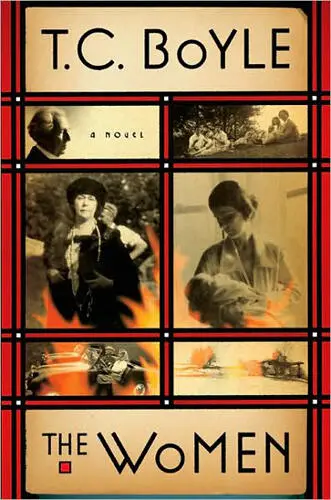
- Название:The Women
- Автор:
- Издательство:Viking Adult
- Жанр:
- Год:2009
- ISBN:нет данных
- Рейтинг книги:5 / 5. Голосов: 1
-
Избранное:Добавить в избранное
- Отзывы:
-
Ваша оценка:
The Women: краткое содержание, описание и аннотация
Предлагаем к чтению аннотацию, описание, краткое содержание или предисловие (зависит от того, что написал сам автор книги «The Women»). Если вы не нашли необходимую информацию о книге — напишите в комментариях, мы постараемся отыскать её.
and sex researcher Alfred Kinsey in
, T.C. Boyle now turns his fictional sights on an even more colorful and outlandish character: Frank Lloyd Wright. Boyle's account of Wright's life, as told through the experiences of the four women who loved him, blazes with his trademark wit and invention. Wright's life was one long howling struggle against the bonds of convention, whether aesthetic, social, moral, or romantic. He never did what was expected and despite the overblown scandals surrounding his amours and very public divorces and the financial disarray that dogged him throughout his career, he never let anything get in the way of his larger-than-life appetites and visions. Wright's triumphs and defeats were always tied to the women he loved: the Montenegrin beauty Olgivanna Milanoff; the passionate Southern belle Maud Miriam Noel; the spirited Mamah Cheney, tragically killed; and his young first wife, Kitty Tobin. In
, T.C. Boyle's protean voice captures these very different women and, in doing so, creates a masterful ode to the creative life in all its complexity and grandeur.
The Women — читать онлайн бесплатно полную книгу (весь текст) целиком
Ниже представлен текст книги, разбитый по страницам. Система сохранения места последней прочитанной страницы, позволяет с удобством читать онлайн бесплатно книгу «The Women», без необходимости каждый раз заново искать на чём Вы остановились. Поставьте закладку, и сможете в любой момент перейти на страницу, на которой закончили чтение.
Интервал:
Закладка:
I remember feeling overwhelmed as the train began to brake for the station at Spring Green, the hills dipping away to release us to the flatland where the town presented its forlorn cluster of buildings, everything different and somehow the same. My wife was watching me, her shoulders pressed so close to mine we might have been one flesh, though we had the entire compartment to ourselves. “Are you all right?” she asked, tilting her head to study me all the more closely. Were there tears in my eyes? Tears of joy, recollection, nostalgia, pain? I don’t know. I suppose there were. And when the platform hove into view and I saw him standing there — Wrieto-San, come to greet us in person, in the midst of a knot of fresh-faced apprentices — I could barely hold myself back. I’d been half-afraid he would forget me or send an apprentice in his stead. But here he was, in the flesh, honoring me with his presence, reminding me of the indissoluble bond between Master and apprentice. “Yes,” I said, struggling for control. “Yes, I’m fine.”
The train lurched. There was the metallic wheeze of the brakes. My wife looked away from me to the platform and back again. “Is that him?”
“Yes,” I said, and I could see that he was holding forth on one subject or another, his chin cocked back, the cane in motion, his cape fluttering with the quick chop of his advancing steps and the beret adhering to his brow as if by some force of its own. People gave way to him. Pigeons erupted. The apprentices scurried to keep up.
The moment we emerged from the train he came striding up the platform, barking out commands to the apprentices in his wake, his face easing into his open natural emollient smile, the smile that had beguiled a legion of reluctant clients round the world and every woman he’d ever met. My first impression? That he looked old, reduced, the hair gone white against the great riven monument of his head. But he was old, in his eighties now, as best I could calculate. “Tadashi,” he called out when he was still ten feet from me, his voice as effervescent and youthful as ever, “you’ve gone gray!”
And then he was there and we were bowing, Setsuko and I, and he bowed first to me and then to her, a dip of his head only, and repeated the greeting I’d given him the first time we met all those years ago beside the still-hissing frame of my Bearcat: “Hajimemashite.”
“And you, Wrieto-San,” I said, feeling as light as if I were filled with helium—“you’ve gone white.” (I meant no disrespect, of course, but was simply playing off his mood, injecting a bit of the banter he was so fond of, though I could imagine his terrorizing the household staff all morning over the arrangements at Taliesin.) Despite the tidal wash of emotion I was experiencing — or perhaps because of it — I found that I was grinning.
“Ah, so you’ve noticed? Well, this is the color of venerability, Sato-San.” His eyes were coruscating, flecks of glass incinerated under the sun. “No matter how soft your pencils nor how often you add tired to tired, that gray I see at your temples will fade on you so that you’ll wake up one morning, look into the mirror and see an Oriental sage staring back at you.” He seized a lock of his hair in one hand and laughed aloud.
On the way out to Taliesin, he hardly had a word for me — it was my wife to whom he devoted himself, Wrieto-San at his most impish and charming. She was young and pretty and she was an angel on the violin, a combination that must have proved irresistible to him. Though my wife’s English was limited, Wrieto-San was very gentle with her, bathing her in the full glow of his charm, as I imagine he must have done with Nobu Tsuchiura and Takako Hayashi before her.
I stared out the window of the car, filled with such longing and nostalgia I thought my heart would break, a hundred questions for Wrieto-San on my lips — How was Wes? Had he heard from Yen? And Herbert was married, could that be true? — and then Taliesin separated itself from the hillside before us, as golden and sustaining as the picture I’d held of it in my mind’s eye through the gray accumulation of weeks, months and years in the camps. Or no, deeper, richer even. The effect it had on me is hard to explain. It was, I suppose, like the feeling of wonder and revelation most people experienced when they first saw the images of the earth from the terra incognita of the moon’s surface — only this wasn’t terra incognita. Not for me. This was my home, my ideal home, if the world were a holier place and aesthetics ruled rather than necessity. And cruelty.
Wrieto-San was going on about the violin and music in general, how Iovanna had mastered that most subtle of instruments, the harp, and wondering if Setsuko would be so kind — so exquisitely thoughtful and indulgent — as to give him and Olgivanna a sample of her skills later on that evening, when we pulled into the courtyard and my wife turned to me, looking utterly bewildered, for a translation. I’m afraid I failed her there, at least for the moment, because suddenly a mélange of all-but-forgotten odors washed over me and triggered my olfactory memory — the cold ashes of the fire, the farthest corner of the hogpen, cabbage soup, sweet Wisconsin air and a trace of the poison bait the cook sprinkled round for the rats — and I was overcome all over again.
There followed a long and loving tour of the house, the late-afternoon sun awakening all its sacral nooks and corners, its dramatic dialogue of light and texture, the magical confluence of the horizontal and vertical, Wrieto-San reminding us of Lao-Tse’s observation that architecture exists not for the sake of the structure but for the space it encloses, among other echoes of the past, and pausing to lecture most charmingly over each of his new acquisitions of Asian art. Then there was tea with Mrs. Wright, who perched formally on the edge of a chair and regarded me out of her Gurdjieffian eyes as if she couldn’t quite place me, her face as drawn and mournful as these eight or nine accumulated years could make it. She was in the midst of grilling Setsuko over her musical tastes — were there Japanese composers she was interested in or was she strictly attuned to the Western canon? — when Wrieto-San set down his cup and clapped his hands like an impresario hovering over his audience. “Well, what do you think about taking in a little of the outdoors, Tadashi?” he said, rising to his feet. “It’s a beautiful day, isn’t it?” And he paused to give me a wink. “Just about perfect for a picnic, wouldn’t you say?”
“A picnic?” I echoed, rising in concert with the Master, as if it were a tic.
“Yes, like in the old days.”
I bowed by way of hiding my emotions. I was deeply moved. Not only had Wrieto-San come to the station for me and taken the time to show off the house and its treasures for my bride, but here he’d arranged a picnic in our honor as well. And of course Wrieto-San was a great champion of the outdoors, as sensitive to nature and its changes as the hermetic monks of my country who sit for days in contemplation of the cherry blossoms or the winged seeds of the maples, which made the gesture even more special and exquisite. In my years at Taliesin we’d picnicked up and down the fields and hillsides on dozens of occasions and in far-flung locations too, a group of apprentices going on ahead to make arrangements and the rest of us piling into the Taliesin cars and heading off to some locale Wrieto-San had chosen in advance for its beauty and serenity, a joy to us all — and now he was offering to rekindle the spirit. For me.
We were all on our feet now, apprentices darting about, the cars standing in the courtyard and Setsuko looking to me for assurance. I went to her, took her by the arm. Embraced the warmth of her.
Читать дальшеИнтервал:
Закладка:
Похожие книги на «The Women»
Представляем Вашему вниманию похожие книги на «The Women» списком для выбора. Мы отобрали схожую по названию и смыслу литературу в надежде предоставить читателям больше вариантов отыскать новые, интересные, ещё непрочитанные произведения.









Обсуждение, отзывы о книге «The Women» и просто собственные мнения читателей. Оставьте ваши комментарии, напишите, что Вы думаете о произведении, его смысле или главных героях. Укажите что конкретно понравилось, а что нет, и почему Вы так считаете.