T. Boyle - The Women
Здесь есть возможность читать онлайн «T. Boyle - The Women» весь текст электронной книги совершенно бесплатно (целиком полную версию без сокращений). В некоторых случаях можно слушать аудио, скачать через торрент в формате fb2 и присутствует краткое содержание. Год выпуска: 2009, Издательство: Viking Adult, Жанр: Современная проза, на английском языке. Описание произведения, (предисловие) а так же отзывы посетителей доступны на портале библиотеки ЛибКат.
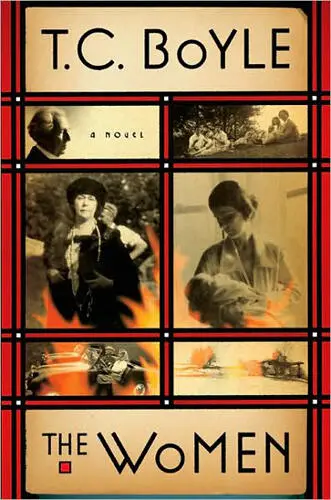
- Название:The Women
- Автор:
- Издательство:Viking Adult
- Жанр:
- Год:2009
- ISBN:нет данных
- Рейтинг книги:5 / 5. Голосов: 1
-
Избранное:Добавить в избранное
- Отзывы:
-
Ваша оценка:
The Women: краткое содержание, описание и аннотация
Предлагаем к чтению аннотацию, описание, краткое содержание или предисловие (зависит от того, что написал сам автор книги «The Women»). Если вы не нашли необходимую информацию о книге — напишите в комментариях, мы постараемся отыскать её.
and sex researcher Alfred Kinsey in
, T.C. Boyle now turns his fictional sights on an even more colorful and outlandish character: Frank Lloyd Wright. Boyle's account of Wright's life, as told through the experiences of the four women who loved him, blazes with his trademark wit and invention. Wright's life was one long howling struggle against the bonds of convention, whether aesthetic, social, moral, or romantic. He never did what was expected and despite the overblown scandals surrounding his amours and very public divorces and the financial disarray that dogged him throughout his career, he never let anything get in the way of his larger-than-life appetites and visions. Wright's triumphs and defeats were always tied to the women he loved: the Montenegrin beauty Olgivanna Milanoff; the passionate Southern belle Maud Miriam Noel; the spirited Mamah Cheney, tragically killed; and his young first wife, Kitty Tobin. In
, T.C. Boyle's protean voice captures these very different women and, in doing so, creates a masterful ode to the creative life in all its complexity and grandeur.
The Women — читать онлайн бесплатно полную книгу (весь текст) целиком
Ниже представлен текст книги, разбитый по страницам. Система сохранения места последней прочитанной страницы, позволяет с удобством читать онлайн бесплатно книгу «The Women», без необходимости каждый раз заново искать на чём Вы остановились. Поставьте закладку, и сможете в любой момент перейти на страницу, на которой закончили чтение.
Интервал:
Закладка:
They were in limbo for twelve interminable days.
The papers were full of the story, headlines trumpeting disaster, the least detail pried from the wreckage by the ghouls of the press, but nothing was certain, no one could be trusted till the full accounting was in. Frank was so distracted he couldn’t seem to sit in a chair for more than two minutes at a time. He paced endlessly. Lost his appetite. Let his work lag while he twisted the radio dial and worried the newspapers. The cruelest moment was when they were awakened by the phone ringing in the middle of the night only to have a reporter from the Examiner , full of himself, full of the joy of Schadenfreude, crow over the line that the Imperial had been destroyed and wondering if Frank had a statement to make. Miriam came up out of the morass of sleep, groggy, drugged, buried in a river of oneiric mud, saying, “What? What?” And his voice was there, in the dark, crackling with outrage, truth against the world: “On what authority? How do you know? Have you been there and back on a magic carpet? No, no: you listen to me. The Imperial Theater might have gone down, the Imperial Hospital, the Imperial University and all the thousand other buildings that trumpet the Emperor’s connection, but if there’s a structure standing in all that torn country it will be my hotel. And you can print it!”
How she loved him for that — for his fierceness and certainty. Get his back up against the wall and he’d fight like a lion. She lay there that night listening to his breathing decelerate, declining through the layers of consciousness till he was asleep beside her, her man, her fiancé, her very own personal genius, Frank Lloyd Wright, creator of the Imperial Hotel, may it stand ten thousand years. And even as she drifted off she heard the workers chanting all the way across the spill and tumult of the waves, Wrieto-San, Wrieto-San, banzai!
The telegram finally reached them on the evening of September 13. It had been forwarded through the Spring Green office to their apartment in Hollywood just as they were sitting down to dinner. Frank’s hands quivered as he tore it open. And then his face flushed and he was reading it aloud:
FOLLOWING WIRELESS RECEIVED FROM TOKIO TODAY
HOTEL STANDS UNDAMAGED AS MONUMENT OF YOUR
GENIUS HUNDREDS OF HOMELESS PROVIDED BY PERFECTLY
MAINTAINED SERVICE SIGNED OKURA IMPEHO
137
And now the press could feed on him to its heart’s content. Now she and Frank could open the doors and stand there arm in arm for the photographer’s flash and Frank could prance and crow and sermonize and she, in the shadows no longer, could stand at his side and broadcast his genius to the wide world. She was so proud of him. And he — beaming, glowing like a one-hundred-watt bulb and offering up his grandest smile — he was proud of her.
In the wake of that — the tumult of the press and the international outpouring of awe and gratitude and congratulation that rocketed Frank so far ahead of his competitors and critics that he became, in a single heroic stroke, the most famous architect in the world and no one even to raise a whisper to deny it — the next two months slipped by so quickly she scarcely knew where they went. She kissed Leora on both cheeks, in the French way, her eyes full and her heart luminous, and then she and Frank returned to Wisconsin to make themselves ready, one more shriving of the soul and the flesh too. She was a new person altogether, newborn, and she stood at the tall living room windows looking down the long avenues of light and felt herself open up inside, lifting higher and higher till she was a bright fluttering pennant on a breeze that could never chill her again. The trees gave up their leaves. The weather turned bitter. The lake froze so hard it could have supported the weight of every automobile and tractor in the county. And the night sky was clear all the way to the rooftop of the universe, the stars strung from its beams in a cool white shatter of bliss. For her. For her and Frank.
They could have been married in Los Angeles or even Chicago (quietly, quietly, because whether they bowed to convention and he legitimated her with his ring and a kiss as if they were just any common Joe and Jane was nobody’s business), but the symbolism of Taliesin was irresistible and when he proposed it she didn’t demur or even hesitate. “Yes,” she said, “there’s no place I’d rather be,” and for once she meant it. This was where his heart was, this was where his mother lay buried and the ghost woman too, Mamah, the phantasm she’d had to compete with through all these gratuitous years at his side. It was perfect. She’d have it no other way. And if the wind screamed down out of Canada and the hogs threw up their stink and the rubes sat stupefied in their parlors while her light shone out over the ice-bound river in the witching hour of the night, then so much the better.
But now it was a question of shoes. Of her dress. Flowers. A midnight supper. The cake. Would there even be a cake? Did it make any sense? Who was going to eat it? If it were up to Frank they’d dine on cheese sandwiches and apple cider, but she would have champagne, crepes, caviar, and she wouldn’t discuss it, not for a minute. If he thought she was going to get married without a champagne toast and at least the semblance of real cuisine, then he’d gone mad. Clear out of his mind. Cuckoo. She fought to stay calm as the day approached, though she wanted to fly out at the maid, the cook, at Billy Weston and anyone else who crossed her path, and she could see that Frank was wrought up too. More than once she heard his enraged voice echoing through the caverns of the house like the report of distant thunder, but he put on a face for her — and she for him. In fact — and it moved her so deeply she found herself dabbing her eyes to realize it — they were tenderer with each other than they’d been since that fraught and glorious week when they first met, when she was his ideal made flesh and her every movement bewitched him.
She hid herself away on the night of the wedding, bathing and dressing and making herself up with a precise measured care that took her through each step of the way as if she were rehearsing her catechism, and no, she didn’t need the maid’s help or the pravaz’s either. She was purposeful, calm, utterly absorbed in the moment. On her lips was the poem she’d committed to memory for him, the best translation she could make of the scroll that had hung in her tatami room in the green fastness of the mountains above the Kantō Plain when he came to take her away. It was from the hand of a woman who’d lived a thousand years ago at the court of the Empress, in a time devoted to the fulfillment of the senses, to beauty, poetry, art and love, and she would give it up to him there, in the cold of the primeval night as the stars wheeled overhead and the judge intoned the immemorial phrases and the ring slipped over her finger.
She spoke it aloud one final time, lingering over the rhythms and the aching sweet release of its sentiment. “ ‘The memories of long love, / gather like drifting snow,’ ” she murmured, watching herself in the mirror — beautiful still, still unspoiled, still capable of ascending to the very highest plateau of love and grace abounding — even as her voice dropped to a whisper, “ ‘poignant as the Mandarin ducks / who float side by side in sleep.’ ”
She held her own eyes a moment, looking as deeply into herself as she dared, and then she went out to marry him.
PART III. MAMAH
INTRODUCTION TO PART III
Wrieto-San liked soft pencils. In his paternal — some would say tyrannical — way he banned hard pencils from the drafting room, but there were many among us who preferred them for the crispness and authority of the lines they produced, Herbert Mohl in particular. Herbert was sensitive to criticism, as we all were, but he’d been around Taliesin longer than any of us and we deferred to him, so that there was a period there during which people began to use hard 4H pencils for their drawings in defiance of Wrieto-San’s dictates. (And he preferred soft pencils because their lines were easier to erase, as he was continually erasing while he drew and thought and revised and drew and revised again—“The eraser is the most important instrument of the architectural design,” he used to say, making it one of his mantras.) One afternoon — it was cold, winter shrouding the windows, a certain post-luncheon lethargy casting a pall over the drafting room — he emerged suddenly from his office to stroll amongst us, as he did twenty times a day, and we all rose to our feet in deference. “Good God, it’s like a meat locker in here!” he cried. “Can’t any of you keep up the fire?”
Читать дальшеИнтервал:
Закладка:
Похожие книги на «The Women»
Представляем Вашему вниманию похожие книги на «The Women» списком для выбора. Мы отобрали схожую по названию и смыслу литературу в надежде предоставить читателям больше вариантов отыскать новые, интересные, ещё непрочитанные произведения.







Обсуждение, отзывы о книге «The Women» и просто собственные мнения читателей. Оставьте ваши комментарии, напишите, что Вы думаете о произведении, его смысле или главных героях. Укажите что конкретно понравилось, а что нет, и почему Вы так считаете.