T. Boyle - The Women
Здесь есть возможность читать онлайн «T. Boyle - The Women» весь текст электронной книги совершенно бесплатно (целиком полную версию без сокращений). В некоторых случаях можно слушать аудио, скачать через торрент в формате fb2 и присутствует краткое содержание. Год выпуска: 2009, Издательство: Viking Adult, Жанр: Современная проза, на английском языке. Описание произведения, (предисловие) а так же отзывы посетителей доступны на портале библиотеки ЛибКат.
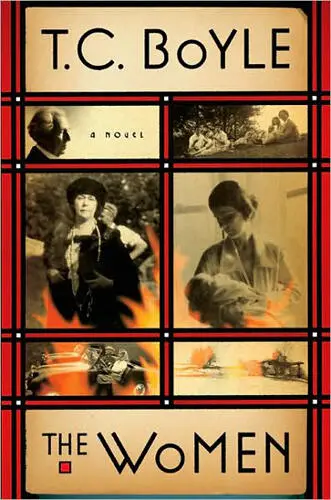
- Название:The Women
- Автор:
- Издательство:Viking Adult
- Жанр:
- Год:2009
- ISBN:нет данных
- Рейтинг книги:5 / 5. Голосов: 1
-
Избранное:Добавить в избранное
- Отзывы:
-
Ваша оценка:
The Women: краткое содержание, описание и аннотация
Предлагаем к чтению аннотацию, описание, краткое содержание или предисловие (зависит от того, что написал сам автор книги «The Women»). Если вы не нашли необходимую информацию о книге — напишите в комментариях, мы постараемся отыскать её.
and sex researcher Alfred Kinsey in
, T.C. Boyle now turns his fictional sights on an even more colorful and outlandish character: Frank Lloyd Wright. Boyle's account of Wright's life, as told through the experiences of the four women who loved him, blazes with his trademark wit and invention. Wright's life was one long howling struggle against the bonds of convention, whether aesthetic, social, moral, or romantic. He never did what was expected and despite the overblown scandals surrounding his amours and very public divorces and the financial disarray that dogged him throughout his career, he never let anything get in the way of his larger-than-life appetites and visions. Wright's triumphs and defeats were always tied to the women he loved: the Montenegrin beauty Olgivanna Milanoff; the passionate Southern belle Maud Miriam Noel; the spirited Mamah Cheney, tragically killed; and his young first wife, Kitty Tobin. In
, T.C. Boyle's protean voice captures these very different women and, in doing so, creates a masterful ode to the creative life in all its complexity and grandeur.
The Women — читать онлайн бесплатно полную книгу (весь текст) целиком
Ниже представлен текст книги, разбитый по страницам. Система сохранения места последней прочитанной страницы, позволяет с удобством читать онлайн бесплатно книгу «The Women», без необходимости каждый раз заново искать на чём Вы остановились. Поставьте закладку, и сможете в любой момент перейти на страницу, на которой закончили чтение.
Интервал:
Закладка:
Two days later, on the tenth of November, the Chicago Tribune ran a story in which Nellie Breen denied attempting blackmail, but which seemed to catch her up in her own machinations. 117Her back against the wall, the woman had apparently given the reporters a fair copy of her letter dated October 22 in which she warned Frank that he and Miriam were liable to arrest under the Mann Act on evidence in her possession (clearly the letters she’d stolen out of Frank’s desk drawer), evidence so damning that it was unlikely they would even be released on bail. But she didn’t stop there — she made demands. What did she want in return for suppressing this evidence? She wanted them to separate. Separate. And never see each other again. Oh, and she was very specific on this, the meddling arthritic broken-down old bitch: “That is, you cannot keep her at Taliesin or Cedar Street, nor have her to visit you or live with her.”
If that wasn’t blackmail, then what was? Miriam — and she was furious with Frank for having kept the letter from her, no matter how loving or charitable his intentions — could scarcely believe the audacity of the woman, who was, after all, no better than a common thief. In fact, when she first saw the article she was so enraged she flung the paper across the room, where it struck the wall in full flight and fell to the carpet like a crippled bird.
It was still there when she went to her writing desk, so absolutely rigid with hate and distaste and mortification that she’d taken a bit of sherry to calm herself — and if it had any effect at all she couldn’t feel it, not in her present state. She was back in Chicago now, at least there was that — they’d taken the train in on the morning after the photograph of the wilting doppelganger had been printed (“No need to hide me away now, Frank,” she’d remarked acidly, holding tight to his arm as they strode up the platform in a flurry of newspapermen and gaping passersby) — but the scene out the window was as close and gray and bleak as it had been in Wisconsin. Well, she welcomed it — it would only feed her mood. Which was dark, dark, dark. And thirsting for blood. How dare she, how dare that lace-curtain bitch set out rules for her — or for anyone, for that matter? Who appointed her moral guardian of the world?
In the lower drawer, locked away from Frank, was a sheaf of the stationery she’d ordered over his objections, the Hicks coat of arms glowing from the page beneath their conjoined initials. She produced a pristine sheet and smoothed it out on the blotting pad, taking another long sip of sherry as she brooded over it. Then she took up her pen, a new Waterman, a gift from Frank, so smooth and delicate and pretty a writing utensil it might have been a supernumerary finger, and without thinking let her ideas flow across the page as if she’d been writing letters to the newspaper all her life. The reporter — the bald one, and for the life of her she couldn’t seem to recall his name — had taken her aside that day at Taliesin and encouraged her to give her side of the story. Her philosophy, her desires, something of herself the public could grasp hold of. Who was she behind the enigma, that sort of thing. It would be so much more gratifying than anything he or his colleagues could write because it was she who was at the center of things here, she who knew the real truth not only of Chicago and its ostensible mores but of the Continent too.
By the time she came back to herself she’d covered some five pages, hardly a letter blotted, her graceful hand undulating across the page with all the authority and elegance that had won her first prize in penmanship at the Thornleigh Academy for Women when she was a girl. She spoke of marriage as a worn-out dead letter, at least when it’s loveless, a mere shadow of what a true and loving pact should be, but then she assured them — her audience, all the shining people of Chicago, and the little people too, the butchers and carters and whoever — that she and Frank weren’t denouncing marriage per se, but simply obeying a higher law. For there was only one real loyalty and that was reflected in conduct consecrated to a living, lofty concept of life and love. That was what people should aim for, that and nothing less.
And then, with all the eloquence she could summon, she went about demolishing Nellie Breen, a hired domestic, a thief, an exemplar of false middle-class morality that stoops to dishonesty, to thievery, in order to uphold its own spuriousness, the very serpent of hypocrisy that was slowly dying out around the world as people listened to their hearts and not the dictates of men dead and gone. Finally, her pen moving so swiftly it was as if a spirit had risen from the grave to take her hand and guide it — Emil, with all his literary talents intact, or perhaps it was her father — she cried out to the world, “Do not pity me. I am no victim of unrequited love. Well might any woman proudly stand in my place and count the cost as nothing.”
When she finished, she went to the window to stare out into what remained of the day. She felt unburdened at last, free of it all, and though she was bursting to show the letter to Frank (but he was at the office) or to Leora, to anyone, she sealed the envelope, affixed a stamp and went to the closet for her coat. She watched herself in the mirror as she did up the buttons, adjusted her hat and pulled on her gloves, staring into her own eyes, but not too deeply. There was a glow about her, certainly, and as she went out into the cold and made her way up the street to the postbox on the corner, she could feel people’s eyes on her and she turned to them gracefully, men and women alike, and smiled.
CHAPTER 7: IN THE LONG SHADOW OF MOUNT FUJI
Frank was shouting, his voice booming out till the house rang with it, and everybody, not least Miriam herself, had been on tenterhooks for three days now and counting. Guests were coming. He was always impossible when people were expected, arranging and rearranging his prints and screens and pottery over and over, grouping the furniture first in one corner and then another and finally dragging it into the center of the room, where it would remain for all of fifteen minutes before he changed his mind yet again. He devoted hours alone to the floral arrangements or to draping his Chinese, Turkoman or Persian carpets over one chair or the other so that they fell just so, and on this occasion — the Japanese were coming and he was so wound up you would have thought the Emperor himself was about to breeze through the door — he went to a rosewood chest in the vault to dig out his eighteenth-century Japanese robes 118so that he could display them beside his prints. But what was he bellowing about now?
Whatever it may have been — a spot of tarnish on a serving spoon, lint on the carpet, an insufficient fire in one of the guest rooms — it was no concern of hers. He had half a dozen of his lackeys running around the place as if they’d been scorched, the cook had her instructions and another housemaid had been taken on to oversee the arrangements. No, her concern — her only concern — was to see to her dress so that she could stand beside him and greet the guests with a pure ethereal serenity and the daintiest of Oriental bows. And certainly Frank had harangued her on this latter point — the form, duration and posture of the bow — till she wanted to scream.
Now, in the privacy of the bedroom, with a good bed of coals in the fireplace and two fresh splits of oak laid atop them because it was cold as a tomb in this rambling stone and stucco citadel with its leaks and drafts and the windows that might as well have been made of transparent paper for all the good they did at keeping the weather out, she practiced before the mirror, dipping her torso and rising again with her eyes radiant and a full-lipped smile spreading across her face till her dimples shone like a girl’s, How nice to meet you, Hayashi-San, enchantée —or no, that wasn’t the right note at all. She should keep silent, letting her eyes do the talking for her — wasn’t that the way the Oriental women did it? Of course, they were nothing but chattel, no better than dogs, unless they were the painted courtesans who coquetted the night away with a passel of leering old men who had nothing more to recommend them than the yen in their pockets. And that horrible rice wine. She’d known a few Japanese in Paris— Japonisme was all the rage in those days; she imagined it still was — and they’d been decent enough, she supposed, with a good command of French, but then they were the artistes and by all accounts Hayashi-San was certainly not artistic in the least. No, he was a businessman. Manager of the old Imperial Hotel in Tokyo. And he was coming to be wooed. Well, all right, she thought, bowing before the mirror, she would woo him, then. For Frank’s sake. 119
Читать дальшеИнтервал:
Закладка:
Похожие книги на «The Women»
Представляем Вашему вниманию похожие книги на «The Women» списком для выбора. Мы отобрали схожую по названию и смыслу литературу в надежде предоставить читателям больше вариантов отыскать новые, интересные, ещё непрочитанные произведения.








Обсуждение, отзывы о книге «The Women» и просто собственные мнения читателей. Оставьте ваши комментарии, напишите, что Вы думаете о произведении, его смысле или главных героях. Укажите что конкретно понравилось, а что нет, и почему Вы так считаете.