T. Boyle - The Women
Здесь есть возможность читать онлайн «T. Boyle - The Women» весь текст электронной книги совершенно бесплатно (целиком полную версию без сокращений). В некоторых случаях можно слушать аудио, скачать через торрент в формате fb2 и присутствует краткое содержание. Год выпуска: 2009, Издательство: Viking Adult, Жанр: Современная проза, на английском языке. Описание произведения, (предисловие) а так же отзывы посетителей доступны на портале библиотеки ЛибКат.
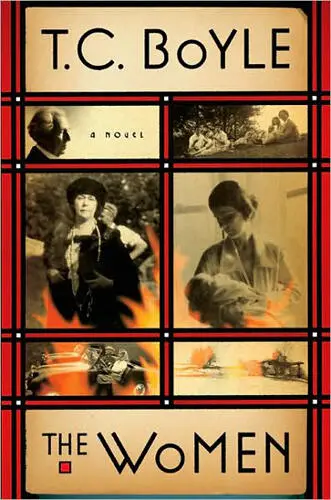
- Название:The Women
- Автор:
- Издательство:Viking Adult
- Жанр:
- Год:2009
- ISBN:нет данных
- Рейтинг книги:5 / 5. Голосов: 1
-
Избранное:Добавить в избранное
- Отзывы:
-
Ваша оценка:
The Women: краткое содержание, описание и аннотация
Предлагаем к чтению аннотацию, описание, краткое содержание или предисловие (зависит от того, что написал сам автор книги «The Women»). Если вы не нашли необходимую информацию о книге — напишите в комментариях, мы постараемся отыскать её.
and sex researcher Alfred Kinsey in
, T.C. Boyle now turns his fictional sights on an even more colorful and outlandish character: Frank Lloyd Wright. Boyle's account of Wright's life, as told through the experiences of the four women who loved him, blazes with his trademark wit and invention. Wright's life was one long howling struggle against the bonds of convention, whether aesthetic, social, moral, or romantic. He never did what was expected and despite the overblown scandals surrounding his amours and very public divorces and the financial disarray that dogged him throughout his career, he never let anything get in the way of his larger-than-life appetites and visions. Wright's triumphs and defeats were always tied to the women he loved: the Montenegrin beauty Olgivanna Milanoff; the passionate Southern belle Maud Miriam Noel; the spirited Mamah Cheney, tragically killed; and his young first wife, Kitty Tobin. In
, T.C. Boyle's protean voice captures these very different women and, in doing so, creates a masterful ode to the creative life in all its complexity and grandeur.
The Women — читать онлайн бесплатно полную книгу (весь текст) целиком
Ниже представлен текст книги, разбитый по страницам. Система сохранения места последней прочитанной страницы, позволяет с удобством читать онлайн бесплатно книгу «The Women», без необходимости каждый раз заново искать на чём Вы остановились. Поставьте закладку, и сможете в любой момент перейти на страницу, на которой закончили чтение.
Интервал:
Закладка:
She could feel the metallic burn of outrage in the back of her throat, though she was elated too— the noted sculptress! — and she rose up out of the chair in a shiver of anticipation and hate. “Said what?”
“Well”—another flurry of blinking—“that she felt she had to come forward because of the children.”
“Children? What children?”
“Frank’s children. She says they were there.”
“ Frank’s children?” It took her a moment. A series of images ran through her head — Thomas in diapers, the girls nattering over their dolls, their hair in ringlets and their dresses spread out round them like parachutes fallen to earth, the glittering black eyes of a random infant in a perambulator, tiny immaculate fingers and toes, pink skin in a bubble bath — but none of them seemed to have anything to do with Frank. Children? Frank didn’t have any children.
“That’s what it says.”
“But they’re grown. They’re adults. Two of them are married, for God’s sake. And the youngest — he must be twelve or thirteen, at any rate — went back off to school the week I got there. In Chicago. Or Oak Park — at his mother’s.”
Leora gave an elaborate shrug. “You know that. I know it. But they’re still his children.”
Frank’s response was to pack her into the car that very night and drive up to Wisconsin as if they were fugitives. The following day — it was early November now, the fields frost-burned, the windows aching with the cold — he gave a statement to the press denying everything. His attachment to Madame Noel, he said, was purely spiritual and to think of conducting a love affair under the eyes of his mother — who had been living at Taliesin for some months now — was preposterous. Madame Noel was a brilliant and highly sensitive soul who could only find solace in the company of her fellow artists and who was, accordingly, a member of the Taliesin atelier that included himself and a number of architects, draftsmen and artisans. Further, he and his attorney, Mr. Clarence Darrow, were looking into prosecuting Mrs. Breen — an embittered, discharged domestic who had written several letters threatening both Mr. Wright and Madame Noel — for the theft of his private property and misuse of the mails.
When the reporters had left, he sent his draftsmen out into the fields on the pretext of repairing the fences or raking up the stubble or some such thing and took her into the studio. “Miriam, I really do regret all this publicity,” he said, sliding into the seat behind his desk as if he were easing into a bath. “It’s the last thing we need, especially after—” he made a vague gesture. “And I’m sorry you’ve been dragged into it. But please, sit down, sit down, make yourself comfortable.”
“No, I won’t sit, Frank.” She was irritated on a number of counts, not the least of which was having to cut short their Chicago sojourn in order to eat flapjacks and freeze her marrow out here in the dismal dull cloud-hung barn-stinking hind-end of nowhere. “And I won’t hide myself away out of sight as if I have something to be ashamed of. I’m not ashamed of our love, Frank — are you?”
He picked up his spectacles and fiddled with them a moment before clamping them over the bridge of his nose as if to examine her more closely. 112He looked like a bank examiner, a livestock appraiser, his eyes distorted and rinsed of color. “Of course not, but that’s not at issue, not at all.”
She cut him off. “What is, then?”
“I simply cannot afford — and you know this as well as anyone, Miriam — another blowup. In this neighborhood especially, not after what happened here summer before last—”
“The dead woman again. It always comes down to her, doesn’t it, Frank? Well, I tell you, I am not going to hide myself away. I’m going to proclaim the truth of what we are and I don’t give two figs for what anybody thinks. Including you.”
“Damn it, Miriam!” He stood so abruptly the chair pitched over behind him. In his excitement he began waving his arms as if he were trying to shoo a cow out of the garden and the gesture froze her inside. She wouldn’t be intimidated. She wouldn’t. “You don’t understand. You talk about—”
“I love you, Frank.”
“—love, yes, love, but that’s not what this concerns. This concerns scandal, Miriam, the kind of scandal that will destroy all the goodwill I’ve patiently built up among my neighbors here. .”
She held herself perfectly rigid. “That’s the only truth, Frank. That’s all anyone needs to know.”
“No, Miriam, no, it’s not. They’re going to publish the letters and Clarence says it’s too late to stop them.”
The letters. To bloody hell with the letters. She never flinched. Never took her eyes from his. “Good,” she spat. “Let them. Let the whole world know what I feel for you. Let them see what a true and good and noble love is, a love for the ages, a love that shines like the brightest star in the firmament.”
And then (was she catching cold?) she brought her handkerchief to her face to dab at her eyes — and let him fume, let him rage at her — and very gently, very softly and delicately, blew her nose. 113
CHAPTER 6: THE SERPENT OF HYPOCRISY
That night they ate a subdued meal, latterly shot-gunned duck in its own oleaginous juices, with half a dozen insipid side dishes, the only recognizable one of which seemed to be some sort of potato concoction buried in strips of what looked to be roadside weed, prepared by the lumbering swollen wife of one of the workmen and served in uncovered tureens by the graceless little sixteen-year-old. There were just three place settings at the table, which would make this the smallest group she’d presided over since coming to Taliesin. Not that it mattered to her one way or the other, simply that a larger party made for gayer conversation, and gay conversation helped fight down the crushing tedium of the place. Frank’s sons had long since returned to their wives, as the major part of the construction was completed now, and the visiting architect and his wife had gone back to Germany — or was it Austria? Paul Mueller was overseeing things in the Chicago offices and Russell Williamson and the other draftsmen had gone off to a concert in Madison. The third setting was for Frank’s mother, but Frank’s mother was in a funk over the newspaper reports and wouldn’t come out of her room.
“Well, I guess it’s just the two of us, then,” Frank said, lifting his glass — of plain unadulterated eau de vie — for a toast. “To us,” he offered, and she dutifully clinked her glass against his, making her best effort to hold on to a smile. In her glass, which she’d seen to personally before Frank came into the room, was a crisp dry Chablis she’d got from her wine merchant in Chicago, the palate and aroma of which momentarily took her back across the Atlantic to the vineyards of Burgundy on a long-ago autumn day when she was newly in love with René, 114who’d been so wonderfully kind to her after Emil’s death. Until he turned rotten, that is. And unfaithful. Like any man, if you gave him half the chance. The thought soured her and her smile abruptly vanished. She gave him a hard look.
“As I was saying earlier, we can’t afford to stir up the press any more than we already have, thanks to Mrs. Breen — and damn that woman. I’m sorry to have to say it, but there it is. She’s the one at fault, clearly, and these Mann charges will certainly be dismissed as the absurdity they are. What rankles me — no, what infuriates me — is this sordid effort to impeach your character, and it’s got to stop.” He looked up from his duck, the worry lines lashing at his eyes, and let out a sigh. “Which is why I’ve asked my mother to stay on. At least until this has blown over.”
Читать дальшеИнтервал:
Закладка:
Похожие книги на «The Women»
Представляем Вашему вниманию похожие книги на «The Women» списком для выбора. Мы отобрали схожую по названию и смыслу литературу в надежде предоставить читателям больше вариантов отыскать новые, интересные, ещё непрочитанные произведения.


Обсуждение, отзывы о книге «The Women» и просто собственные мнения читателей. Оставьте ваши комментарии, напишите, что Вы думаете о произведении, его смысле или главных героях. Укажите что конкретно понравилось, а что нет, и почему Вы так считаете.