T. Boyle - The Women
Здесь есть возможность читать онлайн «T. Boyle - The Women» весь текст электронной книги совершенно бесплатно (целиком полную версию без сокращений). В некоторых случаях можно слушать аудио, скачать через торрент в формате fb2 и присутствует краткое содержание. Год выпуска: 2009, Издательство: Viking Adult, Жанр: Современная проза, на английском языке. Описание произведения, (предисловие) а так же отзывы посетителей доступны на портале библиотеки ЛибКат.
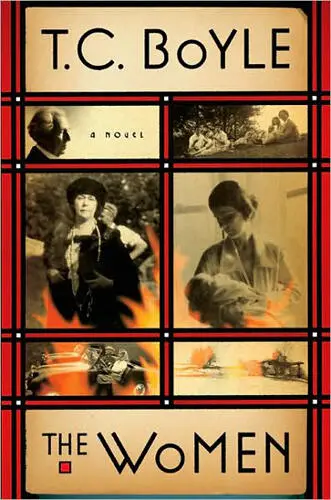
- Название:The Women
- Автор:
- Издательство:Viking Adult
- Жанр:
- Год:2009
- ISBN:нет данных
- Рейтинг книги:5 / 5. Голосов: 1
-
Избранное:Добавить в избранное
- Отзывы:
-
Ваша оценка:
The Women: краткое содержание, описание и аннотация
Предлагаем к чтению аннотацию, описание, краткое содержание или предисловие (зависит от того, что написал сам автор книги «The Women»). Если вы не нашли необходимую информацию о книге — напишите в комментариях, мы постараемся отыскать её.
and sex researcher Alfred Kinsey in
, T.C. Boyle now turns his fictional sights on an even more colorful and outlandish character: Frank Lloyd Wright. Boyle's account of Wright's life, as told through the experiences of the four women who loved him, blazes with his trademark wit and invention. Wright's life was one long howling struggle against the bonds of convention, whether aesthetic, social, moral, or romantic. He never did what was expected and despite the overblown scandals surrounding his amours and very public divorces and the financial disarray that dogged him throughout his career, he never let anything get in the way of his larger-than-life appetites and visions. Wright's triumphs and defeats were always tied to the women he loved: the Montenegrin beauty Olgivanna Milanoff; the passionate Southern belle Maud Miriam Noel; the spirited Mamah Cheney, tragically killed; and his young first wife, Kitty Tobin. In
, T.C. Boyle's protean voice captures these very different women and, in doing so, creates a masterful ode to the creative life in all its complexity and grandeur.
The Women — читать онлайн бесплатно полную книгу (весь текст) целиком
Ниже представлен текст книги, разбитый по страницам. Система сохранения места последней прочитанной страницы, позволяет с удобством читать онлайн бесплатно книгу «The Women», без необходимости каждый раз заново искать на чём Вы остановились. Поставьте закладку, и сможете в любой момент перейти на страницу, на которой закончили чтение.
Интервал:
Закладка:
“It’s false, Frank, and you know it.”
“False or not, I won’t have the press making sport of you — and me. Me, all over again. If I’m to get work, and you know perfectly well how tight things are for me right now, then there simply cannot be any more talk or even the breath of a scandal. God knows the letters will be embarrassment enough.”
She was calm, utterly composed, and she sipped her wine and watched him over the rim of the glass until he was done. “I want to speak with them,” she said, setting the glass down and taking up knife and fork. The duck lay there before her. She gave it a single glance — folds of luteous fat and dull dun flesh, steam rising, gravy —and laid down the fork, carefully realigning it with the plate, before going on. “I’ll explain it all. I tell you: I will not hide.”
“You will.” His tone was curt and despotic and she didn’t like it at all. He might have been speaking to one of his draftsmen over a poorly executed section or a farmhand who’d dared to express an opinion on the application of fertilizer. “You’ll stay here at Taliesin, away from the reporters, until I say different. Do you understand me?”
Understand him? He was speaking English, wasn’t he? But did he understand her? She didn’t like to be dictated to. Emil had tried it and she was just a girl then. He lived to regret it. And René too. She lifted the glass to her lips, let the taste of the cold clear liquid — the taste of France, of civilization — soothe her throat and her nerves and her temper too. She didn’t bother to answer.
The next morning they saddled up two of the horses and rode out over the hills together and everything seemed new-made and fine, the air and exercise dispelling the bad odor of the day before. He was a splendid horseman and that made her proud of him all over again. They cantered across the fields, the breeze in their faces, absolutely removed from the world, and they might have been Heathcliff and Catherine pounding over the turf in all the wild excess of their fraught and doomed love. It was bracing. Exhilarating. And when Frank’s mother crawled out of her burrow to take luncheon with them she barely minded. The afternoon was pleasant too. She spent most of it reading before the fire while Frank and one of the men went into Madison to run errands, and she was so engaged with her book, so caught up in the momentum of the unfolding story (two men and a woman, the midnight assignation, blood and honor and the fierce crack of the vaquero’s lariat as the lovers fled into the fastness of the Argentine night) 115she hardly glanced up when he returned. It took a moment, a minor irritation, his shadow falling across the page as he stood there silently in front of the chair, before she acknowledged him. He was still in his hat and coat. His face was grim. “They’ve printed the letters,” he said, dropping the newspaper in her lap. Then he turned on his heel and stalked out of the room without another word.
Irritated, she tried to read on, but the words began to meld and elongate so that she could make no sense of them, and after a moment she set down the book and took up the paper.
The headline — it exploded across the page, sending sparks and rockets high into the farthest reaches of her scrambled brain — made her catch her breath: “MIRIAM” LETTERS TO WRIGHT RANGE FROM JOY TO DESPAIR. It was like nothing she’d ever experienced. To see her name there, reproduced in canonical ink, was a shock — of course it was — but it was something more too, something indefinable, and even as she glanced over the subtitle ( The Shunned Woman: Her Cry, Her Pains ) she could feel the glow of it. Suddenly, overnight, in a single stroke, she was famous. Known to thousands, hundreds of thousands. She was Frank Lloyd Wright’s love and all the world knew it, shunned no more. She thrilled with the knowledge, every cell and fiber alive with it, and if she was in exile, if the sky outside the window was as dull and dirty and depressing as an old tin pot in the kitchen sink, what did it matter? These were her words, her very words, broadcast to the world!
Of course, as she read on — and she did have a literary gift, a real way with the turn of a phrase, she had to credit herself there — she couldn’t help regretting certain small infelicities. Had she really called Frank “a pathetic, bitter, aging man”? Had she actually said “I am going — the ‘menace’ to your safety no longer exists. Live your life as pitifully as you desire”? Or this: “You do not wish to be POSSESSED (OWNED) by love, by tenderness, kindness, devotion, but you ARE possessed by a tyranny whose sway is disastrous to the happiness of those who love you.” The words hardly made sense. And she would have taken them back if she could. But she’d been overwrought at the time, spurned, cast out of the fold, people had to understand that — and the thought of it, of how beastly he’d been, how sharp-tongued and sarcastic and purely petty and mean, made her anger shine out all over again. She read through it all, column after column, weighing each word with a mixture of euphoria and heartache, and then she read it through a second time.
When she was finished she sat a long while staring into the fire, struggling to get hold of her emotions. The initial elation was gone now, replaced by doubt. This wasn’t right — it wasn’t right at all. The overall impression a casual reader of the Tribune would take away with him would be ungenerous, she could see that now. Instead of a true and noble cri de coeur from one great and giving soul to another — stars equally aligned and equally potent — these letters, these very private and personal letters, would be seen as the maunderings of a scorned woman, defeated in love, desperate and pitiful. Some people — the mean-spirited ones — might even laugh at them. And if that wasn’t bad enough, she’d signed herself “Thine,” and even worse, “Love me all you can.”
Finally, the windows gone black with the fall of night and the house settling into a quiet that dwindled down to nothing but the tick and crepitus of the fire, she pushed herself up and went looking for Frank. He wasn’t in the bedroom and she traced her way back through the loggia to the dining alcove and on to the living room, but she didn’t encounter him along the way. There was a smell of cabbage emanating from the kitchen — peasant fare, as poisonous as it was bland — and the cook and serving girl, busying themselves over chopping block and stove respectively, barely glanced up when she peered through the door. No one else seemed to be stirring. And that was odd — or maybe it wasn’t. Maybe this was the way it was out here in the country, everyone battened down to survive the interminable winter, all human hopes and joys and aspirations buried under a heap of quilts, to bed at dark and up with the cows. The thought made her seize with anxiety, and where was Frank? Didn’t he realize that she needed him, that the letters were all wrong, that she was the one who’d been exposed to public censure and maybe even ridicule — that it was she who bore the burden, not he?
She thought perhaps Frank had gone outside — whenever he was wrought up, no matter the weather, he’d pull on his boots and go tramping round the place, as if he were impervious to heat, cold, rain and snow alike. Frank the farmer, Frank the Welshman, the manure spreader and hog appraiser, a peasant for all his genius. She’d actually stuck her head outside in the intemperate air and bleated his name down the length of the courtyard before she thought of the studio. Which was where she found him, seated at one of the drafting tables beneath the oil portrait of his mother — the sole picture in the room — and the motto he’d affixed to the wall: WHAT A MAN DOES, THAT HE HAS. And what does a man do? she was thinking. Lock up his amante in a dungeon? Silence her? Let the newspapers make a mockery of her spirit, her love, her life? “This won’t stand, Frank,” she said.
Читать дальшеИнтервал:
Закладка:
Похожие книги на «The Women»
Представляем Вашему вниманию похожие книги на «The Women» списком для выбора. Мы отобрали схожую по названию и смыслу литературу в надежде предоставить читателям больше вариантов отыскать новые, интересные, ещё непрочитанные произведения.


Обсуждение, отзывы о книге «The Women» и просто собственные мнения читателей. Оставьте ваши комментарии, напишите, что Вы думаете о произведении, его смысле или главных героях. Укажите что конкретно понравилось, а что нет, и почему Вы так считаете.