T. Boyle - The Women
Здесь есть возможность читать онлайн «T. Boyle - The Women» весь текст электронной книги совершенно бесплатно (целиком полную версию без сокращений). В некоторых случаях можно слушать аудио, скачать через торрент в формате fb2 и присутствует краткое содержание. Год выпуска: 2009, Издательство: Viking Adult, Жанр: Современная проза, на английском языке. Описание произведения, (предисловие) а так же отзывы посетителей доступны на портале библиотеки ЛибКат.
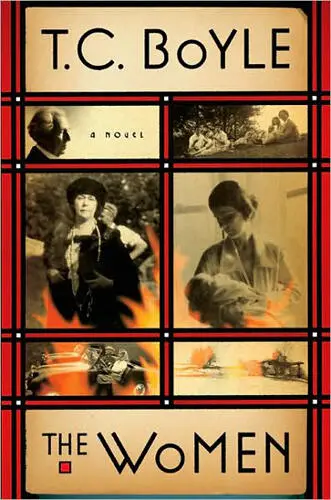
- Название:The Women
- Автор:
- Издательство:Viking Adult
- Жанр:
- Год:2009
- ISBN:нет данных
- Рейтинг книги:5 / 5. Голосов: 1
-
Избранное:Добавить в избранное
- Отзывы:
-
Ваша оценка:
The Women: краткое содержание, описание и аннотация
Предлагаем к чтению аннотацию, описание, краткое содержание или предисловие (зависит от того, что написал сам автор книги «The Women»). Если вы не нашли необходимую информацию о книге — напишите в комментариях, мы постараемся отыскать её.
and sex researcher Alfred Kinsey in
, T.C. Boyle now turns his fictional sights on an even more colorful and outlandish character: Frank Lloyd Wright. Boyle's account of Wright's life, as told through the experiences of the four women who loved him, blazes with his trademark wit and invention. Wright's life was one long howling struggle against the bonds of convention, whether aesthetic, social, moral, or romantic. He never did what was expected and despite the overblown scandals surrounding his amours and very public divorces and the financial disarray that dogged him throughout his career, he never let anything get in the way of his larger-than-life appetites and visions. Wright's triumphs and defeats were always tied to the women he loved: the Montenegrin beauty Olgivanna Milanoff; the passionate Southern belle Maud Miriam Noel; the spirited Mamah Cheney, tragically killed; and his young first wife, Kitty Tobin. In
, T.C. Boyle's protean voice captures these very different women and, in doing so, creates a masterful ode to the creative life in all its complexity and grandeur.
The Women — читать онлайн бесплатно полную книгу (весь текст) целиком
Ниже представлен текст книги, разбитый по страницам. Система сохранения места последней прочитанной страницы, позволяет с удобством читать онлайн бесплатно книгу «The Women», без необходимости каждый раз заново искать на чём Вы остановились. Поставьте закладку, и сможете в любой момент перейти на страницу, на которой закончили чтение.
Интервал:
Закладка:
The weeks began to topple forward, a series of unanchored pillars thundering to earth one after another. He barely slept. And when he did sleep he was plagued with nightmares, the face of Carleton, a scrim of blood, the children’s hacked limbs and the creeping damp inadmissible blotches that infested the sheets under which they lay splayed like roots torn from the earth. Rigor mortis. He’d never known what the term meant, never wanted to know, the miniature bodies laid out in a grotesque parody of rest and surcease. When he closed his eyes, even for a minute, he saw the dead children, saw Mamah, and then the naked pillars and the ghostly chimneys rose up as in a separate reality, skewed, out of plumb, irremediably wrong. No design. There was no design. Just chaos.
He turned to work, buried himself in it — and it might have sustained him if it weren’t for the eternal vagaries of finance. Though Midway Gardens had opened to grand success at the end of June — a thousand and more of Chicago’s upper crust gathered there in tuxedoes and gowns, the National Symphony Orchestra playing three separate concerts, Pavlova dancing, the hoi polloi mobbing the outdoor beer gardens and everyone enthusiastic in their praise — September came on and still the final details were left unfinished. Waller 88was out of money, flat and busted, and that was that. There were gaps everywhere, art glass yet to be installed, sculptures, murals, but no amount of pleading, anger, resentment or even logic could sway the man — the money was gone and Frank would just have to be patient. Patient? He needed a return, needed money of his own to reconstruct Taliesin, and where was his fee? Where was his recompense for the hundreds of hours he’d put in? For Taliesin? For Mamah?
At home, in the evenings, Mother Breen fussed over him and he ate alone — roasts, Irish stew, broiled lamb and Lake Michigan whitefish in cream sauce — then sat working on the plans for Taliesin, the drama of creation taking him out of himself for hours at a time. Mother Breen chattered all the while in her jagged unmodulated tones, inculcating him in the details of her private life as she served the meat, cleared the table, ran a ceaseless broom over the floors, and the sound of her voice, a feminine voice for all its stridulation, was as comforting in his present state as a choir of angels. She was a widow, he learned, née McClanahan, with references from Monsignor O’Reilly and the Howard Turpetts, with whom she ’d been in service for thirty-two years till the cholera took them both on a trip to the Orient. Her daughter — she had just one daughter and four sons, scattered to the winds — had been a disappointment to her. She went to mass each morning at five to pray for her and for her sons and for him too (“Mr. Wright,” she’d say, dropping her voice from the key of fulmination to something like a shout, “I wear my knees out over you, don ’t you know? ”) and again after she served the evening meal. She slept under three blankets, even on the hottest nights. “Rheumatism,” she explained. “The curse of the old.” And she looked at him as if he could commiserate, but he wasn’t old, not yet — forty-seven last June and each day feeling his strength and determination returning by increments.
He took her to Wisconsin with him on the train and left her to fight the incursion of ash in the studio, the back bedroom, the kitchen, the pantry and anywhere else a window was left open or a shoe had found its mark, while he walked the site and conferred with Billy Weston and Paul Mueller over what needed to be done. She was a fury and she brought order to the house in a way his own mother never could have, because his own mother, though he loved her more than any other woman in the world and needed her now more than ever, would have nagged and coddled and irritated him in a way this new mother, this artificial mother, never did. Mother Breen. She cooked for the men, she scrubbed and washed and ironed, and she never heard a word you said.
Gradually, through the fading haze of September and on into the rains of October and the early enduring freeze that was November that year, the old rhythms reasserted themselves. He traveled freely between Spring Green and Chicago, cajoling clients, submitting plans and proposals, looking out for materials and browsing shops and galleries for things of beauty to replace what had been destroyed. He manipulated accounts, wrote checks against insufficient funds, placated his daughter when she came round again and again wondering if there was any way she could help — with correspondence, dusting, anything. And his mother. He spent as much time with her as he could, assuring her that he was rebuilding for her, so that she and Aunts Nell and Jane could be with him permanently, 89and she seemed mollified, though she kept asking about Mrs. Breen. Who was she? Why was she at his side at a time like this instead of his own mother who’d given birth to him and raised him up to be what he was? Could she cook — was that it? He preferred her cooking to his own mother’s? Most of all, though, he worked to rebuild Taliesin, laboring side by side with the men in the bitterest weather, oblivious to the cold and discomfort, watching the patterns emerge day by day from the farrago of wood and stone and stucco. 90His muscles ached. He began to recover the weight he’d lost. The nightmares fell away in the face of exhaustion and he slept as he’d always slept, in an unbroken descent into the deepest oblivion.
Throughout it all he continued to receive letters of sympathy from friends and strangers alike, hundreds of letters, an avalanche, so many he couldn’t possibly begin to answer them. Each day there was a new sheaf of envelopes on his desk, the newspapers having whipped up an outpouring of unfettered emotion from people all over the world who wanted to share in his grief, wanted to tell him of their own losses and bereavements, reassure him, scold him, praise and criticize and offer up their prayers. He couldn’t read the letters, not after the first few. They depressed and irritated him. Who were these people to think they could invade his life, whether they meant well or not? Was this notoriety? Was this what notoriety meant? People nosing into your private life like parasites, digging at your soul, insinuating themselves through two thin sheets of paper?
“Burn them,” he told his secretary. “All of them. Unless they’re from people I know and want to know. Friends, clients, family. Burn the rest. I don’t want to see them.”
And so it went. But the secretary, a judicious woman, set aside some of the more intriguing and compassionate specimens, thinking they would appeal to his sense of himself in a very specific and therapeutic way. She bound these letters with a strip of ribbon and every few days set them down on his desk. “I thought these might interest you,” she would say, quickly adding, “I’ve burned the rest.”
One morning in early December she laid a single letter on his desk. “This one seems very heartfelt,” she murmured, and he looked up at the catch in her voice. She gave him a weak smile and excused herself. A cold rain fell beyond the windows. He got up a moment to poke at the fire, then went back to the drawing he was working on, pushing the letter to the corner of his desk. For the next hour, he barely glanced up, trying out one idea after another for the Japanese, envisioning a hotel that would be neither Oriental nor Western, a grand edifice that might combine some of the structural elements of Midway Gardens, layered stone, brick, with a pool out front to bring it down to earth and reflect its lines — preliminary sketches, that was all, because the commission wasn’t assured, not yet. Though it would be, he was confident of that, and he couldn’t help calculating the commission on a building with a nearly limitless budget, two million, three, maybe more. He’d forgotten all about the letter, but when he next glanced up, there it was, in a cream-colored envelope embossed with the initials MMN.
Читать дальшеИнтервал:
Закладка:
Похожие книги на «The Women»
Представляем Вашему вниманию похожие книги на «The Women» списком для выбора. Мы отобрали схожую по названию и смыслу литературу в надежде предоставить читателям больше вариантов отыскать новые, интересные, ещё непрочитанные произведения.







Обсуждение, отзывы о книге «The Women» и просто собственные мнения читателей. Оставьте ваши комментарии, напишите, что Вы думаете о произведении, его смысле или главных героях. Укажите что конкретно понравилось, а что нет, и почему Вы так считаете.