T. Boyle - The Women
Здесь есть возможность читать онлайн «T. Boyle - The Women» весь текст электронной книги совершенно бесплатно (целиком полную версию без сокращений). В некоторых случаях можно слушать аудио, скачать через торрент в формате fb2 и присутствует краткое содержание. Год выпуска: 2009, Издательство: Viking Adult, Жанр: Современная проза, на английском языке. Описание произведения, (предисловие) а так же отзывы посетителей доступны на портале библиотеки ЛибКат.
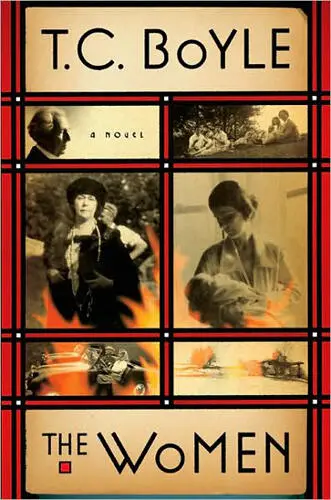
- Название:The Women
- Автор:
- Издательство:Viking Adult
- Жанр:
- Год:2009
- ISBN:нет данных
- Рейтинг книги:5 / 5. Голосов: 1
-
Избранное:Добавить в избранное
- Отзывы:
-
Ваша оценка:
The Women: краткое содержание, описание и аннотация
Предлагаем к чтению аннотацию, описание, краткое содержание или предисловие (зависит от того, что написал сам автор книги «The Women»). Если вы не нашли необходимую информацию о книге — напишите в комментариях, мы постараемся отыскать её.
and sex researcher Alfred Kinsey in
, T.C. Boyle now turns his fictional sights on an even more colorful and outlandish character: Frank Lloyd Wright. Boyle's account of Wright's life, as told through the experiences of the four women who loved him, blazes with his trademark wit and invention. Wright's life was one long howling struggle against the bonds of convention, whether aesthetic, social, moral, or romantic. He never did what was expected and despite the overblown scandals surrounding his amours and very public divorces and the financial disarray that dogged him throughout his career, he never let anything get in the way of his larger-than-life appetites and visions. Wright's triumphs and defeats were always tied to the women he loved: the Montenegrin beauty Olgivanna Milanoff; the passionate Southern belle Maud Miriam Noel; the spirited Mamah Cheney, tragically killed; and his young first wife, Kitty Tobin. In
, T.C. Boyle's protean voice captures these very different women and, in doing so, creates a masterful ode to the creative life in all its complexity and grandeur.
The Women — читать онлайн бесплатно полную книгу (весь текст) целиком
Ниже представлен текст книги, разбитый по страницам. Система сохранения места последней прочитанной страницы, позволяет с удобством читать онлайн бесплатно книгу «The Women», без необходимости каждый раз заново искать на чём Вы остановились. Поставьте закладку, и сможете в любой момент перейти на страницу, на которой закончили чтение.
Интервал:
Закладка:
I see that perhaps I’ve gone on at too great a length concerning this period of Wrieto-San’s life, in what is meant to serve, after all, merely as an introduction, but I do think these recollections should help to illuminate the character of the man whose greatness has touched us all. In closing, I should mention that my distinguished collaborator, Seamus O’Flaherty, is, in addition to the aforementioned translations, the author of two novels, The Ladies’ Heat (not what you might think — its subject is women’s track and field) and Kit and Caboodle (also a surprise — this work deals with a fictional detective agency established in Okinawa by two Englishmen, Jonas Kit and Malcolm Caboodle, in the years immediately following the conclusion of the second war). At this point, sadly, neither has found a publisher. And yet, as I’m sure you’ll agree, O’Flaherty-San brings a unique artistic perspective to the text here as it unravels backward in time to attempt to define the true essence of Mr. Frank Lloyd Wright, Wrieto-San, Wrieto-San, banzai! — the guiding light and enduring genius of all working architects, past, present and future.
CHAPTER 1: DIES IRAE
August 1914. There was a war on in Europe, the Archduke Ferdinand assassinated, the old alignments breaking down, trenches dug, want and terror and ruin spreading outward like ripples on the surface of a pond, but the rumor of it barely touched him. Nothing touched him. A week ago he’d been as secure and genuinely happy as he’d ever been in his life, Mamah blossoming along with Taliesin, working on a book of her own and winning over the neighbor women with her God-given grace and charm and the long trailing diminuendo of her laugh, the scandals behind them and the hounds of the press onto other shames and miseries, his own work on Midway Gardens coming to fruition in a last-minute frenzy of alterations, substitutions, delays and shortages and the mad concentrated efforts of a cadre of men working against deadline, just the way he liked it. But now he was alone. Taliesin was in ashes. And Mamah was dead.
Past midnight on a day he couldn’t name — Monday, Tuesday, what difference did it make? — he was sitting on the hill above the ruins of the house, crickets alive around him, roaring as if their lives would never end and the frost never come, fireflies aping the stars overhead, the grass lush, the trees burdened with fruit and the bitter reek of ash hanging over everything. Five hundred copies of the Wasmuth portfolio, printed on the finest German stock, were still smoldering in the basement — even now he could segregate the smell of them, a thin persistent chemical stink of colored plates, elaborated plans and burned-out ideas — and when he turned his head he could see the deeper darkness, black smoke against the black sky and the dense textured shadows of the freestanding chimneys that were like the remains of a civilization gone down. Everything was still. And then, suddenly, a noise came at him, abrasive and harsh, the grind of boot heels amongst the cinders, and he caught his breath. There, a quick flare of light — a match lit and snuffed. Joseph, he thought, it’s only Joseph, the farmer’s son he’d hired to walk the property with a rifle to keep out the looters and anyone else who might want to do him harm.
Further harm. Fatal harm. The Barbadian was in the Dodgeville jail, but who knew if he had collaborators, a whole army of disaffected Negroes in white service jackets hunkered in the bushes over their hatchets and knives? He almost wished it were so. At least then he could do something to release the grief and rage boiling up in him. Literally boiling up. His back, from tailbone on up into the hair at the nape of his neck, was a plague of boils, inflamed suppurating sores, and he’d never in his life suffered so much as a pimple or blemish. It was as if what the gossipmongers were saying was true and verifiable, that divine justice had come down on his head for violating the laws of God and man in taking Mamah outside of marriage and then compounding the sin by establishing her in Taliesin as if to rub all their noses in it. Mamah had paid the ultimate price, yet he’d been spared by a fluke of fate, away in Chicago and so pressed and harried he’d taken to sleeping right there on the job site in a pile of shavings. Spared, as the editorialists had it, so he could twist and suffer for the rest of his life. Arson, murder, desolation, boils. What next — frogs dropping down from the heavens? Locusts?
They called it sin, the preachers denouncing him from their pulpits, crowing, gloating, and the newspapermen right there alongside them, but was there any such thing? He didn’t believe in it any more than Mamah or Ellen Key did, not when it came to honest and loving relations between women and men, but how else could you explain what had happened? It was the God of Isaiah come down to lay his hand over the hillside, the God before whom Ein Tad 83had made him tremble when he was a boy. The words were on his lips now, involuntary and poisonous, but he could no more stop them than he could go back in time to stay the murderer’s hand: “ ‘The grass withereth,’ ” he said aloud, the sound of his voice an assault on the solitude of the night, “ ‘the flower fadeth, because the breath of the Lord blows upon it; surely the people are grass.’ ”
He’d buried her himself. In a plain pine box fashioned by Billy Weston with his two burned hands and gashed scalp and it was no trouble for Billy, the smallest thing, because Billy was making a box of his own, child-size, for his son Ernest, murdered alongside Mamah and the others and laid out on the stones like a burnt offering. The box stood there in the courtyard, smelling of sap and shavings, isolate and actual, a thing he could touch and feel and run his hands over. White pine. The planed edges. But it was too small, wasn’t it? Too reduced and confined for a spirit like hers, and his first thought was that Billy must have miscalculated. He kept stalking round it, unable to grasp the problem, to discover the solution in the conjoined boards and the light, shifting grain of the wood — architecture, it was only architecture — till his son John found him there. “Too small, too small,” he kept muttering, closer then to breaking down than at any time since he’d stepped off the train. “No, Papa,” John told him, “it’s just right,” and it was, he understood that finally. It was.
There were sickles hanging on hooks in the barn and he’d gone out there and fitted one to the grip of his hand, then took down the whetstone and sharpened the blade till it shone in the dense shifting August light. When he was satisfied he strode out to her flower garden and cut it to the ground in a fury of wide slashing strokes till his hands were wet with the ichor of the stems, a whole field of cut flowers lying there in sheaves, enough to fill a casket and a raw hole in the ground too. He chased off the undertaker. Chased them all off, the newspapermen, the farmers and their wives, the gawkers and gapers and bloodsuckers, the ones who never knew her and never would. He was the one who knew her, the only one, and he was the one who bent to bathe her in blooms, her own blooms, the ones she’d toiled over herself, petals opening to the sun and closed now forever. 84Then he hitched up the sorrel team and led the funeral procession down the drive from the scorched ruins, along the county road to the Lloyd Jones family chapel and the churchyard behind it.
The service was brief because there was nothing to say, not as far as he was concerned, the blow so heavy, the weight of the pain, the punishment, and then he sent them all away — his sister Jennie, his son John, his brother-in-law Andrew Porter and the handful of others — and took up the shovel himself. Her husband — her former husband, a decent man, decent enough — wasn’t there. Nor had he wanted to be. He was on the Chicago train, the train that stopped at every town and crossing, with two caskets of his own, caskets smaller even than the one Billy Weston had made for his son. There was the soft swish of the dirt sifting down into the hole, stones rattling against the planed corners of the box, the thump of a clod, a dangle of severed roots. Rain coming. The dirt smell. And then finally there was the raised mound and he was tamping it with the butt of the shovel, dusk closing down against a sky roiled with clouds. The heat — the August heat — settled in till it was like another kind of fire burning up out of the ground. When the rain did come sometime past midnight, he was still there and though it soaked him through to the skin, it never cooled him.
Читать дальшеИнтервал:
Закладка:
Похожие книги на «The Women»
Представляем Вашему вниманию похожие книги на «The Women» списком для выбора. Мы отобрали схожую по названию и смыслу литературу в надежде предоставить читателям больше вариантов отыскать новые, интересные, ещё непрочитанные произведения.







Обсуждение, отзывы о книге «The Women» и просто собственные мнения читателей. Оставьте ваши комментарии, напишите, что Вы думаете о произведении, его смысле или главных героях. Укажите что конкретно понравилось, а что нет, и почему Вы так считаете.