T. Boyle - The Women
Здесь есть возможность читать онлайн «T. Boyle - The Women» весь текст электронной книги совершенно бесплатно (целиком полную версию без сокращений). В некоторых случаях можно слушать аудио, скачать через торрент в формате fb2 и присутствует краткое содержание. Год выпуска: 2009, Издательство: Viking Adult, Жанр: Современная проза, на английском языке. Описание произведения, (предисловие) а так же отзывы посетителей доступны на портале библиотеки ЛибКат.
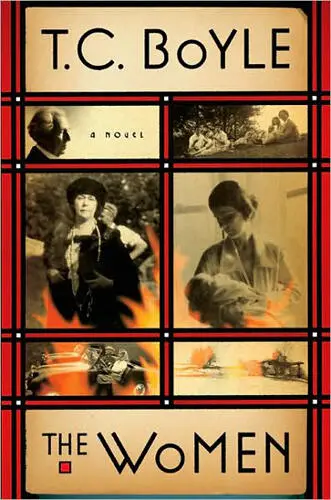
- Название:The Women
- Автор:
- Издательство:Viking Adult
- Жанр:
- Год:2009
- ISBN:нет данных
- Рейтинг книги:5 / 5. Голосов: 1
-
Избранное:Добавить в избранное
- Отзывы:
-
Ваша оценка:
The Women: краткое содержание, описание и аннотация
Предлагаем к чтению аннотацию, описание, краткое содержание или предисловие (зависит от того, что написал сам автор книги «The Women»). Если вы не нашли необходимую информацию о книге — напишите в комментариях, мы постараемся отыскать её.
and sex researcher Alfred Kinsey in
, T.C. Boyle now turns his fictional sights on an even more colorful and outlandish character: Frank Lloyd Wright. Boyle's account of Wright's life, as told through the experiences of the four women who loved him, blazes with his trademark wit and invention. Wright's life was one long howling struggle against the bonds of convention, whether aesthetic, social, moral, or romantic. He never did what was expected and despite the overblown scandals surrounding his amours and very public divorces and the financial disarray that dogged him throughout his career, he never let anything get in the way of his larger-than-life appetites and visions. Wright's triumphs and defeats were always tied to the women he loved: the Montenegrin beauty Olgivanna Milanoff; the passionate Southern belle Maud Miriam Noel; the spirited Mamah Cheney, tragically killed; and his young first wife, Kitty Tobin. In
, T.C. Boyle's protean voice captures these very different women and, in doing so, creates a masterful ode to the creative life in all its complexity and grandeur.
The Women — читать онлайн бесплатно полную книгу (весь текст) целиком
Ниже представлен текст книги, разбитый по страницам. Система сохранения места последней прочитанной страницы, позволяет с удобством читать онлайн бесплатно книгу «The Women», без необходимости каждый раз заново искать на чём Вы остановились. Поставьте закладку, и сможете в любой момент перейти на страницу, на которой закончили чтение.
Интервал:
Закладка:
“Mr. Wright, are you okay?” a voice cried out.
“Mr. Wright — do you need help?”
“Mr. Wright?”
“Tadashi, what is it, what happened?”
Wrieto-San threw back the door of the Cord, waved away a dozen eager arms with a bellicose flick of his cane, and climbed out of the car to stand there erect in the drive, his shoulders thrown back and his eyes on fire, apparently none the worse for the loss of blood and the blast of icy wind. There were dull brown stains on the lapels of his overcoat and I noticed them now for the first time. His shirt — as crisply white and freshly starched as an apprentice could make it just that morning — was torn and bloodied and the crown of his hat was crushed. He said nothing. Just glared round him as if every man and woman present were responsible for what had befallen him, then turned on his heel and marched to the house. Only when he’d flung open the door and stepped into the shadows of his private quarters where none of us could follow, did he appear to break down. “Olgivanna!” we heard him bray in the voice of a schoolboy who’d skinned his knee on the playground. “Olgivanna, where in hell are you?”
As soon as the door slammed shut, everyone turned to me. I was still seated behind the wheel of the Cord, my hair an unholy mess, my teeth rattling with the cold, reluctant to let go of the moment. Daisy was the one who brought me out of it. She was right there, leaning into me, her face suspended in the light of the windows as if it were floating free. She was unguardedly beautiful. She was talking to me. “Tadashi, come on now, we’re dying to know what happened. And you must come in out of the cold — and have something to eat. I asked Emma to put a plate aside for you—”
And then her fingers were entwined in mine and we were heading for the kitchen, three-quarters of the apprenticeship at our heels even as I tried to reconstruct the story amidst a storm of shouts and expostulations. I was standing at the counter — pinned to it actually by the crush of bodies — an oven-warmed plate of plain wholesome gravy-drenched food in front of me, and everyone was talking at once. Wes, the giant, whose head and torso and massive shoulders rose above us as if he were standing on stilts, cried out in a high strained voice: “It was Dunleavy, then — is that who it was? Dunleavy?”
“Yes,” I told him and for the sixth time in as many minutes described the scene outside the hardware store and my part in it, all the while rubbing the side of my face (which hardly stung at all) to bring attention to the badge of honor I would wear for the next week and a half.
I didn’t eat. Couldn’t. The Fellowship — my companions and bunk-mates, mild men and women who honored ideas and the aesthetics of design above any physical expression of emotion — had been transformed into vigilantes, a lynch mob in the making. It was decided, by whom I no longer remember, that we would pile into a car — into my car, the Stutz — and drive to the Dunleavy farm and have it out. “We’ll horsewhip him!” Wes roared as we charged out into the courtyard and he, Herbert, Edgar and I catapulted into the seats while the others shook their fists and hooted like Comanches. I fired up the engine and tore down the dark hill and into the night, their calls echoing in my ears.
It was Mrs. Dunleavy who came to the door in answer to our thunderous knock. She was in a housedress, wearing an apron. Her hair had fallen loose in a sloppy scatter of pins and loose ends. It was, I noticed now, the color of barnyard ordure. Her mouth began to work but she was too startled to speak.
“We want your husband,” Wes said, and there was an ugly edge to his voice.
“And your son. Your son too,” Herbert put in. He was just behind me, as wispy and pale as a child, and Edgar stood behind him, slapping a braided leather whip against one thigh. We were four. We were caught up in the moment. We thought only of vengeance.
I saw comprehension seep into Mrs. Dunleavy’s eyes and along with it, fear and hate. Behind her, appearing on the scene like extras, were the two boys I’d seen that day just over a year ago when I was a young man of urban inclinations, lost in the wilds of the Wisconsin farm country, and their dog, bewhiskered and alert, a low warning growl caught in its throat. At that juncture I was going at full throttle, far beyond the pale of normalcy or civilized behavior. I actually spat on the floor between her two slippered feet. “He attacked the Master,” I snarled, and it was as if I were reading the lines of a play, “—and now he’s going to pay.”
I don’t know if Farmer Dunleavy or his rubicund son were at home that night (though there’s no reason to imagine they weren’t — it wasn’t as if rural Wisconsin abounded in cultural divertissements or that these ignorant half-civilized bumpkins would have made use of them if there were) because Mrs. Dunleavy, with a suddenness and swiftness of movement that startled us all, slammed the door in our faces and drove the bolt to with a resounding clap. After which she apparently went directly to the telephone and called the sheriff. We stood on the porch in the faint yellowish glow of the porch light (until it was abruptly extinguished from inside the house), privately questioning our rashness and wondering what to do next, if only to save face with one another. Wes looked at me. I looked at Herbert. Herbert looked at Edgar. Then Wes turned back to the door and began hammering its cracked pine panels with the anvil of his fist. “I know you’re in there, you coward!” he shouted, amidst a host of threats and accusations. “Come on out now! Take it like a man!” I began to feel embarrassed.
A good deal of time went by — fifteen minutes or more — while we shuffled around on the porch, muttering imprecations and giving out with muffled yelps of outrage for each other’s benefit. There was no sound at all from inside the house, but for the occasional distant quarrel of the dog. I don’t know which of us picked up the stone and shattered the front window, but the sound of the fragmenting glass operated on us like an alarm and we all broke simultaneously for the car.
Unfortunately, the sheriff was waiting for us just off State Highway 23 when we made the turnoff for Taliesin. All four of us were placed under arrest on a charge of assault and escorted, in handcuffs, to the county jail. The Bearcat was impounded. And we spent two days there, locked up like common criminals, before we came to trial, where we were allowed to plead guilty and absorb fines of fifty dollars each.
My father, rest his soul, never learned of it. But Wrieto-San did, of course. And he, in his turn, took Farmer Dunleavy to court, where he arrived in all his pomp and glory, swaggering behind his cane and surrounded by a formidable group of male apprentices (I am second from his right in the celebrated photograph that appeared in the Spring Green, Madison and Chicago papers). The farmer was found guilty of assaulting Wrieto-San, lectured by the judge, sentenced to a week in jail and fined, after which he and his threadbare family found they could no longer sweat a living from the local soil and joined the impoverished hordes heading west for the promise of California. Needless to say, I’m not particularly proud of the role I played in all of this, nor of the fact that in the view of the officials of Iowa County, Wisconsin, I remain to this day a petty criminal, if not the very mark and model of the undesirable alien. In Wrieto-San’s eyes, however, I was elevated into the select company of the very first rank of “his boys,” so that in the months and years to come I would hear him wax sentimentally — and boastfully too — of how his boys had stood up for him when the chips were down. He would pause in the middle of one of his perorations, his eyes growing distant. “Yes sir,” he’d say, “if there’s one thing I can count on, it’s my boys.”
Читать дальшеИнтервал:
Закладка:
Похожие книги на «The Women»
Представляем Вашему вниманию похожие книги на «The Women» списком для выбора. Мы отобрали схожую по названию и смыслу литературу в надежде предоставить читателям больше вариантов отыскать новые, интересные, ещё непрочитанные произведения.






Обсуждение, отзывы о книге «The Women» и просто собственные мнения читателей. Оставьте ваши комментарии, напишите, что Вы думаете о произведении, его смысле или главных героях. Укажите что конкретно понравилось, а что нет, и почему Вы так считаете.