Toni Morrison - God Help the Child
Здесь есть возможность читать онлайн «Toni Morrison - God Help the Child» весь текст электронной книги совершенно бесплатно (целиком полную версию без сокращений). В некоторых случаях можно слушать аудио, скачать через торрент в формате fb2 и присутствует краткое содержание. Год выпуска: 2015, Издательство: Knopf, Жанр: Современная проза, на английском языке. Описание произведения, (предисловие) а так же отзывы посетителей доступны на портале библиотеки ЛибКат.
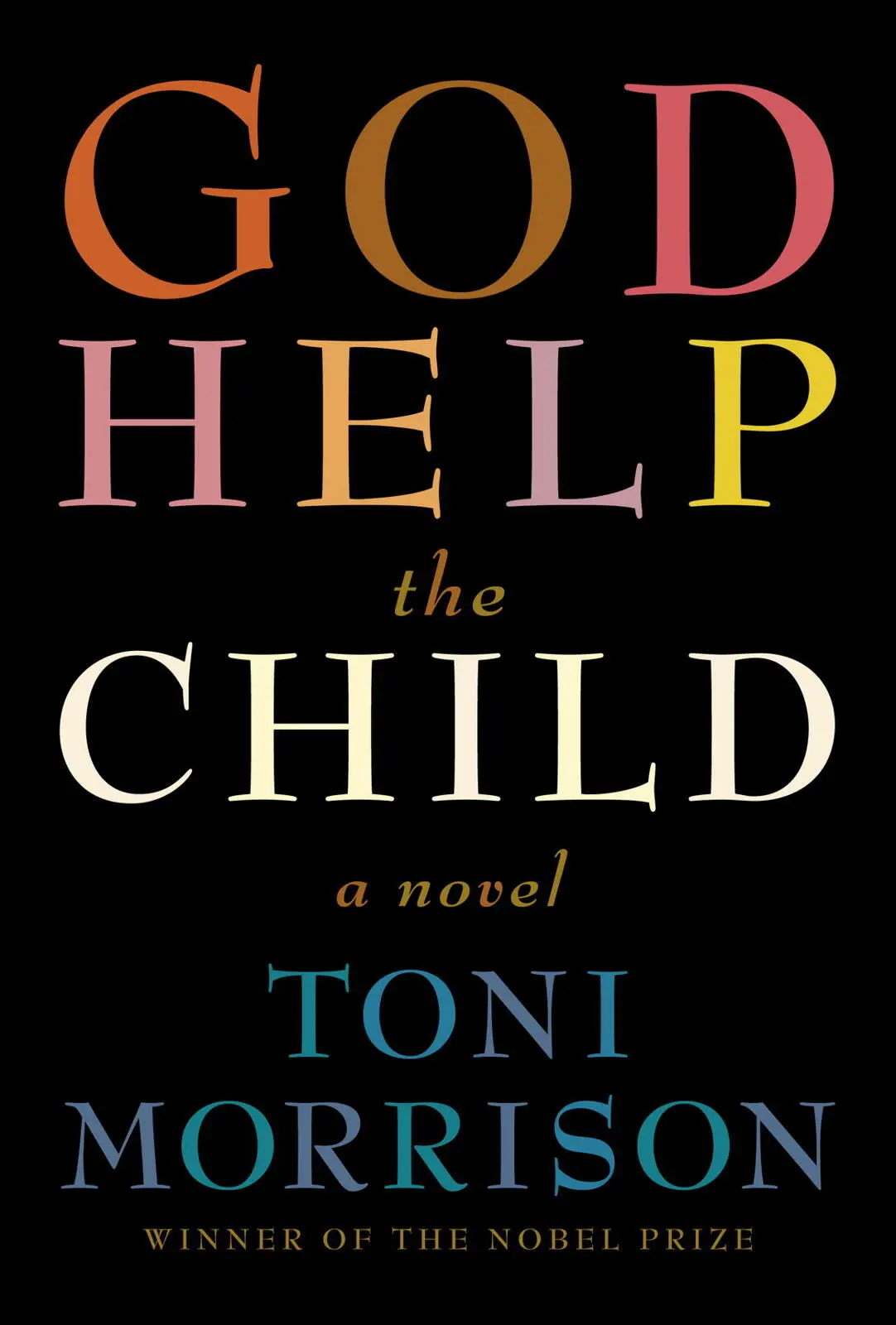
- Название:God Help the Child
- Автор:
- Издательство:Knopf
- Жанр:
- Год:2015
- ISBN:нет данных
- Рейтинг книги:5 / 5. Голосов: 1
-
Избранное:Добавить в избранное
- Отзывы:
-
Ваша оценка:
God Help the Child: краткое содержание, описание и аннотация
Предлагаем к чтению аннотацию, описание, краткое содержание или предисловие (зависит от того, что написал сам автор книги «God Help the Child»). Если вы не нашли необходимую информацию о книге — напишите в комментариях, мы постараемся отыскать её.
is a searing tale about the way childhood trauma shapes and misshapes the life of the adult. At the center: a woman who calls herself Bride, whose stunning blue-black skin is only one element of her beauty, her boldness and confidence, her success in life; but which caused her light-skinned mother to deny her even the simplest forms of love until she told a lie that ruined the life of an innocent woman, a lie whose reverberations refuse to diminish. . Booker, the man Bride loves and loses, whose core of anger was born in the wake of the childhood murder of his beloved brother. . Rain, the mysterious white child, who finds in Bride the only person she can talk to about the abuse she's suffered at the hands of her prostitute mother. . and Sweetness, Bride's mother, who takes a lifetime to understand that "what you do to children matters. And they might never forget."
God Help the Child — читать онлайн бесплатно полную книгу (весь текст) целиком
Ниже представлен текст книги, разбитый по страницам. Система сохранения места последней прочитанной страницы, позволяет с удобством читать онлайн бесплатно книгу «God Help the Child», без необходимости каждый раз заново искать на чём Вы остановились. Поставьте закладку, и сможете в любой момент перейти на страницу, на которой закончили чтение.
Интервал:
Закладка:
“It’s still on her mind.”
“Deeper than her mind.” Booker sat in a chair near the foot of Queen’s bed listening to her persistent call — a whisper now — for Hannah. “Now I think of it, it explains why she told me to hang on to Adam, to keep him close.”
“But Hannah isn’t dead.”
“In a way she is, at least to her mother. You saw that photo display she had on her wall. Takes up all the space. It’s like a roll call. Most of the pictures are of Hannah though — as a baby, a teenager, a high school graduate, winning some prize. More like a memorial than a gallery.”
Bride moved behind Booker’s chair and began to massage his shoulders. “I thought those photos were of all her children,” she said.
“Yeah, some are. But Hannah reigns.” He rested his head on Bride’s stomach and let the tension he didn’t know was in him drift away.
Following a few days of cheer-inspiring recovery, Queen was still confused but talking and eating. Her speech was hard to follow since it seemed to consist of geography — the places she had lived in — and anecdotes addressed to Hannah.
Bride and Booker were pleased with the doctor’s assessment: “She’s doing much better. Much.” They relaxed and began to plan what to do when Queen was released. Get a place where all three were together? A big mobile home? At least until Queen could take care of herself, without delving too closely, they assumed the three of them would live together.
Slowly, slowly their bright plans for the immediate future darkened. The carnival-colored lines on the screen began to wiggle and fall, their sliding punctuated by the music of emergency bells. Booker and Bride took shallow breaths as Queen’s blood count dropped and her temperature rose. A vicious hospital-borne virus, as sneaky and evil as the flame that had destroyed her home, was attacking the patient. She thrashed a bit then held her arms raised high, her fingers clawing, reaching over and over for the rungs of a ladder that only she could see. Then all of it stopped.
Twelve hours later Queen was dead. One eye was still open, so Bride doubted the fact. It was Booker who closed it, after which he closed his own.
—
During the three days waiting until Queen’s ashes were ready, they argued over the choice of an urn. Bride wanted something elegant in brass; Booker preferred something environmentally friendly that could be buried and in time enrich the soil. When they discovered there was no graveyard within thirty-five miles, or a suitable place in the trailer park for her burial, they settled for a cardboard box to hold ashes that would be strewn into the stream. Booker insisted on performing the rites alone while Bride waited in the car. She watched him carefully, anxiously, as he walked away toward the river, holding the carton of ashes in his right elbow and his trumpet dangling from the fingers of his left. These last days, thought Bride, while they were figuring out what to do, were congenial because their focus was on a third person they both loved. What would happen now, she wondered, when or if there was just the two of them again? She didn’t want to be without him, ever, but if she had to she was certain it would be okay. The future? She would handle it.
Although heartfelt, Booker’s ceremony to honor his beloved Queen was awkward: the ashes were lumpy and difficult to toss and his musical tribute, his effort at “Kind of Blue,” was off-key and uninspired. He cut it short and, with a sadness he had not felt since Adam’s death, threw his trumpet into the gray water as though the trumpet had failed him rather than he had failed it. He watched the horn float for a while then sat down on the grass, resting his forehead in his palm. His thoughts were stark, skeletal. It never occurred to him that Queen would die or even could die. Much of the time, while he tended her feet and listened to her breath he was thinking about his own unease. How disrupted his life had become, what with caring for an aunt he adored and who was now dead due to her own carelessness — who the hell burns bedsprings these days? How acute his predicament had become by the sudden return of a woman he once enjoyed, who had changed from one dimension into three — demanding, perceptive, daring. And what made him think he was a talented trumpet player who could do justice to a burial or that music could be his language of memory, of celebration or the displacement of loss? How long had childhood trauma hurtled him away from the rip and wave of life? His eyes burned but were incapable of weeping.
Queen’s remains, touched by a rare welcome breeze, drifted farther and farther down-current. The sky, too sullen to keep its promise of sunlight, sent hot moisture instead. Feeling unbearable loneliness as well as profound regret, Booker stood up and joined Bride in the Jaguar.
—
Inside the car the quiet was thick, brutal, probably because there were no tears and nothing important to say. Except for one thing and one thing only.
Bride took a deep breath before breaking into the deathly silence. Now or never, she thought.
“I’m pregnant,” she said in a clear, calm voice. She looked straight ahead at the well-traveled road of dirt and gravel.
“What did you say?” Booker’s voice cracked.
“You heard me. I’m pregnant and it’s yours.”
Booker gazed at her a long time before looking away toward the river where a smattering of Queen’s ashes still floated but the trumpet had disappeared. One by fire, one by water, two of what he had so intensely loved gone, he thought. He couldn’t lose a third. With just a hint of a smile he turned around to look again at Bride.
“No,” he said. “It’s ours.”
Then he offered her the hand she had craved all her life, the hand that did not need a lie to deserve it, the hand of trust and caring for — a combination that some call natural love. Bride stroked Booker’s palm then threaded her fingers through his. They kissed, lightly, before leaning back on the headrests to let their spines sink into the seats’ soft hide of cattle. Staring through the windshield, each of them began to imagine what the future would certainly be.
No lonesome wandering child with a fishing pole passed by and glanced at the adults in the dusty gray car. But if one had, he or she might have noticed the pronounced smiles of the couple, how dreamy their eyes were, but would not care a bit what caused that shine of happiness.
A child. New life. Immune to evil or illness, protected from kidnap, beatings, rape, racism, insult, hurt, self-loathing, abandonment. Error-free. All goodness. Minus wrath.
So they believe.
Sweetness
I prefer this place — Winston House — to those big, expensive nursing homes outside the city. Mine is small, homey, cheaper, with twenty-four-hour nurses and a doctor who comes twice a week. I’m only sixty-three — too young for pasture — but I came down with some creeping bone disease, so good care is vital. The boredom is worse than the weakness or the pain, but the nurses are lovely. One just kissed me on the cheek before congratulating me when I told her I was going to be a grandmother. Her smile and her compliments were fit for someone about to be crowned.
I had showed her the note on blue paper that I got from Lula Ann — well, she signed it “Bride,” but I never pay that any attention. Her words sounded giddy. “Guess what, S. I am so so happy to pass along this news. I am going to have a baby. I’m too too thrilled and hope you are too.” I reckon the thrill is about the baby, not its father, because she doesn’t mention him at all. I wonder if he is as black as she is. If so, she needn’t worry like I did. Things have changed a mite from when I was young. Blue blacks are all over TV, in fashion magazines, commercials, even starring in movies.
Читать дальшеИнтервал:
Закладка:
Похожие книги на «God Help the Child»
Представляем Вашему вниманию похожие книги на «God Help the Child» списком для выбора. Мы отобрали схожую по названию и смыслу литературу в надежде предоставить читателям больше вариантов отыскать новые, интересные, ещё непрочитанные произведения.










Обсуждение, отзывы о книге «God Help the Child» и просто собственные мнения читателей. Оставьте ваши комментарии, напишите, что Вы думаете о произведении, его смысле или главных героях. Укажите что конкретно понравилось, а что нет, и почему Вы так считаете.