A. Miller - The Faithful Couple
Здесь есть возможность читать онлайн «A. Miller - The Faithful Couple» весь текст электронной книги совершенно бесплатно (целиком полную версию без сокращений). В некоторых случаях можно слушать аудио, скачать через торрент в формате fb2 и присутствует краткое содержание. Год выпуска: 2015, ISBN: 2015, Издательство: Little, Brown UK, Жанр: Современная проза, на английском языке. Описание произведения, (предисловие) а так же отзывы посетителей доступны на портале библиотеки ЛибКат.
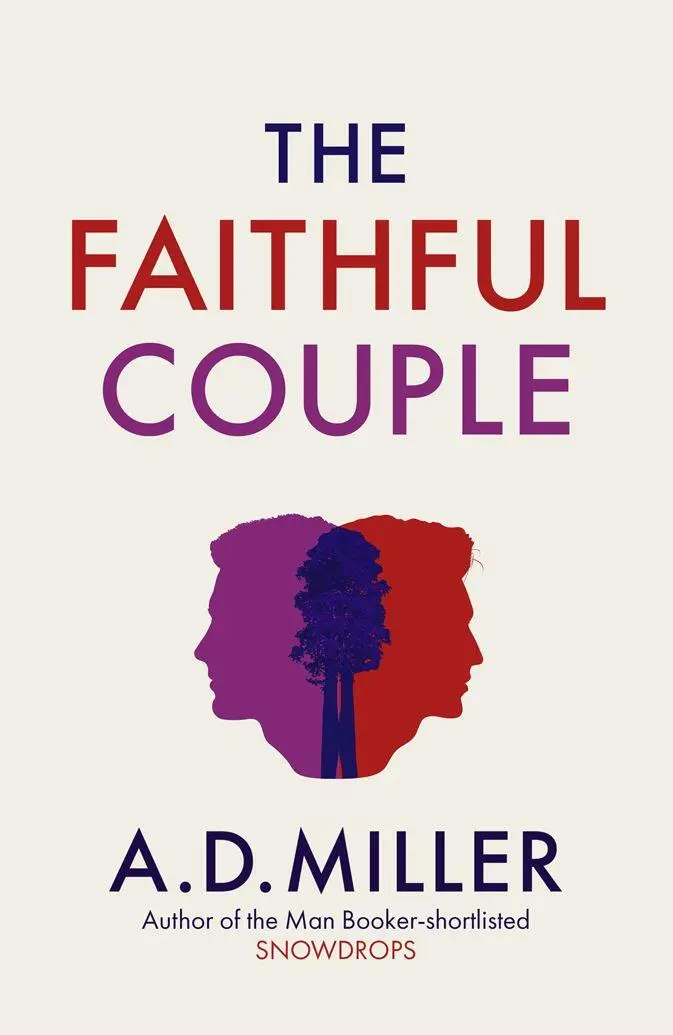
- Название:The Faithful Couple
- Автор:
- Издательство:Little, Brown UK
- Жанр:
- Год:2015
- ISBN:9781408705926
- Рейтинг книги:5 / 5. Голосов: 1
-
Избранное:Добавить в избранное
- Отзывы:
-
Ваша оценка:
The Faithful Couple: краткое содержание, описание и аннотация
Предлагаем к чтению аннотацию, описание, краткое содержание или предисловие (зависит от того, что написал сам автор книги «The Faithful Couple»). Если вы не нашли необходимую информацию о книге — напишите в комментариях, мы постараемся отыскать её.
The story of a friendship built on a shared guilt and a secret betrayal,
follows Neil and Adam across two decades, through girlfriends and wives, success and failure, children and bereavements, as power and remorse ebb between them. Their bifurcating fates offer an oblique portrait of London in the boom-to-bust era of the nineties and noughties, with its instant fortunes and thwarted idealism. California binds them together, until — when the full truth of what happened emerges, bringing recriminations and revenge — it threatens to drive them apart.
THE FAITHFUL COUPLE
The Faithful Couple — читать онлайн бесплатно полную книгу (весь текст) целиком
Ниже представлен текст книги, разбитый по страницам. Система сохранения места последней прочитанной страницы, позволяет с удобством читать онлайн бесплатно книгу «The Faithful Couple», без необходимости каждый раз заново искать на чём Вы остановились. Поставьте закладку, и сможете в любой момент перейти на страницу, на которой закончили чтение.
Интервал:
Закладка:
Neil’s feelings had hardened in the weeks after what, at first, he thought of as ‘the argument’. Every ungenerous thought he had ever harboured about Adam, from San Diego to Ealing, was collated in his defence, exaggerated and repeated with no kinder reflections admitted:
Smug bastard. Patronising bastard. Jealous bastard.
Fauntleroy. Failure.
Accomplice. Liar. Pimp.
He forgot that a friend’s faults were among his consolations — that some of Adam’s faults were virtues. They became only faults, worse and worse. He forgot his own culpabilities.
The blindness lasted over a year, until a few months after Neil’s father died. When, that autumn, the banks collapsed, gravity was reinvented, and it emerged that, contrary to long-held London belief, economics wasn’t only something that happened in faraway countries — Latin American basket cases and rabid Asian tigers — Neil felt sure Adam would be glorying in the blow-up. The image of Adam vengefully celebrating his comeuppance hardened into a certainty in Neil’s mind: chancer, spiv , wasn’t that what Adam had always thought of him, those only-in-England terms of disparagement, the commercial equivalents of the other English classic, Too clever by half ? It sometimes seemed to Neil that there were only two or three socially acceptable careers in his hypocritical country.
Fuck you, then.
What are you really going to do?
That was the final swell of his anger, and at the end of the same year, after eighteen months apart, the bitterness lifted, slowly then suddenly, like a migraine or a grief. Now Neil floundered when he tried to recapture the logic that, on Adam’s sofa, had seemed to link his grievance with this redress. His reasoning became so vague and inarticulable that it was astonishing to him, almost funny, that he had lost his best friend, his only whole friend, for ever over this.
He should have known that night in California, Neil finally acknowledged to himself. He hadn’t needed Adam to tell him. Not just her nerves, nor the way her knees knocked together as she dried herself by the lake. He should have known in the tent.
Neil was in a post-crisis strategy meeting with Tony and the other partners when it struck him that in fact he had known, had only been pretending not to, hadn’t asked because he knew what the answer would be; that therefore, in a way, Adam had nothing to do with it, there had been nothing for Neil to revenge, and he must bear all the responsibility himself, both for Rose and for Claire. He blushed violently, not just blushing but sweating, suddenly and feverously as if he had food poisoning, his hands shaking like an alcoholic’s when he tried to take a note. He excused himself and rushed to the gents, hoping that Tony and the others hadn’t noticed his disarray, holding on to the edges of the sink and bowing his head so as not to look himself in his bloodshot eyes. By that evening his certainty had dissipated, and he was no longer sure what he had known or when.
When he first kissed her she had closed her eyes and puckered her lips as if she were in an old movie.
Who cared what Adam had or hadn’t said that night? He felt ridiculous and ashamed. That Christmas he considered texting. The number was still listed among the contacts in Neil’s phone, and now and then he would open Adam’s details and look at the meaningless digits and the handsome thumbnail as he was scrolling his way to someone else, privately embarrassed by this indulgence, the SIM-card necromancy. It was my fault, all of it, I’m sorry. But he didn’t text, or call.
He had texted Jess about Brian, telling himself that she would want to know. Sorry 2 hear that , she replied.
He hadn’t got his comeuppance. ‘It’s like that golf joke,’ Tony said to Neil early in the New Year.
‘What golf —’
‘Two golfers, they’re on the fairway, they see a bear. One starts to run, the other says, what are you doing, you can’t outrun a bear, and the first guy says, I don’t have to, I only have to outrun you . We’ve just got to be less fucked than the other fuckers.’
Neil laughed, aloud and inauthentically.
‘Don’t share that one with the clients, kimosabe.’
Tony had swapped a slab of stocks for gold, Swiss francs and American bonds. There was a bond-rush and a gold-rush, and six months on they were miraculously in profit, coming out of the crash with their reputation enhanced in the garrulous HNWI family. In hard times, Neil saw, the rich were the best business to be in. The rich were always with us, ever anxious to be relieved of the awful burden of their cash.
He was learning to be picky about who he ran money for. He could smell the psychotics who would sue if you missed their pie-in-the sky targets, and the foreign tycoons who would laugh, then have you escorted from the building, when you proffered your humble but kosher ten per cent return. He could spot the neurotics whose money could only be extracted gently, reassuringly — the right-place, right-time mega-salariat of the eighties and nineties, whose share options had turned into one-way golden tickets, and who were petrified of losing their barely dreamed of windfalls. On the other hand there were the risk junkies, proud of their own daring, a pride you had to flatter and nurture.
During the spring after the crash he went to Miami, a nine-hour flight for a fifteen-minute pitch, though by now Neil tended to know within thirty seconds how the conversation would end. Through the retracted security gates and into the antiseptically pristine home (always over-housekept, these palaces, the life scoured and disinfected out of them like covered-up murder scenes).
The client was at his desk. He didn’t look up. Neil said, ‘How do you feel about losing money?’
They wired the investment to Rutland half an hour later. In London they would think Neil had reeled him in with some patented, supernumerate spiel. It was simpler than that: Sell the customer what he wants to buy .
That evening he flew to New York, and in the morning had two meetings on the Upper East Side. In the afternoon he saw a woman he thought he knew, something about the shape of her head, her hair, the elastic rhythm of her stride. He tried to put her out of his mind. Later, on Park Avenue, he saw the same woman again, or thought he did, and although he knew the familiarity might be psychosomatic, he ran. I am not the sort of man who runs after a woman in the street , he wanted to tell the Americans he passed.
She was gone. She made him think of times in his childhood when he had needed to prove, in some insoluble dispute with Dan, that the tennis ball was in, really it was, or, later, that he had been the first of them to ask their father for Saturday morning off — occasions when he wanted urgently to appeal to some celestial umpire for a categorical ruling. Just tell me! Possibly she was fine, but there was no one to ask, and you had to live with that, Neil realised, never knowing what your own actions meant.
Two years after ‘the argument’, drinking alone at his bamboo bar, Neil thought about killing himself. Not out of despair or anguish; not for any particular reason at all, in fact, but rather because of the absence of a clinching reason to carry on living. He had changed his mind about suicide. It had come to seem less an arrogance than a practicality, an efficiency saving. Sure, his work had its consolations. It was fixed, unsurprising, and success and failure, blame and virtue, were reassuringly clear, the therapeutic superficiality limiting the scope of disappointment. But work wasn’t a sufficient incentive, and nor was money. For some of the others, money was less a commodity than a war, which they would always be losing so long as someone at the fund on the other side of Piccadilly was getting more. Neil knew he had enough. He was PAYEd more in a month than his father had earned most years.
Читать дальшеИнтервал:
Закладка:
Похожие книги на «The Faithful Couple»
Представляем Вашему вниманию похожие книги на «The Faithful Couple» списком для выбора. Мы отобрали схожую по названию и смыслу литературу в надежде предоставить читателям больше вариантов отыскать новые, интересные, ещё непрочитанные произведения.



Обсуждение, отзывы о книге «The Faithful Couple» и просто собственные мнения читателей. Оставьте ваши комментарии, напишите, что Вы думаете о произведении, его смысле или главных героях. Укажите что конкретно понравилось, а что нет, и почему Вы так считаете.