A. Miller - The Faithful Couple
Здесь есть возможность читать онлайн «A. Miller - The Faithful Couple» весь текст электронной книги совершенно бесплатно (целиком полную версию без сокращений). В некоторых случаях можно слушать аудио, скачать через торрент в формате fb2 и присутствует краткое содержание. Год выпуска: 2015, ISBN: 2015, Издательство: Little, Brown UK, Жанр: Современная проза, на английском языке. Описание произведения, (предисловие) а так же отзывы посетителей доступны на портале библиотеки ЛибКат.
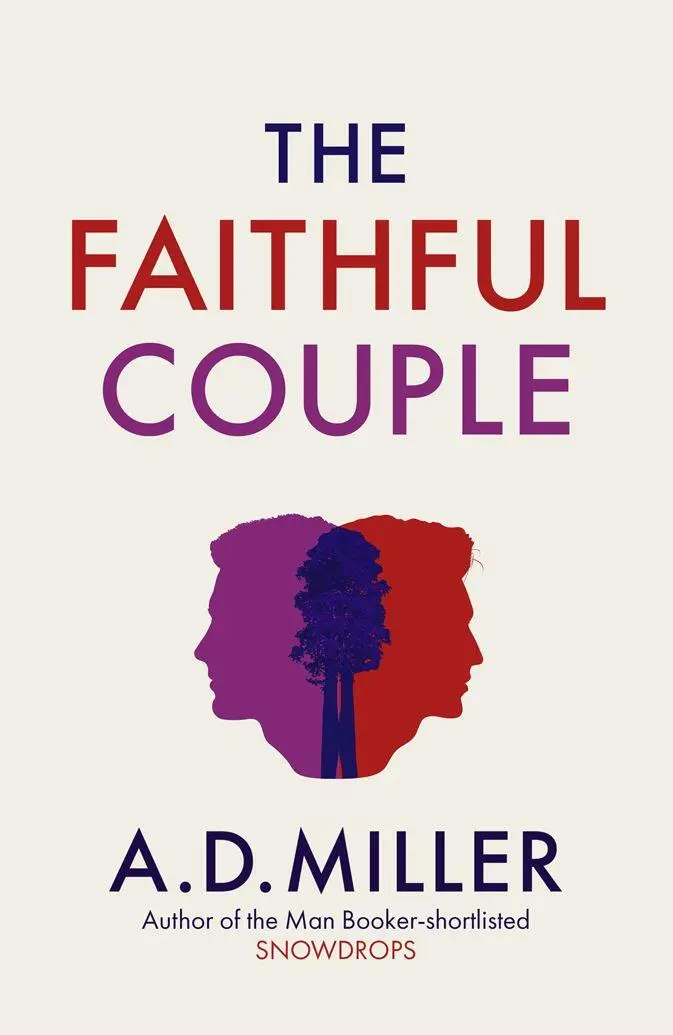
- Название:The Faithful Couple
- Автор:
- Издательство:Little, Brown UK
- Жанр:
- Год:2015
- ISBN:9781408705926
- Рейтинг книги:5 / 5. Голосов: 1
-
Избранное:Добавить в избранное
- Отзывы:
-
Ваша оценка:
The Faithful Couple: краткое содержание, описание и аннотация
Предлагаем к чтению аннотацию, описание, краткое содержание или предисловие (зависит от того, что написал сам автор книги «The Faithful Couple»). Если вы не нашли необходимую информацию о книге — напишите в комментариях, мы постараемся отыскать её.
The story of a friendship built on a shared guilt and a secret betrayal,
follows Neil and Adam across two decades, through girlfriends and wives, success and failure, children and bereavements, as power and remorse ebb between them. Their bifurcating fates offer an oblique portrait of London in the boom-to-bust era of the nineties and noughties, with its instant fortunes and thwarted idealism. California binds them together, until — when the full truth of what happened emerges, bringing recriminations and revenge — it threatens to drive them apart.
THE FAITHFUL COUPLE
The Faithful Couple — читать онлайн бесплатно полную книгу (весь текст) целиком
Ниже представлен текст книги, разбитый по страницам. Система сохранения места последней прочитанной страницы, позволяет с удобством читать онлайн бесплатно книгу «The Faithful Couple», без необходимости каждый раз заново искать на чём Вы остановились. Поставьте закладку, и сможете в любой момент перейти на страницу, на которой закончили чтение.
Интервал:
Закладка:
‘Come on,’ he called back to Sam. ‘Sammy, come on.’
Sam loitered by the car, respectfully fastening the upper buttons of his shirt. Of the two of them, Sam had lost more, Neil saw. More of the less that he had.
Neil climbed over a stile and marched up the ramblers’ path at the side of the field. Glancing back he saw Sam attempt to vault the fence and fail. He turned around quickly so the boy wouldn’t know he had been seen. The field wasn’t as he expected and wanted it to be (cows and grass where Neil remembered wheat), and he realised, as he walked, that he didn’t know what he was looking for or where he ought to stop. Sam had fallen behind; Neil paused to let him catch up, sitting on the trunk of an old tree.
Dan had made it to the crematorium but vanished immediately afterwards, not troubling with excuses or goodbyes or bittersweet reminiscences or even a drink, leaving Neil in sole charge of both Sam and the ashes that had recently been Brian. Neil’s first instinct was surreptitiously to leave the urn behind, but one of the attendants had scampered after him, presuming the dereliction was an oversight, and he had been obliged to take it. Putting the thing in the bin felt like too much, even for Neil. Sam suggested the stretch of pavement outside the shop, which was after all the place Brian had spent more of his waking life than any other, a fourteen-year-old’s crazy and possibly illegal scheme that Neil had fleetingly entertained as reasonable.
Then he thought of the picnic place. The memory of it seemed to belong to someone else, inherited by the almost-forty Neil from some ancestor self, a figure who resembled and related to him as Neanderthals did to modern humans in biology-textbook sketches of the ascent of man. His childhood was a story about a person he only distantly knew; at the same time it contained incidents he could recall with an almost shocking clarity. The odour of damp at the back of the armchair when he hid behind it to filch a fresh-minted one-pound coin from his mother’s handbag, the leathery smell of her bag as he persuaded himself that she wouldn’t notice, or, if she did, that she would blame Dan. His reasoning and remorse on that day seemed nearer to Neil, as he sat on the tree trunk, than did the motives for more recent wrongs.
Sam caught up, perched alongside him and panted. Neil put his hand on his nephew’s shoulder. When he regained his breath Sam stood up and in front of Neil, fidgeting — digging his hands into his trouser pockets, taking them out, entwining his fingers behind his back, replacing them in his pockets — from which Neil inferred that Sam thought this was the moment. It might as well be.
He stood and unscrewed the lid of his father’s urn, trying to think of something to say. In the end he settled on ‘Goodbye, Brian’, the valediction doubling as a petty revolt, since he had never called his father Brian while he was alive.
‘Amen,’ Sam said, and swallowed.
Neil rotated the lid. He meant to do it slowly, a picturesque hour-glass trickling, but he misjudged the angle and the consistency of the ash, and it landed in a clump at his feet. It seemed sacrilegious just to leave the stuff there — he had a premonition of a cow ambling over and lapping it up — so he and Sam found sticks and spread out the flakes until they resembled a burned-out campfire. Sam dug his stick into the ash and the ground below it to mark the spot. ‘Goodbye, Brian,’ he repeated.
Neil decided to keep hold of his mother until he thought of something more decorous to do with her. Walking back to the car he dredged or conjured up a picture of her sitting in an alcove of wheat in a summer skirt, her legs curled under her, her shoes kicked off. He might have distilled a picture of his father, but halfway back Sam found a chewed-up tennis ball, hemispherically bald where a dog had mauled it. He kicked the ball at Neil; Neil inexpertly returned it. They stained the knees of their trousers on the overlong grass at the verge of the field. Sam ran out of breath after a few minutes.
‘You okay?’ Neil asked him.
‘Yeah,’ Sam said. ‘No problem.’
‘Right. Come on.’
Neil drove them to a pub he knew further up the lane, now accoutred with a kiddies’ playground and a conservatory that he didn’t remember. He left his mother in the boot. He ordered a gin and tonic for himself and half a pint of lager shandy for his nephew.
‘So how’s Stacy, then?’
‘A’righ, s’pose,’ Sam said, drawling like an American television gangster, at least when he remembered to. He took a swig of shandy but didn’t seem to like it. ‘She’s a’righ most of the time. She’s there a lot, you know, with me. More than him.’
What sort of woman, Neil had asked himself when Sam first mentioned Stacy, would take on his brother in his twenty-first-century guise? Dan was no longer sinking, exactly — he had stretches of work, weeks or months at building sites or warehouses — but equally he seemed to have given up hope of rising: he subsisted in a hand-to-mouth state of precariously deferred crisis. Stacy was the answer. Whether she constituted a net benefit to Sam, or was simply an extra embarrassment, Neil wasn’t sure.
‘Didn’t want to come up?’
‘Don’t think he asked her. Not speaking much at the moment. You know, one of those.’ Sam raised his eyebrows, a worldly gesture on the craterous man-boy’s brow.
‘What about Basingstoke? School and everything.’
‘A’righ.’ Sam’s leg was twitching. He wiped his nose. He swallowed nervously, though he hadn’t taken a drink. ‘It’s true, what he said. The old man. The Indian bloke. I heard him from up the stairs. He was mad proud of you, your dad. Brian. Always on about you. He got me to show him your website, you know, on the computer. Your company or whatever. We went to that internet place on the high street.’
‘When I wasn’t there,’ Neil said, like some touchy adolescent. ‘Only when I wasn’t there.’
‘Yeah, but anyway. Still counts. And he was grateful, you know, the way you were always coming up here. He told me. He was thankful. Even if you and him, you never said much.’
‘You only get one,’ Neil said. ‘Dad, I mean. Might as well do your bit.’
‘Huh,’ Sam grunted, as if to say, Don’t I know it? What he actually said was, ‘He loved you, innit.’
Neil took a slug of G&T. ‘He was proud of you too, Sammy.’
‘Yeah…’
‘He was.’
‘Right.’
He noticed a cut at the corner of Sam’s mouth where he had attempted to shave for the occasion; between that, his grimy shirt and stained trousers, Sam might have stumbled out of a fire or a collapsed building. A few months before, during the death-watch in Harrow, Neil had broached the idea of his nephew moving in with him — casually, he intended, presenting it as an all-round win. It was a mistake, he saw afterwards, to specify that Dan could see his son whenever he liked, as if that were in doubt. Dan had growled at Sam to get his stuff together, shouted a goodbye at Brian, and manhandled the boy away. Three or four more years — as soon as Sam could be comprehensively detached from Dan, and from Stacy, if she were still around — and Neil would redeem him. Money and somewhere of his own to live and a job, even: he was the sort of man who could pull that off now.
They drove back into London. Neil bought potatoes and cooking oil and made them chips for dinner, cutting the potatoes very finely while Sam watched.
He wasn’t lonely. Neil told himself he wasn’t lonely. He had friends, or quasi-friends, functional friends, people with whom his life overlapped, people with whom he shared common interests, mostly in the utilitarian sense rather than the recreational one. He had gym friends, friends at work, though with them, Neil found, all the gamesmanship and rivalry that crept in under the back door of civilian friendships were there in the hallway from the start. Simulacra of friends. After he put Sam on his bus, the morning after the ashes, he had an urge to phone Adam. Not because he was traumatised or bereft: he just felt Adam should know, as if the act of telling him and Adam’s witness were a missing part of the event.
Читать дальшеИнтервал:
Закладка:
Похожие книги на «The Faithful Couple»
Представляем Вашему вниманию похожие книги на «The Faithful Couple» списком для выбора. Мы отобрали схожую по названию и смыслу литературу в надежде предоставить читателям больше вариантов отыскать новые, интересные, ещё непрочитанные произведения.


Обсуждение, отзывы о книге «The Faithful Couple» и просто собственные мнения читателей. Оставьте ваши комментарии, напишите, что Вы думаете о произведении, его смысле или главных героях. Укажите что конкретно понравилось, а что нет, и почему Вы так считаете.