A. Miller - The Faithful Couple
Здесь есть возможность читать онлайн «A. Miller - The Faithful Couple» весь текст электронной книги совершенно бесплатно (целиком полную версию без сокращений). В некоторых случаях можно слушать аудио, скачать через торрент в формате fb2 и присутствует краткое содержание. Год выпуска: 2015, ISBN: 2015, Издательство: Little, Brown UK, Жанр: Современная проза, на английском языке. Описание произведения, (предисловие) а так же отзывы посетителей доступны на портале библиотеки ЛибКат.
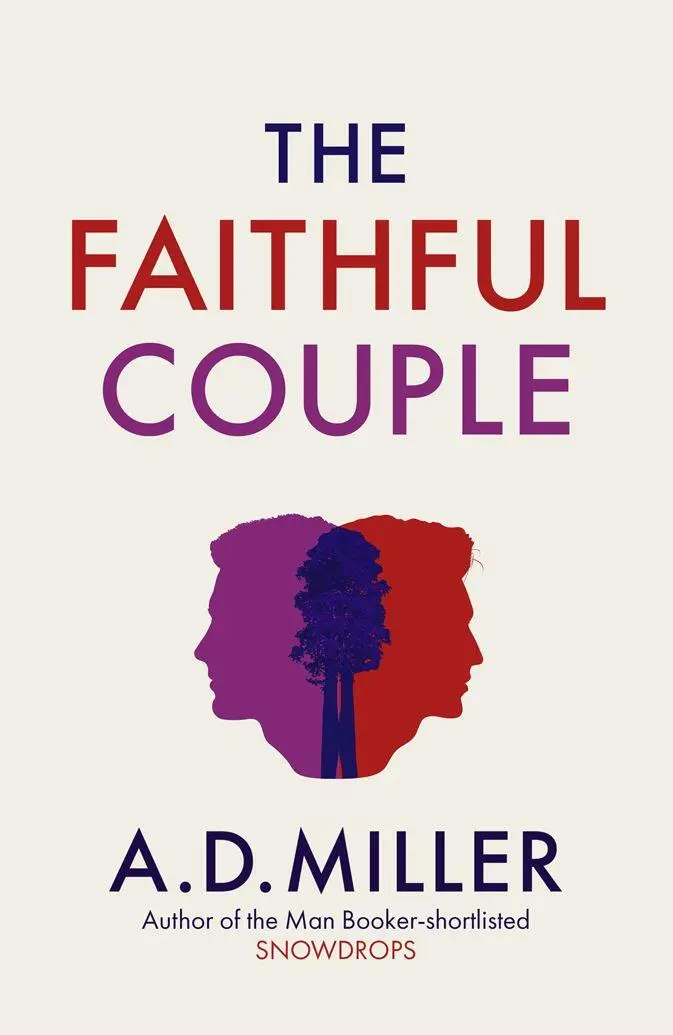
- Название:The Faithful Couple
- Автор:
- Издательство:Little, Brown UK
- Жанр:
- Год:2015
- ISBN:9781408705926
- Рейтинг книги:5 / 5. Голосов: 1
-
Избранное:Добавить в избранное
- Отзывы:
-
Ваша оценка:
The Faithful Couple: краткое содержание, описание и аннотация
Предлагаем к чтению аннотацию, описание, краткое содержание или предисловие (зависит от того, что написал сам автор книги «The Faithful Couple»). Если вы не нашли необходимую информацию о книге — напишите в комментариях, мы постараемся отыскать её.
The story of a friendship built on a shared guilt and a secret betrayal,
follows Neil and Adam across two decades, through girlfriends and wives, success and failure, children and bereavements, as power and remorse ebb between them. Their bifurcating fates offer an oblique portrait of London in the boom-to-bust era of the nineties and noughties, with its instant fortunes and thwarted idealism. California binds them together, until — when the full truth of what happened emerges, bringing recriminations and revenge — it threatens to drive them apart.
THE FAITHFUL COUPLE
The Faithful Couple — читать онлайн бесплатно полную книгу (весь текст) целиком
Ниже представлен текст книги, разбитый по страницам. Система сохранения места последней прочитанной страницы, позволяет с удобством читать онлайн бесплатно книгу «The Faithful Couple», без необходимости каждый раз заново искать на чём Вы остановились. Поставьте закладку, и сможете в любой момент перейти на страницу, на которой закончили чтение.
Интервал:
Закладка:
Or: I guess the dinner’s off.
Better not. Beware the perils of email, Neil urged himself: jokes that might be missed, brevity received as rudeness, possibly, in this case, an apology that would seem insufficiently contrite, or, conversely, to be admitting more than he intended to. All these new ways to communicate, digital guarantees against losing each other, which were mostly new opportunities for misunderstanding. Everyone was inescapable, these days, but in place of the old jeopardy you found yourself clutching at holograms.
Probably best just to write, Adam, I’ll call you tomorrow . Or, Let’s talk tomorrow . Although that might seem curt and non-consensual.
Neil accidentally kicked over the half-drunk wine glass at his feet. He turned back towards the suits and plucked another from a passing tray. Best of all, maybe, would be to say and write nothing for a few days. Let his friend cool off. Let him and Claire patch things up.
He blamed the old woman (Priscilla?), with her cats and her orange-powdered mole. If she hadn’t barged in, he might have left. If: If Eric hadn’t turned in early that night. If the man who owned the truck had been out. If the girl in the sarong (she was the blonde, wasn’t she?) hadn’t lingered in the hostel yard. Or if Adam hadn’t. All these random collisions, pinballing molecules. In the end you couldn’t say where anything started, which was the main action of your life and what the interference.
Neil sipped. He gulped.
In any case, was it really only he who ought to apologise? He was in the wrong, he acknowledged that. Doubly wrong: he shouldn’t have said the things he did. But some of what he said had been accurate, and not just about Adam’s deceit: his tone, the superciliousness that had grated from the beginning, right back to Las Vegas, the condescension that incited Neil in Yosemite, which he thought Adam had outgrown, but which in reality he had merely disguised. I have always encouraged you… I have never criticised you .
Who the fuck did he think he was? Neil didn’t owe Adam anything. Morally speaking, they were quits, he reckoned, taking into account what happened in California. Quits at the least. In any case, for years Adam had been a kind of succubus, taking out of Neil more than he put back. Neil could have managed everything he had done without Adam. He could manage the future without him, if he must or if he chose to.
So: We’re quits, Ants. Fuck you.
Tony was coming towards him with the Levene brothers’ man. Neil replaced the BlackBerry in his pocket, cocked his head back and sluiced the last of the wine down his throat. He stepped forward for the handshake. ‘Jonny,’ he said. ‘Good to see you.’
Neil, Tony and the man clinked glasses. ‘Bottoms up,’ Neil heard himself say.
When it was too late, or seemed to be, he reflected that his mood that evening — wrigglingly defensive, angrily ashamed — had been a hypocritical luxury. He had luxuriated in his pique because he didn’t think the estrangement was real. His confidence in the friendship obscured its demise. In the morning Neil sent a secretary from the office to collect his car.
Adam slammed the front door again. He didn’t care if he woke the kids; he didn’t think Claire would reproach him. As he started up the stairs, his phone rang. He expected Neil, but it was Nick, doubtless wanting to impart some new, baroque twist in the illegal-immigrant debacle — less than a day old, but already feeling prehistoric — or some fresh demand for unobtainable statistics, the wrong, inconsequential part of Adam’s life interrupting his private crisis.
He switched Nick off. He pounded up the stairs to the bedroom and turned on the light.
Claire was in bed but awake. Adam avoided her eyes and didn’t speak. He rolled the chair to the wardrobe and stood on it to reach the upper cupboard, surfing the swivels as he opened the doors. Forgotten objects fell or were thrown out as he rummaged. Maternity clothes; worn-out but hoarded shoes; a map of Barcelona from a pre-parenthood weekend break, sentimentally retained as if it might help them chart a path back in time; a university graduation certificate; the box for a digital camera. Why had they never sifted this stuff?
‘Adam?’ Then, more stridently, ‘Adam — what are you doing?’
He succeeded, finally, in extracting a red biscuit tin from the junk. He balanced the tin on the lip of the cupboard, prised open the lid. These were Adam’s special, once-important things: the letter that had offered him his first big-time job in television, some billets-doux from Chloe, tied up in a pretentious snip of lace, some old photographs. He found what he was looking for. He replaced the box, jumped from the chair and made for the door, leaving the detritus of his raid scattered on the floor.
‘Adam, what…’
Back down the stairs, the late, mauve summer dusk shading to grey outside the window, a view he had always enjoyed but would soon leave behind, past the contaminated sofa and into the kitchen. He turned the photo over.
Two young men, almost equally foreign to him now, their arms around each other, gesticulating for the camera. Two young men who, naturally, had no idea what the next decade and a half would do to them; who had little idea what the next thirty-six hours would do to them, or what they would do in them. Adam felt affectionate, protective, belatedly apprehensive. He wanted to break through time’s thick, soundproofed glass, sit between them, behind the sign that said Faithful Couple, put an arm around each of them and tell them not to do it. But they wouldn’t have known what he was talking about. They were happy. They were together.
He grasped the upper edge of the photo between his thumbs, preparing to rip. I sometimes think… After a minute he stood on another chair and tossed the picture into the dusty, dead-insect limbo on top of the kitchen cabinet.
2008–10
Another thud from above, a few seconds after the first — the percussion, Neil figured, of something falling, then turning over or overbalancing. There was a scuffle of feet and the scrape of an object too big to carry being dragged across the floorboards.
‘Sam?’ Neil called up. ‘Sammy, you okay?’
No reply.
Neil came out of his parents’ room and took hold of the stepladder; its antique metal rungs wobbled as he climbed. He tried to remember the last time he had been in his father’s loft (the house and bedroom would always be Neil’s parents’, plural, but in his internal designation the loft was eternally and exclusively Brian’s, his mother’s closest approach to it, so far as he remembered, being to stand at the bottom of these steps and call down whomever was up there for lunch, peering up into the murk with an expression of adamant distrust). He trod carefully on the narrow steps, trying to weigh as little as possible. The madeleine aromas of damp paper and mouldy rubber assailed and stopped him halfway through the hatch.
Sam was kneeling in the beige glow of a single, unshaded low-watt bulb, his shirt smeared with a rich, well-matured dust. He was appraising an old black-and-white television — deeper than it was wide, three knobs, only ever three channels — which, Neil remembered, had been retired to the loft from service in his parents’ bedroom, but which before the purchase of their colour set had been the screen on which they watched the Cup Final in the lounge, he and Dan alternately fiddling with the aerial when the zigzagging interference got too much; the screen on which they watched the Grand National, Brian having closed the shop early and visited the bookies’ three doors down, placing a single pre-selected one-pound wager per family member, the boys clutching the betting slips as if they were enchanted parchments.
Читать дальшеИнтервал:
Закладка:
Похожие книги на «The Faithful Couple»
Представляем Вашему вниманию похожие книги на «The Faithful Couple» списком для выбора. Мы отобрали схожую по названию и смыслу литературу в надежде предоставить читателям больше вариантов отыскать новые, интересные, ещё непрочитанные произведения.


Обсуждение, отзывы о книге «The Faithful Couple» и просто собственные мнения читателей. Оставьте ваши комментарии, напишите, что Вы думаете о произведении, его смысле или главных героях. Укажите что конкретно понравилось, а что нет, и почему Вы так считаете.