Daša Drndić - Trieste
Здесь есть возможность читать онлайн «Daša Drndić - Trieste» весь текст электронной книги совершенно бесплатно (целиком полную версию без сокращений). В некоторых случаях можно слушать аудио, скачать через торрент в формате fb2 и присутствует краткое содержание. Год выпуска: 2014, Издательство: Houghton Mifflin Harcourt, Жанр: Современная проза, на английском языке. Описание произведения, (предисловие) а так же отзывы посетителей доступны на портале библиотеки ЛибКат.
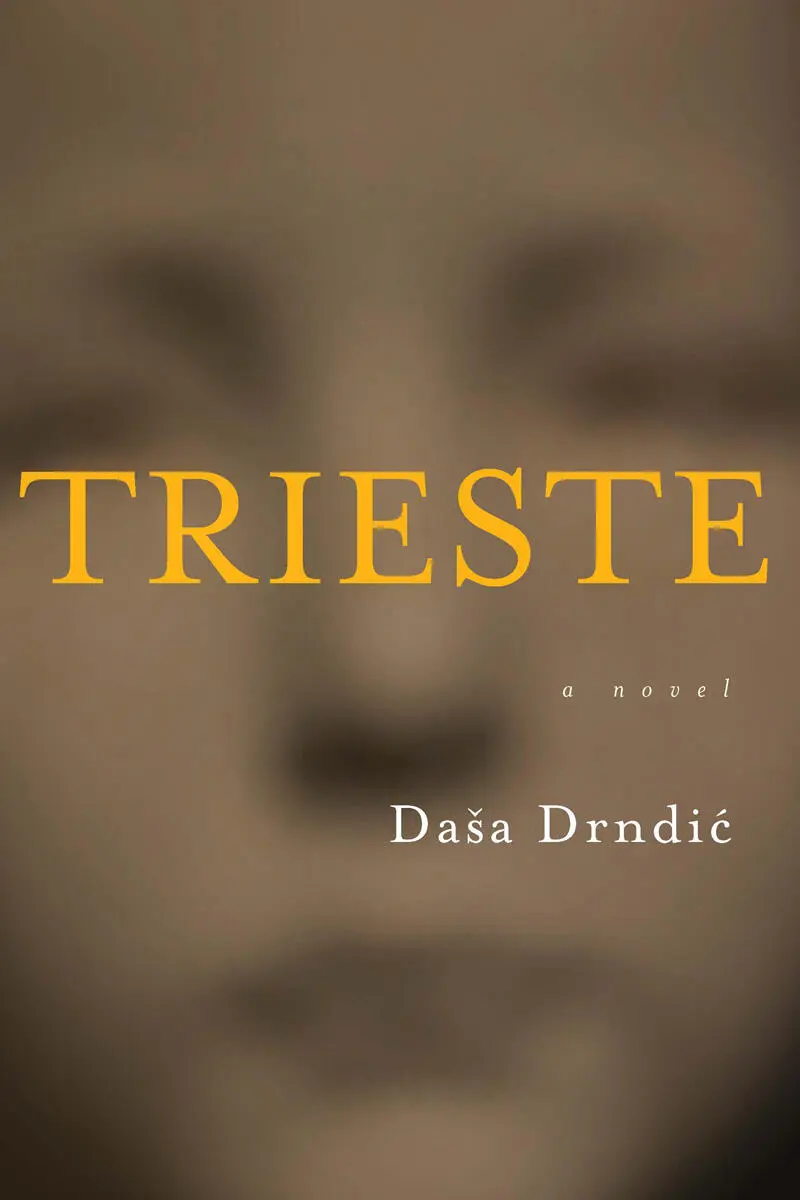
- Название:Trieste
- Автор:
- Издательство:Houghton Mifflin Harcourt
- Жанр:
- Год:2014
- ISBN:нет данных
- Рейтинг книги:3 / 5. Голосов: 1
-
Избранное:Добавить в избранное
- Отзывы:
-
Ваша оценка:
Trieste: краткое содержание, описание и аннотация
Предлагаем к чтению аннотацию, описание, краткое содержание или предисловие (зависит от того, что написал сам автор книги «Trieste»). Если вы не нашли необходимую информацию о книге — напишите в комментариях, мы постараемся отыскать её.
project. Haya reflects on her Catholicized Jewish family’s experiences, dealing unsparingly with the massacre of Italian Jews in the concentration camps of Trieste. Her obsessive search for her son leads her to photographs, maps, and fragments of verse, to testimonies from the Nuremberg trials and interviews with second-generation Jews, and to eyewitness accounts of atrocities that took place on her doorstep. From this broad collage of material and memory arises the staggering chronicle of Nazi occupation in northern Italy.
Written in immensely powerful language and employing a range of astonishing conceptual devices,
is a novel like no other. Daša Drndić has produced a shattering contribution to the literature of twentieth-century history.
Trieste — читать онлайн бесплатно полную книгу (весь текст) целиком
Ниже представлен текст книги, разбитый по страницам. Система сохранения места последней прочитанной страницы, позволяет с удобством читать онлайн бесплатно книгу «Trieste», без необходимости каждый раз заново искать на чём Вы остановились. Поставьте закладку, и сможете в любой момент перейти на страницу, на которой закончили чтение.
Интервал:
Закладка:
7
On 31 October, 1944, at about 6 p.m., Ada’s sister, Haya’s aunt, Letizia Puhaz, shouts: Fanny, run and fetch Teresa from Via Caporetto! At 8.17 p.m. Teresa Cavalieri, a midwife from Via Caporetto 51, delivers Haya Tedeschi’s baby. Antonio “Toni” Tedeschi comes into the world.
Kurt Franz sees his son twice. In late December, leaning over the counter at La Gioia, Kurt Franz twiddles a lock of Haya’s light-brown hair between his index finger and his ring finger, leans in to her face and whispers: My little Jewess, we can’t go on like this. Oh, yes, I know, Tedeschi ist ein jüdischer Name. Besides, my fiancée is waiting for me at home. Heinrich Himmler, Minister of the S.S. Rasse- und Siedlungshauptamt has finally granted me permission to wed. I am leaving for Düsseldorf at Christmastime, and when I come back, I will not be in touch. Please do not ask for me .
This is when Haya seeks out Don Baubela. Antonio Toni is baptized as every good Catholic should be, in the presence of Letizia and Laura Puhaz and Teresa the midwife, he is entered into the church books with his father’s name, yes, Kurt Franz, and is given the mother’s surname, Tedeschi. All of this should remain a secret, Haya says to Don Baubela. The times are risky, she says. Don Carlo Baubela probably says not a word, because that is the way of priests. Don Baubela dies in 1946, having lived to more than eighty. Gorizia believes that Antonio’s father has died in combat, but in whose army? On whose side? This doesn’t interest many. The times are murky.
Gorizia is a small town. Nevertheless.
On Friday, 13 April, 1945, Haya takes Antonio Toni, as usual, to the Duchessa Anna d’Aosta Asilo Nido in Via Veneto, in other words to a nursery where he is cared for by Iolanda Visintin, a friend of her mother Ada’s from elementary school days. At the front door the postman says, You have a letter. Your parents are sending you money from Milan. Sign here . When Haya turns around, Toni’s pram is empty. There is no-one walking along Via Veneto. Not a single passer-by. The morning is brisk, sunny, and the air is clear after several days of driving rain; the trees are shyly blooming in white and pink. The postman and Haya stare, appalled, at how this magic trick has happened. And so it is that, five months after his birth, Antonio Toni Tedeschi disappears, suddenly and quietly, as if he had never lived.
Oh yes, Haya searches for Antonio high and low, high and low. Gorizia is on its feet. The police investigate, dispatches fly, phones jangle, tears well, chaos reigns in her mind. The nights do not pass. The days do not pass. Time grows like yeast, time swells, then one day it overflows, pours out of Haya’s breast, clambers up on to a merry-go-round and off it flies. Nothing could be done.
History decides to hide, to go underground for a spell. I need a break, says History, turns its back on the here and now, sweeps up all its rattles, leaving a huge mess behind, a hill of rubbish, vomit everywhere, and with a satanic cackle, witch-like, it soars heavenward. On Saturday, 28 April the partisans kill Mussolini and Clara Petacci at Mezzegra and on Sunday they hang them head down on a gas pump at an Esso petrol station at Piazzale Loreto in Milan, somehow gauging this at precisely the same moment that Hitler swears his fidelity to Eva Braun “until death do us part”. On Monday, 30 April, 1945, Adolf and Eva kill themselves; Dachau is liberated by the Americans; and on Tuesday, 1 May the Yugoslav 4th Army and the Slovenian 9th Corps march into Trieste. Who has the time to look for one stolen child?
In 1946 Ada comes back to Gorizia with Paula and Orestes from Milan, and Florian and Nora go off to Salò, where old Tedeschi and his second wife Rosa have come through the war essentially unscathed. They burn their Fascist Party membership booklets, although they needn’t have; no-one asks them for anything.
After the war there are no heroes, the dead are forgotten immediately , pipes up Jean Giono. The widows of heroes marry living men, because these men are alive and because being alive is a greater virtue than being a dead hero. After a war, says Giono, there are no heroes, there are only the maimed, the crippled, the disfigured, from whom women avert their eyes, he says. When a war ends, everyone forgets the war, even those who fought in it. And so it should be, says Giono. Because war is pointless, and there should be no devotion for those who have dedicated themselves to the pointless, he says.
Listen, Romain Rolland says, war is not over, nothing is over; humankind is in fetters .
Old Paolo Tedeschi lives in a neo-Baroque villa on the shore of Lake Garda, but he is not at peace. The words Tedeschi ist ein jüdischer Name pound in his head throughout the war; they press against his chest. When events reach fever pitch, when Paolo Tedeschi feels they may reach fever pitch, he slips into hospital where his friend Dr Armando Bosi sets him up in the intensive-care unit. There, in intensive care, Paolo Tedeschi gets vitamins intravenously, a lovely view of the hospital garden and a sense of the seasons passing. When the birds chirp Paolo Tedeschi listens to the birdsong. When rain falls he listens to the patter and it lulls him to sleep. Then he is given a laxative and says, Ah, this, too, will end . Paolo’s stays in the hospital are brief and well rehearsed. After them, he goes home heartened and stronger. Paolo’s sons Sergio and Walter take their mother’s surname, Brana (after the war they take back their father’s, Tedeschi). In 1944 they report to the Italian branch of the German Army and manage mini-submarines, which attack the Allied forces. Paolo’s youngest son Ugo, otherwise a flautist, crosses over into neutral Switzerland before September 1943 to the little town of Untersiggenthal in the Aargau canton, and entertains the beer drinkers on a second-hand accordion in a local tavern. In the mid-1950s he sends his parents a postcard from the Gripsholm translatlantic Swedish-American ocean liner, writing that he is sailing on the Gothenburg-New York line, playing in the ship’s orchestra. In 1954 the Gripsholm is rechristened the Berlin , but Ugo no longer writes. Catholicized Jew Paolo Tedeschi dies in 1948, and his second wife, Rosa Brana, a Catholic born and bred, dies a year later. Paolo’s eldest son Florian remarries in 1963. Walter and Sergio find work in a nearby liqueur factory. Nora starts her own family.
As if there had never been a war.
Years follow in which deaths are what is remembered, some gentle and quiet, anticipated, peacetime deaths, some violent and maybe unjust. Haya attends the funerals of her closest family as if going off to shallow confessions from which she lugs back to Gorizia her bundles of deaf nausea and second-hand incredulity. Paula dies of cancer in Trieste in 1963; Florian, on the shore of Lake Garda in 1972. After Orestes graduates from secondary school in 1952 he abandons Gorizia. All of you are full of shit! he shouts, and as a member of the Red Brigades he dies in a Roman prison on 17 March, 1978, of a heart attack a day after he takes part in the assassination of Aldo Moro; while Nora, as a happy housewife, closes her eyes with God’s blessing in Brescia in 1990.
Ada is the first to go.
Ada drinks more in Gorizia. She drinks so much, especially in the afternoons, that she can no longer manoeuvre herself downstairs. She falls. She has cuts all over, especially on her face. Later they treat her at the hospital, stitch her up. And so the years pass. Ada’s face is scribbled with scars and the visible traces of surgical sutures, the knots tied to close her open wounds. Ada looks more and more like a patch, a rag, totally unusable. She often cries for no reason. Her words jumble into long, snotty, garbled sequences, which she swipes at with the back of her hand, but fails. She finds it hard to bring the fork to her mouth. Her food dribbles on to her bosom. Her clothing is covered in greasy stains. She is soiled and unkempt, the situation, in general, is serious.
Читать дальшеИнтервал:
Закладка:
Похожие книги на «Trieste»
Представляем Вашему вниманию похожие книги на «Trieste» списком для выбора. Мы отобрали схожую по названию и смыслу литературу в надежде предоставить читателям больше вариантов отыскать новые, интересные, ещё непрочитанные произведения.







Обсуждение, отзывы о книге «Trieste» и просто собственные мнения читателей. Оставьте ваши комментарии, напишите, что Вы думаете о произведении, его смысле или главных героях. Укажите что конкретно понравилось, а что нет, и почему Вы так считаете.