Rabih Alameddine - The Hakawati
Здесь есть возможность читать онлайн «Rabih Alameddine - The Hakawati» весь текст электронной книги совершенно бесплатно (целиком полную версию без сокращений). В некоторых случаях можно слушать аудио, скачать через торрент в формате fb2 и присутствует краткое содержание. Год выпуска: 2009, Издательство: Anchor, Жанр: Современная проза, на английском языке. Описание произведения, (предисловие) а так же отзывы посетителей доступны на портале библиотеки ЛибКат.
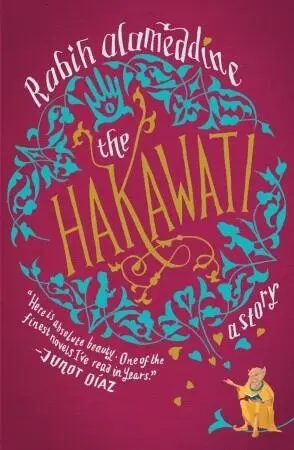
- Название:The Hakawati
- Автор:
- Издательство:Anchor
- Жанр:
- Год:2009
- ISBN:нет данных
- Рейтинг книги:4 / 5. Голосов: 1
-
Избранное:Добавить в избранное
- Отзывы:
-
Ваша оценка:
The Hakawati: краткое содержание, описание и аннотация
Предлагаем к чтению аннотацию, описание, краткое содержание или предисловие (зависит от того, что написал сам автор книги «The Hakawati»). Если вы не нашли необходимую информацию о книге — напишите в комментариях, мы постараемся отыскать её.
, or storyteller, and his bewitching tales are interwoven with classic stories of the Middle East. Here are Abraham and Isaac; Ishmael, father of the Arab tribes; the beautiful Fatima; Baybars, the slave prince who vanquished the Crusaders; and a host of mischievous imps. Through Osama, we also enter the world of the contemporary Lebanese men and women whose stories tell a larger, heartbreaking tale of seemingly endless war, conflicted identity, and survival. With
, Rabih Alameddine has given us an
for this century.
The Hakawati — читать онлайн бесплатно полную книгу (весь текст) целиком
Ниже представлен текст книги, разбитый по страницам. Система сохранения места последней прочитанной страницы, позволяет с удобством читать онлайн бесплатно книгу «The Hakawati», без необходимости каждый раз заново искать на чём Вы остановились. Поставьте закладку, и сможете в любой момент перейти на страницу, на которой закончили чтение.
Интервал:
Закладка:
A full-figured man genuflected before her and kissed her hand. “I am regaining weight, exalted lady,” he said. “It is not yet a crisis, but it will be soon. I do not wish to regress to where I was before your remarkable son touched me. I would not be able to bear it. I was hoping your gloriousness could give me a booster.”
“But of course.” The emir’s wife slid forward, moving the ostrich-feather cushion halfway beyond the edge of the throne. “Come closer. I do not bite.” She laughed at her joke but then sat bolt upright. A sudden current of heat had shot down her spine, from the top of her head to her behind. “Did you do that?” she asked the man.
“Did I do what?”
She hesitated, looked about her. No one in the temple seemed to have felt what she did. She shut her eyes, recaptured her serene self, and wore her gracious smile once more. “Where were we? Yes, come closer for your booster.” She felt it again, stronger, more delicious, more disconcerting. She shivered in momentary glee, considered whether she was having another pleasant metamorphosis. Would that not be delightful? But what if it were not? She had to go on.
“We strive for perfection,” she advised the attendees, “to reflect God’s. It pleases Him mightily when we achieve our ideal shape. Fat people will always earn lower wages, and they are not pleasant to look at. It is God’s plan. To avoid weight gain, you must look to God and worship. He will teach you to love yourself, and love is the cure for obesity.”
The line hummed in appreciation. The emir’s wife glanced to her left to make sure the scribe was writing down every wise word of her short yet exquisite sermon. An unfamiliar movement in the line caught her eye. She glanced up and noticed a man and his wife raising the robe of the man standing in front of them — thirteenth in line — and fondling his genitals. Before she could open her mouth to demand that they stop, she was struck once more with the surge. This time, she felt her soul shake. This time, she knew it was not going to be pleasant. This time, she was not the only one who felt it. The line was no longer straight; some supplicants looked confused, others terrified, still others lustful. One woman turned toward the temple gate and exposed her plentiful breasts. The floor rumbled, the pillars shimmied, and the emir’s wife felt two more surges rush through. Her skin tingled and her vagina buzzed and the temple gate burst into an infinity of tiny shards and toothpicks.
She wanted to exhort her seekers to calm down. She wanted to shout out a warning. Her lips moved of their own accord, and she heard herself whisper, “He comes.”

And into the diwan came a messenger bearing a letter from the emir of Bursa to the illustrious Baybars. The emir wrote that the Mongol queen of Kirkuk, a sorceress and half-sister of Hulagu Khan, had threatened to destroy his city if he did not comply with the outrageous duty payments she was demanding. “Let us return that barbarian to the hell from which she came,” decreed Baybars. “Taboush will lead an army against her. I pronounce him king of Kirkuk, with all the attendant duties and honors.”
The messenger cleared his throat. “Your Majesty, courage and valor may not be a match for this wily queen’s witchcraft.”
“Then we must certainly send her someone wilier,” Baybars said. “Othman, would you be so kind as to ask your charming wife to attend the diwan?”
Taboush led a few battalions of the slave army out of Cairo, accompanied by a most unwarlike-looking group: Othman, Harhash, Layla, and seven of her luscious-dove friends.
“Why are they traveling with us?” asked Othman.
“I do not know much about witchcraft,” Layla replied, “so I thought I would ask Maysoura, whose tea-leaf reading is unsurpassed. However, she refuses to be anywhere that Lama is not, and hence I had to ask both. Rania thinks she communicates with the spirits of her deceased paramours, and that might come in handy, although it is hard to imagine what use dead philanderers might be. Umm Jihan says she can conjure jinn, but only on full-moon nights and not during Ramadan. Rouba  ia can do astonishing card tricks, and she has studied necromancy. Soumaya vows that she can change the position of weightless objects with her mind, and Lubna works with potions. I do not know if any of their powers will be helpful, but they are good company, and Lubna brews a marvelously refreshing drink using fermented hops and water.”
“Should I start worrying now?” asked Harhash, and Othman replied, “Why wait?”
The witch queen’s mighty army laid siege to the fort of Bursa. Upon hearing Taboush’s war bugle, the enchantress turned her attention to the slave army. The Mongolian queen babbled, cursed, gestured wildly, and sent forth one of her soldiers to challenge the heroes. The Mongolian’s reek preceded him by a hundred meters. Layla held her nose.
“None of them bathe,” explained Othman. “They mean to frighten enemies with the stench.”
Taboush nudged his horse toward the Mongolian fighter. “I will answer the call. Let us end this quickly.”
“Wait,” cried Layla. She searched through the saddlebags and brought out a jar. “Allow me.” She ran her forefinger inside the jar and dabbed cream beneath Taboush’s nose. “A mix of cucumber, lavender, verbena, and rose petals. You will smell nothing but this.”
Taboush trotted toward the Mongolian. The barbarian was quick and strong. His arms moved like palm fronds in a swirling sandstorm. But Taboush was a great warrior, a scion of great warriors trained by great warriors, and he parried every stroke the maniac attempted. After an hour of sweat and blows, Taboush saw his opening and with one stroke decapitated his enemy. The Mongolian’s head alit five horse lengths away.
“I do not like the looks of this,” said Othman.
“That foreigner was not human,” said Harhash. “Had I not seen blood spurting, I would have sworn he was a jinni. We must find out how this is accomplished.”
Taboush roared victoriously, and another of the witch’s men, a Chechen, trotted out to fight him. The joust followed a similar pattern. An exhausted Taboush returned to his army dragging the two corpses behind him.
“If he goes out tomorrow,” said Harhash, “they will wear him down and kill him.”
“Both fighters fought the same way,” said Layla, “with unusual strength and quickness.”
Othman walked over to the corpses. “I will sneak into their camp,” he said, sounding nasal because he had his nose covered. “I will be a Chechen.”
“His clothes are too bloody,” said Layla. “You will have to wear the Mongolian’s.”
“But I do not look like a Mongolian.”
“Who is going to look at your face when your odor is so sickening? You think you will suffer? I am sending my pigeon, who has to endure being hidden on your person.”
And Majnoun stepped through the temple he had once possessed. Coral eyes flaring, hair afloat and aflame, he moved across the hall like a lion surveying his realm, like a tiger stalking his prey. His iridescent robe shone and shimmered with the many colors of fire. Three fire-breathing imps walked on his left, three on his right, one before him, and one behind. Neither violet Adam, indigo Elijah, and blue Noah on Majnoun’s right, nor green Job, yellow Jacob, and orange Ezra on the left, looked impish. Isaac and Ishmael, sizzling and smoking, carried their agate-and-gold swords. And when Majnoun halted before the emir’s wife, every ecru robe in the temple turned an inimitable bright color.
Читать дальшеИнтервал:
Закладка:
Похожие книги на «The Hakawati»
Представляем Вашему вниманию похожие книги на «The Hakawati» списком для выбора. Мы отобрали схожую по названию и смыслу литературу в надежде предоставить читателям больше вариантов отыскать новые, интересные, ещё непрочитанные произведения.










Обсуждение, отзывы о книге «The Hakawati» и просто собственные мнения читателей. Оставьте ваши комментарии, напишите, что Вы думаете о произведении, его смысле или главных героях. Укажите что конкретно понравилось, а что нет, и почему Вы так считаете.