Rabih Alameddine - The Hakawati
Здесь есть возможность читать онлайн «Rabih Alameddine - The Hakawati» весь текст электронной книги совершенно бесплатно (целиком полную версию без сокращений). В некоторых случаях можно слушать аудио, скачать через торрент в формате fb2 и присутствует краткое содержание. Год выпуска: 2009, Издательство: Anchor, Жанр: Современная проза, на английском языке. Описание произведения, (предисловие) а так же отзывы посетителей доступны на портале библиотеки ЛибКат.
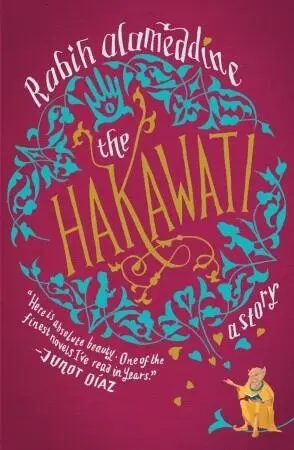
- Название:The Hakawati
- Автор:
- Издательство:Anchor
- Жанр:
- Год:2009
- ISBN:нет данных
- Рейтинг книги:4 / 5. Голосов: 1
-
Избранное:Добавить в избранное
- Отзывы:
-
Ваша оценка:
The Hakawati: краткое содержание, описание и аннотация
Предлагаем к чтению аннотацию, описание, краткое содержание или предисловие (зависит от того, что написал сам автор книги «The Hakawati»). Если вы не нашли необходимую информацию о книге — напишите в комментариях, мы постараемся отыскать её.
, or storyteller, and his bewitching tales are interwoven with classic stories of the Middle East. Here are Abraham and Isaac; Ishmael, father of the Arab tribes; the beautiful Fatima; Baybars, the slave prince who vanquished the Crusaders; and a host of mischievous imps. Through Osama, we also enter the world of the contemporary Lebanese men and women whose stories tell a larger, heartbreaking tale of seemingly endless war, conflicted identity, and survival. With
, Rabih Alameddine has given us an
for this century.
The Hakawati — читать онлайн бесплатно полную книгу (весь текст) целиком
Ниже представлен текст книги, разбитый по страницам. Система сохранения места последней прочитанной страницы, позволяет с удобством читать онлайн бесплатно книгу «The Hakawati», без необходимости каждый раз заново искать на чём Вы остановились. Поставьте закладку, и сможете в любой момент перейти на страницу, на которой закончили чтение.
Интервал:
Закладка:
The old man leaned forward on his stool and squinted at me. “I know you,” he suddenly said. His hand infiltrated his sparse, spiked hair. “I know who you are.”
And I awoke from my stupor.
“You don’t recognize me,” he said, not sounding offended. When he spoke, it seemed only his mouth moved, while the rest of his face remained still. “I remember you as a boy. I remember most of the children of the neighborhood, everyone who used to play on this street. You didn’t play much.” The neighborhood was eerily quiet. The cars on the main street, three bullet-ridden buildings away, seemed to be running noiselessly, images of cars instead of real. “No one plays on the street anymore.” The old man stated the obvious. Anyone not interested in a mud bath would avoid walking on the street, let alone playing on it. “No one cares anymore.” He paused briefly. “I didn’t really live here then, which is probably why you don’t remember me. My sister did. You’d know her. My name is Joseph Hananiah.”
I wanted to say, “And I’m Osama al-Kharrat, your relative,” but he wouldn’t have understood. No one remembered the story of Hananiah anymore. Fewer still would recognize the word “Ananias.” Kharrat, Hananiah, liars of the world, unite.
“You don’t remember?” he asked. “My sister was Hoda Salloum. The concierge’s wife. Elie’s mother. Remember?”
Just what I needed. More family.
“My father isn’t doing well,” I exclaimed, not knowing why. “He’s dying.”
“I’m sorry,” old man Hananiah said.
“I’m sorry, too,” I said. “I just had to take a break from the hospital.”
“I didn’t know him well, but we all respected him. A good man, and decent. He didn’t deserve what my nephew did.”
“Elie was a good man as well. They were difficult times.”
“Elie was a good-for-nothing fake-idealist bastard,” the man went on, “bringing disgrace to us all, forcing his parent into an early grave. Even his death did nothing to ease their shame.”
“I didn’t even know he’d died,” I said, and I tried to change the subject. “I wanted to come back here to see, to go up those stairs.”
He continued to stare at a point in the distance. “Why?”
“I have never been good with answers,” I said. I could tell stories, but explanations always eluded me — an observer, not an expositor, a chronic coward. I paused, felt awkward. I took a deep breath. “Forgive me. I’m just babbling.”
“You call that babbling?” He chuckled. “You don’t talk much.”
I sat down on the sidewalk next to the old man. It was noon now, and the saffron sun stood equidistant from its goals. The world was echoing in my ears, and I had to look up at the old man when he spoke. “There’s a nice family from the south living in your apartment. I think the wife and kids are up there, but I wouldn’t disturb them if I were you. What’s the point?”
“I have to leave anyway. I should go back to the hospital.”
From a distance, a muezzin called in his faint megaphone voice, sounding like a boy reciting a lesson. I couldn’t lift myself off the sidewalk. A black Toyota Camry parked right in front of us, and Hafez, ever the company man, got out of it. His dark sunglasses made him look like a blind man missing his accordion. “Hello, Joseph. How are you today?”
The old man’s face lit up. “Hafez, I have a complaint to make. Your cousin didn’t remember me.”
“Forgive him, Uncle,” Hafez said, sitting on the pavement next to me. “He’s been living abroad. He doesn’t remember much. That’s what we’re here for.” He put his hands behind him and leaned back. “Did you see your home?”
“No,” I said. “I’ve just been sitting here for a while.”
“Come.” He stood up and stretched, like an athlete before a run. “Let’s go look.”

And Isaac commanded the desert’s red scorpions to disinter Majnoun. From under the shifty sands he was lifted. Atop thousands of stingers he floated, and upon the trail of sun-hardened hair he was placed.
“Rise, my nephew,” spoke Isaac. “Rise and greet the changing landscape.”
“Rise, my hero,” spoke Ishmael. “Rise and meet the new world order.”
Majnoun opened his eyes and moaned. “I long,” he said hoarsely, “to see his face once more, to touch his dark and barklike skin, to rake my fingers through his coarse hair. I sigh for what once was and will never be again. I am no longer one who holds the thread to my fate. Longing is full of unmanageable distances. Thus, my life is forfeit.”
Majnoun and Isaac and Ishmael wept, as did all the animals gathered round them, the desert swallowing the falling tears, leaving their salt to mix with sand.
The desert snakes lifted their heads into the parched air, and one of them said, “Let it not be forfeit. Consider all pleasures life can offer, those that were and those yet to come.”
“Pleasures?” cried Majnoun. “Lewd visions of my pleasures with Layl have collared my wretched soul. My eyes see nothing but his lust, and I wish for nothing but his wantonness.”
“Wait,” begged a camel. “God rewards the patient.”
“Rediscover the enjoyment of eating,” cried a vulture. “Think of what it felt like to contemplate a great meal before you, how it felt to be sated.”
“Food?” wailed Majnoun. “His skin was what I tasted upon waking, and his flavor was what put me to sleep. I hunger for nothing but him.”
“You are power descended from power,” announced a lion of the desert. “You are the mightiest creature of above and below. You can rule us all. We will worship and serve you. Does that not entice you?”
“Power?” moaned Majnoun. “I would rather live life on my knees before my beloved than become the master of all realms. For one more kiss of his lips, I would let the Furies torture my soul for eternity. The tiniest kernel of my being has no desire but Layl, for he has melted into my heart. Power means naught if it cannot fulfill my one desire.”
“I beg to differ,” interrupted the owl.
“About time,” said Ishmael.
“Do you remember how Psyche regained the love of Eros after all hope was gone?” said the owl. “How she survived Aphrodite’s wrathful vengeance and triumphed?”
“But I am not a helpless little girl,” responded Majnoun.
“You are,” said the owl. “You are both Psyche and Aphrodite; both the falcon and the partridge. You are Eros as well. You are the demon king.”
“That was Layl, not me.”
“You are Layl as well,” counseled the owl. “Surrender. Pain is proportional to wanting the world to be other than it is.”
Majnoun’s sun-colored hair rose and burst into flame, his skin darkened and burst into life. “I know you,” he said.
“Of course, you do,” sneered Isaac. “Of all things, he chooses an owl — in the desert, no less.” And Ishmael said, “At least it was not a waterfowl.”
“Remove your mask, Uncle,” Majnoun said. “I see you.”
“And I see you,” responded Jacob the yellow owl.
“Rise, my nephew,” said Isaac.
“Heed your destiny, my hero,” said Ishmael.
“End your sorrow,” said Jacob. “Your mother calls.”
The emir’s wife concentrated on her intention and directed her energy from her stomach up through her right hand to the hairy mole on the supplicant’s upper lip. “Heal,” she cried. She raised her eyelids discreetly, gently tried to sense with her hand whether the hateful mole was still present, then dramatically swung her arm back, announcing, “Behold!”
The line of seekers gasped and oohed. The supplicant’s hand raced to her lips. “It is gone,” she yelled, and the line broke into applause. The emir’s wife beamed, bowed — she had spent a few hours just that morning practicing her appreciative bows — and sat back on the throne. She waited for the clapping to quiet before calling, “Next.”
Читать дальшеИнтервал:
Закладка:
Похожие книги на «The Hakawati»
Представляем Вашему вниманию похожие книги на «The Hakawati» списком для выбора. Мы отобрали схожую по названию и смыслу литературу в надежде предоставить читателям больше вариантов отыскать новые, интересные, ещё непрочитанные произведения.









Обсуждение, отзывы о книге «The Hakawati» и просто собственные мнения читателей. Оставьте ваши комментарии, напишите, что Вы думаете о произведении, его смысле или главных героях. Укажите что конкретно понравилось, а что нет, и почему Вы так считаете.