Rabih Alameddine - The Hakawati
Здесь есть возможность читать онлайн «Rabih Alameddine - The Hakawati» весь текст электронной книги совершенно бесплатно (целиком полную версию без сокращений). В некоторых случаях можно слушать аудио, скачать через торрент в формате fb2 и присутствует краткое содержание. Год выпуска: 2009, Издательство: Anchor, Жанр: Современная проза, на английском языке. Описание произведения, (предисловие) а так же отзывы посетителей доступны на портале библиотеки ЛибКат.
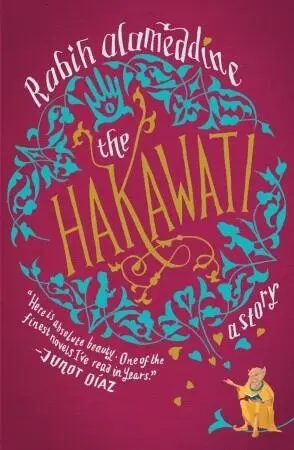
- Название:The Hakawati
- Автор:
- Издательство:Anchor
- Жанр:
- Год:2009
- ISBN:нет данных
- Рейтинг книги:4 / 5. Голосов: 1
-
Избранное:Добавить в избранное
- Отзывы:
-
Ваша оценка:
The Hakawati: краткое содержание, описание и аннотация
Предлагаем к чтению аннотацию, описание, краткое содержание или предисловие (зависит от того, что написал сам автор книги «The Hakawati»). Если вы не нашли необходимую информацию о книге — напишите в комментариях, мы постараемся отыскать её.
, or storyteller, and his bewitching tales are interwoven with classic stories of the Middle East. Here are Abraham and Isaac; Ishmael, father of the Arab tribes; the beautiful Fatima; Baybars, the slave prince who vanquished the Crusaders; and a host of mischievous imps. Through Osama, we also enter the world of the contemporary Lebanese men and women whose stories tell a larger, heartbreaking tale of seemingly endless war, conflicted identity, and survival. With
, Rabih Alameddine has given us an
for this century.
The Hakawati — читать онлайн бесплатно полную книгу (весь текст) целиком
Ниже представлен текст книги, разбитый по страницам. Система сохранения места последней прочитанной страницы, позволяет с удобством читать онлайн бесплатно книгу «The Hakawati», без необходимости каждый раз заново искать на чём Вы остановились. Поставьте закладку, и сможете в любой момент перейти на страницу, на которой закончили чтение.
Интервал:
Закладка:
Othman said, “Emir is a title of great worth.”
“Of course it is, dear. How many men were made emirs today? And how many emirs were there before today? These are the lands of Islam. Kings, sultans, and caliphs are as common as camels. Emirs? There are as many emirs as there are males in these parts.”
The following day, Othman was even more glum and morose in the diwan, and King Baybars asked, “Why are you unhappy, my brother?”
“Because I am a trite emir.”
• • •
And what of Ma  rouf? Have you forgotten him? Ma’arouf, who had been searching for weeks and months and years for his son all over the Mediterranean?
The nun — the nun raised the infant Taboush for two years in the palace of Thessaly. While carrying a large gift for Taboush’s second birthday, she slipped in descending the stairs, and her soul ascended to the Garden. “Oh well,” said King Kinyar. “I must assign someone to raise the boy now that the nun has betrayed us.” He picked one of his men at random. “You will be the boy’s guardian. Raise him and care for him. Teach him to be a man. If you fail, you and your descendants will be tortured to death.” The guardian raised Taboush and cared for him. Every day he took the boy for walks outside the palace, to the lovely hills and meadows of Thessaly.
One day, Ma rouf came across Taboush along the road, and the father’s heart fluttered and raced. Ma rouf greeted Taboush’s guardian and asked if the boy was his son, and the guardian informed him that the boy was the king’s son. And Ma rouf looked into the boy’s eyes and saw his father’s eyes and his grandfather’s eyes, and he said to himself, “This is my son. I know him as I know myself.” Ma rouf began to show up on the same road every day so he could play with Taboush. He brought him gifts and sweets, and Taboush began to love him. Ma rouf had a plan to take the boy with him off the island, back to Maria, and was waiting for the right opportunity. Ma rouf would whisper into his boy’s ears, “You are honor descended from honor. You are my son and the light of my eyes.”
The guardian grew suspicious and informed the king about the man who was befriending his son. The king ordered the guardian not to take the boy on his walk the following day and instead sent a full squadron of a hundred men. The soldiers attacked Ma rouf, beat him, and brought him to the king, who shackled Ma rouf and jailed him in an isolated cell of iron. “You thought you could take my son away from me,” the king said, “but I will take your liberty and pride. You will live here, beneath our royal feet, until you rot and decay. Meditate upon your folly, for you now have the time.” And when he was left alone, Ma rouf wondered what was to become of him, the chief of forts and battlements, without son, without wife, without honor.

To say that there was a class difference between my mother’s family and my father’s would be like saying that a Rolls-Royce is a slightly better car than a Lada. Even my grandmother’s family, the Arisseddines, sheikhs though they might be, were no match for the Khourys. Luckily for my father, she was from a small branch of the family that was not closely related to the first president of the republic. Still, a sensible man wouldn’t have undertaken to woo a woman who had the same last name as the man who was running the entire country.
Aunt Samia considered my mother’s family cursed. “It’s not your mother’s fault,” she’d say. “She never had a chance to understand family. The curse began long before your poor mother was born.” My mother’s father was an only child — probably the biggest curse, according to my aunt. He was both orphaned and widowed. My maternal grandmother died when my mother was only three, and my grandfather remarried a Belgian. “Could you have worse luck?”
My mother had two half-siblings. “But they don’t really count, do they?” my aunt would ask. “They visit the ruins of the Roman temples during a trip to Lebanon, and that makes them Lebanese? That’s not family.”
My grandfather was intelligent, educated, and successful, but if you pointed out to my aunt that he couldn’t have been cursed, what with having all those qualities and being an ambassador to boot, she replied, “True, but we’re talking an ambassador to Belgium.”
My mother grew up in Belgium, where her father emigrated. When she was fourteen, a cousin suggested that my mother should return with her to Beirut. My grandfather and his Belgian family stayed in Brussels, and my mother went with the cousin — my grandfather in essence admitting that his daughter would have a better chance of finding a suitable husband in Lebanon. My mother’s separation from her immediate family was fortunate. My father would have to persuade her to marry him — a ridiculous task to be sure, but not as impossible as persuading the rest of her family as well.
However, my grandfather the hakawati always said that my father and mother were fated to be married, and, of course, there was a story, one concerning an improbable nocturnal meeting between an Arisseddine and a Khoury in late June 1838 during the Battle of Wadi Baka.
In 1831, Ibrahim Pasha, the ruler of Egypt, temporarily liberated Greater Syria, including Lebanon, from the yoke of the Ottomans. At first the populace was happy to be rid of the corrupt and unjust Ottomans. But Ibrahim Pasha proved no better, and in 1838 the Druze revolted. At Hawran, site of the first battle, fewer than fifteen hundred Druze fighters defeated some fifteen thousand Egyptians. The Egyptians kept replenishing their forces, however, and the Druze couldn’t. What was left of the rebels retreated down to Wadi al-Taym, until only four hundred bunkered in Wadi Baka. Ibrahim Pasha himself led his army of thousands against those four hundred.
With the help of Emir Bashir of Lebanon, Ibrahim Pasha had forced Maronite fighters to help him against the Druze. Most refused the call and hid in the mountains. Those unable to disappear joined the battle but never took their swords out of their scabbards. One was a Khoury, my mother’s great-great-grandfather.
When the Druze rebels realized they could hold out no longer, they decided to wait for nightfall and attack. They would kill as many as they could before dying, and perhaps a few of them would be able to escape. One was an Arisseddine, my father’s great-great-grandfather.
The Druze attacked at night. Almost all of them were killed. Khoury saw a couple of riderless stallions trotting away from the battle and caught up to them and took their reins. Beneath the belly of one of the horses, a badly injured Arisseddine was holding on for dear life. Khoury unsheathed his sword for the first time, handed it to the rebel, and sent him on his way.
Their descendants were married one hundred and eighteen years later.
Читать дальшеИнтервал:
Закладка:
Похожие книги на «The Hakawati»
Представляем Вашему вниманию похожие книги на «The Hakawati» списком для выбора. Мы отобрали схожую по названию и смыслу литературу в надежде предоставить читателям больше вариантов отыскать новые, интересные, ещё непрочитанные произведения.










Обсуждение, отзывы о книге «The Hakawati» и просто собственные мнения читателей. Оставьте ваши комментарии, напишите, что Вы думаете о произведении, его смысле или главных героях. Укажите что конкретно понравилось, а что нет, и почему Вы так считаете.