Rabih Alameddine - The Hakawati
Здесь есть возможность читать онлайн «Rabih Alameddine - The Hakawati» весь текст электронной книги совершенно бесплатно (целиком полную версию без сокращений). В некоторых случаях можно слушать аудио, скачать через торрент в формате fb2 и присутствует краткое содержание. Год выпуска: 2009, Издательство: Anchor, Жанр: Современная проза, на английском языке. Описание произведения, (предисловие) а так же отзывы посетителей доступны на портале библиотеки ЛибКат.
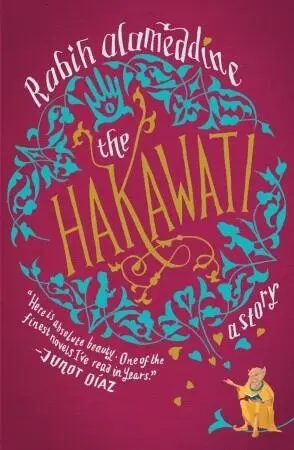
- Название:The Hakawati
- Автор:
- Издательство:Anchor
- Жанр:
- Год:2009
- ISBN:нет данных
- Рейтинг книги:4 / 5. Голосов: 1
-
Избранное:Добавить в избранное
- Отзывы:
-
Ваша оценка:
The Hakawati: краткое содержание, описание и аннотация
Предлагаем к чтению аннотацию, описание, краткое содержание или предисловие (зависит от того, что написал сам автор книги «The Hakawati»). Если вы не нашли необходимую информацию о книге — напишите в комментариях, мы постараемся отыскать её.
, or storyteller, and his bewitching tales are interwoven with classic stories of the Middle East. Here are Abraham and Isaac; Ishmael, father of the Arab tribes; the beautiful Fatima; Baybars, the slave prince who vanquished the Crusaders; and a host of mischievous imps. Through Osama, we also enter the world of the contemporary Lebanese men and women whose stories tell a larger, heartbreaking tale of seemingly endless war, conflicted identity, and survival. With
, Rabih Alameddine has given us an
for this century.
The Hakawati — читать онлайн бесплатно полную книгу (весь текст) целиком
Ниже представлен текст книги, разбитый по страницам. Система сохранения места последней прочитанной страницы, позволяет с удобством читать онлайн бесплатно книгу «The Hakawati», без необходимости каждый раз заново искать на чём Вы остановились. Поставьте закладку, и сможете в любой момент перейти на страницу, на которой закончили чтение.
Интервал:
Закладка:
When asked why she was repelled at that first meeting, my niece said, “Well, look at me. What the hell did he see? I’m not that pretty under normal circumstances, and at the time I looked and felt horrible. I had been throwing up all morning and had severe diarrhea to boot. Fever was burning me up while the fool’s heart caught fire. I thought the man was a pervert. I had no doubt. I felt nauseated and nauseating, and the doctor asked me for a date? A yucky, weirdo pervert, unprofessional, and too handsome for his own good.”
Yes, he was handsome — terribly handsome. He was so handsome that women would develop imaginary aches and pains, palpitations, colic, and severe distress, yet he was captivated by the only one who had no interest in him whatsoever. He called her on her mobile phone; she yelled at him and hung up. He called again to apologize, she threatened to call the hospital and get him fired. He sent a note of flowery apology with a dozen roses. My niece told her mother, who drove to the hospital and announced in front of everyone that she would dissect his internal organs one by one if he didn’t leave her daughter alone. Hovik came to his senses. He stopped.
But you don’t trample upon fate. In May, my father had to have an updated pacemaker installed. As my sister and niece were returning to the hospital from lunch, Lina noticed a couple of young doctors in the lobby. One appeared stunned, rooted, mouth agape, eyes following Salwa’s path. My niece walked on, oblivious, and Hovik remained oblivious to anything but my niece. Maybe it was the look of despair upon his face, maybe it was the look of adoration, but it certainly was a look my sister recognized well. She saw herself in the young doctor. He’d won a silent convert. My niece was smack back in his narrative.
“I can see your problem,” the other young resident told Hovik. And that young resident, trying to impress, told the doctor in the cardiac unit that Hovik was infatuated with a relative of one of his patients. He had no idea that Tin Can was family. Tin Can told my father, who of course demanded a confrontation with the ill-bred lackey. Tin Can informed him that the lackey had done nothing wrong and that he would talk to the young man himself.
Hovik was embarrassed when Tin Can confronted him. He waited until my father was alone and paid him a visit in his hospital room, that fateful day a few years ago. Hovik introduced himself, asked about my father’s health, and finally begged my father’s forgiveness. “I’ve made a grave mistake,” Hovik said. He made my father promise to listen to his whole story. He would appear the cad, he was guilty, but if my father listened to his entire tale, he might understand.
Hovik explained how he met my niece. He admitted how badly he had behaved. He was possessed by the demon of love. How else could he explain it? He could have destroyed his career. How could he have called her when she specifically warned him not to? But he had stopped. He was in control. It was the shock of seeing her once more that had confounded him. He would disturb her no more. He was not wanted.
“You mean to take my granddaughter away from me?” my father asked.
“Meant,” Hovik replied. “That is no longer the case, I assure you.”
“Fool.” And my father told Hovik how he had won my mother, how much he loved her, how he had wooed her, how much he missed her. “Fool,” he repeated. “You tried to win Salwa with clichés? Who sends roses anymore? My granddaughter hates roses. It’s spring. Send her crocuses, hyacinths, and narcissi. Her favorite color is yellow. Daffodils. You’ll have to woo her with her poetry — not yours. Polish up on your R’s, Rimbaud and Rilke — they’re her favorites. She hates movies. Don’t even try. And you’re too pretty. Get a bad haircut. Wear clothes that don’t match. And don’t, and I mean don’t ever, suggest a walk on the beach or a candlelit dinner. She would as soon slit your throat. Listen to her. Always listen to her.”

The mourning army returned to Cairo with little fanfare. Forty days after the burial of the king, the council met to elect the new prince of the faithful. The Kurds still argued for the king’s lineage. The Turkomans nominated a vizier by the name of Aybak. They fought the entire day and drew their weapons three times before Shajarat al-Durr, King Saleh’s widow, sent her servant to the diwan once more to announce that she was fit to rule. The Kurds and Turkomans decided she would be an acceptable compromise.
The coronation of Shajarat al-Durr, an exquisite affair, lasted only a little less time than her reign. Once the news of her ascent to the throne reached the land of Hijaz, the sharif of Mecca wrote to the council berating them for not following the traditions of the faith. He warned that if the queen’s reign continued, the tribes of Hijaz would no longer heed the calls of Cairo. The queen read the letter and announced, “I will step down, for the good of the kingdom.”
The diwan reconvened. Every side argued. Antipodal positions were assumed. The council was exhausted. Finally, the vizier Aybak was elected in a straw vote. To ensure that his reign would last longer than Shajarat al-Durr’s, he married her.
Aybak’s plan, joining the lines of two claimants to the throne, worked, but only briefly. All supported his rule and heeded his commands. Not everything, however, was aligned with Aybak’s ambition. Fate had no use for him, could not bear him, and dismissed him rather cruelly, by gifting him with the source of every man’s fall from grace: the great desire.
He saw her while promenading with his courtiers. She was a young Bedouin girl of a beauty that pierced his heart. He called to her, “O most glorious, whose daughter are you?”
The king sought out her father, received his permission, returned to the diwan, and called on his engineers to build a magnificent palace for his new betrothed. The king spent one month in bed with his beloved. He did not show up at the diwan, and he never once visited Shajarat al-Durr or his first wife, Umm Ahmad. Prince Baybars paid the king a visit and said, “You have been neglecting your duties. You must return to the diwan and handle the affairs of state.”
The king replied, “Queen Shajarat al-Durr is furious with me, and unless someone calms her down, I will not venture out of these chambers to be nagged and berated by that harpy.”
Baybars went to the queen and begged her to forgive her king. He spoke honeyed words to her, he lauded her generosity, he praised, until she finally relented. “Tell him to pay me a visit,” the queen said. Baybars sent a message to the king that the great queen had forgiven him.
The following morning, the king made his appearance at the diwan, and that evening, he visited Shajarat al-Durr. She greeted him warmly and fawned over him, and the happy king said, “Let us relive the good times. Bathe me.” Shajarat al-Durr led her husband to the bath. She undressed him and began to undress herself.
“Does your Bedouin girl have hair more luxurious than mine?” The queen smiled flirtatiously. “Skin more white? Lips more full?”
“My wife, you are beautiful, tribes from the deserts to the seas sing of your loveliness, but you are old. The girl is fourteen. Do you expect to compete with that?”
Shajarat al-Durr, who once ruled the world, knelt down and washed her husband’s hair. She soaped it thoroughly, until lather built. She took out a dagger and slit the king’s throat from carotid to carotid. She watched disloyal blood flow upon the bath’s marble before she plunged the dagger into her own heart.
And the Kurds said, “The kingdom should return to the line of true kings. King Issa Touran Shah had a boy. He is seven and goes by the name of Ala’eddine. He shall be king.”
Читать дальшеИнтервал:
Закладка:
Похожие книги на «The Hakawati»
Представляем Вашему вниманию похожие книги на «The Hakawati» списком для выбора. Мы отобрали схожую по названию и смыслу литературу в надежде предоставить читателям больше вариантов отыскать новые, интересные, ещё непрочитанные произведения.









Обсуждение, отзывы о книге «The Hakawati» и просто собственные мнения читателей. Оставьте ваши комментарии, напишите, что Вы думаете о произведении, его смысле или главных героях. Укажите что конкретно понравилось, а что нет, и почему Вы так считаете.