John Barth - Letters
Здесь есть возможность читать онлайн «John Barth - Letters» весь текст электронной книги совершенно бесплатно (целиком полную версию без сокращений). В некоторых случаях можно слушать аудио, скачать через торрент в формате fb2 и присутствует краткое содержание. Год выпуска: 1994, Издательство: Dalkey Archive Press, Жанр: Современная проза, на английском языке. Описание произведения, (предисловие) а так же отзывы посетителей доступны на портале библиотеки ЛибКат.
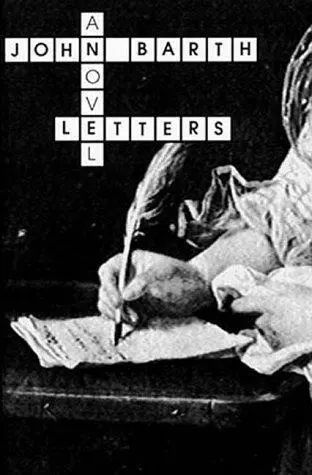
- Название:Letters
- Автор:
- Издательство:Dalkey Archive Press
- Жанр:
- Год:1994
- ISBN:нет данных
- Рейтинг книги:3 / 5. Голосов: 1
-
Избранное:Добавить в избранное
- Отзывы:
-
Ваша оценка:
Letters: краткое содержание, описание и аннотация
Предлагаем к чтению аннотацию, описание, краткое содержание или предисловие (зависит от того, что написал сам автор книги «Letters»). Если вы не нашли необходимую информацию о книге — напишите в комментариях, мы постараемся отыскать её.
Letters — читать онлайн бесплатно полную книгу (весь текст) целиком
Ниже представлен текст книги, разбитый по страницам. Система сохранения места последней прочитанной страницы, позволяет с удобством читать онлайн бесплатно книгу «Letters», без необходимости каждый раз заново искать на чём Вы остановились. Поставьте закладку, и сможете в любой момент перейти на страницу, на которой закончили чтение.
Интервал:
Закладка:
Napoleon, he learns, is being uncharacteristically indecisive, to the growing desperation of his suite. Having offered his services in vain to the provisional government in Paris as a mere general of the army (he had noted on his maps a vulnerable gap between the armies of Wellington and Blücher, both marching toward Paris), he has announced his decision to take refuge in America. But as if in hope of some marvelous re-reversal of fortune, he has put off his flight aboard the French frigates at his disposal and given the British time to reinforce their blockade of the harbor. Captain Ponée of the Méduse still)believes it possible to run the blockade: he will engage the chief blockading vessel, H.M.S. Bellerophon, a 74-gunner but old and slow; he estimates he can survive for two hours, enough time for Napoleon to slip through on the Saale and outrun the lesser blockaders. Napoleon has approved the audacity of the plan, but declined to sacrifice the Méduse. Another loyal frigate stands ready farther south, at the mouth af the Gironde; and there is Joseph’s charter boat at Bordeaux. The French master of a Danish sloop in the Aix Roads has even offered to smuggle the emperor out in an empty wine cask rigged with breathing tubes. Every passing day makes escape less feasible; the options narrow to capture and possible execution by Blücher’s Prussians, arrest by the Bourbons, surrender to the British, or suicide (it is an open secret that he carries a vial of cyanide always on his person). But Napoleon will not act.
Delighted by this unanticipated turn of fortune — which of course revives at once his original hope that Bonaparte himself might lead the “Louisiana Project”—“André Castine” attaches himself to the emperor’s party on the strength of a letter “from Mr. Consul Lee” authorizing him to oversee and facilitate Napoleon’s “American arrangements,” should the emperor choose to go to that country. He urgently advances Jean Lafitte’s Champ d’Asile/New Orleans/Barataria connection, flourishing his letter “from Mayor Girod”; the proposal finds favor with many of the party, but the emperor himself (through intermediaries: Andrew does not see him personally until the last minute) is dilatory. On July 4, our ancestor’s 39th birthday, Joseph sails aboard the U.S.S. Pike, afraid to delay longer. Andrew begins to share the desperation of Napoleon’s aides.
Legality was the official sticking-point, he writes: Bonaparte had long since requested of the Paris government passports to America, & had renew’d that request thro Commander Maitland of Bellerophon, without reply. He had, he declared, been condemn’d an outlaw by the Congress of Vienna since his escape from Elba; moreover, he had been defeated on the field of battle & forced to abdicate. To flee now like a common fugitive was in his eyes but a further ignominy. But some said privately he fear’d life in America, so remote from the terrain of his career. Others, that he had fallen ill, slipt his hold on reality, & half believed a way would yet show itself, to make another Elba of Rochefort.
On July 8, on orders from Paris, the party boards the French frigates anchored in the harbor. On the 10th a letter arrives from Bellerophon, in reply to Napoleon’s query: Maitland does not mention the passports (he has been secretly instructed to intercept and take custody of the emperor if he attempts to flee, and deliver him to Tor Bay), but politely forbids Napoleon passage out of the harbor on any but his own vessel, and that to England. On the 11th they learn of Louis XVIII’s re-restoration. The circle is closing. On the 13th Napoleon drafts his famous letter of surrender to the prince regent:
Your Royal Highness,
A victim to the factions which distract my country, and to the enmity of the greatest powers of Europe, I have terminated my political career, and I come, like Themistocles, to throw myself upon the hospitality of the British people. I put myself under the protection of their laws; which I claim from your Royal Highness, as the most powerful, the most constant, and the most generous of my enemies.
Rochefort, 13 July, 1815,
Napoleon
But before delivering it, and himself, to Bellerophon, he decides to make a final inquiry concerning the passports, at the same time testing the air on the subject of his second choice: asylum in England, where his brother Lucien already resides, and the likely nature of his reception there. On the morning of Bastille Day, therefore, he sends emissaries under a flag of truce to Bellerophon. Commander Maitland again declares (what is technically correct) that he has had no word yet from his admiral concerning the passports; that he cannot permit Napoleon passage to America without them; and that he is not empowered to enter into any agreement concerning the emperor’s reception in England — which, however, he cannot personally imagine will be other than hospitable. The embassy returns; there is no alternative, Napoleon decides, to surrendering to Maitland and taking his chances with the prince regent. A new letter is drafted to that effect, enclosing a copy of the “Themistocles” letter, re-requesting passports and passage to America, but accepting in lieu of them passage to England “as a private individual, there to enjoy the protection of the laws of your country.” He will deliver himself and his entourage to Bellerophon, he declares, on the morrow’s ebb tide.
Andrew sees here a long chance to salvage his mission, which Napoleon’s refusal to escape has rendered all but hopeless: he volunteers to rush overland to London “in [his] capacity as a U.S. diplomatic attaché,” discover if he can what the British cabinet plan to do with their prisoner, and, if that news is not good, do what he can to arrange Bonaparte’s escape before he is landed and taken into custody. In return he stipulates (to the Count de Las Cases, Napoleon’s acting counselor of state and second-ranking aide, whom Andrew has befriended) that any such escape be to Champ d’Asile, and that Las Cases urge Napoleon to lead the “Louisiana Project.”
A fan of Chateaubriand’s redskin romances, Las Cases declares himself ready without hesitation to hazard “the naked but noble savages” rather than the elegant but perfidious Bourbons or what he fears may be the implacable English. He is impressed by Andrew’s showing him, on a map of America, the territory he has in mind, three times the size of France. He inquires as to the quality of Indian wine. Before dawn the next morning he reports that the emperor has approved and will finance Andrew’s London mission, and has regarded that same map with interest but no further comment. News has reached them that Louis XVIII has ordered the commander of the Saale frigate to hold them all under arrest on that vessel; the officer has loyally passed word of his order along, but cannot indefinitely delay executing it. They are leaving at once.
Andrew asks and is given permission to accompany them to Bellerophon. ’Twas no reason of strategy at all, only to see, perhaps for the last time, that man Joel Barlow had come justly so to loathe, but who had play’d as none before him the Game of Governments, & convinced a whole century, for good or ill, that one man can turn the tide of history. The emperor speaks to — or of — him once, and briefly, not recognizing him as the man he’d dispatched years before to oversee young Jérôme in America. “So this is the fellow who would crown me king of the Corsairs,” he remarks, and turns his attention to the choreography of boarding the British warship with most impressive effect.
That day and the following morning Andrew spends aboard the “Billy Ruffian,” as her crew call Bellerophon. He watches Napoleon display his talent for ingratiating himself with those useful to him, intuitively exploiting every circumstance to best advantage. So far from abject, the man turns his surrender into a diplomatic and theatrical coup, and receives, without having to ask, every royal prerogative — except the passports. Andrew also completes the letter to Andrée begun in Fort Bowyer and put aside in New Orleans, describing the sack of Washington and the siege of Fort McHenry: he will leave it with Consul Lee to dispatch to Canada via Washington by diplomatic pouch, having reported “officially” to that gentleman the details of Bonaparte’s surrender. In his satisfaction at having got hold of the emperor before his superiors could snatch that plum for themselves (the sails of Admiral Hotham’s Superb are visible all through the morning of the 15th, standing in for Rochefort), Maitland accepts Las Cases’s voucher that “M. Castine” is the party’s “American liaison,” and both permits him aboard and allows him to leave at his pleasure on the 16th.
Читать дальшеИнтервал:
Закладка:
Похожие книги на «Letters»
Представляем Вашему вниманию похожие книги на «Letters» списком для выбора. Мы отобрали схожую по названию и смыслу литературу в надежде предоставить читателям больше вариантов отыскать новые, интересные, ещё непрочитанные произведения.










Обсуждение, отзывы о книге «Letters» и просто собственные мнения читателей. Оставьте ваши комментарии, напишите, что Вы думаете о произведении, его смысле или главных героях. Укажите что конкретно понравилось, а что нет, и почему Вы так считаете.