S. Agnon - Shira
Здесь есть возможность читать онлайн «S. Agnon - Shira» весь текст электронной книги совершенно бесплатно (целиком полную версию без сокращений). В некоторых случаях можно слушать аудио, скачать через торрент в формате fb2 и присутствует краткое содержание. Год выпуска: 2014, Издательство: Toby Press, Жанр: Современная проза, на английском языке. Описание произведения, (предисловие) а так же отзывы посетителей доступны на портале библиотеки ЛибКат.
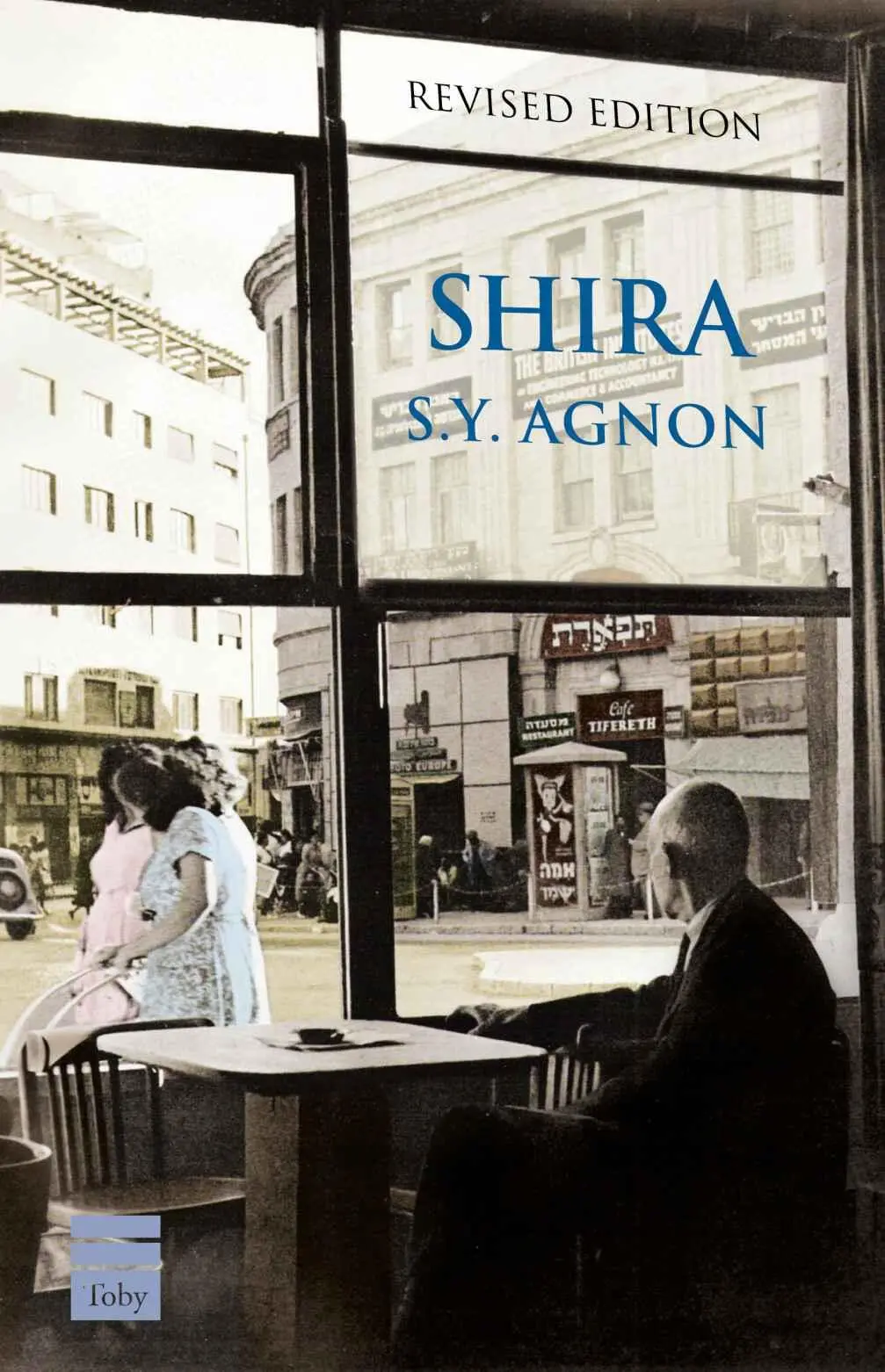
- Название:Shira
- Автор:
- Издательство:Toby Press
- Жанр:
- Год:2014
- ISBN:нет данных
- Рейтинг книги:5 / 5. Голосов: 1
-
Избранное:Добавить в избранное
- Отзывы:
-
Ваша оценка:
Shira: краткое содержание, описание и аннотация
Предлагаем к чтению аннотацию, описание, краткое содержание или предисловие (зависит от того, что написал сам автор книги «Shira»). Если вы не нашли необходимую информацию о книге — напишите в комментариях, мы постараемся отыскать её.
Shira — читать онлайн бесплатно полную книгу (весь текст) целиком
Ниже представлен текст книги, разбитый по страницам. Система сохранения места последней прочитанной страницы, позволяет с удобством читать онлайн бесплатно книгу «Shira», без необходимости каждый раз заново искать на чём Вы остановились. Поставьте закладку, и сможете в любой момент перейти на страницу, на которой закончили чтение.
Интервал:
Закладка:
Taglicht asked Tamara, “And what do you think?” Tamara said, “I’m my parents’ daughter. They don’t observe the dietary laws.” Taglicht said, “I’m not asking about the dietary laws. I’m asking if it isn’t good that we have rules about slaughter and appoint a shohet to do the job — someone God-fearing and virtuous, who knows that it is only because the Torah lets us eat meat that he is allowed to tamper with life; all Jews are aware of this, and not everyone may slaughter. What do you think about that, Tamara?” Tamara said, “I was never confronted with that question before, so I haven’t explored it.” Taglicht said, “You want ice cream, and I detain you with words. Let’s go into that café.” Tamara said, “We don’t have to go to that particular one. If you like, we could stand outside for a while or walk a bit. Wherever we go, we’ll find other cafés.” Taglicht said, “If you want to walk, I’m certainly agreeable.” Tamara said, “On condition that we end up at some café.” Taglicht said, “Agreed. Meanwhile, let me tell you something.” “Is it something that happened to you?” Taglicht said, “I could tell you that sort of thing. My life is no secret. The events are known. I could give you an earful, enough to bore you. But now I’ll tell you about someone else. If the subject isn’t of interest, the person it relates to may be.” “Who is it?” “Hemdat.” “The one who writes…What is it he writes?” Once again Tamara feigned innocence. She took a mirror from her purse, looked into it, arranged her hair, looked up at Taglicht, and said, “Hemdat. I see.” Taglicht said, “Hemdat told this to me. He lived in Jaffa, in the Neve Zedek neighborhood, in a house owned by a Sephardic Jew. A German gentleman lived there too, who was one of the managers of the Wagner factory. He may have even been a partner to the owner, who was a descendant of the Templers. He himself may have been a Templer. I don’t recall the details. Hemdat thought this German was an extraordinary person. Before the war, all Germans were considered extraordinary — not to mention the Templers, who were, as a rule, ethical, upright, and God-fearing. Hemdat’s manners were such that he kept his distance, rather than risk intruding on these neighbors, and he maintained somewhat inflated illusions about their character, qualities, and intellect, because they were compatriots of Goethe and Schopenhauer. One day, they had visitors from Stuttgart, among them a large blonde girl, a beauty of the sort that had never been seen before in Jaffa. Picture to yourself, Tamara, the meaning of a beautiful girl from Germany in those years, in this country. Now our land is full of lovely, charming Hebrew girls. Hush, Tamara, hush. I include you among the charmers. If you insist, I include you among the beauties too. Are you satisfied? Here’s the café.” Tamara said, “First tell me, then we’ll go in.” Taglicht said, “Hemdat, like many poets when they see a lovely girl and are attracted to her, composed garlands of verse to her. Whether on paper or only in his head, he never divulged to me. His manners were such that he kept his distance, rather than risk intruding on her, and as a result he attributed every virtue to her. Besides, in that period he used to read German books, whatever could be found in Jaffa. And all the fine characteristics ascribed to their women by German poets, Hemdat attributed to this girl from Stuttgart. One day, Hemdat was standing in his attic room looking out the window. He saw the girl in the garden, holding a chicken. Her hair was slightly disheveled, her blonde curls mingled with the white chicken feathers, and her blue eyes matched the pure blue sky. In fact, Hemdat recounted, at that moment he thought he detected an evil spark in her eyes, the sort you see when someone is about to do evil but is too ruthless to be aware of the nature of the act. However, a young man, confronted with his idol, sees beauty even in such eyes. He suddenly heard the shriek of an animal, a heartrending sound. He looked up and saw the girl beating the bird on its head. Hemdat didn’t immediately grasp what had happened. When he did, he turned away from the blonde with the dead bird in her hand, and, if you’ll excuse me, he threw up. Yes, he threw up. On the face of it, the girl was not to blame. It is the way of the world to eat the meat of animals killed in this fashion, and a Gentile woman who needs meat kills, cooks, eats, and serves her family, and no one gives it a second thought. Now for the rest of Hemdat’s story, as he himself related it to me. Not about the belle of Stuttgart, but about that fellow with the earlocks and beard.
“After that incident, Hemdat fled from his room and roamed the streets, the avenues, the shore, the beach, the vineyards — any place that wasn’t fenced off, with the exception of the German neighborhood, which he chose to stay far away from. After several hours, when it was already night and he was plagued by hunger, he returned to Neve Zedek. He passed the synagogue and, hearing the drone of voices, he went in and found people engaged in Torah study. One of them, with earlocks and a beard like all the others, was leading the lesson. This person was the shohet. Hemdat gazed at him, searching for a sign of ruthlessness, of savagery. He found none. On the contrary, he saw a thread of kindness stretched across the man’s face. He asked about him and learned that he was a man of sterling character and high moral qualities, that he was especially generous in offering hospitality and charity for the poor.” Tamara said, “Here comes Father.” Taglicht followed her eyes and said, “I don’t see him.” Tamara said, “But I do. Here he comes.” Taglicht said, “Now I see him.”
Herbst appeared. His face was clear, with no trace of sorrow, probably because he was pleased to find his daughter with Taglicht. Herbst said, “I don’t want to interrupt. Continue your conversation and your walk.” Tamara said, “Come and join us. We’re heading for a café. Come on, Manfred. Come.” Herbst said, “How can I come if you call me Manfred? What will people say? He has a grown daughter and sits in cafés with young women. Isn’t that so, Dr. Taglicht?” “Of course, of course,” Taglicht answered, without having heard what Herbst said. After a few steps, Taglicht stopped and said, “Excuse me, but I can’t go with you. Weltfremdt is waiting for me.” “Ernst or Julian?” Tamara said, “Father, it’s as if you’re asking ‘odds or evens?’“
Neither one of the Weltfremdts was waiting for Taglicht, but he wanted to give the father and daughter a chance to be alone together. Tamara said, “Have you changed your mind?” Taglicht said, “What can I do? They’re waiting for me.” Herbst said to his daughter, “We’ll let him go now if he promises to come to us for supper.” Tamara said, “Eggs in a glass, tea in a glass, and a lump of sugar.” Taglicht said, “I’ll try to come.” Tamara said, “You see, Manf — I mean, Father — how much influence I have. He didn’t say, ‘God willing.’“ Herbst smiled. Taglicht smiled and took leave of them.
It was odd for Herbst to be going to a café with his daughter. He had never sat in a café in Jerusalem with either Zahara or Tamara. After ordering what he ordered, he began searching his mind for something with which to entertain his daughter. He found nothing. He wanted to tell her one of those anecdotes about university personalities. But he felt that the time and place required something special, not the sort of subjects they discussed at home. It occurred to him that he could ask her to do the talking. But he felt that he should entertain her. Again, he searched his mind and found nothing suitable to say to his daughter. While he was searching and failing to find anything, a newsboy came through, shouting at the top of his lungs that eight Jews had been killed on Mount Carmel. There was chaos in the café. The newspapers were snatched up, without much attention to proper change, and were all gone in a minute. Herbst barely managed to get a copy.
Читать дальшеИнтервал:
Закладка:
Похожие книги на «Shira»
Представляем Вашему вниманию похожие книги на «Shira» списком для выбора. Мы отобрали схожую по названию и смыслу литературу в надежде предоставить читателям больше вариантов отыскать новые, интересные, ещё непрочитанные произведения.








Обсуждение, отзывы о книге «Shira» и просто собственные мнения читателей. Оставьте ваши комментарии, напишите, что Вы думаете о произведении, его смысле или главных героях. Укажите что конкретно понравилось, а что нет, и почему Вы так считаете.