S. Agnon - A Guest for the NIght
Здесь есть возможность читать онлайн «S. Agnon - A Guest for the NIght» весь текст электронной книги совершенно бесплатно (целиком полную версию без сокращений). В некоторых случаях можно слушать аудио, скачать через торрент в формате fb2 и присутствует краткое содержание. Год выпуска: 2014, Издательство: The Toby Press, Жанр: Современная проза, на английском языке. Описание произведения, (предисловие) а так же отзывы посетителей доступны на портале библиотеки ЛибКат.
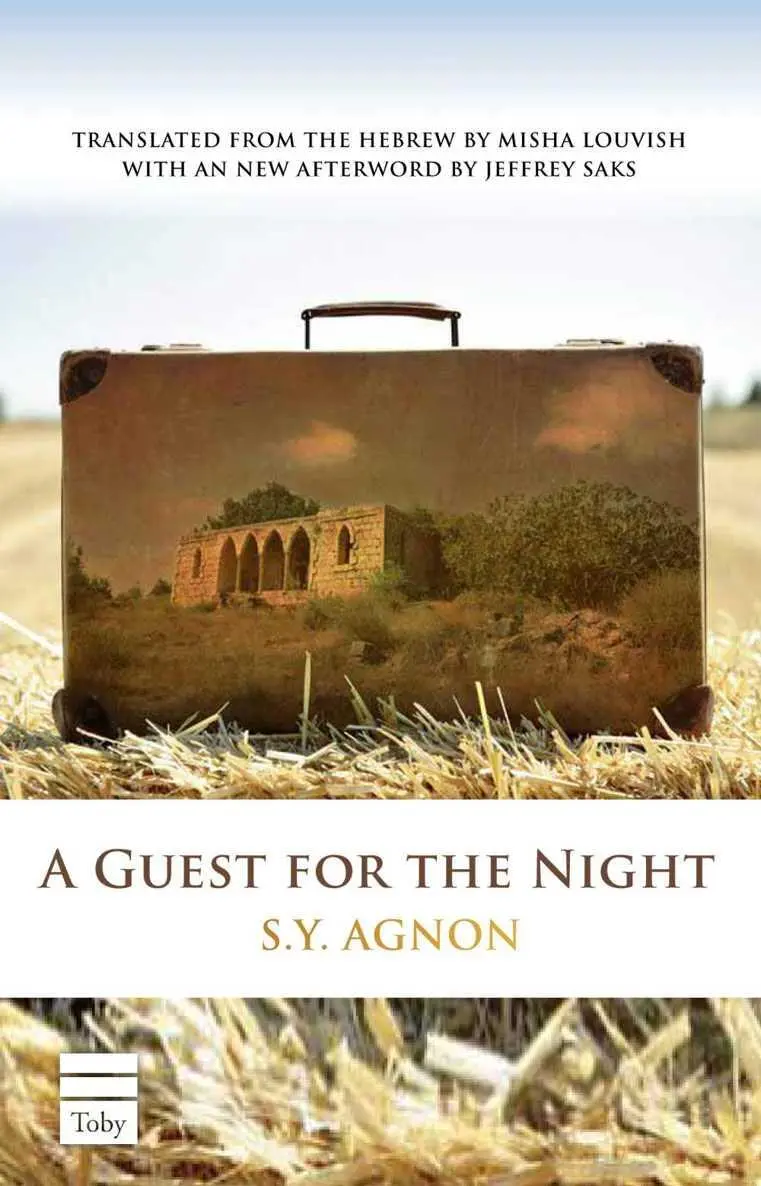
- Название:A Guest for the NIght
- Автор:
- Издательство:The Toby Press
- Жанр:
- Год:2014
- ISBN:нет данных
- Рейтинг книги:5 / 5. Голосов: 1
-
Избранное:Добавить в избранное
- Отзывы:
-
Ваша оценка:
A Guest for the NIght: краткое содержание, описание и аннотация
Предлагаем к чтению аннотацию, описание, краткое содержание или предисловие (зависит от того, что написал сам автор книги «A Guest for the NIght»). Если вы не нашли необходимую информацию о книге — напишите в комментариях, мы постараемся отыскать её.
depicts Jewish life in Eastern Europe after World War I. A man journeys from Israel to his hometown in Europe, saddened to find so many friends taken by war, pogrom, or disease. In this vanishing world of traditional values, he confronts the loss of faith and trust of a younger generation. This 1939 novel reveals Agnon’s vision of his people’s past, tragic present, and hope for the future.
Cited by National Yiddish Book Center as one of "The Greatest Works of Modern Jewish Literature".
A Guest for the NIght — читать онлайн бесплатно полную книгу (весь текст) целиком
Ниже представлен текст книги, разбитый по страницам. Система сохранения места последней прочитанной страницы, позволяет с удобством читать онлайн бесплатно книгу «A Guest for the NIght», без необходимости каждый раз заново искать на чём Вы остановились. Поставьте закладку, и сможете в любой момент перейти на страницу, на которой закончили чтение.
Интервал:
Закладка:
But even if a sharp sword is laid to a man’s throat he should not despair of mercy. The Blessed One can still bring salvation if we know how to arouse mercy. The rabbi of the town assembled ten honest men and arranged for them to say verses of the psalms the first letters of which made up the name of Hanoch. First all the verses beginning with Het , then all the verses beginning with Nun , then all the verses beginning with Vav , then all the verses beginning with Kaf . Then all the verses beginning with the letters of his father’s name and of his mother’s. Anyone who is familiar with the various versions, editions, and printings of the prayer book and knows that prayer books suitable for this procedure are not to be found in our country will understand how much trouble the rabbi took.
Wrapped in their rags, ten men sat in the Great Synagogue and recited with tears and supplication, “ Haneni … Have mercy upon me, O Lord; for I am weak: O Lord, heal me; for my bones are vexed,” in Psalm 6, and ended with the verse “ Hanun … The Lord is gracious, and full of compassion; slow to anger, and of great mercy,” in Psalm 145. Then they rose and said a special prayer, sat down again, and said, “ Nenateka … Let us break their bands asunder,” and so forth, and ended with “ Noten … He giveth to the beast food,” and so forth. Again they rose, said a special prayer, sat down again, and recited. “ Vehaya … And he shall be like a tree planted by the rivers of water, that bringeth forth his fruit in his season; his leaf also shall not wither; and whatsoever he doeth shall prosper,” and ended with “ Vayarem … He also exalteth the horn of His people, the praise of all His saints; even of the children of Israel, a people near unto Him. Praise ye the Lord.” Again they rose, recited a special prayer, sat down again, and went on until they ended with the last verse of the Book of Psalms, “ Kol haneshama … Let everything that hath breath praise the Lord. Praise ye the Lord.” Again they rose, said a special prayer, sat down, and recited all the verses for the names of his father and mother. Then they rose and said the prayer beginning “May it be His will,” and the Kaddish, sanctifying the Name of the Lord.
I too did something: I arranged that in my Beit Midrash they should say “Our Father, our King” at the Morning and Afternoon Services, verse by verse. When the rabbi heard this he objected. “Who is this who has come to institute new fashions?” He said, Today he tells you: Say ‘Our Father, our King’; and tomorrow he will tell you: Go and play football on the Sabbath!”
I regretted that I had not gone to pay my respects to the rabbi, for if I had visited him he would not have spoken in this way. I said to myself: Let a day go by and I shall get over my regret. When a day had passed and my regret had not, I went to the rabbi to appease him.
The rabbi is near seventy, but his age is not very apparent. His face is somewhat long and his beard gold in color, and the threads of silver in it gave him the kind look of a good-tempered man. His movements are measured and his speech is gentle; he does not raise his voice too much, but adds intonation to emphasize his words. He looks well fleshed, though in fact he is lean and tall; but because he sits at ease with his arms folded over his heart, he looks well fleshed. Although he is a poor man and his stipend is small, he is dressed in satin and is careful that his clothes should be clean. I have already mentioned in the story of Reb Hayim that at the beginning the present rabbi was accepted as an adjudicator and not as rabbi, and only when the war ended and his rivals disappeared and the town dwindled was he appointed rabbi. Apart from the great controversy with Reb Hayim and the troubles of the war and the troubles of the pogroms, which are common to all, he has not been particularly affected by the sorrows of the time. His sons follow in his footsteps, if not in their learning then at least in their ways. One is a prominent worker for Agudat Israel, the orthodox party, and a bit of a scribbler in their Yiddish newspapers; a second has a kind of factory for sausages; another is a son-in-law in a rich house, and there is reason to expect that he will find a rabbinical post, for his father-in-law is on good terms on the one hand with a famous zaddik and on the other with the authorities.
It is a rule stated in the Gemara that just as it is one’s duty to teach practices that will be followed, so it is one’s duty not to teach practices that will not be followed. This rule the rabbi has applied to himself, and it has saved him from various kinds of difficulty. But if someone comes to ask about a point of law, he is strict; not that this is the law, but that it is fitting to be strict. The rabbi often says, “The rules of the Torah were given to rejoice the hearts of those that learn them, and if a good deed comes to your hand, act so that your Maker should rejoice in you and be strict with yourself.” If the questioner resists him and asks, “Is the law really so?” he says to him, “If you know the law why do you ask me? And if you ask, it is because you do not rely on yourself, so you must rely on me.” Although his actions are measured and his speech balanced, he does not avoid idle conversation, and adorns his talk with things that put people in good humor. But he is careful not to tell two jokes one after the other, and not to tell a story that has nothing to do with what he is talking about.
When I came in he received me cordially, although it could be seen that he resented my not having come before, and he spoke to me in this wise in Aramaic: “If I am a king (for it is said, ‘Who are kings? The rabbis!’), why did you not come to see me until now?” But he immediately gave me a place at his right hand, and explained that the reason he had objected to the saying of “Our Father, our King” was that this prayer should not be recited for the troubles of an individual. Since I was silent, he thought I was annoyed because he had said, “Today he tells you: Say ‘Our Father, our King,’ and tomorrow he will say: Go and play football on the Sabbath,” and he began discussing why it is forbidden to play football on the Sabbath. Anyone who heard him might have imagined that people did nothing else in the Land of Israel but play football every day, especially on the Sabbath. More things, too, he said in condemnation of the people of the Land of Israel, which because of various preoccupations I took no notice of and did not answer. When he saw that I was silent, he changed his tone and looked at me more favorably. He raised his voice a little, not too much, adding intonation to emphasize what he was saying, and said, “And now, sir, will you honor me by saying a blessing in my house?” Then he raised his voice above the usual and called, “Rebetzin, bring refreshments. A Jew from the Land of Israel has come to visit us.”
A short while passed. From the kitchen I could hear footsteps and the clattering of dishes. Although the rabbi’s wife had made no reply, it was obvious that she had heard her husband and was now preparing refreshments. The rabbi looked at me affectionately and stroked his beard gently. Suddenly he shifted his eyes from me and looked at the door, rapping on the table with his fingers so as to hurry up his wife. I wanted to tell him that there was no need to trouble her, for I was neither hungry nor thirsty, but the door opened and in came the rabbi’s wife, carrying a tray with two glasses of tea and plates full of sweetmeats, as well as some sugar and slices of lemon. She bowed to me and said, “Welcome!” She seemed as old as he was, but more worn. In honor of this man who had come to her house she wore a kind of bonnet. Her husband looked at her approvingly, like a husband who is satisfied with his wife, for you must know that during the war they had come in contact with rabbis of the moderate Mizrachi party and had seen how the world behaves.
Читать дальшеИнтервал:
Закладка:
Похожие книги на «A Guest for the NIght»
Представляем Вашему вниманию похожие книги на «A Guest for the NIght» списком для выбора. Мы отобрали схожую по названию и смыслу литературу в надежде предоставить читателям больше вариантов отыскать новые, интересные, ещё непрочитанные произведения.












Обсуждение, отзывы о книге «A Guest for the NIght» и просто собственные мнения читателей. Оставьте ваши комментарии, напишите, что Вы думаете о произведении, его смысле или главных героях. Укажите что конкретно понравилось, а что нет, и почему Вы так считаете.