Eva Ibbotson - The Morning Gift
Здесь есть возможность читать онлайн «Eva Ibbotson - The Morning Gift» весь текст электронной книги совершенно бесплатно (целиком полную версию без сокращений). В некоторых случаях можно слушать аудио, скачать через торрент в формате fb2 и присутствует краткое содержание. Год выпуска: 0101, ISBN: 0101, Издательство: Pan Macmillan, Жанр: Современная проза, Исторические любовные романы, Детская проза, на английском языке. Описание произведения, (предисловие) а так же отзывы посетителей доступны на портале библиотеки ЛибКат.
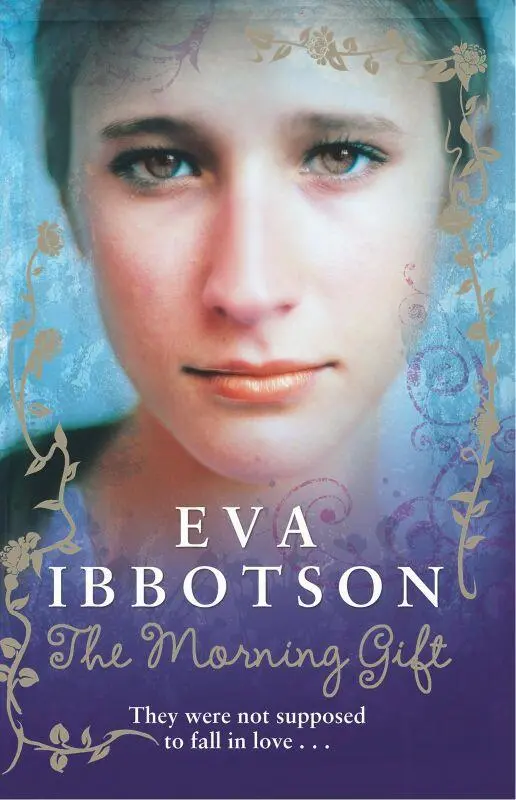
- Название:The Morning Gift
- Автор:
- Издательство:Pan Macmillan
- Жанр:
- Год:0101
- ISBN:9780330477345
- Рейтинг книги:4 / 5. Голосов: 1
-
Избранное:Добавить в избранное
- Отзывы:
-
Ваша оценка:
The Morning Gift: краткое содержание, описание и аннотация
Предлагаем к чтению аннотацию, описание, краткое содержание или предисловие (зависит от того, что написал сам автор книги «The Morning Gift»). Если вы не нашли необходимую информацию о книге — напишите в комментариях, мы постараемся отыскать её.
The Morning Gift — читать онлайн бесплатно полную книгу (весь текст) целиком
Ниже представлен текст книги, разбитый по страницам. Система сохранения места последней прочитанной страницы, позволяет с удобством читать онлайн бесплатно книгу «The Morning Gift», без необходимости каждый раз заново искать на чём Вы остановились. Поставьте закладку, и сможете в любой момент перейти на страницу, на которой закончили чтение.
Интервал:
Закладка:
‘America!’ Heini’s eyes widened. ‘It’s what I’ve dreamt of. You mean you’d be able to get me a visa?’
‘If there’s enough interest in you. Fleury could fix it if he wished. Now here are the conditions of entry and the dates. There’s a registration fee, but I expect you can manage that.’
‘Yes.’ The Bergers were funny about Dr Friedlander — they wouldn’t take anything from him, but that was silly. The dentist was musical; he’d be glad to help.
‘Good.’ Mantella rose as a sign that the interview was over. ‘Come back next week with the completed form — and bring the girl!’
Heini left the office in a daze. Passing Hart and Sylvesters in Bruton Street, he stopped to stare at a pair of hand-stitched gloves in the window. Liszt had always come onto the platform in doeskin gloves and dropped them onto the floor before he went to the instrument. He was glad Mantella had mentioned Liszt — he’d play the Dante Sonata; it was hellishly difficult but that was all to the good. It was time virtuoso playing came back into fashion. People like Ziller were all very well, but even the greatest musicians had not been averse to an element of showmanship.
How pleased Ruth would be that he had decided to play the Mozart! Well, Mantella had decided, but there was no need to mention that; no point in depriving her of the happiness she would feel. And if it meant America! They would be married over there — he’d rather dreaded a scrappy wedding in the squalor of Belsize Park.
Abandoning the hand-stitched gloves, dreaming his dreams, Heini made his way to Dr Friedlander’s surgery in Harley Street.
‘She’s done it!’ said Dr Felton gleefully, pushing away the pile of exam papers he had been marking. He’d checked and double checked to make sure he’d been completely fair, and he had. Ruth had beaten Verena Plackett by two marks in the Marine Zoology paper, and by three in the Parasitology.
‘Which, considering what she’s been up against, is quite an achievement,’ said Dr Elke, inviting her fellow members of staff to a celebratory glass of sherry in her room.
They had all been worried about Ruth who had been found asleep in various unexpected places in the college and had ended up in the Underground terminus of the Northern Line after a longer night than usual discussing the fingering of Beethoven’s Hammerklavier.
‘And Moira’s decided to adopt!’ said Dr Felton, in the grip of end-of-term euphoria. ‘So no more thermometers!’
The marks, when they went up on the board, gave general satisfaction. Verena was top in the other two theory papers and since one of these was Palaeontology, she was content. Sam had done unexpectedly well, and both Huw and Janet were comfortably through.
But it was Pilly’s results that were the most surprising. She had failed only the Physiology practical in which she had fainted while pricking her finger to get a sample of blood, and was to be allowed to take her Finals without a resit.
‘And it’s all because of you, Ruth,’ said Pilly, hugging her friend.
The party on the last day of term was thus a cheerful affair. Heini came, and even those of Ruth’s friends who had been critical of his demands were charmed by his broken accent and wistful smile. Since his meeting with Mantella, he had been in excellent spirits and when Sam produced a pile of music from the piano stool and begged him to play, he did so without demur.
Quin, on the same evening, had been bidden to a pre-Christmas gathering of eminent academics at the Vice Chancellor’s Lodge. Arriving purposely late, he paused for a few moments outside the lighted windows of the Union Hall.
Heini was at the piano and Ruth sat by his side. She wore the velvet dress she had worn on the Orient Express and her head was bent in total concentration as she followed the score. Then she rose, one arm curved over the boy’s head… her fingers, in one deft movement, flicked the page.
‘You have to be like a wave when you turn over,’ she had told him on the train. ‘You have to be completely anonymous.’
Quin walked on across the darkened quadrangle. It seemed to him that he had never seen an action express such dedication, such gracefully given service — or such love!
Christmas Eve in the Willow would have surprised passers-by who were given to understand that it was a refugee café largely frequented by displaced persons and run by austere and frugal spinsters.
The tables had been pushed to the edge of the floor and in the centre stood the tree in all its festive glory. This tree had not been dug out of the garden of Mrs Weiss’s son, Georg, while her daughter-in-law slept, though the old lady had been perfectly willing to attempt this foul deed. It had been bought in a shop, yet it was Mrs Weiss who was its source. A week before Christmas the hard-pressed Moira had paid a secret visit to Leonie and struck a bargain. A liberal sum of money which Moira could well spare if Leonie could guarantee that her mother-in-law was out of the house for the whole of Christmas Eve.
‘I’ve got some people coming in — clients of George’s; important ones. You understand?’
Leonie, at first, had been inclined to refuse, but on reflection it seemed to be a fair bargain. She herself, while still prosperous and in her native land, would have paid twice what Moira was offering to be sure of Christmas Eve without Mrs Weiss. She took the money and went shopping with the old lady for the tree, the silver tinsel, the candles, the spices, the rum…
Now the café was a bower of green, the glockenspiel of the banker’s wife set up a sweet tinkling over the hubbub of voices… Voices which were stilled as Miss Maud, now primed in the mysteries of an Austrian Holy Night, handed the matches to Ruth.
‘Careful!’ said Professor Berger, as he had said every year since Ruth was old enough to light the candles on the tree.
He had travelled overnight on the bus from Manchester and would greatly have preferred to be at home with his family, but now as he looked at the circle of faces and touched his daughter’s head, he was glad they had come together with their friends.
‘I never seen it like that,’ said Mrs Burtt. ‘Not with real candles.’
And Miss Violet and Miss Maud forgot the needles dropping on the floor and the wax dripping on to the tablecloths and even the appalling risk of fire, for it was beyond race or belief or nationality, this incandescent symbol of joy and peace.
Then came the presents. How these people, some of whom could scarcely afford to eat, had found gifts remained a mystery, but no one was forgotten. Dr Levy had discovered a postcard of the bench where Leonie had been overcome by pigeons and made for it a wooden frame. Mrs Burtt received a scroll in which Ruth, in blank verse, proclaimed her as Queen of the Willow. Even the poodle had a present: a bone marrow pudding baked on the disputed cooker at Number 27.
But Heini’s presents were the best. It had occurred to Heini that while he was borrowing money from Dr Friedlander for the competition, he might as well borrow a little extra for Christmas, and the dentist had been perfectly happy to lend it to him. So Heini had bought silk stockings for Leonie and chocolates for Aunt Hilda and a copy of The Meditations of Marcus Aurelius for the Professor who was fond of the Roman Stoic. This had used up more money than he expected and when he went into a flower shop to buy red roses for Ruth, he found the cost of a bunch to be exorbitant. It was the assistant who had suggested a different kind of rose — a Christmas rose, pale-petalled and golden-hearted, and put a single bloom, cradled in moss, into a cellophane box — and now, as he saw Ruth’s face, he knew that nothing could have pleased her more.
Читать дальшеИнтервал:
Закладка:
Похожие книги на «The Morning Gift»
Представляем Вашему вниманию похожие книги на «The Morning Gift» списком для выбора. Мы отобрали схожую по названию и смыслу литературу в надежде предоставить читателям больше вариантов отыскать новые, интересные, ещё непрочитанные произведения.







Обсуждение, отзывы о книге «The Morning Gift» и просто собственные мнения читателей. Оставьте ваши комментарии, напишите, что Вы думаете о произведении, его смысле или главных героях. Укажите что конкретно понравилось, а что нет, и почему Вы так считаете.