Eva Ibbotson - The Morning Gift
Здесь есть возможность читать онлайн «Eva Ibbotson - The Morning Gift» весь текст электронной книги совершенно бесплатно (целиком полную версию без сокращений). В некоторых случаях можно слушать аудио, скачать через торрент в формате fb2 и присутствует краткое содержание. Год выпуска: 0101, ISBN: 0101, Издательство: Pan Macmillan, Жанр: Современная проза, Исторические любовные романы, Детская проза, на английском языке. Описание произведения, (предисловие) а так же отзывы посетителей доступны на портале библиотеки ЛибКат.
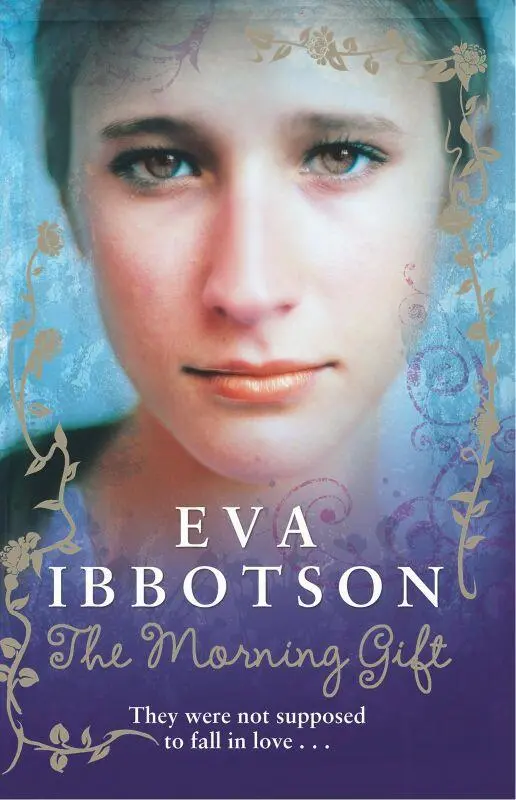
- Название:The Morning Gift
- Автор:
- Издательство:Pan Macmillan
- Жанр:
- Год:0101
- ISBN:9780330477345
- Рейтинг книги:4 / 5. Голосов: 1
-
Избранное:Добавить в избранное
- Отзывы:
-
Ваша оценка:
The Morning Gift: краткое содержание, описание и аннотация
Предлагаем к чтению аннотацию, описание, краткое содержание или предисловие (зависит от того, что написал сам автор книги «The Morning Gift»). Если вы не нашли необходимую информацию о книге — напишите в комментариях, мы постараемся отыскать её.
The Morning Gift — читать онлайн бесплатно полную книгу (весь текст) целиком
Ниже представлен текст книги, разбитый по страницам. Система сохранения места последней прочитанной страницы, позволяет с удобством читать онлайн бесплатно книгу «The Morning Gift», без необходимости каждый раз заново искать на чём Вы остановились. Поставьте закладку, и сможете в любой момент перейти на страницу, на которой закончили чтение.
Интервал:
Закладка:
‘Don’t worry, I’ll tell him. Only, Ruth, don’t you think there’s a case now for telling Heini and your parents about our marriage? We haven’t after all done anything we need be ashamed of. I’m sure they’d be —’
‘Oh, no, please, please!’ Ruth had seized his arm and was looking entreatingly into his face. ‘I beg of you… My mother’s very good, she does all Heini’s washing and she feeds him and she doesn’t complain when he’s in the bath for a long time… but being a concert pianist is something she doesn’t altogether understand. You see, when Paul Ziller found a job for Heini two evenings a week playing at Lyons Corner House, she really wanted him to take it.’
‘But he didn’t?’
‘No. He said once you go down that road you never get back to being taken seriously as a musician, but, of course, Paul Ziller does it and my mother… She’s already so grateful to you for getting work for my father and she’d come to see you and you’d hate it.’
‘Would I?’ said Quin, in a voice she hadn’t heard him use before. ‘Well, perhaps. Anyway, I’ll phone Dick and he’ll get some new papers drawn up. Don’t worry, we’ve probably only lost a month or two.’
She smiled. ‘Thank you. It’s such a relief. I can face my essay on “Parasitism in the Hermit Crab” now. It was just a blur before.’
It was not till the end of the day that Quin, mysteriously restored to good humour, could ring his lawyer.
‘She has done what?’ said Proudfoot incredulously.
‘I’ve told you. Left the annulment papers on the bus.’
‘I don’t believe it! They were in a damn great roll as long as an arm and tied up with red tape.’
‘Well, she has,’ said Quin, outlining the saga of the edible boletus. ‘So it’s back to the drawing board, I’m afraid. Can you get another lot drawn up?’
‘I can, but not this week — my clerk’s off ill. And after that I’m going to Madeira for a fortnight so you can forget the next sitting of the courts.’
‘Well, it can’t be helped,’ said Quin — and it seemed to Dick that if he wanted to marry Verena Plackett, he did not do so badly. ‘What are you going to do in Madeira?’
‘Have a holiday,’ said Proudfoot. ‘And paint. Your wife thought I should take it up again.’
‘My —’ Quin broke off, aware that he had never used those words about Ruth.
‘Well, she is your wife, isn’t she? God knows why you want to get rid of her — you must be mad. However, it’s none of my business.’
‘No, it isn’t,’ said Quin pleasantly. ‘And I warn you, when she comes to see you again don’t mention Professor Freud or you’ll get your head bitten off.’
‘Why the devil should I mention him? I don’t understand the first thing about all that stuff.’
‘That’s all right then. I’m only warning you.’
Chapter 23
It was Paul Ziller who introduced Heini to Mantella.
‘He’s a very good agent. A bit of a thruster, but they have to be. Why don’t you go and see him?’
‘Do you use him?’
Ziller shook his head. ‘He’s only interested in soloists and celebrities.’
‘Well, you could be a soloist.’
‘No. I’m an ensemble player.’ Ziller was silent, pursuing his thoughts. Returning to the Day Centre to re-establish his claim, he had found, among the wash basins, an emaciated and exceedingly shabby man playing the cello — and playing it well. This had turned out to be Milan Karvitz from the Prague Chamber Orchestra, just returned from the International Brigade in Spain… and Karvitz, in turn, had brought along the viola player from the disbanded Berliner Ensemble. The three of them played well together though it was a tight fit in the cloakroom, but the repertoire for string trio was limited and now a man had written from Northumberland where he was working as a chauffeur. Ziller knew him by reputation — a fine violinist, an unselfish player — but it was out of the question. He could never replace Biberstein; never. ‘Anyway,’ he went on, pulling himself out of his reverie, ‘I’ve spoken to him about you. Why don’t you go along?’
Mantella, though brought up in Hamburg, was a South American by birth, with an olive skin, a pointed black beard and a legendary nose for sniffing out talent. In Heini, presenting himself the following day in the elegant Bond Street office, he at once saw possibilities. The musical gift could not be in doubt — all those medals from the Conservatoire and a debut with the Philharmonic promised in Vienna — but more importantly, the boy had instant emotional appeal. Even Mantella, however, could not get a concert for a pianist unknown in England and not yet established on the continent.
He had, however, a suggestion to make.
‘There’s an important piano competition here at the end of May. It’s sponsored by Boothebys — the music publishers. They’re big in the States and here too. No, don’t look like that; it may be commercially sponsored, but the judges are absolutely first class. They’ve got Kousselovsky and Arthur Hanneman and the Director of the Amsterdam Conservatoire. The Russians are sending two candidates and Leblanc’s entered from Paris.’
‘He’s good,’ said Heini.
‘I tell you, it’s big. After all, Glyndebourne is run by auctioneers! The commercial sponsorship means that the prizes are substantial and the press is getting interested. The finals are held in the Albert Hall — they’ve got the BBC Symphonia to accompany the concertos — and that isn’t all!’ He paused for dramatic effect. ‘Jacques Fleury is coming over from the States!’
That settled it. Fleury was one of the most influential concert impresarios in the world with houses in Paris and London and New York. ‘What are the concertos? I could learn a new one, but I’ve only got a rotten little piano and I’d rather play something I’ve studied.’
Mantella pulled out the brochure. ‘Beethoven’s Number 3, the Tchaikovsky Number 1… Rachmaninoff 2… and Mozart Number 17.’
Heini smiled. ‘Really? Number 17? The Starling Concerto? Well, well!’
Mantella’s glance was sharp. ‘What do you mean, the Starling Concerto?’
‘The last movement is supposed to be based on the song of a starling Mozart had. My girlfriend would want me to play that — I used to call her that… my starling — but it isn’t showy enough. I’ll play the Tchaikovsky.’
‘Wait a minute — didn’t I see something in the papers? Did she ever work as a waitress?’
‘Yes, she did. She still does in the evening, but she won’t for long; I’ll see to that.’
‘I remember… some article by a chap who went into a refugee café. There was a picture… lots of hair and a snub nose.’ Mantella twiddled his silver pencil. The girl had been very pretty — girls with short noses always photographed well. ‘I think you should play the Mozart.’
Heini shook his head. ‘It’s too easy. Mozart wrote it for one of his pupils. I’d rather play the Tchaikovsky.’
‘You can give them the pyrotechnics in the preliminary rounds. You get the chance to play six pieces and only two of them are obligatory: a Handel suite and Beethoven’s Hammerklavier. You can dazzle them with Liszt, Chopin, Busoni… show them nothing’s too difficult. Then when you’re through to the finals come on quietly and play the Mozart.’
‘But surely —’
‘Heini, believe me; I know what I’m talking about. The Russians will go for Tchaikovsky and Rachmaninoff and you can’t beat them. And we can use the story — you and the girl. Your starling. After all, we’re not just trying to win, we’re trying to get you engagements. America’s not out of the question — I have an office there.’
Читать дальшеИнтервал:
Закладка:
Похожие книги на «The Morning Gift»
Представляем Вашему вниманию похожие книги на «The Morning Gift» списком для выбора. Мы отобрали схожую по названию и смыслу литературу в надежде предоставить читателям больше вариантов отыскать новые, интересные, ещё непрочитанные произведения.








Обсуждение, отзывы о книге «The Morning Gift» и просто собственные мнения читателей. Оставьте ваши комментарии, напишите, что Вы думаете о произведении, его смысле или главных героях. Укажите что конкретно понравилось, а что нет, и почему Вы так считаете.