Eva Ibbotson - The Morning Gift
Здесь есть возможность читать онлайн «Eva Ibbotson - The Morning Gift» весь текст электронной книги совершенно бесплатно (целиком полную версию без сокращений). В некоторых случаях можно слушать аудио, скачать через торрент в формате fb2 и присутствует краткое содержание. Год выпуска: 0101, ISBN: 0101, Издательство: Pan Macmillan, Жанр: Современная проза, Исторические любовные романы, Детская проза, на английском языке. Описание произведения, (предисловие) а так же отзывы посетителей доступны на портале библиотеки ЛибКат.
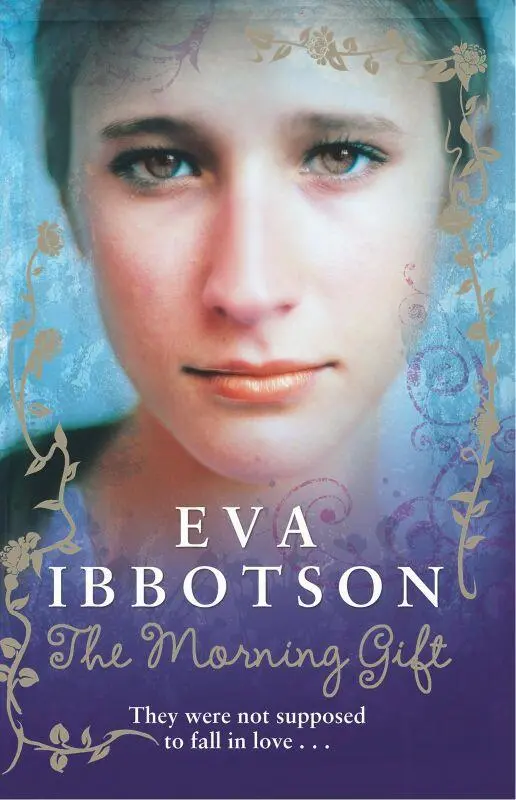
- Название:The Morning Gift
- Автор:
- Издательство:Pan Macmillan
- Жанр:
- Год:0101
- ISBN:9780330477345
- Рейтинг книги:4 / 5. Голосов: 1
-
Избранное:Добавить в избранное
- Отзывы:
-
Ваша оценка:
The Morning Gift: краткое содержание, описание и аннотация
Предлагаем к чтению аннотацию, описание, краткое содержание или предисловие (зависит от того, что написал сам автор книги «The Morning Gift»). Если вы не нашли необходимую информацию о книге — напишите в комментариях, мы постараемся отыскать её.
The Morning Gift — читать онлайн бесплатно полную книгу (весь текст) целиком
Ниже представлен текст книги, разбитый по страницам. Система сохранения места последней прочитанной страницы, позволяет с удобством читать онлайн бесплатно книгу «The Morning Gift», без необходимости каждый раз заново искать на чём Вы остановились. Поставьте закладку, и сможете в любой момент перейти на страницу, на которой закончили чтение.
Интервал:
Закладка:
‘We have to tell her,’ said Pilly. ‘We have to find some way of getting a message to the house.’
‘The Professor will tell her,’ said Dr Elke.
‘No, he won’t.’ Pilly’s round blue eyes were desperate. ‘He’ll go on punishing her. He hates her.’
Dr Elke was silent. Existing in extreme content without the company of men, she sometimes saw further than she wished to.
‘No, Pilly,’ she said sadly. ‘He doesn’t hate her. It’s not like that.’
Chapter 20
Ruth woke, bewildered, from a drugged sleep. The clock beside the bed said three o’clock — the pre-dawn hour in which demons gibber and people die. At first she didn’t know where she was… she seemed to be in a large bed covered by some kind of animal skin: the pelt of a bear or something even more exotic. Then, as she touched it, she remembered.
She was in Quin’s tower. He had given instructions to have her carried there after the boat landed — still furious, taking no notice when she said that she was perfectly well, that she wanted to go back to the boat-house with the others. He’d told the students to keep away and sent for two men from the farm to carry her.
‘No one is to go near her till she’s seen a doctor,’ he’d said.
This wasn’t help; it wasn’t concern; it was punishment.
The doctor had come earlier, an old man, sounding her chest, feeling her pulse.
‘I’m all right,’ she’d kept saying, and he said, ‘Yes, yes,’ and left her something in a bottle to make her sleep.
But she wasn’t all right. Even the news brought in by Martha — that the dog was safe — couldn’t make her all right. It wasn’t the waves breaking over her head that had troubled her half-sleep. It was what Quin had said: his rejection, his cruelty. She was in disgrace, she was to be sent home.
She got up, her bare feet feeling the wooden boards. This was the most masculine room she had ever seen; almost without furniture, the uncurtained windows letting in pools of moonlight, the bear skin thrown carelessly over the bed with its single pillow. To sleep thus was to get as close as one could get to sleeping out of doors.
The nightdress she was wearing must have belonged to Aunt Frances; made of thick white flannel, it billowed out over her feet; the ruffles on the neck half buried her chin. Turning on the lamp, she saw, on a small desk pushed against the wall, the photograph of a young woman whose dark, narrow face above the collar of the old-fashioned dress was startlingly familiar. Picking it up, she carried it to the window and examined it.
‘What are you doing?’
She turned abruptly, caught out again, once more in the wrong.
‘I’m sorry; I woke.’
Quin’s face was still drawn and closed, but now he made an effort. ‘There’s nothing wrong with her physically,’ the doctor had said to him, ‘but she looks as though she’s had some kind of shock.’
‘Well, obviously,’ Quin had replied. ‘Nearly drowning would be a shock.’
But old Dr Williams had looked at him and shaken his head and said he didn’t think it was that; she was young and strong and hadn’t been in the water long. ‘Go easy,’ he’d said, ‘treat her gently.’
So he came over, took the picture from her hand. ‘Are you feeling better?’
‘Yes, I’m perfectly all right. I wish I could go.’
‘But you can’t, my poor Rapunzel; not till the morning. Even your pretty hair wouldn’t be long enough to pull up a prince to rescue you.’
‘And there’s a shortage of princes,’ she said, trying to speak lightly for the edge was still there in his voice.
Quin said nothing. Earlier he had found Sam on the terrace, looking up at Ruth’s window, and sent him away.
‘It’s your mother, isn’t it?’ she asked, looking down at the portrait.
‘Are we so alike?’
‘Yes. She looks intelligent. And so… alive.’
‘Yes, she was, I believe. Until I killed her.’
It was Ruth now who was angry. ‘What rubbish! What absolute poppycock. Schmarrn! ’ she said, spitting out the Viennese word, so much more derogatory than anything in English. ‘You talk like a kitchen maid.’
‘I beg your pardon?’ he said, startled.
But his attack on the boat had freed Ruth. Born to please, trained to put herself at the service of others, she now abandoned the handmaiden role.
‘I shouldn’t have said that. Kitchen maids are often highly intelligent, like your Elsie who told me the names of all the plants on the cliff. But you talk like someone in a third-rate romantic novel — you killed her, indeed! Well, what does one expect from a man who sleeps under dead animals… a man who owns the sea!’
She had succeeded better than she’d hoped in riling him. ‘Nobody owns the sea,’ he said. ‘And if it interests you, I’m giving away what I do own. The year after next, Bowmont goes to the National Trust.’
She took a deep breath. She was, in fact, totally confounded and worse than that, utterly dismayed; she felt as though she had been kicked in the stomach.
‘All of it?’ she stammered. ‘The house and the gardens and the farm?’
‘Yes.’ He had recovered his equanimity. ‘As a good Social Democrat I’m sure you’ll be pleased.’
She nodded. ‘Yes…’ she struggled to say. ‘It’s the right thing to do. It’s just…’
But what it was was something she could not put into words. That she was devastated by the loss of a place which had nothing to do with her, which she would never see again. That she had been storing Bowmont in her mind: its cliffs and flowers, its scents and golden strands… There would be a lot of waiting in her life with Heini: sitting in stuffy green-rooms, accompanying him in crowded trains. Like the coifed girls in medieval cloisters who wove mysterious trees and crystal rivers into their tapestries, she had spun for herself a dream of Bowmont: of paths where she could wander, of a faded blue door in a high wall. And the dream meant Bowmont as it was — as Quin’s demesne, as a place where an irascible old woman bullied the flowers out of the ground.
‘Is it because you will benefit the people?’ she asked, sounding priggish but not knowing how to say it otherwise.
Quin shrugged. ‘I doubt if the people — whoever they are — are all that interested in Bowmont; the house is nothing much. What they want, I imagine, is access to the sea and that could be arranged with a few more rights of way. I’m afraid I don’t share your passion for “the people” in the abstract. One never knows quite who they are.’
‘Well, why then?’
Quin took the portrait of his mother from her hands. ‘You chose to sneer when I said I killed her. Yet it is not untrue. My father knew that she was not supposed to have children. She’d been very ill — they met in Switzerland when he was there in the Diplomatic Service. She was in a sanatorium, recovering from TB. He wanted a child because of Bowmont. He wanted an heir and he didn’t mind what it cost. An heir for Bowmont.’
‘And if he did?’ Ruth shrugged. She seemed to him relentless, suddenly; grown up, no longer his student, his protegée. ‘Men have always wanted that. A tobacconist will want an heir for his kiosk… the poorest rabbi wants a son to say kaddish for him when he’s dead. Why do you make such a thing of it?’
‘If a man forces a woman to bear a child… if he risks her life so that he can come to his own father — the father he quarrelled with and loathed — and say: “Here is an heir” — then he is committing a sin.’
But she wouldn’t heed him. ‘And what of her? Do you think she was so feeble? Do you think she didn’t want it? She was brave — look at her face. She wanted a child. Not for Bowmont, not for your father. She wanted one because a child is a marvellous thing to have. Why do you patronize women so? Why can’t they risk their lives as men do? They have a right, as much as any man.’
Читать дальшеИнтервал:
Закладка:
Похожие книги на «The Morning Gift»
Представляем Вашему вниманию похожие книги на «The Morning Gift» списком для выбора. Мы отобрали схожую по названию и смыслу литературу в надежде предоставить читателям больше вариантов отыскать новые, интересные, ещё непрочитанные произведения.






Обсуждение, отзывы о книге «The Morning Gift» и просто собственные мнения читателей. Оставьте ваши комментарии, напишите, что Вы думаете о произведении, его смысле или главных героях. Укажите что конкретно понравилось, а что нет, и почему Вы так считаете.