Eva Ibbotson - The Morning Gift
Здесь есть возможность читать онлайн «Eva Ibbotson - The Morning Gift» весь текст электронной книги совершенно бесплатно (целиком полную версию без сокращений). В некоторых случаях можно слушать аудио, скачать через торрент в формате fb2 и присутствует краткое содержание. Год выпуска: 0101, ISBN: 0101, Издательство: Pan Macmillan, Жанр: Современная проза, Исторические любовные романы, Детская проза, на английском языке. Описание произведения, (предисловие) а так же отзывы посетителей доступны на портале библиотеки ЛибКат.
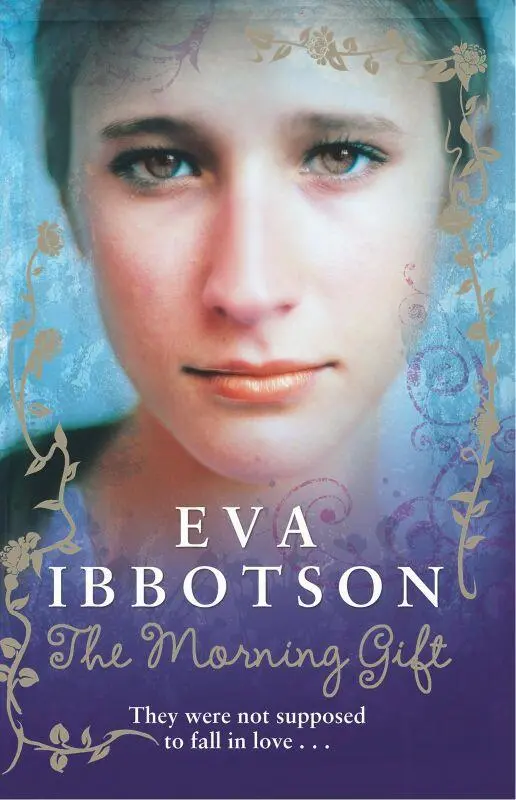
- Название:The Morning Gift
- Автор:
- Издательство:Pan Macmillan
- Жанр:
- Год:0101
- ISBN:9780330477345
- Рейтинг книги:4 / 5. Голосов: 1
-
Избранное:Добавить в избранное
- Отзывы:
-
Ваша оценка:
The Morning Gift: краткое содержание, описание и аннотация
Предлагаем к чтению аннотацию, описание, краткое содержание или предисловие (зависит от того, что написал сам автор книги «The Morning Gift»). Если вы не нашли необходимую информацию о книге — напишите в комментариях, мы постараемся отыскать её.
The Morning Gift — читать онлайн бесплатно полную книгу (весь текст) целиком
Ниже представлен текст книги, разбитый по страницам. Система сохранения места последней прочитанной страницы, позволяет с удобством читать онлайн бесплатно книгу «The Morning Gift», без необходимости каждый раз заново искать на чём Вы остановились. Поставьте закладку, и сможете в любой момент перейти на страницу, на которой закончили чтение.
Интервал:
Закладка:
‘Yes. She was a Quaker.’
‘Gardeners are never wicked, are they?’ said Ruth. ‘Obstinate and grumpy and wanting to be alone, but not wicked. Oh, look at that creeper! I’ve always loved October so much, haven’t you? I can see why it’s called the Month of the Angels. Shall I go and fetch a wheelbarrow?’
‘Yes, it’s over there behind the summerhouse. And bring a watering can.’
Ruth disappeared. Minutes passed; then there was a cry. Displeased, and for a moment fearful, Miss Somerville rose.
Ruth was kneeling down by a patch of mauve flowers which had gone wild in the grass behind the shed. Flowers like slender goblets growing without leaves so that their uncluttered petals opened to the sky and their golden centres mirrored the sun. She was kneeling and she was worshipping — and Miss Somerville, made nervous by what was obviously going to be more emotion, said sharply: ‘What’s the matter? They’re just autumn crocus. I put some in a few years ago and they’ve spread.’
‘Yes, I know. I know they’re autumn crocus.’ She looked up, pushing her hair off her forehead, and it was as Miss Somerville had feared; there were tears in her eyes. ‘We used to wait for them every year before we left the mountains. There were meadows of them above the Grundlsee and it meant… the marvellousness of summer but also that it was time to leave. Things that flower without their leaves… they come out so pure. I never thought I’d find them here by the sea. Oh, if only Uncle Mishak was here. If only he could see them.’
She rose, but it was hard for her to pick up the handle of the barrow, to turn her back on the flowers.
‘Who’s Uncle Mishak?’
‘He’s my great-uncle… he loves gardening. He’s managed to make a garden even in Belsize Park and that isn’t easy.’
‘No, I imagine not. A dreadful place.’
‘Yes, but it’s friendly. He’s cleared quite a patch, and now he’s trying to grow vegetables for my mother… We can’t get fertilizer but —’
‘Why on earth not? Surely they sell it there?’
‘Yes, but we can’t afford it. Only it doesn’t matter — we use washing-up water and things like that. But oh, if he saw these! They were Marianne’s favourite flowers. It was the wild flowers she loved. She died when I was six but I can remember her standing on the alp and just looking. Most of us ran about and shrieked about how lovely they were, but Marianne and Mishak — they just looked.’
‘She was his wife?’ asked Aunt Frances, realizing she would be informed whether she wished it or not.
‘Yes. He loved her — oh, my goodness those two! She was very tall and as thin as a rake, with a big nose, and she had a stammer, but for him she was the whole world. It was very hard for him to leave Vienna because her grave is there. He’s old now, but it doesn’t help.’
‘Why should it?’ said Miss Somerville tartly. And in spite of herself: ‘How old?’
‘Sixty-four,’ said Ruth, and Miss Somerville frowned, for sixty-four is not old to a woman of sixty.
Ruth, working in the compost, looked up at the formidable lady and made a decision. You had to be worthy to hear the story of Mishak’s romance, but oddly this sharp-tempered spinster who had left Quin alone was worthy.
‘Would you like to hear how they met — Uncle Mishak and Marianne?’
‘I don’t mind, I suppose,’ said Aunt Frances, ‘as long as you go on with what you’re doing.’
‘Well, it was like this,’ said Ruth. ‘One day, oh, many, many years ago when the Kaiser was still on his throne, my Uncle Mishak went fishing in the Danube. Only on that particular day, he didn’t catch a fish, he caught a bottle.’
She paused to judge whether she had been right, whether Miss Somerville was worthy, and she had been.
‘Go on then,’ said the old lady.
‘It was a lemonade bottle,’ said Ruth, pushing back her hair and getting into her stride. ‘And inside it was a message…’
Late that night, Aunt Frances stood by her bedroom window and looked out at the sea. It had rained earlier, raindrops as big as daisies had hung on the trees, but now the sky was clear again, and the moon was full over the quiet water.
But the beauty of the view did little for Miss Somerville. She felt unsettled and confused. It was all to be so simple: Verena Plackett, so obviously suitable, would marry Quin, Bowmont would be saved and she, as she had intended all along, would move to the Old Vicarage in Bowmont village and live in peace with Martha and her dogs.
Instead, she found herself thinking of a woman she had never known, a plain girl standing terrified before a class of taunting children in an Austrian village years and years ago. ‘She was as thin as a rake,’ the girl in the garden had said, ‘with a big nose, and she had a stammer. But for him she was the whole world.’
Frances had been just twenty years old when she went to the house on the Scottish Border, believing that she had been chosen freely as a bride. She knew she was plain, but she thought her figure was good, and she was a Somerville — she believed that that counted. The house was beautiful, in a fold of the Tweedsmuir Hills. She had liked the young man; as she dressed for dinner that first night, she imagined her future: being a bride, a wife, a mother…
It was late when she returned to her room where Martha waited to help her to bed. She must have left the door open, for she could hear voices outside in the corridor.
‘Good God, Harry, you aren’t really going to marry that anteater?’ A young voice, drawling, mocking. A silly youth, a friend of her fiancé’s who’d been at dinner.
‘You’ll have to feed her on oats — did you see those teeth !’ A second voice, another friend.
‘She’s like a hacksaw; she’ll tear you to pieces!’
And then the voice of her young man — her fiancé — joining in the fun. ‘Don’t worry, I’ve got it all worked out. I’ll go to her room once a month in my fencing kit, that’s padding enough. Then as soon as she’s pregnant I’m off to town to get myself a whizzer!’
It was Martha who shut the door, Martha who helped her to undress. Martha who kept silence when, the next morning, Frances left the house and said nothing, enduring the anger of her parents, the puzzlement of the family on the Border. That had been forty years ago and nothing had happened since. No door had opened for Frances Somerville as it had opened for that other girl in an Austrian village. No black-suited figure with a briefcase had stood on the threshold and asked her name.
Irritated, troubled, Frances turned from the window, and at that moment Martha came in with her evening cocoa — and the puppy at her heels.
‘Now what?’ she said, relieved to have found something to be angry about. ‘I thought you were taking him down to The Black Bull after tea.’
‘Mrs Harper sent word she couldn’t have him,’ said Martha. ‘Her mother-in-law’s coming to live and she hates dogs.’ She looked down at the puppy who was winding himself round Miss Somerville’s legs like a pilgrim reaching Lourdes. ‘He’s a bit unsettled, not having been down with the students today.’
Frances said she could see that and picked him up. Nothing had improved: not his piebald stomach, not his conviction that he was deeply loved.
That was what things were coming to, she thought. Twenty years ago, the wife of a publican would have been honoured to have a dog from the big house. Any dog. It was all of a piece, this idiot mongrel… all of a piece with waitresses who wept over the autumn crocus, with cowmen who sang and Wagner’s stepdaughter with her unequal eyes. Comely slept in her kennel; she would not have dreamt of coming upstairs. And it wasn’t any good rereading Pride and Prejudice yet again. Mr Darcy might have been disappointed in Elizabeth Bennet in chapter three, but by chapter six he was praising her fine dark eyes.
Читать дальшеИнтервал:
Закладка:
Похожие книги на «The Morning Gift»
Представляем Вашему вниманию похожие книги на «The Morning Gift» списком для выбора. Мы отобрали схожую по названию и смыслу литературу в надежде предоставить читателям больше вариантов отыскать новые, интересные, ещё непрочитанные произведения.







Обсуждение, отзывы о книге «The Morning Gift» и просто собственные мнения читателей. Оставьте ваши комментарии, напишите, что Вы думаете о произведении, его смысле или главных героях. Укажите что конкретно понравилось, а что нет, и почему Вы так считаете.